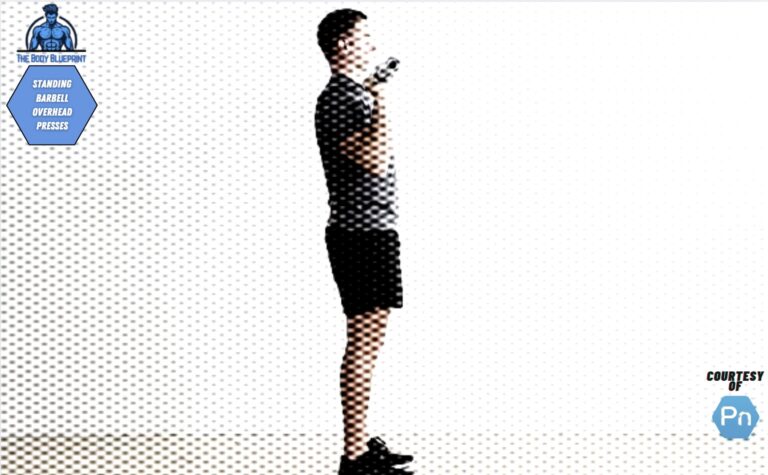
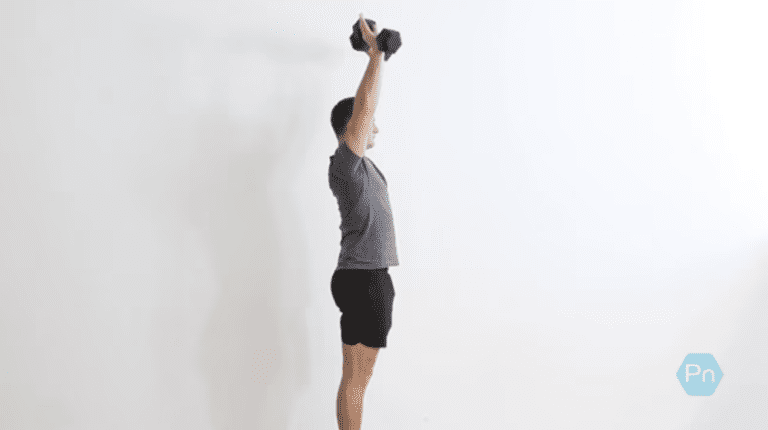
Standing presses are great for athletes, but if you want shoulders that look like bowling balls, you need to sit down. Why? Because stability dictates force output. When you remove the legs and core from the equation, you can direct 100% of your nervous system into the deltoids.
The Seated Overhead Dumbbell Press is the king of hypertrophy for shoulders. It doesn’t care about your balance. It doesn’t care about your hip drive. It only cares about isolation and load. If you are tired of having narrow shoulders, park yourself on a bench and start pressing heavy.
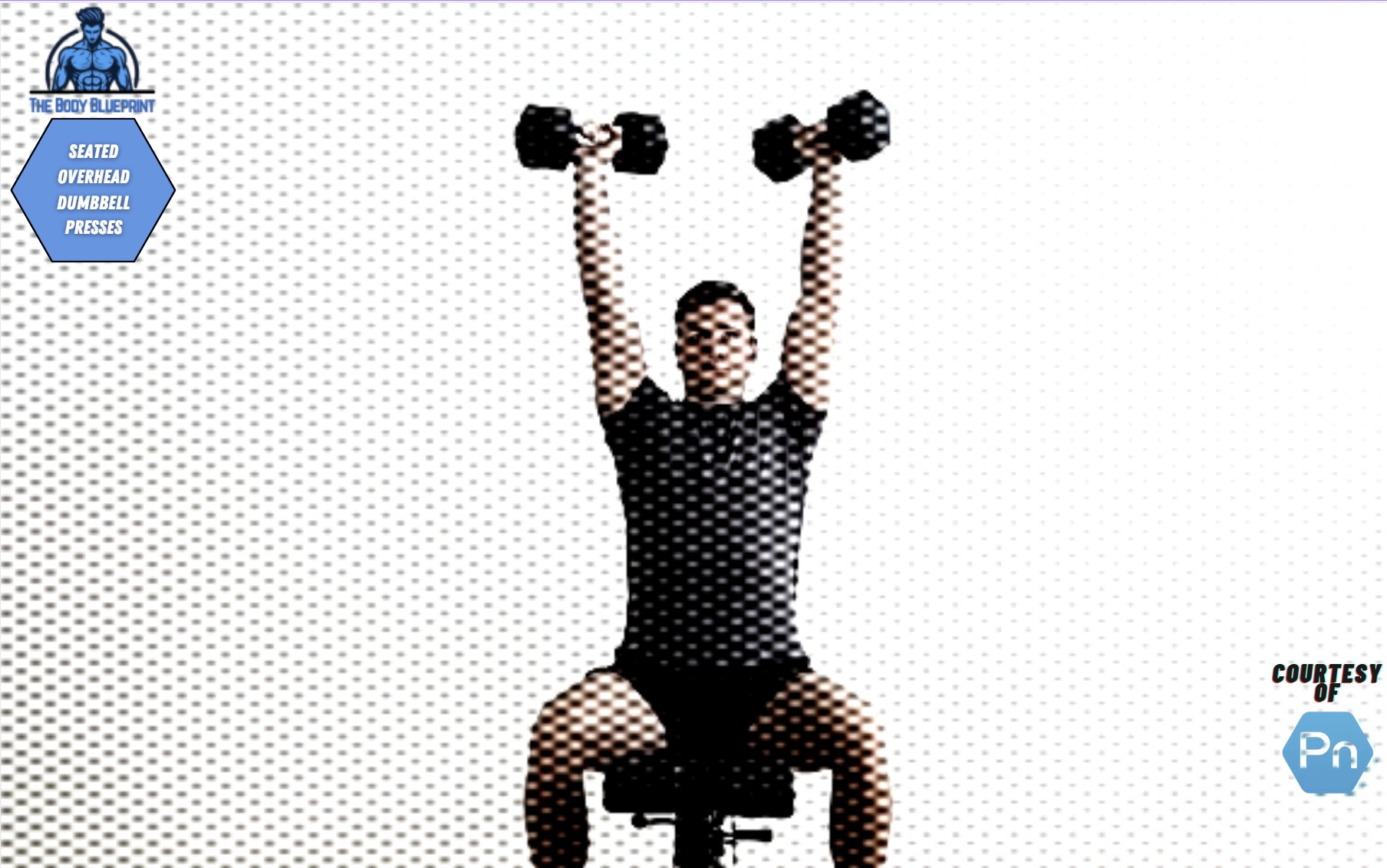
Important: Set the bench to a high incline (75 degrees), not 90 degrees. A purely vertical bench forces the shoulder into impingement. A slight lean back saves your rotator cuff.
Why You Need Seated Overhead Dumbbell Presses
Most people have weak shoulders because they rely on momentum. They “push press” everything. The Seated Press eliminates cheating. It forces the delt to move the load from a dead stop (if done correctly).
Seated vs. Standing
| Feature | Seated Press | Standing Press |
|---|---|---|
| Isolation | High. Bench stabilizes the torso. | Low. Core and hips share the load. |
| Load Potential | Higher. You can press closer to failure safely. | Lower. Balance becomes the limiting factor. |
| Safety | Easier to bail out of a rep. | Risk of lumbar hyperextension (arching back). |
How to Perform It Like a Pro
Do not flare your elbows like a chicken. That is how you tear a labrum.
Step-by-Step Execution
- The Bench: Set to 75-80 degrees. Not straight up.
- The Setup: Kick the dumbbells up with your knees to your shoulders. Palms facing forward or neutral.
- The Scapular Plane: Tuck your elbows slightly forward (30 degrees). They should be in front of your body, not directly out to the side.
- The Drive: Press straight up. Bring the dumbbells close at the top but do not clang them together.
- The Lockout: Soft lockout. Keep tension on the delts.
- The Descent: Lower until the dumbbells touch your shoulders. Full range of motion.
“If you arch your lower back off the pad, you are turning this into an Incline Bench Press. Keep your spine glued to the bench to keep the tension on the shoulders.”
— Eugene Thong, CSCS
Common Mistakes That Kill Progress
- Half Reps: Stopping at ear level. Go all the way down. The bottom stretch is where growth happens.
- Clanging Weights: Smashing dumbbells together at the top takes tension off the muscle. Stop an inch apart.
- Ego Lifting: Using momentum to get the weight up. If you have to bounce, it’s too heavy.
Programming & Optimization
Shoulders respond well to varied rep ranges.
Sample Protocol
| Goal | Sets/Reps | Context |
|---|---|---|
| Mass | 4 x 8-12 | Heavy load. Full rest. |
| Metabolic Stress | 3 x 15-20 | Short rest (60s). Burnout. |
Performance Stack
- Pre-Workout: Shoulders require blood flow for the “pump.” Using a high-stim pre-workout like in our Redcon1 Total War review can drive intensity.
- Brain Health: Overhead pressing requires coordination. Magnesium L-Threonate aids in neuromuscular connection.
- Recovery: Shoulders are easily inflamed. Use percussive therapy (check the Hypervolt Go 2 review) to keep tissue pliable.
- Foundation: Ensure you aren’t deficient in basics. A solid multivitamin like Thorne Basic Nutrients covers the gaps.
Home Gym Tip: If you have limited dumbbells, a functional trainer can replicate this movement with cables. See our REP Arcadia review for a versatile option.
The Verdict
The Seated Overhead Dumbbell Press is the foundational movement for shoulder size. It removes the variables and leaves only the load. Sit down, brace the core, and press until you can’t.