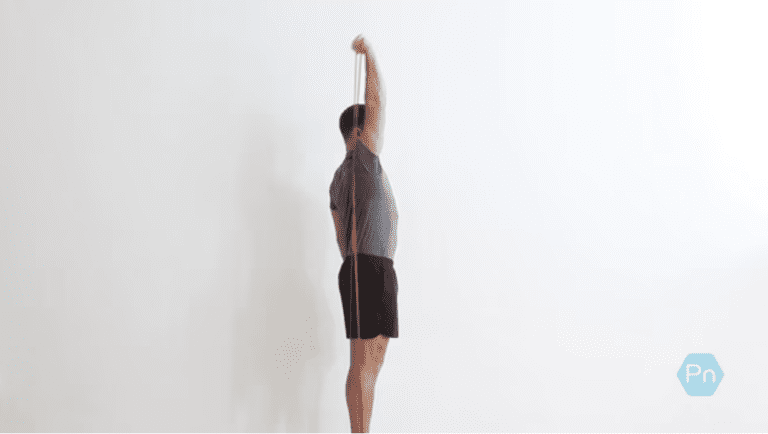
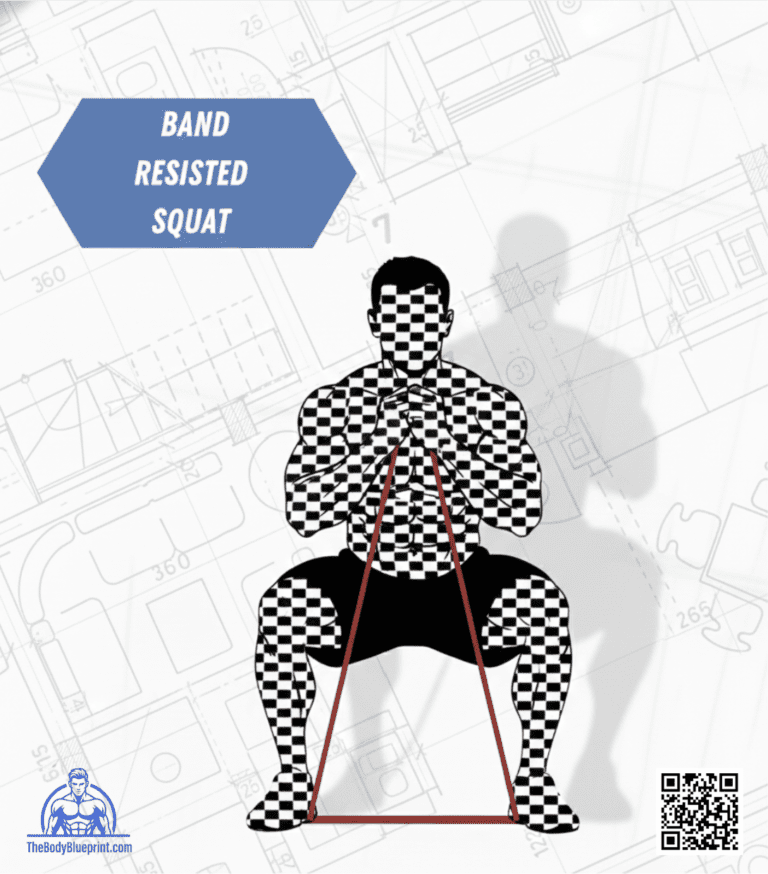
The single-arm standing split-stance band row is a unilateral horizontal pulling movement designed to isolate the latissimus dorsi while challenging core anti-rotation. Most gym-goers rely on seated machines that “leak” energy through a soft midsection. By moving to a split-stance, we perform a mechanical audit on your pelvic stability and force the obliques to lock down the ribcage, mirroring the lean strength requirements of explosive athletic performance.
Health & Safety: For educational purposes only. Not FDA evaluated. These products and exercises carry inherent risks; results are not guaranteed and vary by individual. Always consult a professional before starting any new diet, supplement, or physical regimen.
Technical Setup: Establishing the Athletic Base
Effective band rows require a staggered stance to create a stable base of support against horizontal resistance. If your stance is too narrow, the band will pull your torso into rotation, killing your lat recruitment. Ensure you are using a ribs-down exhale to engage the core before the first rep. If you find your balance wavering, revisit your hip integrity with single-leg bridges to ensure your glutes are providing the necessary “ground anchors.”
Execution Cues: Maximizing Lat Tension
Proper rowing mechanics involve initiating the movement with scapular retraction rather than elbow flexion. Many guys “arm” the weight, missing out on the back density that characterizes a Golden Era physique. To optimize the neural drive, pause for a 1-second squeeze at the hip. If your grip fails before your back does, consider using a massage roller ball on your forearms to maintain tissue quality between sessions.
| Mechanical Check | Correction Strategy |
|---|---|
| Torso Rotation | Drive through the front heel; brace the obliques. |
| Shoulder Shrugging | Depress the scapula; think “elbow to pocket.” |
| Lower Back Arch | Re-establish ribs-down positioning. |
Anti-Rotation Logic: Protecting the Chassis
Anti-rotation is the ability of the core musculature to resist external twisting forces. In the Engineering Dept, we see the split-stance band row as a direct transferable skill to agility and speed drills. If you can’t stabilize a band row, you will leak energy during a lateral cut on the field. Support this high-tension work with creatine for power output and HBCD carb timing to ensure your recovery keeps pace with your training volume.
“A strong back on a weak core is like a turbocharger on a rusted frame—you’ll eventually tear the whole thing apart. Lock the stance, row the band, and build the structural integrity first.” — Eugene Thong, CSCS
Lexicon of Mechanics: Rowing Edition
Unilateral Training: Working one side of the body at a time to eliminate “side-to-side” strength imbalances.
Anti-Rotation: A core stability category where the goal is to remain stationary against a rotating force.
Scapular Retraction: The act of pulling the shoulder blades toward the spine—essential for back health.
Metabolic Efficiency: Using supplements like NAD+ to support the mitochondrial health needed for intense isometric holds.
Engineer a Bulletproof Back.
Stop pulling with your ego. Master the split-stance row and build the stability that drives real power.