Traditional abdominal flexion exercises often fail to address the diagonal force vectors encountered in athletic performance. The Tall-Kneeling Cable Lift isolates the kinetic chain’s ability to transfer force from the hips to the upper extremities while maintaining a neutral spine, effectively training the oblique slings for anti-rotational stability.
Look, you can do crunches until your eyes bleed, but if you can’t stabilize a diagonal load, you’re just building a “show” core that collapses under pressure. The Tall-Kneeling Cable Lift is the antidote to weak, non-functional abs. By removing your legs from the equation and dragging weight from the floor to the sky, you force your midsection to become a rigid iron transfer of power. This is how you build a core that actually works.
Important: This movement places significant demand on the thoracic spine and shoulders. Ensure you have adequate mobility before loading heavy.
Why This Move Deserves a Spot in Your Routine
The “Lift” is the opposite of the “Chop.” A Chop goes high-to-low (anterior core focus). A Lift goes low-to-high (posterior chain and shoulder focus). You need both.
Most gym bros ignore the lift pattern because it’s harder. It exposes weak glutes and tight shoulders instantly.
The Benefits at a Glance
| Benefit | The Real-World Payoff |
|---|---|
| Posterior Chain Recruitment | Forces the lower back, glutes, and rear delts to fire in sync. |
| Glute Stability | If your glutes turn off, you fall over. It teaches proper hip extension mechanics. |
| Diagonal Force Production | Mimics lifting a heavy object from the floor to a shelf, or throwing an uppercut. |
Mastering the Setup: Don’t Waste the Rep
Step-by-Step Breakdown
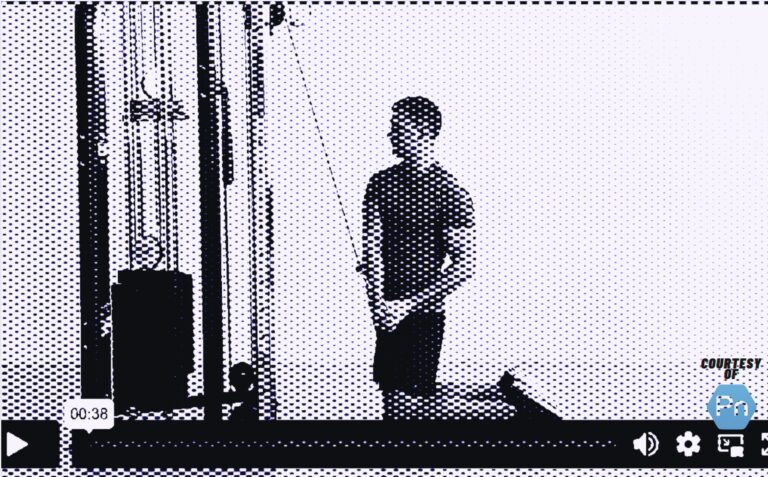
- The Anchor: Set the cable pulley to the lowest position. This is a lift, not a row.
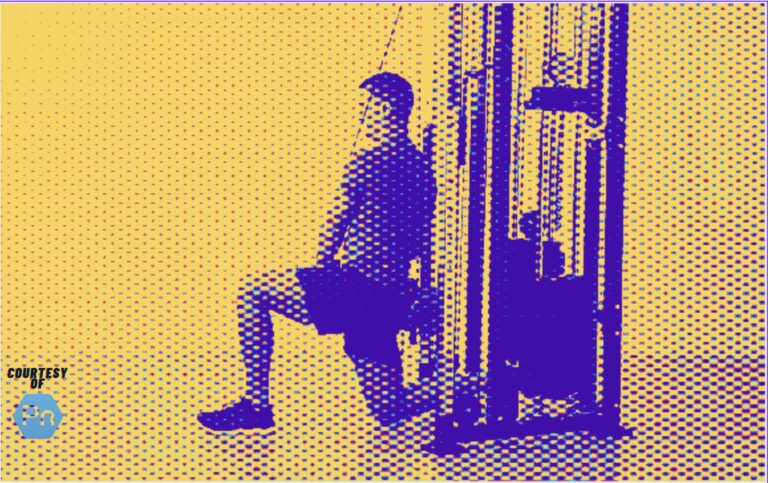
- The Stance: Tall-kneeling. Knees hip-width apart. Toes active (dug into the floor).
- The Glute Lock: Squeeze your glutes to push your hips forward. Your torso should be stacked directly over your knees.
- The Grip: Grab the rope or handle with both hands. Arms straight.
- The Lift: Pull the cable diagonally UP across your body, finishing above the opposite shoulder. Follow your hands with your eyes.
- The Eccentric: Control the weight back down to the hip. Do not let it crash.
“If you can’t get your arms overhead without arching your lower back, stop. You lack thoracic mobility. Go do some Dynamic Blackburns to free up your shoulders before attempting this.”
— Eugene Thong, CSCS
Rare Variations to Level Up
1. Half-Kneeling Lift
One knee down (the one closest to the cable stack). This narrows your base and creates a massive stability challenge for the adductors and glutes.
2. Standing Split-Stance Lift
Stand up and split your feet. This integrates the legs and mimics the mechanics of the standing single-arm cable row, but with a diagonal vector.
3. The “Press-Out” Lift
Pull the weight to your chest, pause, press it out, then lift overhead. This increases time under tension and forces isometric stabilization.
Common Mistakes to Watch Out For
- The “T-Rex” Arm: Keep your arms straight. If you bend your elbows, you turn this into a bicep curl. The core must drive the movement.
- Hip Rotation: Your hips should be cast in stone. Only the ribcage rotates.
- leaning Back: Do not hyperextend the spine to get the weight up. If you have to lean back, the weight is too heavy.
Progression Plan for All Fitness Levels
Integrate this into your routine after your heavy compound lifts, or pair it with cardio work like the Concept2 Rower for a metabolic conditioning circuit.
Beginner Plan
| Week | Variation | Focus |
|---|---|---|
| 1-2 | Isometric Hold (Top Position) | 3 x 15s Hold (Build stiffness) |
| 3-4 | Full Lift | 3 x 10/side (Control tempo) |
Advanced Challenge
| Variation | Volume | Note |
|---|---|---|
| Half-Kneeling Lift | 4 x 8/side | Heavy load. |
| Cable Lift + Press Out | 3 x 6/side | 2s pause at extension. |
Fuel Your Recovery
Core stability work is deceptively taxing on the CNS. If you are combining this with cardio or heavy lifting, prioritize post-workout nutrition. A rapid-digesting protein like hydrolyzed whey is ideal for kickstarting repair immediately after training.
FAQs
Q: Is this better than woodchops?
It’s different. Woodchops (high-to-low) are anterior-dominant. Lifts (low-to-high) are posterior-dominant. Do both for a balanced core.
Q: Can I do this with bands?
Yes, but cables are better. Bands lose tension at the bottom (the start of the lift), which is exactly where you need the most glute activation to start the movement.
The Verdict
The Tall-Kneeling Cable Lift is the ultimate test of your posterior oblique sling. If you can master this, you unlock a level of rotational power that makes you dangerous on the field and bulletproof in the gym. Grab the handle and get lifting.