Strength and mass are not accidents. They are engineered outcomes. This guide lays out the proven strategies that actually work. Mechanical tension. Progressive overload. Nutrition timing. Recovery protocols. No fluff. No bro science. Just the data and the systems. Whether you are stuck on a plateau or starting from scratch, these are the levers that deliver results.
Medical Disclaimer: This guide is for educational purposes. The statements regarding any supplements have not been evaluated by the Food and Drug Administration. These products are not intended to diagnose, treat, cure, or prevent any disease. Always consult a qualified professional before starting a new regimen.
Programming: The Foundation of Strength and Mass
Strength and mass require structured training. Random workouts produce random results. A well‑designed program provides the framework for consistent progress.
The core principles:
- Frequency: Train each muscle group 2‑3 times per week. This balances stimulus and recovery.
- Volume: 10‑20 working sets per muscle group per week is the evidence‑based sweet spot for hypertrophy.
- Intensity: Train within 1‑3 reps of failure on working sets. This is where mechanical tension peaks.
- Exercise selection: Prioritize compound movements. They recruit the most muscle fibers and drive systemic overload.
For programming options, see our best workout routines for men, full‑body vs. split routines, and periodization training guide. For specific strength benchmarks, check timeless strength benchmarks.
Progressive Overload: The Engine of Growth
Progressive overload is the non‑negotiable driver of adaptation. Without it, the body has no reason to build more muscle or strength. The principle is simple: gradually increase the demands placed on the body over time.
Methods of overload:
- Add weight to the bar (the most straightforward method).
- Add reps with the same weight (builds muscular endurance and volume).
- Add sets to increase total volume (useful for hypertrophy phases).
- Reduce rest periods to increase density (advanced technique).
- Improve technique to increase effective tension (often overlooked).
For detailed overload strategies, see our progressive overload guide, progressive overload for muscle growth, and volume vs. intensity for hypertrophy.
“If you are not adding weight or reps over time, you are not growing. You are just exercising. There is a difference between training and working out. Training has a goal. Working out is just movement.”
Eugene Thong, CSCS
Nutrition: Fueling the Machine
You cannot out‑train a poor diet. Nutrition provides the raw materials for repair and growth. The right strategy makes the difference between progress and plateau.
Key nutritional levers:
- Protein: 1.6‑2.2g per kg of body weight daily. Spread across 3‑5 meals. Whey protein post‑workout is a fast, effective option.
- Caloric surplus: For mass gain, a moderate surplus of 300‑500 calories above maintenance supports growth without excessive fat gain.
- Carbohydrates: Fuel training and recovery. Time them around workouts for optimal performance.
- Hydration: Even 2% dehydration reduces strength output. Water is a performance variable.
For nutrition deep dives, see our best protein powder guide, whey protein types explained, hardgainer diet guide, and calorie guide for muscle building. For meal prep strategies, check college muscle meal prep and old‑school bulking diets.
Recovery: Where Adaptation Occurs
Training breaks muscle down. Recovery builds it back stronger. Neglecting recovery sabotages progress and increases injury risk.
Recovery pillars:
- Sleep: 7‑9 hours per night. Deep sleep is when growth hormone peaks and repair occurs.
- Rest days: At least 48 hours between training the same muscle group. Active recovery (walking, mobility) can aid blood flow without adding fatigue.
- Stress management: Chronic stress elevates cortisol, which is catabolic. Manage it through breathwork, mindfulness, or simply scheduling recovery.
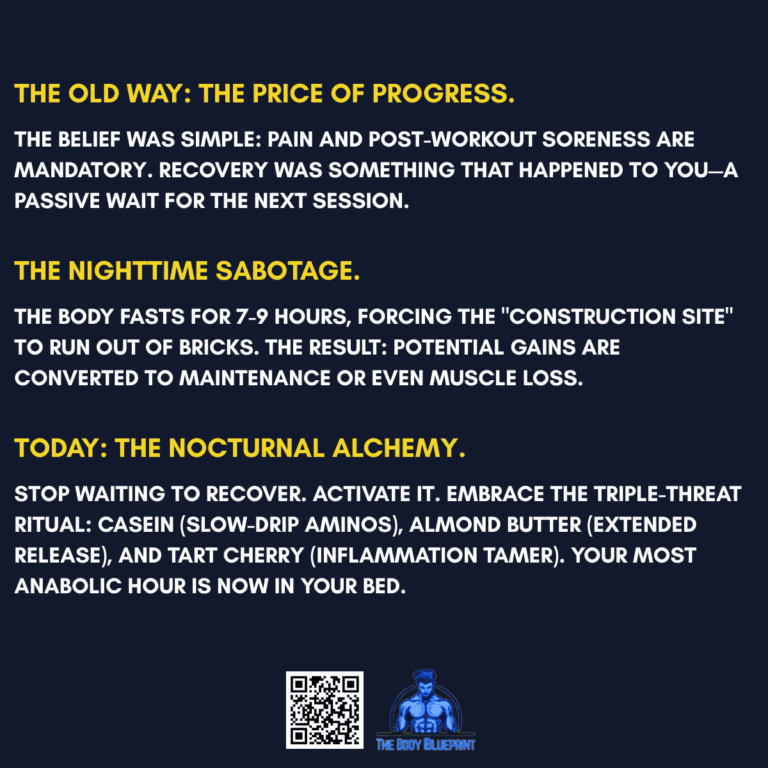
- Nutrition timing: Post‑workout protein and carbs kickstart repair. A bedtime protein source can support overnight recovery.
For recovery protocols, see our sleep optimization guide, rest day science, active recovery exercises, and rest strategies for growth. For recovery tools, see massage gun comparison and foam roller guide.
“Sleep is the most underrated anabolic agent. You can inject all the hormones you want, but if you are sleeping five hours a night, you are fighting a losing battle. Recovery is where the growth happens.”
Charles Damiano, B.S. Clinical Nutrition
Common Mistakes That Kill Progress
Even with the right strategies, certain habits can undermine results. Avoid these traps.
| Mistake | Why It Hurts | Fix |
|---|---|---|
| Too much volume | Excessive sets exceed recovery capacity, leading to stagnation or regression. | Stick to 10‑20 working sets per muscle group per week. Focus on quality over quantity. |
| Insufficient intensity | Stopping far from failure does not provide enough mechanical tension. | Train within 1‑3 reps of failure on your working sets. |
| Inconsistent nutrition | Sporadic protein intake and calorie deficits prevent growth. | Hit daily protein targets and maintain a consistent surplus if mass is the goal. |
| Neglecting sleep | Low sleep reduces testosterone, increases cortisol, and impairs recovery. | Prioritize 7‑9 hours. Treat sleep like a workout. |
| Lack of progressive overload | Doing the same weights and reps week after week produces no adaptation. | Log your lifts and aim to add weight or reps each session. |
For deeper troubleshooting, see our why most men’s workouts fail, sledgehammer vs. scalpel approach, and clean eating sabotaging gains.
Final Verdict: Stack the Levers
Strength and mass are built through a combination of proven strategies, not a single magic bullet. The formula is consistent across decades of research and real‑world application.
The blueprint:
- Follow a structured program with compound movements.
- Apply progressive overload every session.
- Eat enough protein and calories to support growth.
- Prioritize sleep and recovery.
- Avoid common mistakes that kill progress.
If you apply these strategies consistently, progress is inevitable. For full program breakdowns, see our muscle growth strength programs. For advanced techniques, check high‑intensity training guide and superset strategies.
The Bottom Line: Systems Over Secrets.
There is no secret to building strength and mass. There are only proven systems applied consistently. Choose the right program. Progress intelligently. Fuel the machine. Recover hard. Do that for months, not weeks, and you will outgrow anyone chasing shortcuts.
*Verified 2026 strength protocols.
The Supplement Lexicon: Strength & Mass Edition
- Mechanical Tension
- The primary driver of hypertrophy. Created by lifting heavy weights with controlled form. The foundation of strength training.
- Metabolic Stress
- The “pump” and burn associated with higher reps. Contributes to hypertrophy but is secondary to mechanical tension.
- Muscle Damage
- Micro‑tears from training that signal repair and growth. Requires adequate recovery to translate into adaptation.
- Volume Load
- Total work performed (sets × reps × weight). A key variable for hypertrophy programming.
- Rate of Perceived Exertion (RPE)
- A scale from 1‑10 measuring how hard a set feels. RPE 8‑9 is the sweet spot for strength training intensity.
- Anabolic Window
- The post‑workout period where nutrient uptake is prioritized. Modern research shows it is wider than once thought, but post‑workout protein still matters.
- Systemic Fatigue
- Total accumulated stress on the nervous system from training. Managing it through deloads and periodization is essential for long‑term progress.