This isn’t a gym machine. This is a structural stress test.
Most hamstrings function like cheap rubber bands—they snap under tension. The Single-Leg Slide Curl forces your hamstring to act as a brake against gravity. If you want to stop tearing ACLs and start sprinting without fear, you need to master the eccentric load.
What it is: A bodyweight hamstring curl using a slideboard or slider. One leg at a time.
Who it’s for: Athletes, lifters with weak hamstrings, anyone preventing knee pain.
When to do it: Leg day finisher, warm-up, dedicated posterior chain work.
Where it helps: Hamstring strength, knee stability, glute tie-in, crazy core engagement.
Why it works: Forces your hamstrings to control your bodyweight eccentrically. The primary insurance policy against ACL tears.
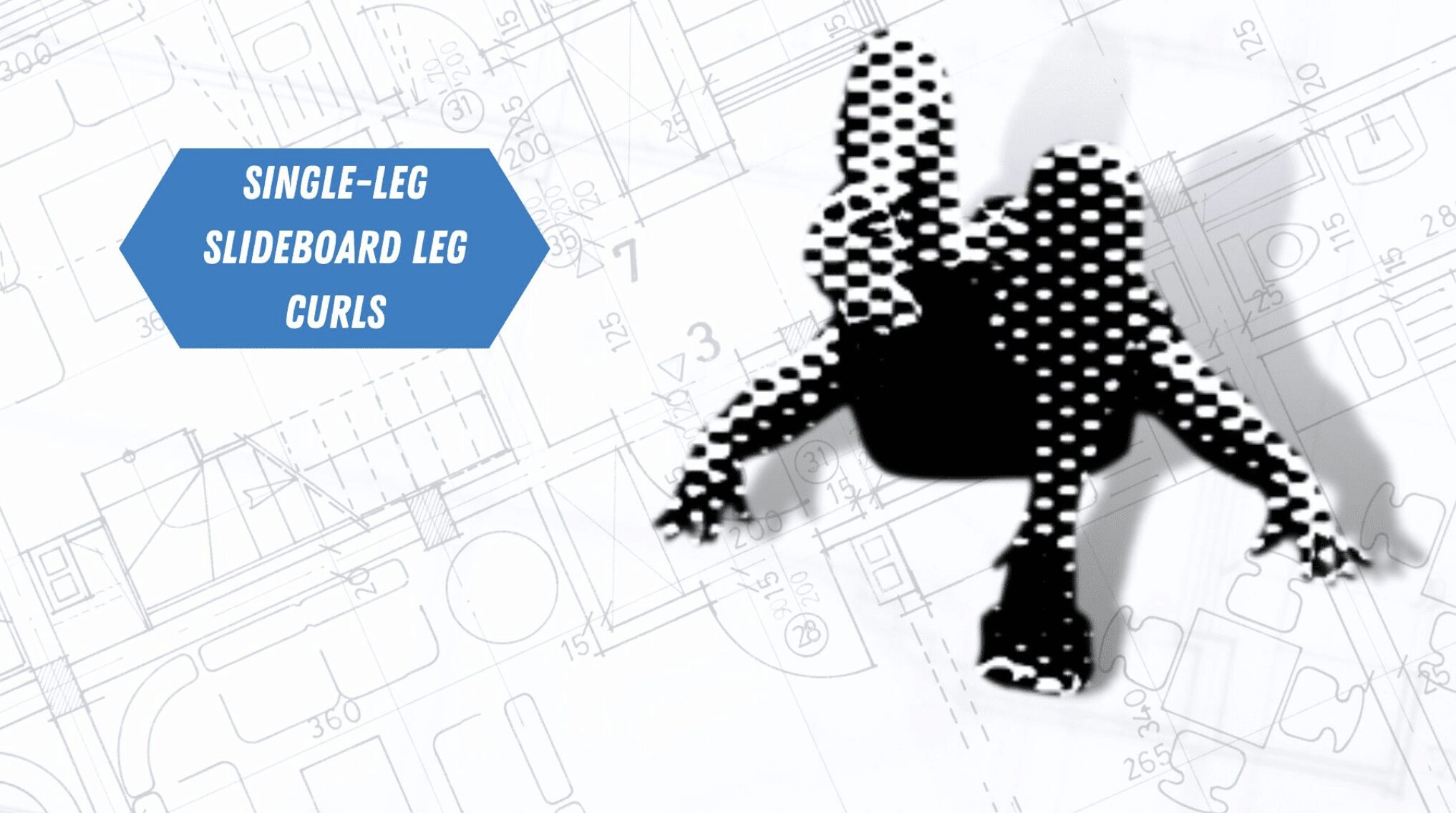
Single-Leg Slideboard Curl: Control the Slide
“The slideboard leg curl is a diagnostic tool for hamstring integrity. If you can’t control the eccentric on one leg, your knees are living on borrowed time. This exercise pays that debt in full.” — Eugene Thong, CSCS
- Set Up: Kneel on a padded surface. Place a slideboard (or furniture slider) under one foot. Your other foot can be raised or resting. Hands on the floor in front of you.
- Brace Hard: Squeeze your glutes and brace your core. Your body should form a straight line from knees to head. This is your start position.
- The Controlled Lowering: Slowly let your sliding foot slide forward. Keep your hips high and core tight. Fight the movement with your hamstring every inch.
- Find Your Depth: Lower until you feel a deep stretch in your hamstring, or just before your form breaks. Do not collapse to the floor.
- The Pull Back: Dig your toes down into the slider. Use your hamstring and glute to powerfully drag your heel back to the start. Squeeze hard at the top.
- Reset: Regain full tension before the next rep. No bouncing. Complete all reps on one leg before switching.
Muscles Worked: Hamstring Focus
| Phase | Primary Job | Muscles on Fire |
|---|---|---|
| Eccentric (Sliding Out) | Control the descent, resist collapse | Hamstrings (lengthening under tension), Glutes, Core (anti-extension) |
| Concentric (Pulling Back) | Powerfully return to start | Hamstrings (shortening), Glutes, Calves (toe-point tension) |
| The Single-Leg Difference | Exposes imbalances instantly. Your weak side has nowhere to hide. Also fires the hip stabilizers of the grounded leg like crazy. | |
Who Is This For? (And Who Should Wait)
Do It If:
✔ You run, jump, or sprint. This is non-negotiable for athletes.
✔ Your hamstrings are a weak link in your deadlift or squat.
✔ You’ve had or fear knee issues (ACL, general pain). This is prehab.
✔ You want hamstrings that look like separated cables.
Skip It If:
✖ You have active hamstring or groin tendon pain.
✖ You can’t do a basic glute bridge. Build foundational strength first.
✖ You don’t have a slider or smooth surface. (But towels on hardwood work!).
Progressions & Modifications
| Variation | How To | Why It’s Killer |
|---|---|---|
| Two-Legged Slide Curl | Start with both feet on the slider. Kneel and perform the curl. | The essential beginner step. Learn the hinge pattern before going solo. |
| Band-Resisted Slide Curl | Attach a band to a low anchor, loop it around your hips pulling forward. | Adds resistance at the top where you’re strongest. Makes the pull-back brutal. |
| Weighted Vest Curl | Wear a weight vest for added load. | The ultimate progression. Simple, brutal overload. |
| Elevated Hands | Place your hands on a bench or box in front of you. | Makes the movement easier by reducing the lever arm. Good for beginners. |
Form Checks: Don’t Cheat the Slide
❌ Letting your hips pike (butt up in the air). Maintain a straight body line. Hips stay high.
❌ Collapsing to the floor at the bottom. Control the descent. Touch gently, don’t crash land.
❌ Using momentum to pull back. No jerking. It’s a deliberate drag with your hamstring.
❌ Letting your lower back sag. Core stays braced the entire time. Protect your spine.
“This exercise isn’t about how far you slide. It’s about how much tension you maintain. A short, controlled range of motion with a furious hamstring contraction is worth ten sloppy full-range reps.” — Charles Damiano, B.S. Clinical Nutrition
Programming for Resilient Hams
For Strength & Injury Proofing:
3 sets of 5-8 tough reps per leg. Focus on a 3-second lowering. Rest 90 seconds.
For Muscle Growth (Hypertrophy):
2-3 sets of 10-15 reps per leg. Use a slightly faster tempo but maintain control. Rest 60s.
As a Warm-up or Finisher:
1-2 sets of 8-10 controlled reps per leg before deadlifts or after leg day. Grease the groove for your hams.
The Bottom Line: Why Slide?
✅ Builds eccentric hamstring strength—the #1 factor in preventing pulls and tears.
✅ Directly strengthens knees by supporting the joint from behind.
✅ Corrects muscle imbalances better than any machine curl.
✅ Requires minimal equipment. A slider or towel unlocks elite-level hamstring training.
Your hamstrings are brakes and springs. Train them to control force. This exercise is your mechanic.