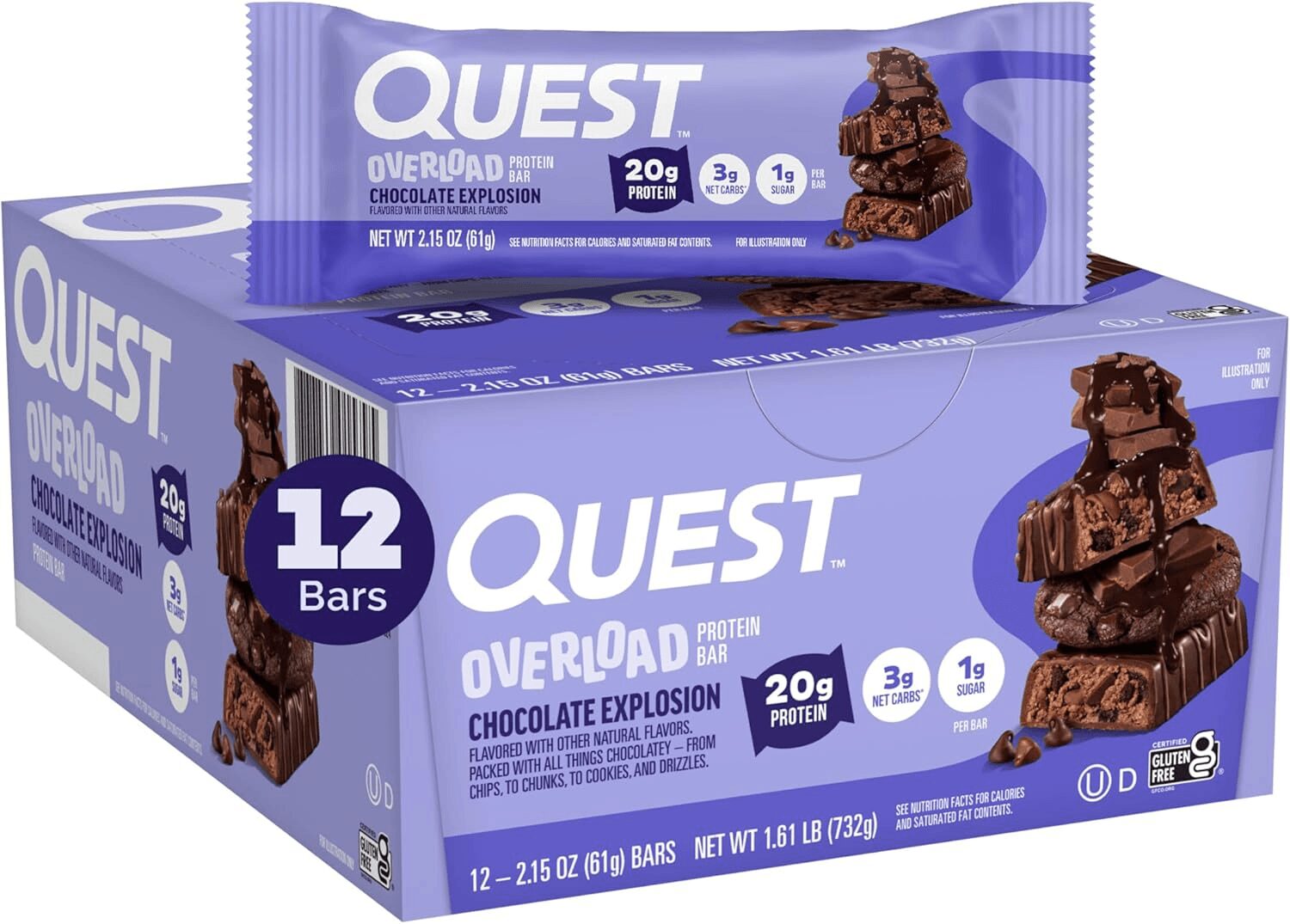
If you are looking for a definitive Quest Overload Protein Bar review, you need to understand that this is an engineered satiety tool, not a rapid-absorbing post-workout supplement. While the fitness industry praises its 20g protein and 3g net carb payload, we have to look past the macro math and examine the digestive reality of its thick fiber matrix. We analyzed the whey isolate quality, the sugar alcohol response, and the actual biological impact of this high-density bar to determine if it belongs in your nutritional arsenal.
The Fine Print (Affiliate & Medical): As an Amazon Associate, I earn from qualifying purchases at no extra cost to you.
Medical Disclaimer: This guide is strictly for educational purposes, based on a technical analysis of macronutrient engineering. Always consult a qualified professional before significantly altering your dietary intake, especially if you have sensitivities to concentrated fiber or sugar alcohols.
Diet-Friendly Protein vs. Digestive Friction: The Macro Reality
The “Overload” moniker implies a heavy hit of decadence, but the biological math remains strictly controlled. Yielding 20g of protein, 1g of sugar, and just 3g of net carbs, this bar is formulated to be a highly effective diet-friendly protein bridge. It relies on a premium blend of Milk Protein Isolate and Whey Protein Isolate to deliver complete amino acids without cheap soy fillers.
However, that macro-efficiency comes with physiological friction. To keep the net carbs at 3g while simulating a candy bar, Quest utilizes a massive dose of soluble corn fiber and erythritol. This creates a slow-digesting matrix that makes you feel aggressively full, but it also means this bar has a very slow gastric clearance rate.
“The Quest Overload Bar is a masterclass in craving management. It provides 20g of high-grade dairy isolate to protect lean mass, but the heavy fiber load means you should never use this immediately post-training. Use it to survive a caloric deficit, not to spike protein synthesis.”
— Charles Damiano, B.S. Clinical Nutrition
Ingredient Breakdown: The Brutal Biological Truth
Functional foods always demand biological trade-offs. Here is what happens when you prioritize 3g of net carbs over whole foods.
The Pros: Premium Macros and Satiety
- Top-Tier Protein: Utilizes highly bioavailable whey and milk isolates, ensuring you get the leucine necessary to prevent muscle catabolism during a cut.
- Massive Satiety: The heavy soluble corn fiber content physically expands in the gut, blunting hunger signaling for hours.
- Zero Glycemic Spike: With only 1g of actual sugar and 3g of net carbs, this will not trigger an insulin crash, making it ideal for the low-carb or keto lifter.
The Cons: Digestive Load and Processing
- Sugar Alcohol Distress: Erythritol is safe, but consuming multiple bars a day can easily trigger bloating, gas, and osmotic diarrhea in sensitive individuals.
- Slow Absorption: The fat and fiber trap the protein, rendering it useless for immediate post-workout muscle protein synthesis.
Macronutrient Comparison: Overload vs. Standard Quest Bars
How does this specific “Overload” formulation stack up against the original? If you want to see the performance metrics of the standard line, refer to our definitive Quest Protein Bar Buyer’s Guide.
| Metric | Quest Overload Bar | Standard Quest Bar | Standard Candy Bar |
|---|---|---|---|
| Protein Matrix | 20g (Milk/Whey Isolate) | 21g (Milk/Whey Isolate) | 2g (Peanuts/Milk) |
| Net Carbs | 3g | 4g | 30g+ |
| Total Sugar | 1g | 1g | 28g |
| Primary Target | Decadent Craving Control | Daily Macro Management | Rapid Sugar Spike |
Quest Overload FAQ: Timing, Ketosis, and Digestion
- Is the Quest Overload Bar optimal for post-workout recovery?
- No. As detailed in our post-workout nutrition guide, your body requires rapid amino acid delivery immediately following resistance training. The high fiber content of this bar severely slows down digestion. It is a mid-day snack, not a post-workout recovery tool.
- Will this kick me out of ketosis?
- It is highly unlikely. Because the total glycemic impact is reduced to just 3g of net carbs through the use of dietary fiber and erythritol, it will not cause the insulin spike necessary to disrupt a ketogenic state.
- Why does eating these cause bloating?
- The combination of soluble corn fiber and sugar alcohols (Erythritol) is notoriously difficult for some gut microbiomes to break down. If you eat more than one per day, the unabsorbed carbohydrates ferment in your large intestine, causing gas and bloating.
Final Verdict: Should You Buy Quest Overload Protein Bars?
Your decision comes down to your cutting strategy. If you are struggling with a severe caloric deficit and need a high-protein, low-sugar tool that mimics a decadent candy bar to keep you sane, this is a phenomenal asset. The whey isolate protects your muscle, and the fiber kills your hunger. If you just need clean, fast-digesting protein, stick to a liquid powder.
Verdict: The Deficit Sanity Saver
You have the biological facts. If you need craving control without sacrificing your macros, this is your weapon.
The Functional Food Lexicon: Macros & Fibers
- Net Carbohydrates
- The total amount of fully digestible carbohydrates. It is calculated by taking the total carbohydrates and subtracting the dietary fiber and sugar alcohols (which do not significantly impact blood sugar).
- Soluble Corn Fiber
- A non-digestible carbohydrate used to provide bulk and sweetness. It slows gastric emptying, heavily contributing to the bar’s ability to keep you full for hours.
- Erythritol
- A naturally occurring sugar alcohol used as a zero-calorie sweetener. It provides sweetness without spiking insulin, but can cause gastrointestinal distress in high doses.