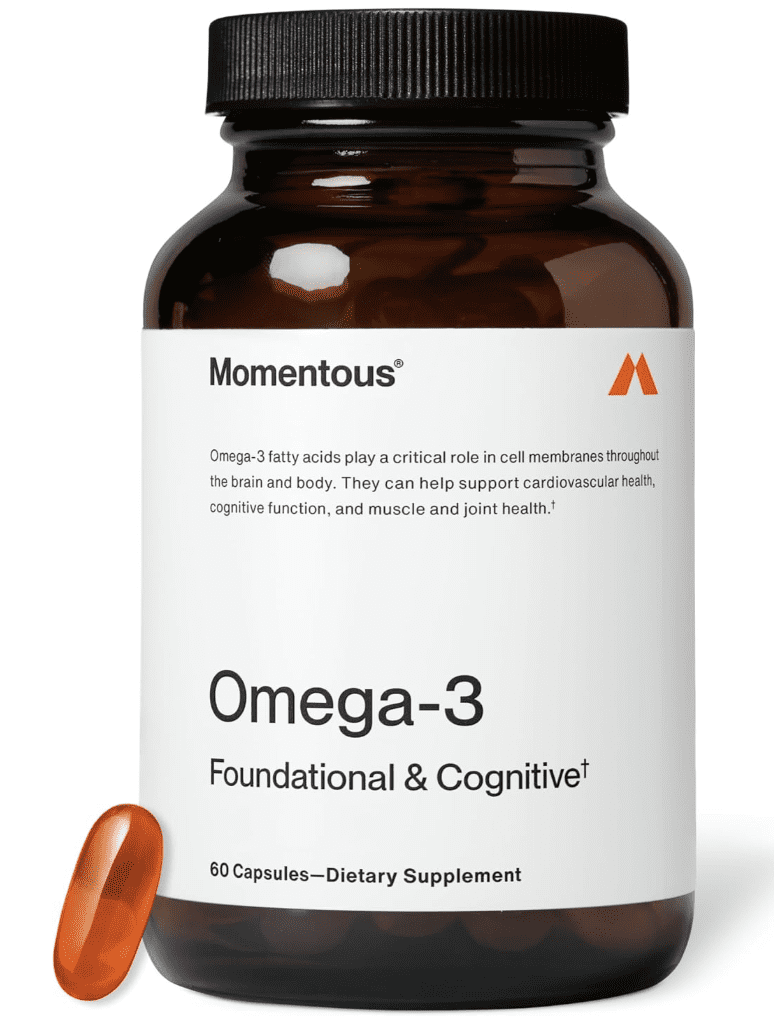
Momentous Omega-3 delivers 1,600mg of triglyceride-form fish oil with a clinical 860mg EPA and 580mg DHA split, backed by NSF Certified for Sport purity standards. Most fish oils are underdosed fillers. This one targets the therapeutic range for athletes who train hard. We broke down the absorption technology, the EPA/DHA ratio, and the certification metrics to see if this premium oil earns a spot in your recovery stack.
The Specs and Payload: What You Actually Get
Momentous Omega-3 ignores the bargain-bin strategy. It focuses on clinical-level potency and third-party purity certification. The delivery form is triglyceride, not cheap ethyl esters. Triglyceride form means superior systemic absorption. Your body keeps more of what you pay for.
- Total Omega-3: 1,600mg per serving (2 softgels)
- EPA Payload: 860mg. The anti-inflammatory workhorse.
- DHA Payload: 580mg. Supports brain cell integrity and cognitive focus.
- Form: Triglyceride (re-esterified). Higher bioavailability than ethyl ester.
- Purity: NSF Certified for Sport. Banned substance tested. Zero contaminants.
The 860mg EPA dose is the headline. Most fish oils sit at 300 to 500mg EPA per serving. Momentous hits the therapeutic range where systemic inflammation modulation becomes measurable. Anything under 1,000mg combined EPA plus DHA is background noise for a serious lifter. This clears that threshold by a wide margin.
“Omega-3s are not a nice-to-have. They are the foundational tool that modulates the fire you start in the gym. Anything under 1,000mg of EPA plus DHA is just background noise for a serious lifter. Momentous gets your system into the therapeutic range.”
— Eugene Thong, CSCS
Selection Matrix: Who Actually Needs This Dose?
This is a high-threshold recovery tool. Match it to your training intensity, not your supplement shelf ego.
- The Heavy Lifter (Squat, Deadlift, Press Focus): Your joints take constant mechanical stress. The 860mg EPA dose modulates the inflammatory load from heavy compound movements. Stack with collagen for comprehensive joint support.
- The High-Volume Athlete (CrossFit, Strongman, Rugby): Systemic inflammation accumulates across multiple sessions per day. This dose brings it down. NSF certification matters for tested athletes.
- The Aging Athlete (40+): Joint integrity and cognitive function both benefit from this EPA/DHA split. DHA supports brain cell membrane integrity. EPA supports joint mobility.
- The Biohacker / Stack Enthusiast: You already run creatine, magnesium, and vitamin D. This plugs the omega-3 gap with a certified clean source. See our omega-3 hub for stacking strategies.
- Skip This If: You train casually three days per week. A lower-dose, cheaper brand like Sports Research covers your needs. You are vegan. This is fish based. See our algae omega-3 review instead.
Momentous Omega-3 Pros and Cons: Potency vs. Price
The Advantage (Pros)
- Clinical EPA Dose: 860mg per serving. Hits the therapeutic threshold for inflammation modulation. Most competitors sit at 300 to 500mg.
- Triglyceride Form: Re-esterified triglyceride absorption. Superior bioavailability versus ethyl ester. Your body retains more omega-3 per capsule.
- NSF Certified for Sport: Third-party tested for banned substances, heavy metals, and oxidation. Gold standard for purity.
- Clean Taste: No fish burps. The triglyceride form and lemon flavoring eliminate the main compliance killer.
- High EPA-to-DHA Ratio: 860mg EPA to 580mg DHA. Favors inflammation control while maintaining cognitive support.
The Trade-off (Cons)
- Premium Price: At roughly $0.80 to $1.00 per serving, it costs more than double standard fish oils. You pay for the certification and concentration.
- Two Softgel Serving: Two capsules per day, not one. Some competitors offer 1,000mg in a single softgel.
- Not for Vegans: Fish-derived. No algal version available. Plant-based athletes need to look elsewhere.
- Overkill for Low-Volume Training: If you train three days per week with moderate intensity, this dose exceeds your needs. A standard 500mg EPA brand is sufficient.
- Large Softgels: The capsules are above average size. Users with pill aversion may struggle.
Market Contrast: Momentous vs. The High-Potency Field
Momentous wins on certification and EPA density. It loses on cost per milligram versus bulk alternatives.
| Supplement | Total EPA + DHA | Form | Certification |
|---|---|---|---|
| Momentous Omega-3 | 1,440mg | Triglyceride | NSF Certified for Sport |
| Nordic Naturals Ultimate Omega | 1,280mg | Triglyceride | Proprietary |
| Sports Research Omega-3 | 1,000mg | Triglyceride | Third Party Tested |
| Viva Naturals Omega-3 | 1,400mg | Ethyl Ester | Third Party Tested |
| Drugstore Brand (Kirkland, Nature Made) | 500 to 700mg | Ethyl Ester | USP (some) |
FAQ: Dosing, Absorption, and Omega-3 Basics
- Why does triglyceride form matter more than total mg?
- Triglyceride form is absorbed 50 to 70% better than ethyl ester. A 1,000mg triglyceride oil delivers more usable EPA and DHA than 1,500mg ethyl ester oil. Form matters more than the number on the bottle.
- Is 860mg EPA enough to reduce joint stiffness?
- For most athletes, yes. Studies show 800 to 1,000mg EPA is the threshold for measurable inflammation modulation. Below that, effects are inconsistent.
- Can I take this on an empty stomach?
- Yes. The triglyceride form absorbs well without food. Taking it with a meal containing fat may boost absorption further.
- Does NSF certification actually matter?
- If you are a tested athlete, yes. NSF Certified for Sport guarantees no banned substances and verified label claims. For casual users, third-party testing is sufficient.
- How does this compare to eating fatty fish?
- One serving of Momentous equals roughly 6 to 8 ounces of salmon in EPA plus DHA content. The softgel form removes mercury risk and variability in fish quality.
- Can I stack this with other supplements?
- Yes. Omega-3 pairs well with creatine, collagen, and magnesium L-threonate. See our omega-3 hub for stacking protocols.
Momentous Omega-3 Verdict: The Certified Heavy Lifter
Momentous Omega-3 delivers on its core promise: clinical EPA dose, triglyceride absorption, and NSF-certified purity in a single serving. The 860mg EPA is legit. The triglyceride form ensures you absorb it. The NSF seal removes doubt about contaminants. The premium price is the trade-off. For the athlete who trains hard, values certification, and wants therapeutic-range dosing, Momentous is a top-tier choice. Confident recommendation.
Verdict: Clinical Recovery. No Compromise.
You have the facts. 1,600mg total. 860mg EPA. NSF certified. Triglyceride form. If you want a clean, high-potency omega-3 that actually delivers, this is it.
The Supplement Lexicon: Omega-3 Edition
- EPA (Eicosapentaenoic Acid)
- The primary anti-inflammatory omega-3 fatty acid. Supports joint mobility and recovery by modulating inflammatory signaling pathways.
- DHA (Docosahexaenoic Acid)
- An omega-3 fatty acid critical for brain cell membrane integrity, cognitive function, and retinal health.
- Triglyceride Form
- The natural molecular structure of omega-3s found in fish. Re-esterified triglyceride form offers superior absorption compared to synthetic ethyl esters.
- Ethyl Ester
- A synthetic form of omega-3 created during processing. Cheaper to produce. Less bioavailable than triglyceride form.
- NSF Certified for Sport
- A third-party certification program that tests supplements for banned substances, heavy metals, and label accuracy. The gold standard for athlete safety.
- Systemic Inflammation
- A whole-body inflammatory state often elevated by intense training. EPA works at the cellular level to bring it down.
For more on omega-3s and recovery, check our Omega-3 Hub, Full Momentous Omega-3 Review, Sports Research Omega-3 Review, and Best Omega-3 Supplements Guide.