Immediate Answer — The Real Reason You Can’t Lose Them
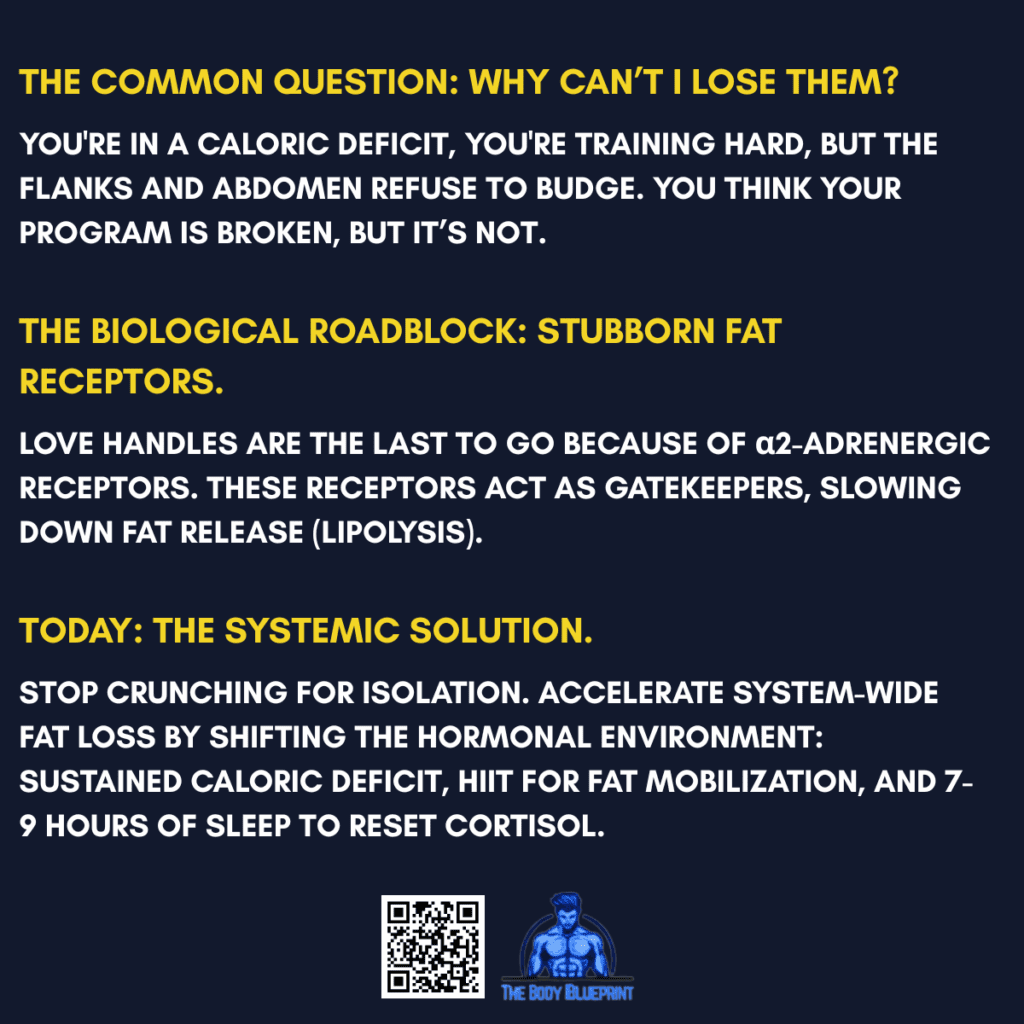
If you’re asking, “why can’t I lose love handles?”, here’s the straight answer: love handles are a product of stubborn fat storage driven by hormonal, genetic, and lifestyle factors.
Even with caloric deficits, your body prioritizes fat loss unevenly. The lower back, flanks, and abdomen are typically the last zones to give up stored fat—especially in men, due to higher α2-adrenergic receptor density (these receptors slow lipolysis).
So no—your program isn’t broken. It’s biology doing what biology does best: protecting energy reserves.
What Love Handles Actually Are
Love handles aren’t a separate muscle or special kind of fat. They’re simply subcutaneous fat deposits over the obliques and iliac crest region.
The issue isn’t their existence—it’s their resistance to change.
| Region | Common Fat Storage Pattern | Primary Hormonal Influence |
|---|---|---|
| Abdomen & Flanks | Last to lean out | High α2-adrenoceptor activity (anti-lipolytic) |
| Thighs & Hips (Men vs. Women) | Men: love handles Women: glutes/thighs | Testosterone & Estrogen balance |
| Upper Body | First to lose fat | β2-adrenoceptor activity (pro-lipolytic) |
Eugene Thong, CSCS, notes: “Localized stubborn fat loss isn’t solved by more crunches—it’s solved by changing the hormonal environment that governs where the body releases fat.”
Why Spot Reduction Doesn’t Work
It’s tempting to think that targeted exercises—side bends, oblique crunches, or endless planks—will melt fat right where you feel it.
But fat loss doesn’t work locally. You can train a muscle, but you burn fat systemically.
Your body decides which fat cells to mobilize first, based on hormonal signaling and receptor density, not your workout selection.
The Three Hidden Variables That Keep Love Handles Stuck
- Insulin Resistance
Elevated insulin (from frequent snacking or high-carb diets) keeps fat locked inside adipocytes. Lowering insulin spikes through meal timing, fiber, and balanced macros can help unlock stored fat. - Cortisol & Stress Response
Chronic stress elevates cortisol, encouraging fat storage around the waistline. Poor sleep and overtraining amplify this effect. - Energy Balance & NEAT (Non-Exercise Activity Thermogenesis)
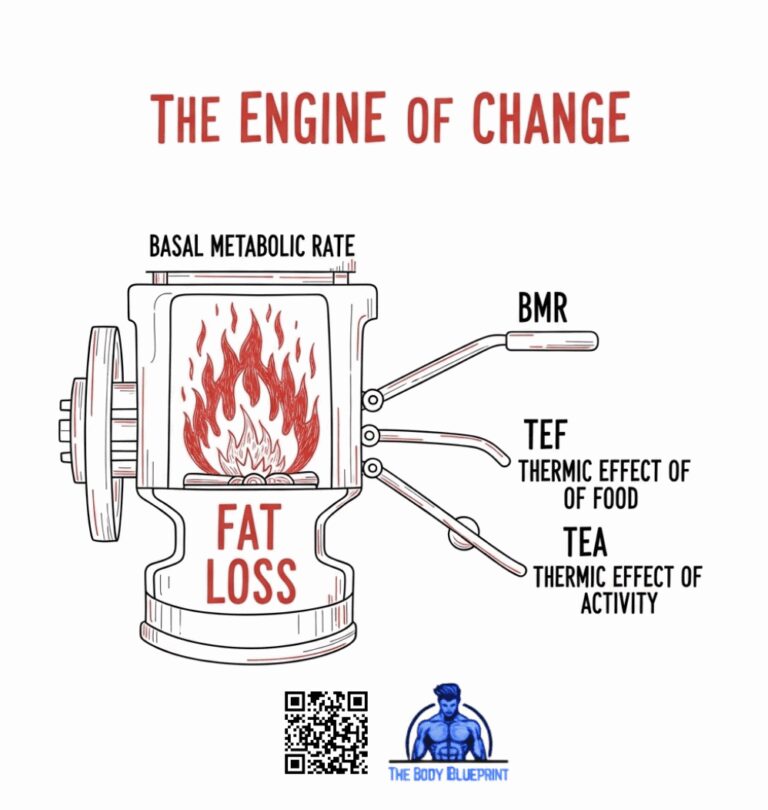
You might be training hard but moving less overall. A 300-calorie workout can be canceled out by unconscious reductions in movement later in the day. Increasing daily step count and standing time improves fat mobilization.
Training Strategy: Burn from the Inside Out
You can’t out-crunch your hormones—but you can train in ways that shift your body’s preference toward burning stored fat.
Charles Damiano, B.S. Clinical Nutrition, explains: “Fat loss accelerates when resistance training and high-intensity intervals are combined. The hormonal pulse of those sessions changes how the body partitions energy.”
Sample Weekly Structure
| Day | Training Focus | Duration | Intensity |
|---|---|---|---|
| Mon | Full-Body Strength (compound lifts) | 45 min | 70–80% 1RM |
| Tue | HIIT (sprints, rowing) | 20–25 min | 85–95% max HR |
| Wed | Active Recovery (walking, yoga) | 30–45 min | Low |
| Thu | Upper/Lower Split | 50 min | 70–85% 1RM |
| Fri | HIIT or Circuit | 20–30 min | High |
| Sat | Core Stability & Cardio | 40 min | Moderate |
| Sun | Rest | — | — |
Nutrition: Precision, Not Perfection
Losing love handles requires sustained caloric deficit, but equally, macronutrient balance.
Here’s a general formula:
- Protein: 1.6–2.2 g/kg bodyweight
- Fat: 20–30% of total calories
- Carbs: Fill the remainder, timed around training
Hydration and electrolyte balance also influence water retention around the midsection—sometimes what looks like fat is subcutaneous fluid retention.
Recovery and Hormonal Reset
Sleep is the secret weapon most lifters ignore.
Less than 6 hours per night correlates with higher ghrelin, lower leptin, and elevated cortisol—all of which keep the waistline soft.
Aim for 7–9 hours nightly and limit late caffeine.
The Real Fix: Patience and Persistence
It takes roughly 4–6 weeks for visible waist changes to occur, and 12–16 weeks for a complete recomposition—depending on baseline body fat and adherence.
Progress feels slow because fat distribution changes last, not first.
But once it shifts, it stays—if you maintain lean mass and metabolic activity.
Key Takeaways
- Love handles are hormonal, not mystical.
- Spot reduction doesn’t exist.
- Sustained calorie control, smart training, and better recovery change the hormonal landscape that controls fat loss.
- Consistency outperforms intensity every time.
Footnotes
- Arner, P. “Differences in lipolysis between human subcutaneous and omental adipose tissues.” Annals of Medicine, 1995.
- Stallknecht, B. et al. “Fat metabolism in human adipose tissue during exercise.” Journal of Physiology, 2007.
- Kuehn, B. “Cortisol’s role in central obesity and insulin resistance.” JAMA, 2012.
- Tremblay, A. et al. “Impact of exercise intensity on body fatness and skeletal muscle metabolism.” Metabolism, 1994.