If the thought of another chalky protein shake makes your stomach turn, you’re not alone. Many lifters, athletes, and fitness enthusiasts want real food—not powdered milk and sucralose—after a hard session. The good news? You don’t need a shake to recover. What matters most is hitting your daily protein and calorie targets, not chugging a blender bottle within 30 minutes.
According to a 2013 review in the Journal of the International Society of Sports Nutrition, “the so-called anabolic window is far wider than once believed—any high-quality protein consumed within a few hours post-training supports muscle repair and adaptation.” That’s the modern, stress-free science.
Post-Workout Meal Timing: The Real Window
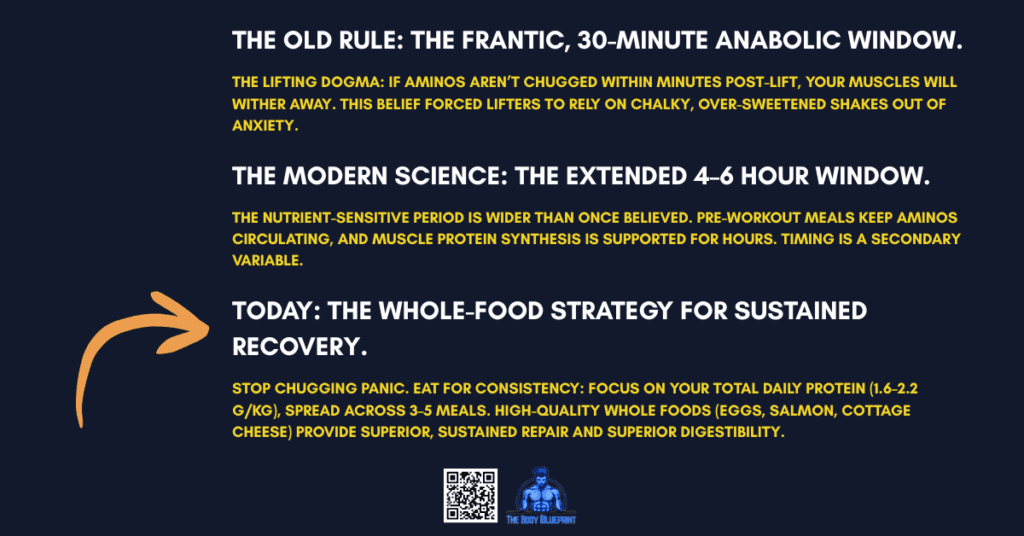
Forget the panic about eating “within 30 minutes.”
Modern research shows the nutrient-sensitive period lasts roughly 4–6 hours post-training. The old “anabolic window” myth came from fasted studies, not realistic, fed training environments.
If you’ve eaten protein earlier in the day—say, a solid lunch or pre-workout meal—your bloodstream already has amino acids circulating during recovery. That means your job after training is simply to eat a balanced meal when convenient, ideally within a few hours, not minutes.
Top Whole-Food Post-Workout Options
Here’s a table of real-food meals that match or exceed the recovery benefits of protein shakes—balanced in macronutrients, electrolytes, and digestibility.
| Meal Option | Protein (g) | Carbs (g) | Fats (g) | Highlights |
|---|---|---|---|---|
| Grilled Chicken + Sweet Potato + Spinach | ~40 | ~45 | ~5 | Lean, anti-inflammatory, rich in potassium and magnesium |
| Greek Yogurt Bowl with Oats and Berries | ~35 | ~40 | ~6 | Fast-digesting dairy protein + antioxidants |
| Egg & Avocado Toast (2 eggs) | ~20 | ~25 | ~15 | Excellent for morning or midday training sessions |
| Salmon with Rice and Broccoli | ~35 | ~45 | ~10 | Omega-3s aid muscle recovery and joint health |
| Cottage Cheese + Pineapple + Walnuts | ~30 | ~25 | ~10 | Slow-digesting casein supports overnight recovery |
Each option provides roughly 350–550 kcal depending on portion size—a sweet spot for muscle recovery without overloading your system post-lift.
Hydration and Electrolytes
Post-workout nutrition isn’t only about protein and carbs. During intense training, you can lose 1–2 liters of fluid per hour and significant sodium, potassium, and magnesium.
A simple mix of water + pinch of salt + fruit (like a banana or orange) restores electrolyte balance better than many commercial drinks. If you crave a brand, LMNT, Nuun, or Liquid I.V. offer low-sugar options backed by solid sodium-to-potassium ratios (~1000 mg Na : 200 mg K).
Building the Habit Without the Blender
If you’re on the go, you can hit recovery targets with portable, no-shake solutions:
- Jerky and fruit — simple, shelf-stable, and high in protein.
- Hard-boiled eggs + rice cakes — fast digesting and travel friendly.
- Tuna packets + crackers — high protein, moderate carbs.
- Greek yogurt drink or kefir — dairy-based but smoother and more palatable than whey shakes.
These hit the 10–20 g of essential amino acids (EAAs) target per meal—roughly 0.4 g of protein per kg of bodyweight—recommended by the ISSN and American College of Sports Medicine.
The Big Picture: Consistency > Panic
Eating a solid meal within a few hours—say, 2–4 hours post-training—is perfectly effective. What matters most:
- Total daily protein: 1.6–2.2 g per kg of bodyweight
- Meal frequency: 3–5 evenly spaced meals
- Carbohydrate support: to replenish muscle glycogen
- Hydration: before, during, and after training
As Dr. Brad Schoenfeld writes in Strength and Conditioning Journal, “Timing is a secondary variable. What drives results is consistency of intake over days and weeks.”
Quick Takeaway List
- Skip the shakes if you hate them—real food works just as well.
- You have up to 6 hours post-training to eat effectively.
- Focus on lean protein + complex carbs + hydration.
- Hit total daily macros, not minute-by-minute timing.
- Recovery comes from sleep, nutrition, and load management, not panic eating.
Final Word
You don’t need to love protein shakes to love your results. You just need to feed recovery, not the myth. Eat whole foods. Stay hydrated. Sleep deeply. Your muscles won’t know the difference—they’ll just grow.