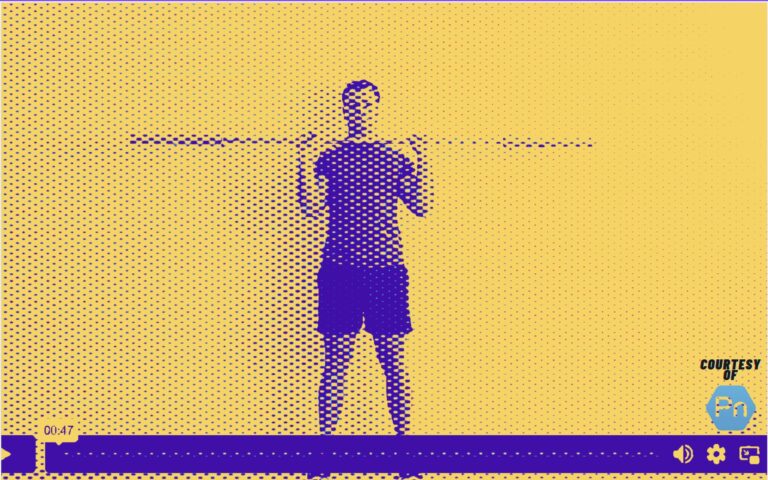
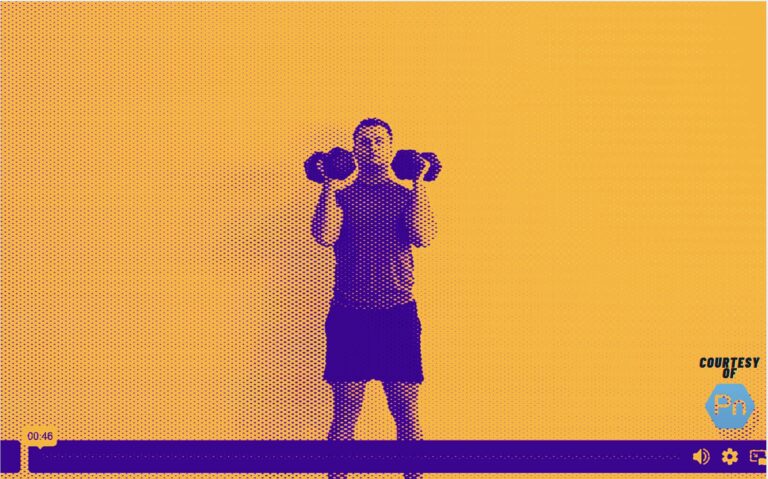
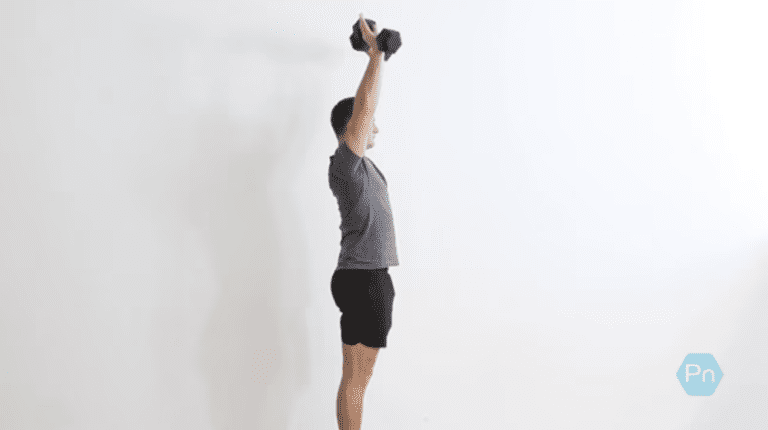
Infraspinatus, teres minor, and posterior deltoid get isolated by the side-lying dumbbell external rotation with abduction. The dumbbell provides constant gravitational resistance. The side-lying position eliminates scapular compensation. This isn’t a heavy lift. This is a shoulder health tool that builds rotator cuff endurance and prevents impingement syndromes.
Side-Lying Dumbbell External Rotation With Abduction – Execution Protocol
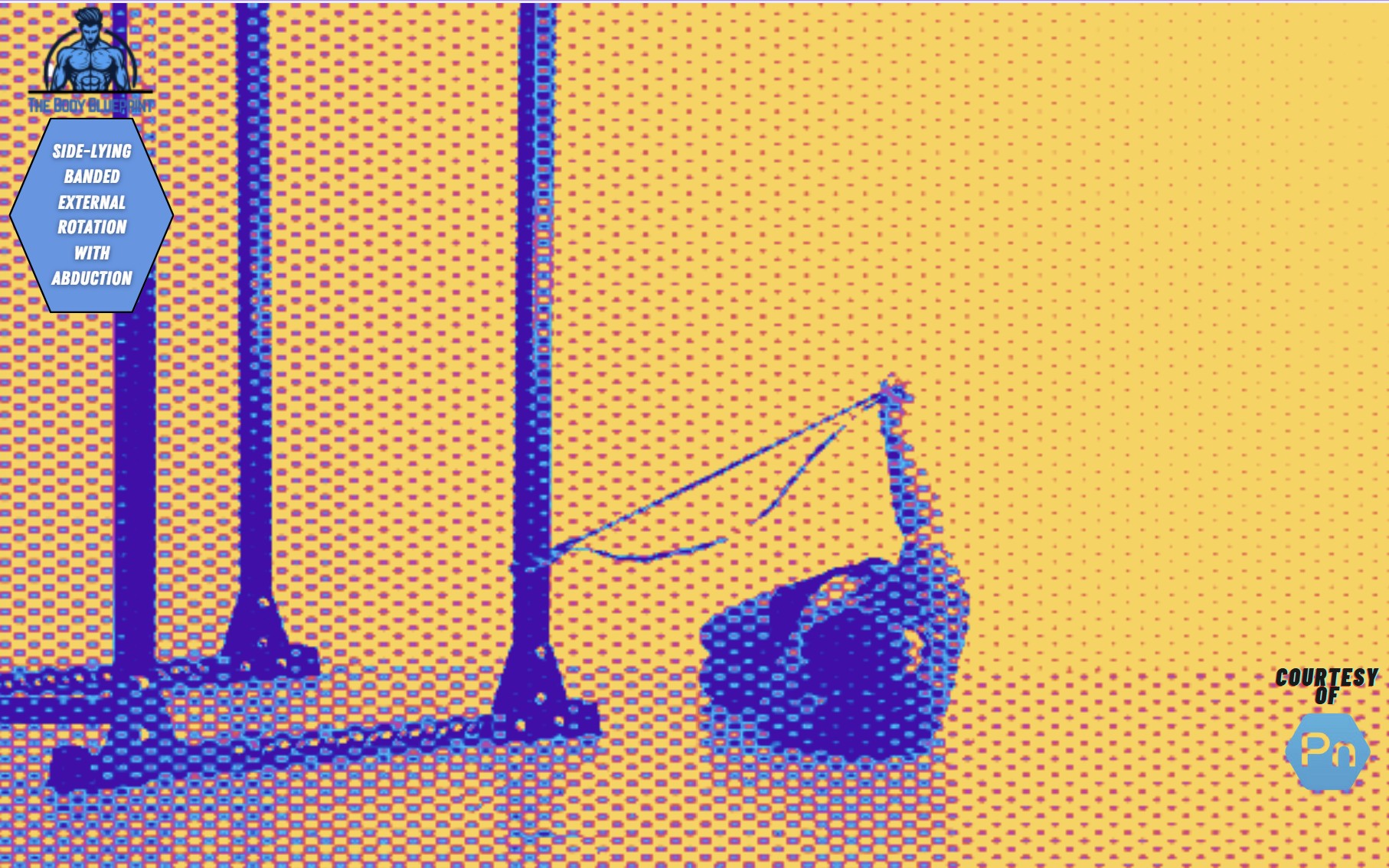
“The side-lying dumbbell external rotation with abduction is like polishing a trophy. Slow. Controlled. Precise. You don’t rush quality. You earn it with every rep.”
Lie on your side with a light dumbbell in your top hand. Your bottom arm supports your head. Your knees stay bent for stability. Your top elbow is locked at a 90-degree angle. Your forearm hangs across your body. Your core stays braced. Your scapula stays retracted against your ribcage.
Initiate the movement with pure external rotation. Your elbow stays pinned to your hip. Rotate your arm upward. Your forearm lifts toward the ceiling. The dumbbell travels in an arc. Your infraspinatus and teres minor control the rotation. Your deltoid stays relaxed.
Add abduction once you reach full external rotation. Lift your upper arm away from your body. Your arm moves outward like a wing. Keep it in line with your shoulder. Do not let it drift toward your hip. Your supraspinatus and lateral deltoid engage to control the abduction phase. This is the two-part movement.
Control the eccentric phase back to the start. Lower your arm slowly. Resist gravity’s pull. Your rotator cuff works eccentrically to control the descent. This is where the real strength is built. Do not let the dumbbell drop. Control is everything.
Complete 12-15 reps per side. Use a light dumbbell. 5-10 pounds is typical. Your rotator cuff muscles are small. They fatigue quickly. Increase weight gradually. Focus on form and control over load. Quality beats quantity every time.
Switch sides and repeat. Shoulder imbalances are common. This exercise exposes them. Your weaker side will struggle earlier. That is the point. Build both sides equally. Prevent asymmetry and injury.
Expert Analogy: “Think of this exercise like turning a key in a lock. You don’t force it. You turn it smoothly. You feel the mechanism engage. That’s your rotator cuff working. Force it and you break it. Control it and it lasts forever.”
Muscles Worked: Primary and Secondary Contributors
Infraspinatus and teres minor handle the external rotation component. These are the primary external rotators of the shoulder. They attach to the posterior scapula. They insert on the greater tuberosity of the humerus. Their job is to rotate the arm outward. The dumbbell amplifies their activation through gravitational resistance.
Supraspinatus engages during the abduction phase. This muscle initiates shoulder abduction. It sits in the supraspinatus fossa. It inserts on the greater tuberosity. The abduction component adds a stability challenge. Your supraspinatus works harder to keep the arm elevated. This is critical for overhead pressing.
Posterior deltoid assists with both rotation and abduction. The posterior deltoid contributes to shoulder extension and external rotation. It works alongside the rotator cuff. Your deltoid provides power while the rotator cuff provides stability. This combination is essential for shoulder health. See our shoulder exercises for complementary work.
Subscapularis acts as a dynamic stabilizer. The subscapularis is the primary internal rotator. It works eccentrically to control the external rotation. This antagonist activation prevents excessive motion. Your rotator cuff works as a team. Each muscle supports the others. Balanced development prevents injury.
Quoting a shoulder specialist: “The side-lying dumbbell external rotation with abduction is the purest rotator cuff isolation you can get with free weights. The dumbbell doesn’t hide your weaknesses. It exposes them. That’s the value.”
Who It’s For
Athletes with throwing or overhead sports demands. Baseball pitchers benefit. Quarterbacks benefit. Volleyball players benefit. Tennis players benefit. The movement pattern mimics deceleration and stabilization demands. Your rotator cuff needs to withstand repetitive stress. This exercise builds that resilience. See our performance hub for more.
Lifters with shoulder impingement or instability issues. The side-lying position eliminates compensation. Your scapula is stabilized against the floor. This isolates the glenohumeral joint. Your rotator cuff works without scapular cheating. This is ideal for rehab and prehab phases. See our joint stability guide.
Anyone looking to prevent shoulder injuries. Your rotator cuff is vulnerable. Overhead pressing, benching, and throwing all stress it. Strong external rotators protect against impingement and tears. This exercise builds that strength. It addresses a common weak point.
Bodybuilders wanting balanced shoulder development. Most shoulder work targets the front and side delts. The rear delt and rotator cuff get neglected. This exercise fills the gap. It builds the posterior shoulder and improves posture. Balanced shoulders look better and perform better.
Who It’s Not For
Anyone with an active rotator cuff tear. This exercise stresses the rotator cuff directly. If you have a tear, consult a professional first. We are not testing. We are analyzing mechanics. This movement is not for acute injuries.
Lifters with acute shoulder pain. Pain during external rotation is a red flag. Stop immediately. Do not push through pain. Consult a qualified professional. Your shoulder health is paramount.
Athletes seeking pure strength or power development. This is a stability and rehab exercise. It is not a heavy strength builder. Use it as an accessory. Pair it with heavier compound work. For strength, see standing overhead press.
Programming the Side-Lying Dumbbell External Rotation
Rehab/Prehab Day: 3 sets of 15-20 reps per side. Use a light weight. Focus on control and range of motion. Perform this at the start of your workout. It activates your rotator cuff. Preps your shoulder for heavier work. Rest 60 seconds between sets.
Accessory Work: 3 sets of 12-15 reps per side. Use a moderate weight. Perform after your main pressing or pulling work. Your rotator cuff gets fatigued. This is fine. It builds endurance and stability. Rest 45-60 seconds between sets.
Warm-up Application: 2 sets of 10 reps per side. Use a very light weight. This is a dynamic warm-up. Your rotator cuff activates. Blood flow increases. Your shoulder joint prepares for heavier work. Do this before benching or pressing.
Frequency considerations: This is an accessory movement. Use it 2-3 times weekly. Do not overdo it. Your rotator cuff is small. It fatigues quickly. Listen to your body. For more recovery, see our muscle recovery hub.
Common Mistakes to Avoid
Using too much weight destroys the stimulus. Your rotator cuff muscles are small. They cannot handle heavy loads. The dumbbell provides gravitational resistance. Light weight is enough. Heavy weight causes compensation. Your scapula and traps take over. This defeats the purpose.
Letting the elbow drift away from your side. Your elbow stays pinned to your body. This is non-negotiable. Drifting reduces external rotation isolation. Your deltoid takes over. The rotator cuff gets less work. Keep that elbow tight.
Using momentum to swing the dumbbell. The dumbbell amplifies momentum issues. A swinging arm reduces rotator cuff engagement. Your muscles experience less tension. Control the movement. Slow and steady wins this one.
Flaring your ribs during the movement. Your core must stay braced. Rib flaring creates lumbar extension. This shifts the movement pattern. Your shoulder compensates. Your scapula loses stability. Keep your ribs down. Keep your abs tight.
Not achieving full external rotation. Partial reps miss the end-range stimulus. Your infraspinatus works hardest at the end range. Shortening the range reduces effectiveness. Rotate fully. Your forearm should point upward. Your upper arm stays horizontal.
Expert Comparison: “Treat this exercise like a golf putt. You don’t swing hard. You swing smooth. You feel the club. You control the face. That’s the rotator cuff. Smooth control beats brute force.”
Variations to Progress or Regress
Banded External Rotation Regression: Use a light resistance band instead of dumbbell. Anchor it at waist height. This removes the gravitational variable. Good for beginners or home gyms. Start with this variation. Build form first. See our banded external rotation guide.
Cable External Rotation Variation: Use a cable machine with an elbow cuff. This provides constant tension throughout the range. Different stimulus than the dumbbell. Good for advanced lifters. See our cable version guide.
With Pause at End Range: Hold the fully rotated position for 2-3 seconds. This increases isometric demand. Your infraspinatus and teres minor work harder. Great for endurance. Drop the weight by 20% to maintain form.
Without Abduction Regression: Perform only the external rotation. Skip the abduction phase. This reduces the supraspinatus demand. Good for those with shoulder impingement. Start here if you have pain during abduction. Progress slowly.
Bilateral Variation: Perform both arms simultaneously. This exposes asymmetries. Your weaker side shows itself clearly. Great for balanced development. Requires two dumbbells. See our shoulder exercises for more options.
Side-Lying Dumbbell External Rotation With Abduction – FAQ
A: It can be beneficial for impingement when performed correctly. The side-lying position stabilizes the scapula. This isolates the glenohumeral joint. However, if you experience pain, stop. Consult a professional first. See our joint stability guide.
A: Start with 3-5 pounds. Your rotator cuff muscles are small. They need controlled loading. Focus on form first. Increase in 1-2 pound increments. Your target is 12-15 controlled reps.
A: The dumbbell provides gravitational resistance. The cable provides constant tension. Both are effective. The dumbbell is more accessible. You can do it anywhere. The cable is more consistent through the range. See our cable version guide.
A: 2-3 times per week is sufficient. Your rotator cuff needs recovery. This is an accessory movement. Pair with heavier compound work. Your rotator cuff strength will improve over time.
A: You can perform it bilaterally with two dumbbells. This exposes asymmetries. However, side-lying is more effective. It isolates each shoulder independently. Do both variations for balanced development.
Final Verdict
The side-lying dumbbell external rotation with abduction is a precision shoulder tool. The infraspinatus activation. The teres minor engagement. The supraspinatus recruitment. This variation builds rotator cuff resilience. It prevents injury. It improves overhead performance. It’s not flashy. It’s effective.
The dumbbell provides gravitational resistance throughout the range. No momentum. No cheating. Your rotator cuff works from the first degree of rotation. This builds end-range strength and control. The dumbbell doesn’t hide your weaknesses. It exposes them.
The side-lying position eliminates compensation. Your scapula is stabilized. Your torso is braced. Your glenohumeral joint works in isolation. This is the gold standard for rotator cuff isolation with free weights. You cannot cheat this movement.
Your shoulder health determines your lifting longevity. Neglect the rotator cuff. Pay the price. Build it. Your bench press, overhead press, and pull-ups will improve. Your shoulder will thank you.
Build Bulletproof Shoulders With Dumbbells
The side-lying dumbbell external rotation with abduction is your ticket to shoulder stability and injury prevention. Use it consistently. Progress slowly. Watch your overhead strength and shoulder health improve. For more shoulder exercises and programming, explore our comprehensive guides.
Key Terms for This Shoulder Exercise
- Rotator Cuff
- A group of four muscles stabilizing the glenohumeral joint. The infraspinatus, teres minor, supraspinatus, and subscapularis. They control shoulder rotation and stability.
- Glenohumeral Joint
- The ball-and-socket joint of the shoulder. The most mobile joint in the body. Requires dynamic stability from the rotator cuff.
- External Rotation
- Rotation of the arm away from the body’s midline. Controlled primarily by the infraspinatus and teres minor.
- Abduction
- Movement of the arm away from the body. Initiated by the supraspinatus and continued by the deltoid.
- Scapular Stability
- Control of the shoulder blade during arm movement. Essential for rotator cuff function and impingement prevention.
- Gravitational Resistance
- Resistance provided by gravity against a weight. The dumbbell creates gravitational resistance throughout the movement arc.