Quadriceps, glute medius, and hamstring stability get hammered by this offset lunge variation. The front knee stays locked. The offset dumbbell creates rotational torque. This isn’t a beginner move. This is for lifters who understand joint mechanics and want to fix strength asymmetries. From unilateral power to knee health, this variation delivers a stimulus no other lunge matches.
Offset Dumbbell Reverse Lunge With Blocked Knee – Execution Protocol
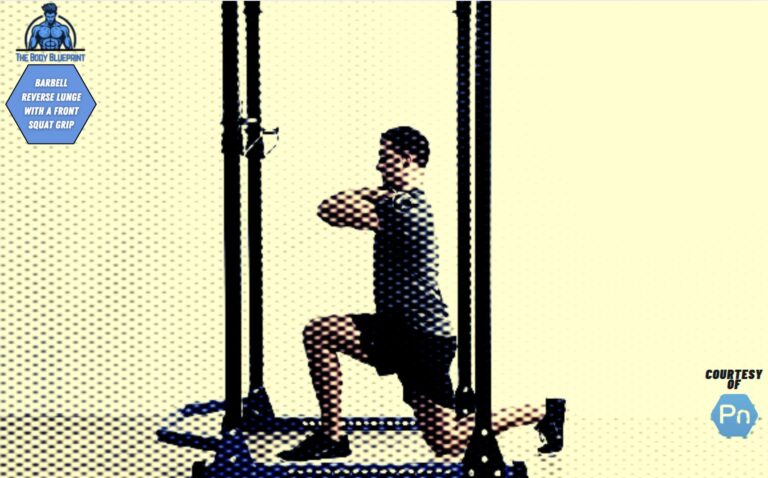
Stand tall with an offset dumbbell load. Use a lighter weight in the hand opposite the rear leg. This offset creates the stability challenge. Your feet should be hip-width apart. Rear foot on the ball. Front foot flat. The front knee is pre-set at roughly 90 degrees of flexion. That angle does not change throughout the set.
Begin the eccentric by pushing your hips backward. Lower your rear knee toward the floor. The front knee does not move forward. This is non-negotiable. Your shin stays vertical. Think of your front leg as a fixed post. Your weight shifts onto the front heel. The rear leg extends back behind you.
Maintain a neutral spine with abdominal bracing. Pull your ribs down. Your abs act as an anti-extension mechanism. This prevents the pelvis from tilting forward. Breathe into your belly. Hold that brace tight. The offset load wants to pull you into rotation. Resist this with oblique engagement.
Drive through the front heel to return to standing. The rear leg assists but does not lead. Push the floor away. Keep that knee angle locked. Your glute medius fires hard to maintain frontal plane stability. At the top, your hips are fully extended. Your core stays braced.
Track your front knee over your second and third toes. Internal rotation or valgus collapse are injury precursors. Keep the knee path straight. If your knee drifts inward, reduce the weight. Focus on glute activation drills first. You need proper motor control before adding load.
Expert Analogy: “Treat the blocked knee like a neutral spine during a deadlift. The angle is preset. Everything else moves around it. If the knee moves, the entire lift collapses into something else entirely.”
Muscles Worked: Primary and Secondary Contributors
Quadriceps handle the isometric knee extension and dynamic stabilization. The rectus femoris, vastus medialis, vastus lateralis, and vastus intermedius all fire. The blocked position maximizes quad activation. Your VMO fires to maintain patellar tracking. This is a quad-dominant movement by design.
Glute max and glute medius drive hip extension and frontal plane control. The rear hip extends against the load. The front hip stays flexed. This creates a hip-hinge component within a lunge pattern. Your glute medius acts as the primary lateral stabilizer. It fights the offset dumbbell’s rotational torque.
Hamstrings function as hip extensors and knee flexors. The biceps femoris, semitendinosus, and semimembranosus all contribute. The rear leg hamstring experiences significant stretch during the descent. This eccentric loading stimulates hypertrophy. It also improves hamstring flexibility over time.
Adductor magnus and core stabilizers prevent pelvic rotation. The offset load creates a rotational torque. Your inner thigh muscles and obliques must counteract this. This is why the movement builds functional strength. It goes beyond simple quad development. For more core involvement, see our core exercises list.
Quoting a movement specialist: “The offset reverse lunge with blocked knee is the single-leg Romanian deadlift combined with a sissy squat. It asks the posterior chain to work against anterior chain demands. Brutal. Effective. Unforgiving.”
Who It’s For
Athletes needing unilateral lower-body strength with specific quad emphasis. Soccer players benefit. Basketball athletes benefit. Skiers benefit. The movement mimics deceleration patterns. It does this without compromising joint integrity. Your sport requires single-leg strength? This variation delivers.
Lifters with quadriceps dominance but weak glute medius activation. The blocked knee forces glute engagement. Your glutes can’t cheat. The front knee can’t take over. This exposes weaknesses and builds them. Explore more glute exercises to complement this move.
Men over 40 managing knee health. The fixed knee angle reduces shear forces. Your patellar tendon experiences less stress. The tibia doesn’t translate forward. The offset load is light enough to control. It’s heavy enough to stimulate growth. See our joint stability guide.
Anyone looking to break through a lower-body plateau. Novel stimulus equals adaptation. This variation hits your legs differently. Your central nervous system has to figure out the stability pattern. This creates new motor unit recruitment.
Who It’s Not For
Complete beginners with no foundational strength. The stability demands are high. Your proprioceptive system needs basic lunge competence. Start with goblet squats and standard reverse lunges. Master those first. Then progress.
Lifters with significant ankle mobility restrictions. The front ankle must tolerate a closed-chain position. No dorsiflexion allowed. If your ankle can’t maintain a neutral shin angle, you’ll compensate through the knee. This causes patellar tracking issues. Check our ankle mobility guide.
Anyone with active knee pain or patellofemoral syndrome. The isometric quad demand can aggravate existing conditions. Consult a professional before loading this pattern. We are not testing. We analyze biomechanics. This movement is not for injured knees.
Athletes seeking pure posterior chain development. Hip thrusts and Romanian deadlifts provide better glute-hamstring stimulus. This variation is quad-dominant by design. Don’t use it for glute specialization. For posterior chain, see dumbbell RDL.
Variations and Modifications
Offset Lunge With Overhead Press adds shoulder stability challenge. Hold the offset dumbbell in a rack position. Or hold it overhead. This increases core demand dramatically. Your obliques work to resist lateral flexion. Advanced only. Do not attempt without perfect form.
Tempo-Varied Version uses a 3-second descent, 2-second pause, and explosive ascent. The isometric hold at the bottom increases time under tension. Your quads experience prolonged mechanical stress. Great for hypertrophy blocks. Drop the weight by 20%. Maintain form first.
Walking Variation turns the exercise into continuous movement. Step backward into the lunge. Maintain the blocked knee position. Return to standing. Step backward with the opposite leg. This adds an unstable transitional component. Your stabilizers work through dynamic motion. See walking goblet lunges for a similar pattern.
Box-Blocked Version uses a plyo box to standardize rear leg height. Place your rear foot on a 6-12 inch elevation. The increased hip flexion amplifies glute and hamstring stretch. This variation suits lifters with tight hip flexors. It demands more posterior chain engagement. Check our blocked knee split squat guide.
Regression: Bodyweight Only removes the load entirely. Focus on perfect form. Master the blocked knee position unloaded. Your proprioceptive system needs to learn the pattern. Rushing to load builds bad habits. Take your time.
Programming and Progression
Load selection: start with 40% of your standard dumbbell lunge weight. The stability demand reduces your effective working weight. Use a lighter dumbbell in the forward hand. Roughly 70% of the rear hand load. This creates the offset pattern. It does not overwhelm your stabilizers.
Rep ranges and volume: 8-12 reps per leg for hypertrophy. Use 4-6 reps for strength. The isometric component limits total volume. Three to four sets per session. Training this variation once weekly provides sufficient stimulus. More frequent work leads to joint fatigue. No additional benefit.
Progression pathway: Bodyweight. Light dumbbell offset. Increased rear weight. Increased forward weight. Slower tempo (3-1-3). Tempo manipulation provides progressive overload without increasing load. This protects your joints. It drives adaptation. For more on progression, see our progressive overload guide.
Frequency considerations: This is an accessory movement. Use it after your primary squat or deadlift work. Don’t lead with it. Your central nervous system needs fresh recruitment patterns for heavy compound lifts. This variation complements. It does not replace. Pair with barbell back squats or deadlifts.
Common Technical Errors
Front knee slides forward during the descent. This defeats the exercise’s purpose. Your knee must stay locked. If it moves, reduce the weight. Check your ankle mobility. The fix: place your front foot on a slight elevation. A 1-inch platform reduces dorsiflexion demand.
Pelvis rotates toward the offset load. The asymmetrical weight creates a torque. Your core isn’t engaged. Practice unloaded offset stance first. Feel the pull. Actively counter-rotate using your oblique musculature. See our core strength list.
Heel lifts off the floor during the drive. Weight shifts to your toes. This quad-dominates the movement. It loses glute engagement. Push through the heel. Imagine pressing a force-detecting scale into the floor. No heel lift equals proper drive.
Insufficient depth on the rear knee. Partial reps miss the stretch-mediated hypertrophy stimulus. Your rear knee should almost touch the floor. If you can’t reach depth, reduce the weight. The stimulus lives in the bottom position. Cheating depth cheats gains.
Breathing patterns disrupted during the concentric phase. Holding your breath creates excessive intra-abdominal pressure. No benefit to spinal support. Exhale during the drive. Inhale during the descent. Maintain a rhythmic breathing pattern.
Expert Comparison: “The blocked knee is the fixed variable. Everything else moves around it. If the fixed variable changes, the entire lift collapses into something else entirely.”
Recovery and Integration
Place this variation on lower-body days after compound work. Your quads and glutes need to be warmed but not fatigued. Pre-exhaustion compromises form. Perform 2-3 warm-up sets with light weight. Establish the movement pattern before your working sets.
Stretch the front hip flexor between sets. The blocked position requires significant hip extension. This can tighten the iliopsoas. Perform a kneeling hip flexor stretch for 30 seconds per side. This maintains mobility throughout the session. For more, see hip flexor stretch guide.
Monitor recovery: 48-72 hours between sessions. This variation creates significant muscle damage. Eccentric loading is the culprit. Your quads and glutes need adequate time to repair. Training more frequently leads to cumulative fatigue. No additional hypertrophy benefit. Check our muscle recovery hub.
Pair with posterior chain work on the same day. Complementary exercises balance the quad-dominant nature. Hip thrusts or Romanian deadlifts work well. This prevents strength imbalances. It reduces injury risk. Your programming should include both movement patterns. See compound exercises for balanced development.
Final Verdict
The offset dumbbell reverse lunge with blocked knee delivers a unique stimulus. The quadriceps isometric demand. The glute medius stabilization. The hamstring eccentric loading. This creates a complete unilateral leg developer. It’s not sexy. It’s not heavy. For lifters needing asymmetry correction or knee-friendly quad development, this variation works.
The offset load creates the frontal plane challenge. Without it, this is just a reverse lunge. The weight differential forces your lateral stabilizers to work harder. Your body adapts to the instability. This carries over to sport. Forces are rarely symmetrical on the field.
Your execution determines the outcome. Poor form reduces effectiveness. Poor form increases injury risk. Prioritize the blocked knee. Maintain the brace. Drive through the heel. Control the descent. Do these things consistently. Your lower-body strength will improve. For more lunge variations, explore our goblet reverse lunge guide and blocked knee split squat.
The movement doesn’t flatter. It exposes weaknesses and builds them. That is the point.
Offset Dumbbell Reverse Lunge With Blocked Knee – FAQ
A: Yes. The blocked knee position maximizes quadriceps isometric and eccentric loading. Combine with other quad-dominant moves like front squats for best results.
A: The front knee remains locked at a fixed angle. This shifts more load to the rear leg and quadriceps. It also challenges frontal plane stability due to the offset load. Standard reverse lunges allow the front knee to drift. Force disperses differently.
A: For those without pre-existing knee issues, the fixed knee angle reduces shear forces. Less stress than traditional lunges. If you experience pain, stop. Consult a professional. Always warm up and use proper form. See our joint stability guide.
A: Once per week is sufficient. It is an accessory movement. Not a primary lift. Overdoing it leads to joint fatigue. Pair with leg day programming.
A: Yes. The offset load works best with dumbbells for stability. If using kettlebells, hold one in each hand. The forward hand should be lighter. See our kettlebell exercises for alternatives.
Key Terms for This Lunge Variation
- Offset Load
- Asymmetrical weight distribution. One side carries a heavier load. This creates a frontal plane stability challenge.
- Blocked Knee
- Fixed knee angle maintained throughout the movement. The joint does not flex or extend during the lunge. This is the defining feature.
- Eccentric Phase
- The lowering portion of the lift. The rear knee descends while the front knee remains locked. This creates muscle damage and drives hypertrophy.
- Isometric Contraction
- Muscle activation without joint movement. The front quadriceps work isometrically. They maintain the blocked knee angle.
- Frontal Plane
- Movement that occurs side-to-side. The offset load challenges frontal plane stability. This engages lateral stabilizers.
- Proprioception
- Your body’s ability to sense its position in space. This exercise improves proprioceptive demands. The unstable load forces adaptation.
Master Your Unilateral Strength
The offset dumbbell reverse lunge with blocked knee is a precision tool. Use it wisely. Progress slowly. Watch your quad and glute development soar. For more lower-body exercises and programming, explore our comprehensive guides.