You’ve noticed it. The mirror doesn’t lie. After a summer of sharp definition and satisfying fullness, your muscles suddenly look softer, less defined, and strangely flat. This phenomenon is a common, science-backed experience for weightlifters and fitness enthusiasts during the autumn months. This guide explains the precise physiological reasons why it happens and provides a clear, actionable plan to restore muscle fullness and vascularity before Halloween.
The Autumn Flatness: It’s Not in Your Head
First, let’s be clear: this isn’t a sign of muscle loss or a failing workout regimen. What you are experiencing is a temporary shift in your body’s composition and environment. The crisp fall air brings changes that directly impact how your muscles look and feel under the skin. Understanding these mechanisms is the first step to overcoming them.
The three primary culprits are:
- Hydration Dynamics
- Glycogen Shifts
- The Sunlight Deficit
Let’s break down each one.
1. The Hydration Paradox: You’re Drinking Less Without Realizing It
During summer, your body’s demand for water is obvious. You sweat profusely, feel thirst intensely, and instinctively reach for water bottles. This constant hydration has a side benefit for muscle appearance: well-hydrated muscle cells are plump and full, pushing against the skin for that coveted “full” look.
In autumn, the script flips.
- Reduced Thirst Response: Cooler temperatures mean you sweat less visibly. Your thirst mechanism becomes less aggressive, leading to a passive, gradual state of under-hydration.
- Diuretic Effect of Warmer Drinks: As you swap cold water for hot coffee or tea, you’re often consuming beverages with a mild diuretic effect, further contributing to fluid loss.
The bottom line: Even if you think you’re drinking enough, you’re likely in a slight water deficit. Since muscle tissue is approximately 75% water, this deficit makes them look and feel deflated.
2. The Glycogen Vanishing Act
Think of glycogen as the stored carbohydrate fuel in your muscles and liver. For every gram of glycogen stored, your body also stores about 3-4 grams of water within the muscle cells. This is crucial.
- Summer Activity: Higher activity levels, often involving outdoor sports and longer days, lead to a cycle of glycogen depletion and replenishment. This consistent reloading keeps your muscle glycogen—and the associated intramuscular water—topped up.
- Fall Routine: As life moves indoors and routines become more sedentary, your overall energy expenditure can drop. If your carbohydrate intake remains the same, your body simply doesn’t need to store as much glycogen. Lower glycogen stores mean less water pulled into the muscle cells, resulting in a flatter, less voluminous appearance.
This isn’t about “carbs making you bloated.” That’s subcutaneous water (under the skin). Glycogen storage pulls water into the muscle, which is exactly what you want for that full, round look.
3. The Silent Variable: Vitamin D and Nitric Oxide
This is the most underestimated factor. Summer sunlight exposure on your skin stimulates the production of Vitamin D. Beyond its well-known health benefits, Vitamin D plays a role in supporting the function of the cells that line your blood vessels (the endothelium).
These cells produce Nitric Oxide (NO), a potent vasodilator. NO is the master switch for your “pump.” It signals your blood vessels to relax and widen, allowing for increased blood flow to your muscles. More blood flow means a better pump during your workout and better overall vascularity.
In the fall, with less sunlight, your Vitamin D levels can begin to decline. This can subtly impair your body’s ability to produce optimal Nitric Oxide, leading to less impressive pumps and reduced vascularity, even if your body fat percentage hasn’t changed.
The 3-Point Plan to Reclaim Your Fullness
Now for the solution. This isn’t about drastic measures; it’s about intelligent, targeted adjustments. Implement these three strategies over the next few weeks, and you will see a dramatic difference.
Strategy #1: Master Your Hydration
Forget “drinking when you’re thirsty.” You need a proactive plan.
- Set a Daily Water Goal: Aim for at least 0.7 to 1 ounce of water per pound of body weight. (e.g., A 180lb man should target 125-180 oz per day).
- Pre-Load Before Caffeine: Drink 16-20 oz of water before your first cup of coffee or tea.
- Strategic Sodium: Don’t fear salt. A small pinch of high-quality sea salt in your water bottle once a day can help with electrolyte balance and fluid retention within the cells.
Sample Daily Hydration Schedule:
| Time of Day | Action |
|---|---|
| Upon Waking | 16-20 oz water |
| Pre-Workout (60 min before) | 16 oz water with a pinch of salt |
| During Workout | Sip 8-10 oz every 15 minutes |
| Post-Workout | 16-20 oz water |
| With Meals | 8-12 oz water |
| Total | ~120-150+ oz |
Strategy #2: Implement Strategic Carb Cycling
You don’t need to overeat carbs; you need to time them intelligently to maximize glycogen storage without adding fat.
- Low-Carb Days: On rest days or very light activity days, keep carbohydrate intake moderate. Focus on proteins, fats, and fibrous vegetables.
- High-Carb Days: On days you perform intense weight training, make your meals around your workout carbohydrate-heavy. This directs the carbs directly to your muscle glycogen stores when they are most receptive.
The Perfect Post-Workout Meal for Fullness:
Combine a fast-digesting protein (like whey isolate) with fast-digesting carbohydrates (like white rice, dextrose, or even a bagel). This combination triggers an insulin spike that shuttles nutrients into the muscle cells, rapidly replenishing glycogen and pulling water back in.
Strategy #3: Optimize for the Pump and Vitamin D
- Chase the Pump: On training days, include 1-2 “pump sets” at the end of your workout. Choose an isolation exercise (e.g., cable curls, triceps pushdowns, leg extensions) and perform 2 sets of 20-25 reps with a light-to-moderate weight. Focus on perfect form and feeling the muscle contract. This floods the muscle with blood, stretching the fascia and reminding your body what “full” feels like.
- Supplement Smartly:
- Vitamin D3: Consider supplementing with 2,000-5,000 IU of Vitamin D3 daily, especially if you live in a northern climate. (Consult with your doctor if unsure).
- Nitric Oxide Boosters: Ingredients like Citrulline Malate (6-8 grams pre-workout) are proven to enhance blood flow and pump.
Your Action Plan to a Halloween Comeback
This isn’t about starting over. It’s about making nuanced tweaks to counter the seasonal shift. Your muscles haven’t disappeared; they’re just waiting for the right signals to pop again.
Start today. Pick one strategy from each section—hydration, carb timing, and pump training—and apply it consistently. Within 10-14 days, the reflection staring back at you will be noticeably fuller, harder, and more defined. You have the knowledge. Now, go execute and own the room at every Halloween event.
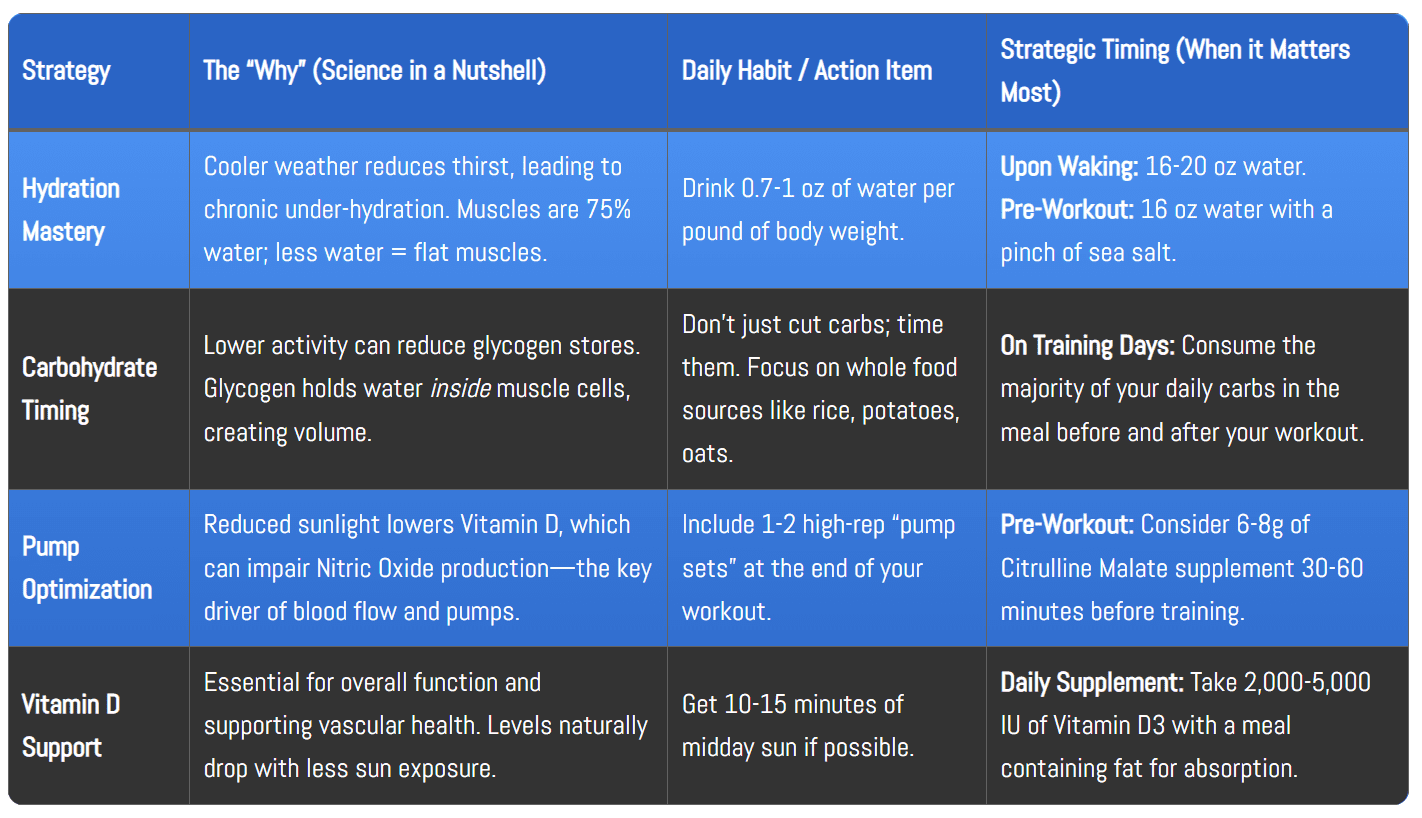
Your “Flat to Full” Muscle Quick-Action Plan (DOWNLOAD)
This table breaks down the science-backed solutions into daily habits and strategic actions. Follow this plan to counteract autumn flatness and regain muscle fullness.