For men with a rocket-fuel metabolism, the struggle to gain weight is a familiar and frustrating battle. This is a strategic guide for the dedicated hardgainer, providing a scientific and practical dietary framework to overcome a fast metabolism. The core purpose is to move beyond simply eating more and into the nuanced art of strategic fueling, timed for optimal muscle growth and recovery.
What is a Hardgainer? A Quick Definition
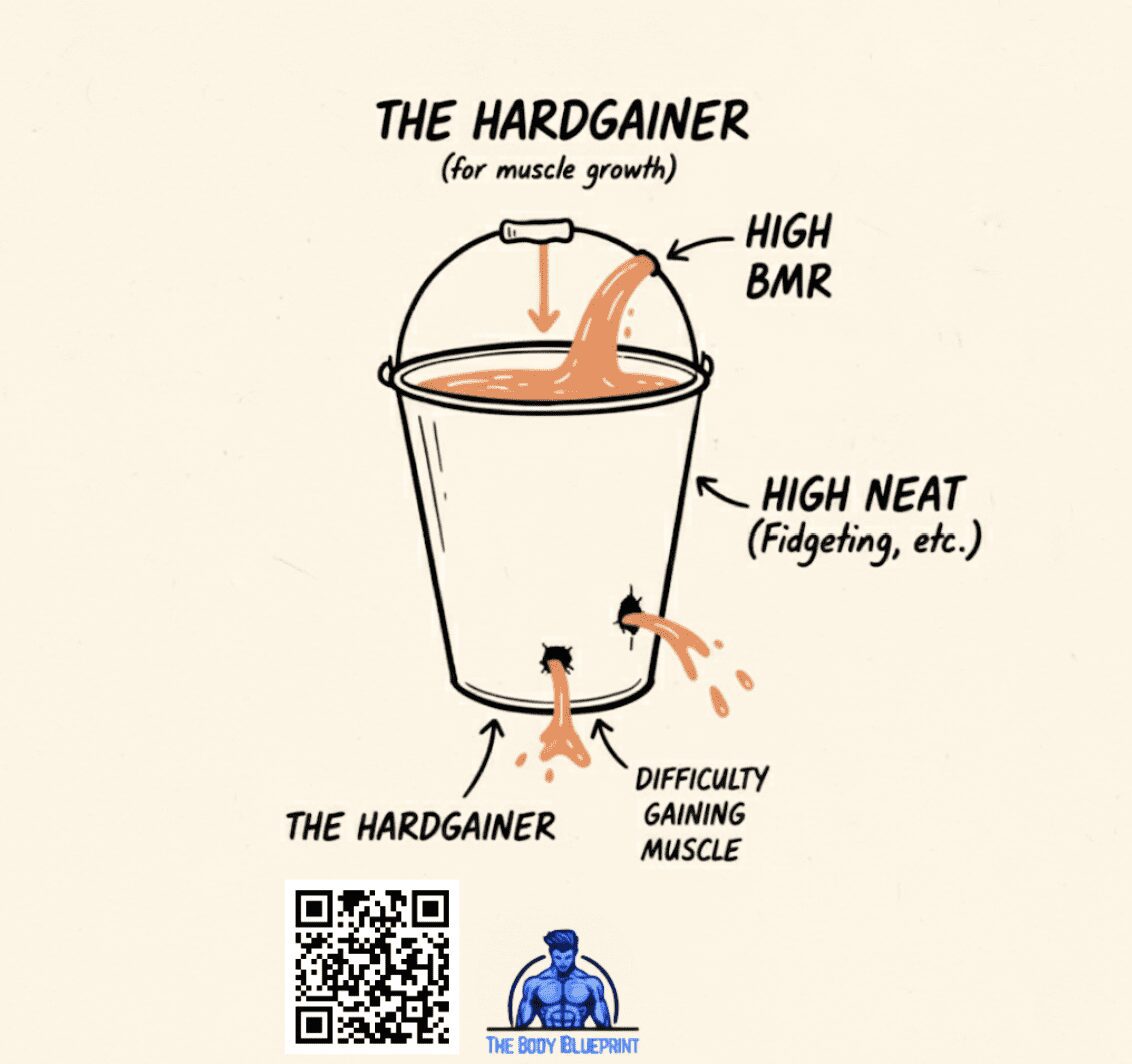
A hardgainer is typically an individual with a genetically high metabolic rate, often characterized by an elevated Basal Metabolic Rate (BMR) and high levels of Non-Exercise Activity Thermogenesis (NEAT). This means their bodies burn a significant number of calories at rest and through unconscious movement like fidgeting, making it exceptionally difficult to maintain a caloric surplus—the fundamental requirement for muscle growth.
You know the feeling. You train with brutal consistency, you push until your muscles scream for mercy, yet the scale mocks you with its unwavering numbers. Your friends pack on size from a sideways glance at a weight rack, while your body seems to burn calories like a blast furnace, consuming every morsel you eat without a trace. This isn’t a lack of effort; it’s a metabolic reality that demands a different kind of warfare. This is not about gluttony; it’s about precision. This is the art of constructing a physique against the relentless current of your own genetics.
The Hardgainer’s Metabolic Engine: Why You’re Built Different
Let’s reframe that “fast metabolism” from a curse to your greatest asset. You aren’t broken; you’re efficient. Your body’s Thermic Effect of Activity (TEA) and Non-Exercise Activity Thermogenesis (NEAT) are likely set on high. While this can be a nightmare for mass gain, it’s also the engine of a lean, ripped physique once you crack the code.
The goal, therefore, is not to fight your metabolism but to outpace it consistently. This requires a calculated surplus of quality nutrients that your body cannot ignore, funneling them directly into muscle protein synthesis instead of burning them for idle energy.
The First Pillar: The Caloric Surplus – Beyond “Just Eat More”
Telling a hardgainer to “eat more” is like telling a drowning man to drink less water. It’s unhelpful and misses the point. You need a targeted surplus.
- Find Your Maintenance: This is your non-negotiable starting point. Use an online TDEE (Total Daily Energy Expenditure) calculator as a baseline, but don’t trust it blindly. For one week, track your exact calorie intake while maintaining your current weight. This number, right here, is your true maintenance. It accounts for your unique metabolic rate and NEAT.
- Apply the Hardgainer’s Surplus: A typical recommendation is a 500-calorie surplus. For you, start with 300-500 calories above your true maintenance. Why the range? A smaller surplus is often more manageable and minimizes fat gain. The key is consistency over time. A massive, unsustainable jump will only lead to digestive distress and quitting.
- Track Relentlessly: For the first few months, track everything. Use an app. Weigh your food. This isn’t forever, but it’s essential data collection to understand what actually works for your body. This moves you from guessing to knowing.
The Architecture of a Mass-Building Meal
It’s not just calories; it’s the blueprint of those calories. You need to construct every meal and snack with a specific purpose.
- Protein: The Building Blocks. Aim for 1 to 1.2 grams of protein per pound of bodyweight (e.g., 180g for a 180lb man). Distribute this across 4-6 meals. This constant drip-feed of amino acids ensures your muscles always have the raw materials for repair and growth.
- Sources: Chicken breast, lean beef, eggs, salmon, whey protein, Greek yogurt, cottage cheese.
- Carbohydrates: The Fuel and The Volume. Carbs are your best friend. They replenish muscle glycogen (stored energy), spike insulin (a potent anabolic hormone that shuttles nutrients into muscles), and provide the energy for your next punishing workout. Don’t fear them; embrace them as your primary tool.
- Sources: Oats, rice (white or brown), potatoes, sweet potatoes, whole-grain breads, pasta.
- Fats: The Hormonal Regulator. Dietary fats are crucial for maintaining healthy testosterone levels and supporting overall health. They are also calorie-dense, making them a powerful tool for hitting your surplus without insane food volume.
- Sources: Avocado, nuts (almonds, walnuts), nut butters, olive oil, fatty fish.
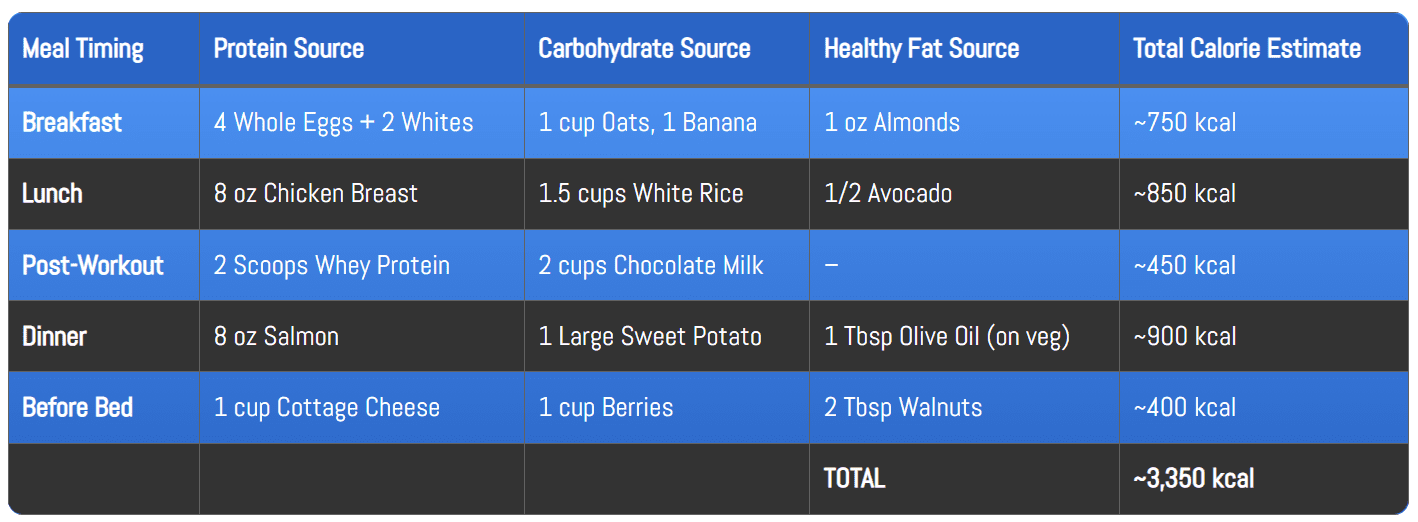
Sample Hardgainer Meal Construction Table
The Nuances: Where the Real Growth Happens
This is where the textbook advice ends and the masterclass begins.
- Liquid Calories Are Your Secret Weapon: Chewing thousands of calories is a chore. Drinking them is a strategy. This is not permission for sugar-filled sodas. This is about mass-gainer shakes you make yourself.
- The Ultimate Hardgainer Shake: 2 cups whole milk, 1 scoop whey protein, 1/2 cup oats (blended to powder first), 1 banana, 2 Tbsp peanut butter, 1 Tbsp olive oil (flavorless). This is an easy 1,000+ calorie missile of nutrition.
- Meal Frequency vs. Meal Size: Don’t force three gigantic meals that make you feel sick. Spread your intake over 5-6 smaller meals and snacks. This is easier to digest, manages hunger, and provides a constant nutrient stream.
- Reframing the Post-Workout Window: While the strict “anabolic window” is debated, the post-training period is a strategic opportunity. Your body is primed to absorb nutrients. A post-workout shake is less about a ticking clock and more about a reliable habit to deliver protein and calories exactly when your body is most receptive to them, aiding recovery and helping you hit your daily totals with ease.
- Sleep is Non-Negotiable: You build muscle when you rest, not when you lift. Poor sleep crushes testosterone and elevates cortisol, a hormone that breaks down muscle tissue. Prioritize 7-9 hours of quality sleep as fiercely as you prioritize your next meal.
Strategic Supplementation: Beyond the Basics
While whole food is king, a few key supplements can provide a measurable edge for a hardgainer.
- Creatine Monohydrate: This is the most researched supplement in sports nutrition, period. It increases phosphocreatine stores in your muscles, providing more energy for high-intensity sets, leading to more reps, more volume, and ultimately, more growth over time. A daily 5g serving is all you need.
- Whey Protein: This isn’t a luxury; it’s a logistical tool. It’s a fast, convenient, and highly bioavailable source of protein to help you hit your daily target, especially around workouts or when whole food isn’t practical.
The Mindset: The Long Game
You will not gain 20 pounds of muscle in a month. Anyone who claims you can is lying. This is a marathon of meticulous effort. There will be days you feel full to the point of discomfort. Do it anyway. There will be days the effort feels Sisyphean. Persist anyway.
The mirror might be slow to change, but the scale will not lie. Weigh yourself weekly, under the same conditions (e.g., first thing in the morning, after using the bathroom). A trend of 0.5-1 pound gained per week is perfect progress. That is 25-50 pounds of potential mass in a year.
Your fast metabolism is not your enemy. It is the very thing that will allow you to build a powerful, lean, and impressive physique—once you learn to feed the fire with intention and relentless consistency. Stop struggling and start building.