Let’s cut through the murky waters. You’re here because you searched for Carlson Fish Oil, and you’re wondering: “Is this the gold standard for omega-3s, or just another bottle of overpriced, fishy burps?” Good. You’re savvy. Let’s get to it now.
This isn’t about just any fish oil. It’s about a supplement that has been routinely tested for decades, using standard international protocols in an independent, FDA-registered laboratory. In a world where most of us are not getting enough omega-3 fatty acids, Carlson is a brand that has built a reputation on purity and taste. But if you think any fish oil will do? Walk away.
Who Needs Carlson (And Who Should Skip It)
| CARLSON IS FOR YOU IF… | YOU CAN PROBABLY SKIP IT IF… |
|---|---|
| You’re part of the majority of Americans who don’t eat enough fatty fish and are in fact desperately in need of Omega-3s. | You eat fatty fish like wild-caught salmon or mackerel 3+ times per week. |
| You’re looking for a clean brand with verified purity and freedom from detectable levels of mercury, lead, and PCBs. | You’re content with the cheapest fish oil on the shelf, regardless of purity or taste. |
| You’ve been turned off by other fish oils that leave a fishy aftertaste or repeat on you. | You have a fish allergy or follow a strict vegan diet. |
The Science of Purity: More Than Just Squeezing Fish
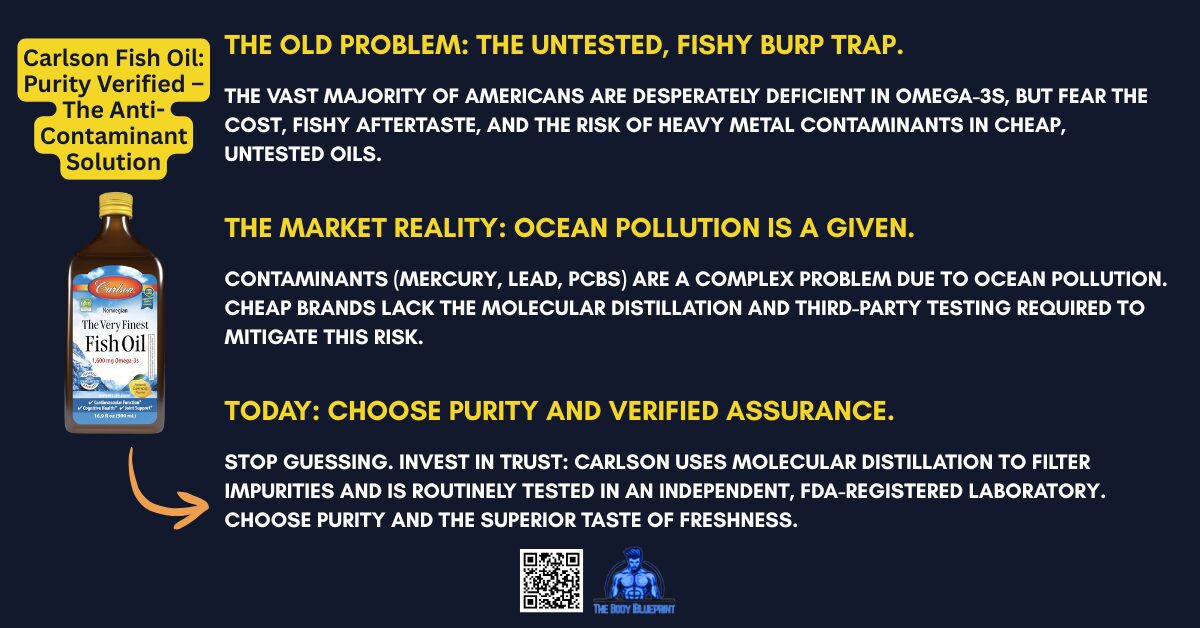
Regular intake of high-quality omega-3 fatty acids is linked to many health benefits, including reduced inflammation and lower cholesterol. But the source matters. Carlson fish oil goes through a molecular distillation process to filter out impurities. This testing not only ensures freedom from detectable levels of mercury, cadmium, lead, and PCBs, but it’s a standard that has made them a leader for over 50 years.
“The case for omega-3s is clear, but the source is everything. Contaminants are a complex problem in our oceans. A brand that invests in independent testing and molecular distillation is providing a product you can actually trust to be clean,” says Charles Damiano, B.S. Clinical Nutrition.
It’s a fact that our oceans are polluted. A study found that more than million pounds of plastic enter the ocean each year, which can lead to contaminants in fish. This is why the molecular distillation process is so critical—it removes these impurities, leaving you with the pure omega-3s you need.
Carlson Deep Dive: The Unfiltered Pros & Cons
👍 CARLSON – WORTH THE PRICE FOR:
- Rigorous third-party testing in an independent, FDA-registered laboratory
- Superior taste and no fishy burps due to added natural lemon flavor
- Molecular distillation removes heavy metals and other contaminants
- Wide range of potencies and forms, including cod liver oil and kid-friendly options
👎 CARLSON – RECONSIDER IF:
- You’re on an extremely tight budget (you pay for the quality assurance)
- You strongly prefer capsules over liquid oil
- You want an enteric-coated capsule to prevent any chance of burps
Specs That Matter For Your Health
| Feature | Why You Care |
|---|---|
| Molecular Distillation | Removes heavy metals, PCBs, and other contaminants for a clean product. |
| Third-Party Testing | Verified purity by an independent lab, not just the manufacturer’s word. |
| Freshness Dated | Guarantees potency and ensures it won’t taste fishy. |
| Lemon Flavoring | Makes taking your daily dose a pleasant experience, not a chore. |
My Fish Oil Recommendation
My Recommendation: CARLSON ELITE OMEGA-3 FISH OIL
👉 Full Disclosure: Links to Amazon in this article are affiliate links. As an Amazon Associate, I earn from qualifying purchases. You don’t pay a penny more, you snag the best deals here, and you support this work (I earn a commission). Fair trade for the research grind?
6 Fish Oil Questions (That Actually Matter)
A: The difference is purity and testing. Many cheap fish oils are not molecularly distilled or third-party tested. Carlson goes through a rigorous process to remove contaminants and is then routinely tested using standard international protocols in an independent, FDA-registered laboratory. This testing ensures freedom from detectable levels of mercury, cadmium, lead, PCBs, and other contaminants you don’t want.
A: It starts with incredibly fresh fish and proper processing to prevent oxidation (which causes the fishy taste and smell). Carlson then adds a touch of natural lemon flavor. Their freshness dating is not just a marketing gimmick—it’s a promise that the oil in the bottle is as fresh as the day it was bottled.
A: Yes. Cod liver oil is a type of fish oil, but it’s sourced specifically from the liver of cod fish, which is a natural source of Vitamins A and D in addition to Omega-3s. Carlson’s regular fish oil typically comes from the flesh of fatty fish like sardines and anchovies and has a higher concentration of EPA and DHA without the extra vitamins. We recommend the cod liver oil if you’re also looking to supplement Vitamin D.
A: Glass is superior for protecting the delicate fish oil from light and oxygen, which are the main causes of oxidation and rancidity. While the cap is still plastic, the glass bottle itself prevents the oil from leaching chemicals from the container—a real concern with plastic. When you’re done, please recycle your glass bottle to complete the sustainable lifecycle.
A: If you’ve had bad experiences, Carlson is the one to change your mind. The lemon flavor completely masks the fish taste. “I routinely have clients who thought they hated fish oil become loyal Carlson users because the taste is that much better,” says Eugene Thong, CSCS.
A: While Omega-3s are one of the few supplements we highly recommend for almost everyone, they are not a cure-all. You should get them from your diet, but a high-quality supplement like Carlson ensures you’re covering your bases. It’s a foundational piece of a health stack, not the only piece.
Final Thought: In a market flooded with questionable supplements, Carlson stands out for its unwavering commitment to purity and taste. It’s not just fish oil; it’s a 50-year promise of quality you can actually trust.