Beta-alanine, muscle carnosine, and hydrogen-ion buffering are the three terms that explain this amino acid’s entire job. It is one of five supplements the International Olympic Committee flags as having real evidence behind it. The catch. That evidence covers a narrow slice of efforts, not everything. This guide breaks down what the research actually shows, and who should skip it.
Overview: What Beta-Alanine Is
Beta-alanine is a non-essential amino acid, a carnosine precursor, and a pH buffer for working muscle. It is not a stimulant. It gives you no energy and no jolt. It raises the muscle’s carnosine stores over weeks of daily use, and carnosine is what blunts the acid buildup that ends a hard set. Slow to load. Not felt in the moment.
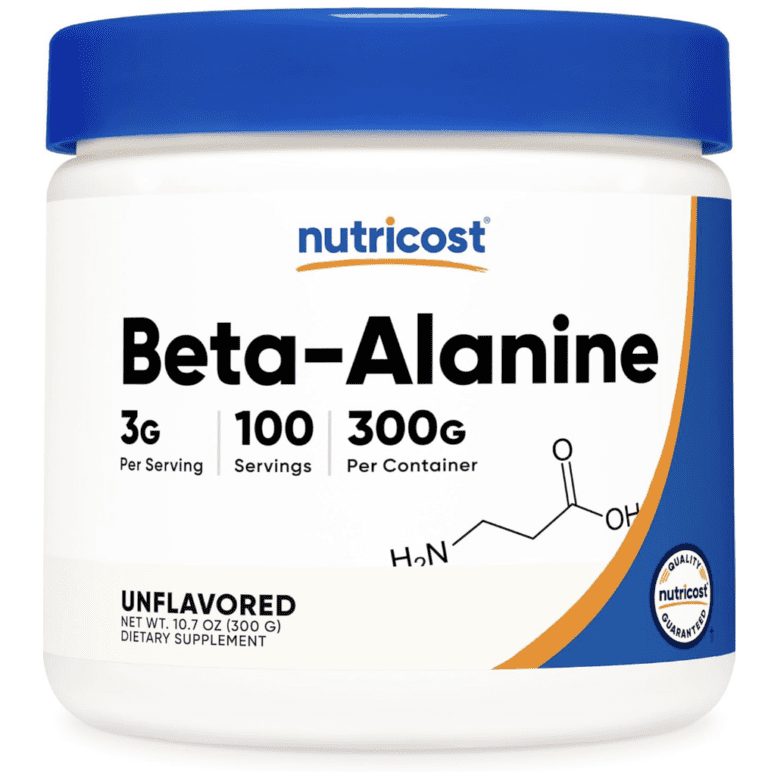
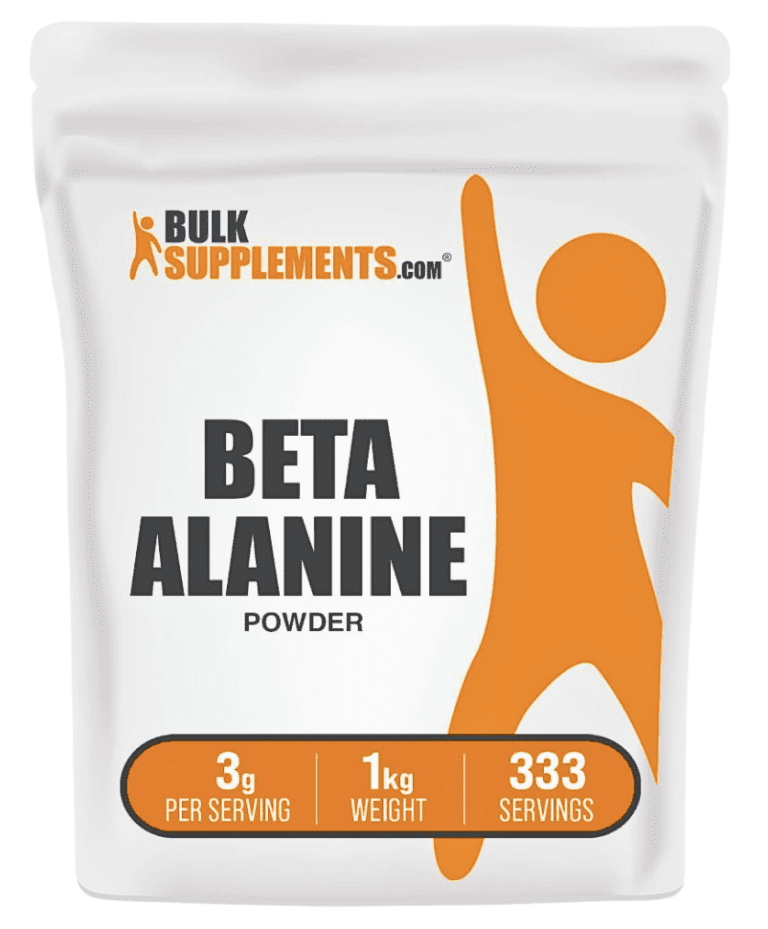
Beta-alanine shows up in pure powders, sustained-release tablets, and capsule formats across the supplement aisle. The research literature ranks it among a short list of ergogenic aids with solid backing, but only for specific effort windows. You will see it in products like BulkSupplements Beta-Alanine, Thorne Beta-Alanine SR, and Nutricost Beta-Alanine. Same active compound. Different delivery.
How Beta-Alanine Works: Carnosine and pH
Beta-alanine binds with histidine to form carnosine, a dipeptide stored in skeletal muscle. During anaerobic effort, hydrogen ions pile up and muscle pH drops. That is the deep burn that forces you to rack the bar. Carnosine soaks up those ions and holds pH steadier for longer. Beta-alanine is the rate-limiting brick. Carnosine is the wall it builds.
Carnosine buffering matters most in the 1-to-10-minute effort band, per the research consensus. Think 400-to-1500-meter runs, rowing pieces, high-rep sets to failure, and hard conditioning intervals. The literature is consistent here. The benefit lives in sustained high-intensity work, not in a single max lift and not in a slow jog.
“Carnosine is a sandbag against a flooding river. It does not stop the acid from coming. It just holds the bank a little longer so you get a few more reps before the levee breaks.” — Eugene Thong, CSCS
The Evidence: What Studies Report
Meta-analyses on beta-alanine report improved high-intensity exercise capacity, greater training volume, and delayed fatigue in the target effort window. These are population-level findings from controlled trials, not a promise about your next session. The strongest signal shows up in capacity tests lasting roughly 30 seconds to 10 minutes. Reported outcomes, not guaranteed ones.
Commonly reported in the literature:
- Increased muscular endurance in high-intensity efforts
- More work completed before task failure
- Better repeated-interval performance in the 1-to-4-minute range
Beta-alanine is not ergogenic for everything, and the research is clear on the limits. It does not meaningfully help single-rep maximal strength or low-intensity steady-state cardio. It is not a pre-workout stimulant. If you feel a rush, that is other ingredients in the stack, not the beta-alanine. Narrow tool. Specific job.
The Tingles: Paresthesia Explained
Paresthesia is the tingling skin sensation, driven by beta-alanine binding the MrgprD nerve receptor. It is harmless and temporary, per the research. It scales with how fast blood beta-alanine peaks, which is why a large single dose prickles more than a split one. Benign. Not a warning sign.
Sustained-release formats and split dosing both reduce paresthesia in the studies. The tingle tends to appear when a single dose runs high, and fade with smaller, spread-out servings. Slow-release tablets like Thorne Beta-Alanine SR are built around exactly that. Some lifters like the tingle as a ritual. Others find it distracting. Preference, not performance.
Dosing: What the Research Uses
Published protocols commonly report total daily intakes in the 3.2-to-6.4-gram range, taken through saturation rather than acute timing. This is what the studies used. It is not a prescription for you. Beta-alanine works by loading carnosine over time, so the consistency of daily intake drives the effect more than the clock. General research figures. Confirm your own plan with a professional.
Saturation research shows muscle carnosine climbing over 4-to-6 weeks of consistent daily use. Trials report roughly a 20-to-30 percent carnosine rise at two weeks and more by four. Going far above the studied range does not speed this up meaningfully. It mostly adds tingle. Patience loads the tank. Megadosing does not.
“Loading carnosine is filling a pool with a garden hose. The hose size barely changes the finish time. What matters is you leave the hose running every single day for a month.” — Charles Damiano, B.S. Clinical Nutrition
Who Beta-Alanine Is For (And Who Should Skip It)
Effort duration and intensity decide whether beta-alanine earns a spot in your stack. Match it to the work, not the hype.
Fits
- CrossFit and conditioning athletes in the 1-to-4-minute pain zone
- Middle-distance runners, rowers, swimmers
- High-rep hypertrophy lifters training near failure
- Repeated-sprint and interval work
Skip It
- Pure 1-rep-max strength chasers. Wrong energy system.
- Low-intensity steady-state cardio. Little to buffer.
- Anyone wanting a pre-workout kick. No stimulant effect.
- Tingle-averse users unwilling to split-dose or use SR.
Top Beta-Alanine Picks (2026)
Pure powder, sustained-release tablets, and budget capsules cover the three buyer profiles here. Pick on format and cost, since the active compound is the same amino acid.
1. BulkSupplements Beta-Alanine: The Value Powder
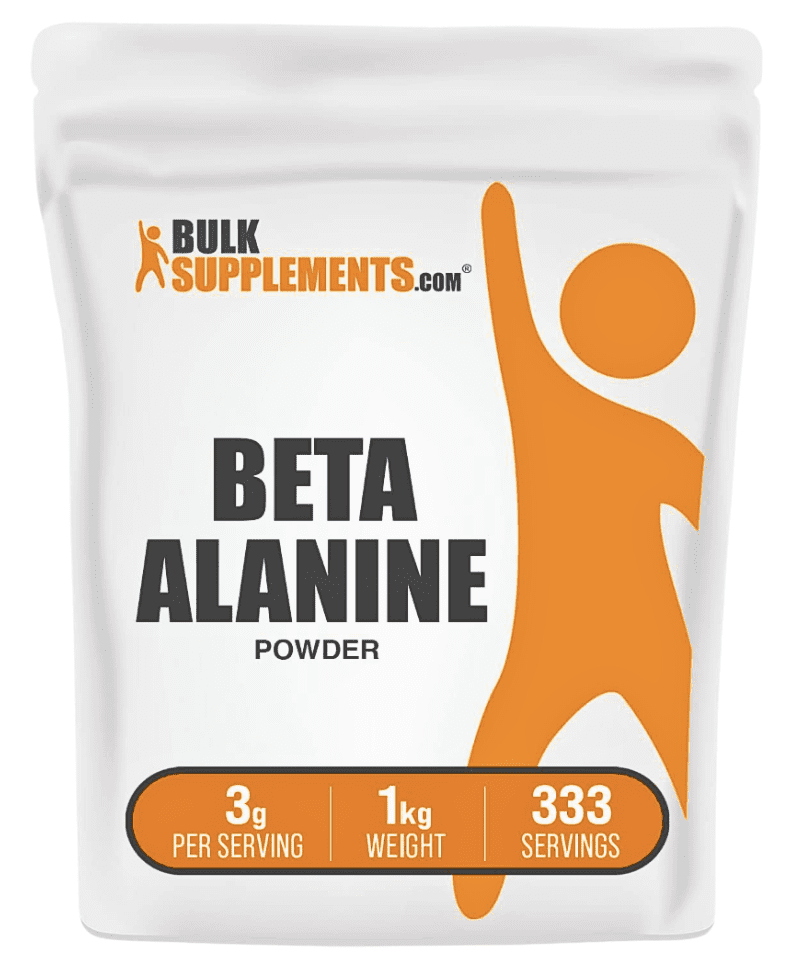
BulkSupplements Beta-Alanine is single-ingredient pure powder, unflavored, sold in bulk bags. No fillers, no flavor, no capsules. It is the lowest cost per gram of the three and the easiest to stack into a pre-workout scoop. The trade-off. You measure it yourself, and standard powder brings the full tingle. Cheapest per gram. Most hands-on.
2. Thorne Beta-Alanine SR: The Tingle-Minimizer
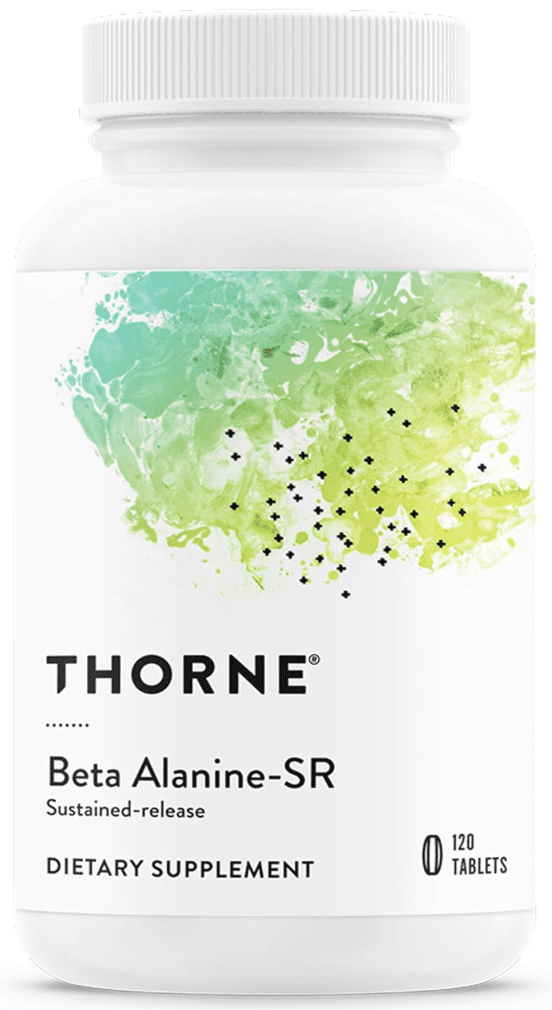
Thorne Beta-Alanine SR uses sustained-release SR CarnoSyn tablets and carries NSF Certified for Sport status. The slow-release delivery is built to blunt paresthesia, and the NSF certification matters if you are drug-tested. It is the premium-priced option and comes as tablets, so no stacking flexibility. Smoothest delivery. Highest price. Competition-safe.
3. Nutricost Beta-Alanine: The Middle Ground
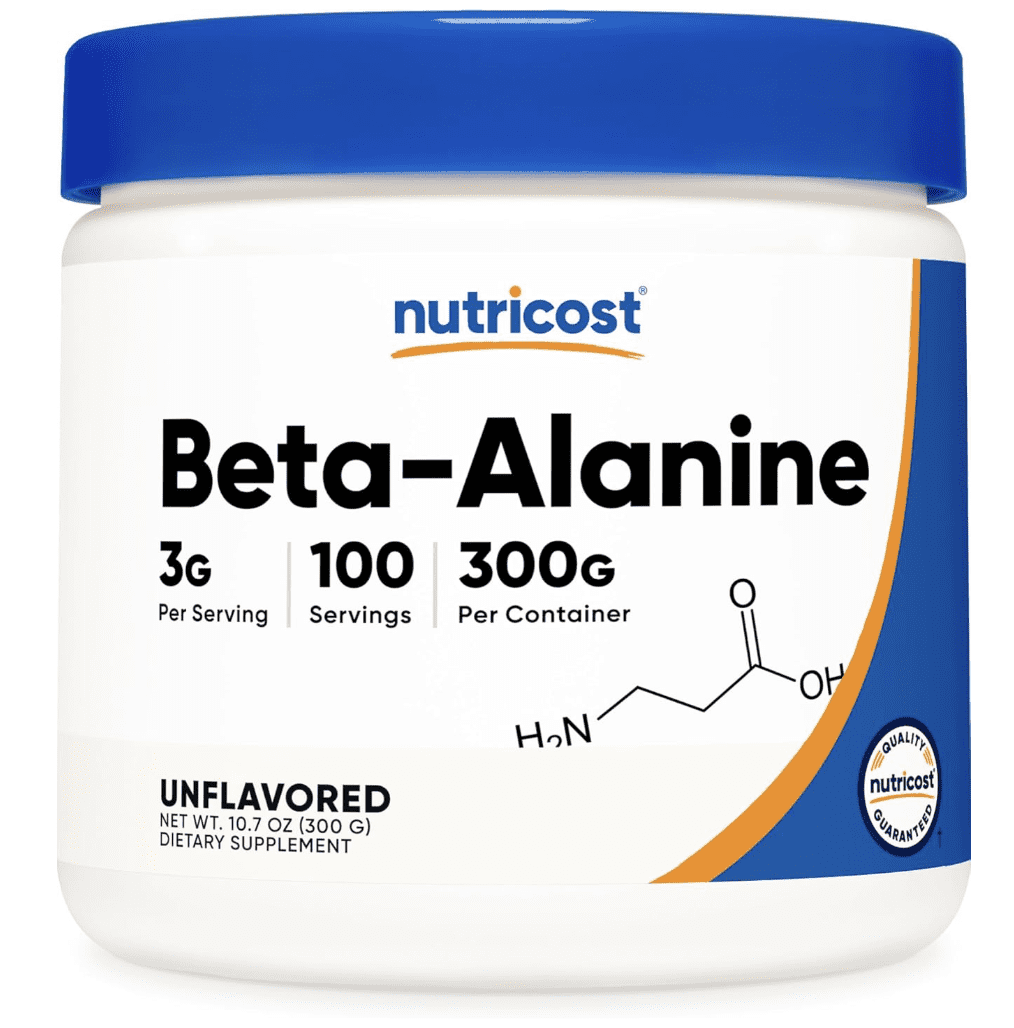
Nutricost Beta-Alanine offers both powder and capsule formats at a mid-tier price point. It splits the difference between raw-bulk economy and premium tablets. The capsule option gives grab-and-go convenience the pure powders lack. Standard (non-SR) delivery means the tingle is still in play. Format flexibility. Fair price. Full tingle.
FAQ
- Does beta-alanine give you energy?
- No. It is not a stimulant. It buffers muscle acid to delay fatigue in high-intensity efforts. Any rush you feel is other pre-workout ingredients.
- How long until it works?
- Research reports carnosine building over roughly 4-to-6 weeks of consistent daily use. It loads slowly. Judge it after a month, not a session.
- Are the tingles dangerous?
- Paresthesia is reported as harmless in the literature. It scales with dose size and fades with split dosing or sustained-release formats. Uncomfortable for some, not a safety issue.
- Can you stack it with creatine?
- They target different systems and are commonly used together. See Beta-Alanine vs Creatine for the full comparison. Different jobs, no conflict.
The Bottom Line
Beta-alanine, muscle carnosine, and the 1-to-10-minute effort window define both the promise and the ceiling of this amino acid. The evidence is real but narrow. It buffers the burn in high-intensity work and does little outside that band. Choose BulkSupplements for cheapest per-gram powder, Thorne SR for the smoothest, competition-safe delivery, or Nutricost for format flexibility. Match the format to your training. Confirm dosing with a professional. Then load it daily.
Powder, Sustained-Release, or Capsule. Pick Your Format.
BulkSupplements for value. Thorne SR for the smoothest tingle-free delivery and NSF certification. Nutricost for flexibility. Same amino acid. Different delivery. Consistency is what loads carnosine.
*Specs and formulations subject to change. Verify the current label before purchase. Statements have not been evaluated by the FDA. These products are not intended to diagnose, treat, cure, or prevent any disease. Consult a qualified professional before starting any supplement.