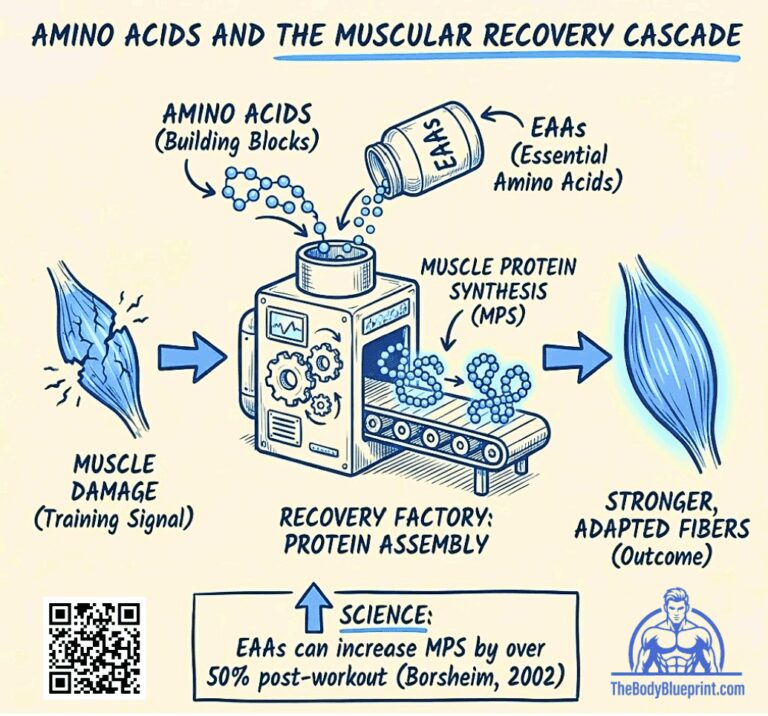
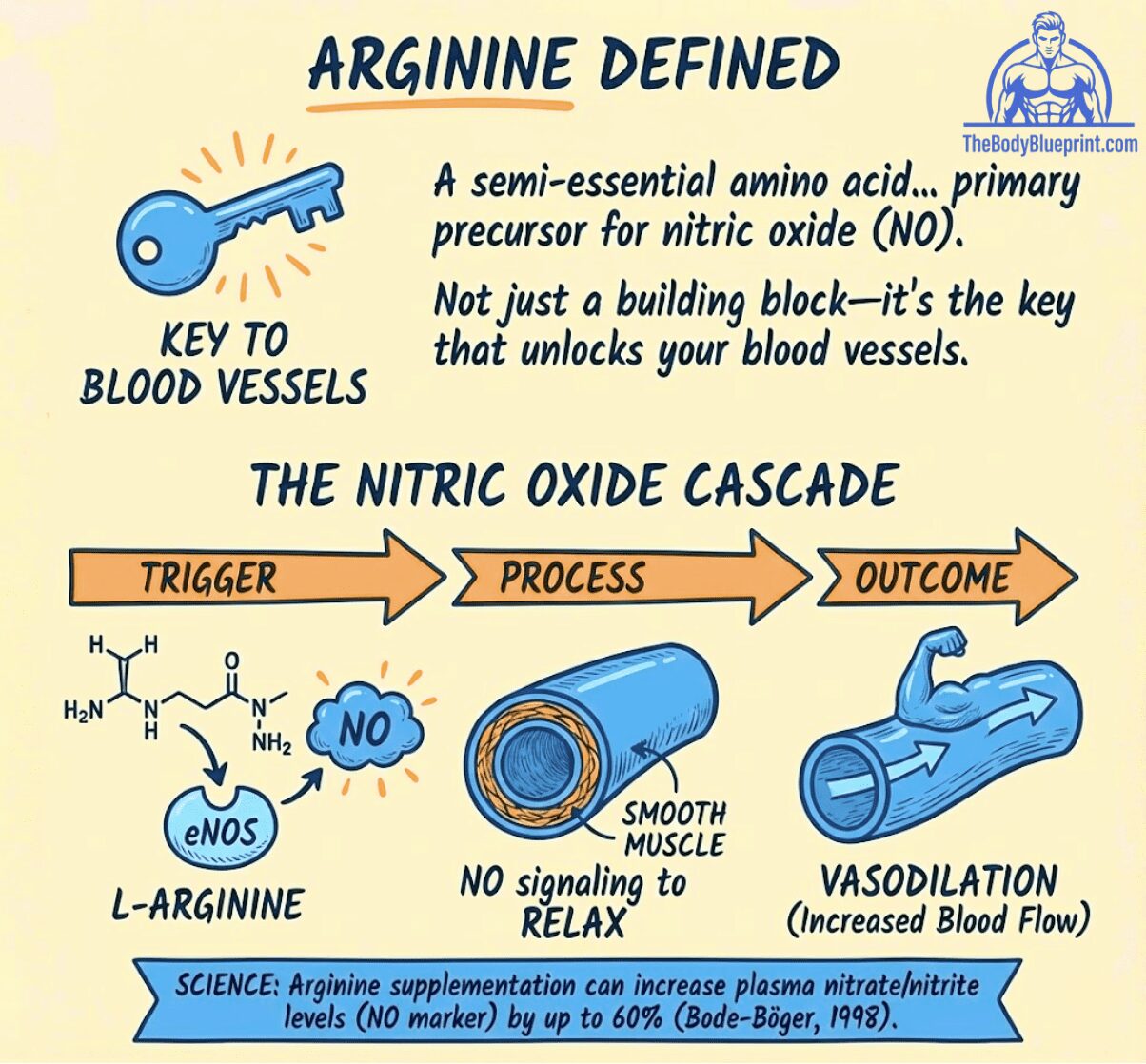
Arginine is a semi‑essential amino acid. It is the primary precursor for nitric oxide (NO). Nitric oxide relaxes blood vessels. Wider vessels = more blood flow = faster nutrient delivery. This guide breaks down how arginine supports recovery. It covers dosing, timing, and the difference between arginine and citrulline. This is the data you need to decide if arginine belongs in your recovery stack.
Medical Disclaimer: This guide is for educational purposes. The statements regarding any supplements have not been evaluated by the Food and Drug Administration. These products are not intended to diagnose, treat, cure, or prevent any disease. Always consult a qualified professional before starting a new regimen.
Core Concepts: The Arginine‑NO Connection
Arginine is a semi‑essential amino acid. It serves as the direct precursor for nitric oxide (NO). NO is a signaling molecule. It tells the smooth muscle in blood vessel walls to relax. Relaxation = vasodilation = wider vessels = increased blood flow.
This process is the foundation of arginine’s recovery benefits. More blood flow means:
- More oxygen delivered to working muscles
- More amino acids and glucose for repair and energy
- Faster removal of metabolic waste (lactate, ammonia)
“Think of arginine as the traffic controller at a busy intersection. Without it, nutrients stack up, waste piles up, and recovery slows to a crawl. With it, the roads open and everything moves where it needs to go.”
Eugene Thong, CSCS
Benefits for Recovery: More Than Just a Pump
Arginine’s role in recovery is mechanical, not magical. It supports the delivery system for everything else you consume. When blood flow is optimized, every nutrient works harder.
| Recovery Metric | Without Optimized Flow | With Arginine‑Induced Vasodilation |
|---|---|---|
| Nutrient Delivery | Standard Rate | Accelerated Delivery |
| Waste Removal | Slower Clearance | Enhanced Clearance (Lactate, Ammonia) |
| Muscle Protein Synthesis | Limited by supply | Better supplied, faster repair |
For a deeper look at recovery mechanics, see our guides on muscle recovery science, amino acids for recovery, and post‑workout nutrition.
Timing & Dosage: How to Use Arginine for Recovery
Arginine is best used around training—both before and after. The goal is to open the vascular highways when nutrient demand is highest.
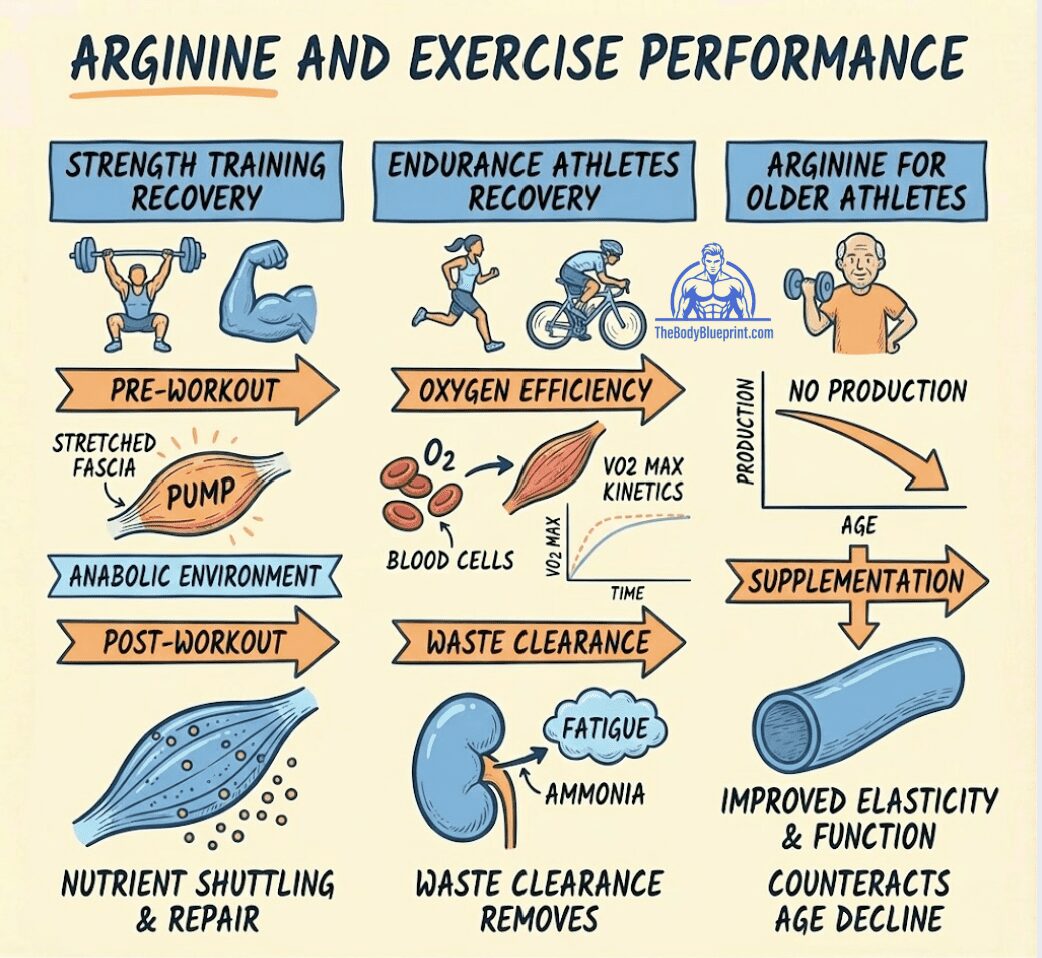
- Pre‑workout (3‑6g, 30‑60 min before): Prime blood flow. Enhance the pump. Start nutrient delivery early.
- Post‑workout (3‑6g, immediately after): Maintain vasodilation. Shuttle amino acids into damaged tissue. Clear metabolic waste.
- Total daily range: 6‑12g split into 2‑3 doses. Start lower to assess tolerance.
For performance timing strategies, see pre‑workout timing guide and protein timing for muscle growth.
“Arginine before training is like opening the floodgates before a storm. Arginine after is like keeping them open to clean up the mess. Timing is the difference between a trickle and a torrent.”
Charles Damiano, B.S. Clinical Nutrition
Food Sources vs. Supplements: What Delivers
You can get arginine from food, but therapeutic doses require supplementation. The table below shows natural sources and their arginine content.
| Food Source | Arginine (per 100g) |
|---|---|
| Pumpkin Seeds | 5.4g |
| Turkey Breast | 3.2g |
| Pork Loin | 2.4g |
| Chicken Breast | 2.2g |
| Peanuts | 3.1g |
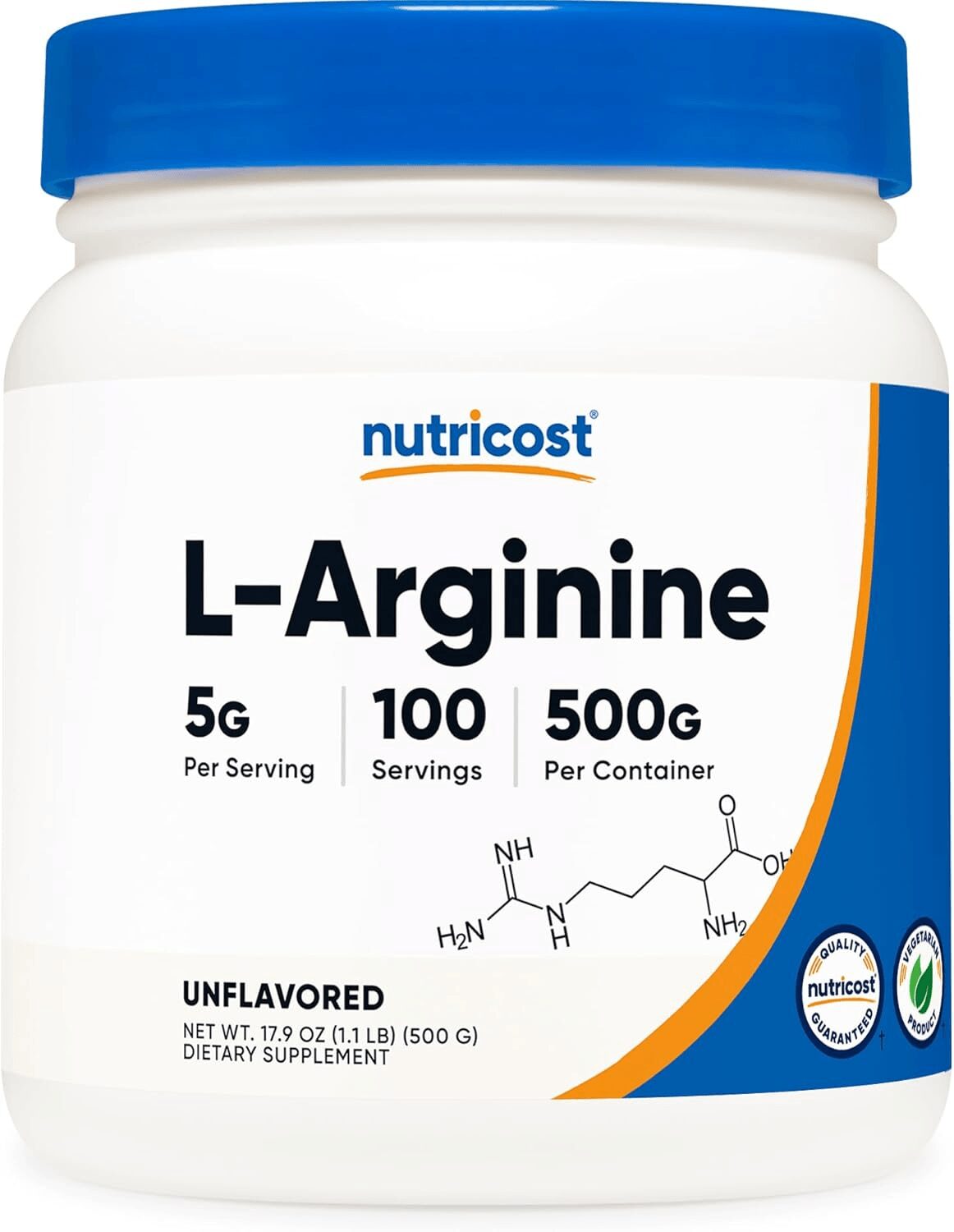
Supplements provide concentrated, fast‑absorbing doses. Powders are ideal for pre‑workout drinks; capsules offer convenience. The main trade‑offs:
| Pros of Supplementation | Cons of Supplementation |
|---|---|
| Precise dosing for therapeutic effects | GI distress at high doses (>10g) |
| Rapid absorption on empty stomach | Can compete with other amino acids for absorption |
| Convenient peri‑workout timing | Purity concerns with low‑quality brands |
For clean supplement options, see our best protein powder guide and Nutricost L‑Citrulline Malate review. To understand how arginine compares to citrulline, read citrulline malate for strength and recovery.
FAQs: What Lifters Actually Ask
A: Yes. It improves blood flow, which delivers oxygen and nutrients to damaged muscles while clearing metabolic waste. This supports a more anabolic environment for repair.
A: For nitric oxide production, citrulline is often superior. Citrulline converts to arginine in the kidneys, providing a more sustained elevation and fewer GI issues. For most athletes, citrulline malate is the better choice.
A: Indirectly, yes. Better oxygen delivery delays fatigue. Its role in ammonia clearance also helps combat central fatigue during prolonged exercise.
A: Arginine can be taken consistently as part of a daily regimen. There is no defined cycle. Periodically assess whether it provides noticeable benefits to performance and recovery.
A: Yes. It stacks well with creatine, whey protein, and omega‑3s. Avoid combining with blood pressure meds or PDE5 inhibitors without medical advice.
Final Verdict: Is Arginine Worth It?
Arginine is not a magic recovery pill. It is a delivery system. When blood flow is optimized, every other recovery tool—protein, carbs, hydration—works better. The key is dosing (6‑12g split around training) and timing (pre and post).
Choose arginine if:
- You want to enhance nutrient delivery to muscles.
- You train with high volume and need faster waste clearance.
- You are willing to use powder form for effective dosing.
Skip arginine if:
- You have a history of herpes (cold sores)—arginine can trigger outbreaks.
- You are already using citrulline malate at effective doses (6‑8g), which may make arginine redundant.
- You experience GI distress at therapeutic doses.
For a complete recovery stack, pair arginine with fast‑digesting whey, strategic carb timing, and quality sleep.
The Bottom Line: Open the Floodgates.
Your muscles are waiting for their shipment. Arginine is the logistics upgrade. Dose it around training, pair it with solid nutrition, and let the vascular system do its job.
*Prices subject to change. Verified 2026 technical review.
The Supplement Lexicon: Arginine Edition
- L‑Arginine
- A semi‑essential amino acid and the primary precursor for nitric oxide (NO) synthesis. Supports vasodilation, nutrient delivery, and waste clearance.
- Nitric Oxide (NO)
- A signaling molecule that relaxes the smooth muscle in blood vessel walls, causing vasodilation and increased blood flow.
- Vasodilation
- The widening of blood vessels due to relaxation of smooth muscle. Increases blood flow, oxygen delivery, and nutrient transport.
- Citrulline Malate
- A combination of L‑citrulline and malic acid. Converted to arginine in the kidneys, providing more sustained NO elevation and often better GI tolerance.
- Ammonia Clearance
- The removal of ammonia, a fatigue‑inducing metabolic byproduct, via the urea cycle. Arginine plays a key role in this process.
- Arginine AKG (AAKG)
- A salt of arginine and alpha‑ketoglutarate, often marketed for pre‑workout pumps. Absorption and efficacy are similar to standard L‑arginine.