Most lifters are leaking power. They have strong legs and a decent bench, but their ability to transfer force from the ground to their hands is practically nonexistent. If your core collapses under diagonal stress, your heavy lifts and athletic potential are dead in the water.
The Half-Kneeling Band Lift fixes this energy leak. By removing the legs from the equation, it forces your core stabilizers to do the heavy lifting—literally. This isn’t a “toning” exercise; it’s a biomechanical tune-up that builds the rotational torque and anti-rotational stiffness required for elite performance.
Important: Ensure you have adequate hip mobility before loading this movement heavily. Poor hip positioning will force lumbar compensation.
Why This Move Deserves a Spot in Your Routine
This is the inverse of the Pallof Press. Instead of resisting rotation isometrically, you are actively driving rotation against resistance while stabilizing the hips.
Key Performance Outcomes
| Benefit | The Real-World Payoff |
|---|---|
| Diagonal Force Transfer | Connects the opposite hip to the opposite shoulder (the “X” pattern). |
| Hip Dissociation | Teaches you to rotate the T-spine without compromising the lumbar spine. |
| Glute Activation | Forces the down-leg glute to fire to prevent pelvic tilt. |
How to Perform It Like a Pro
Do not rush this. The magic is in the control, not the speed.
Step-by-Step Instructions
- Anchor Low: Attach your band near the floor. You are lifting *up* and across. If you don’t have a low anchor, check our guide on anchoring bands safely.
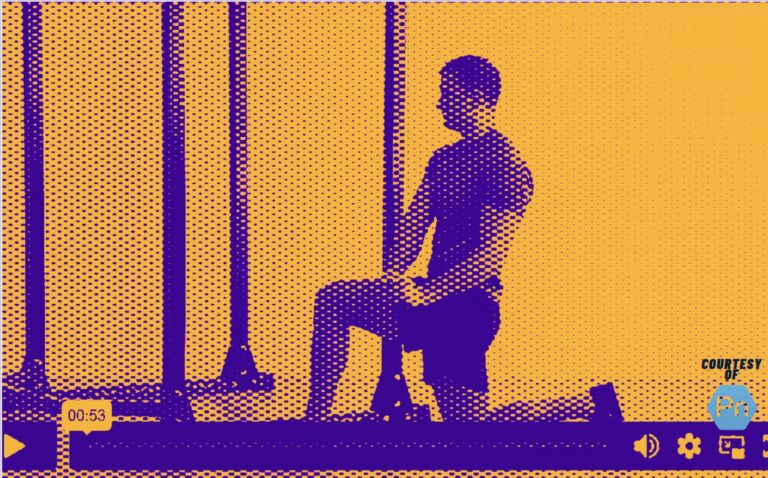
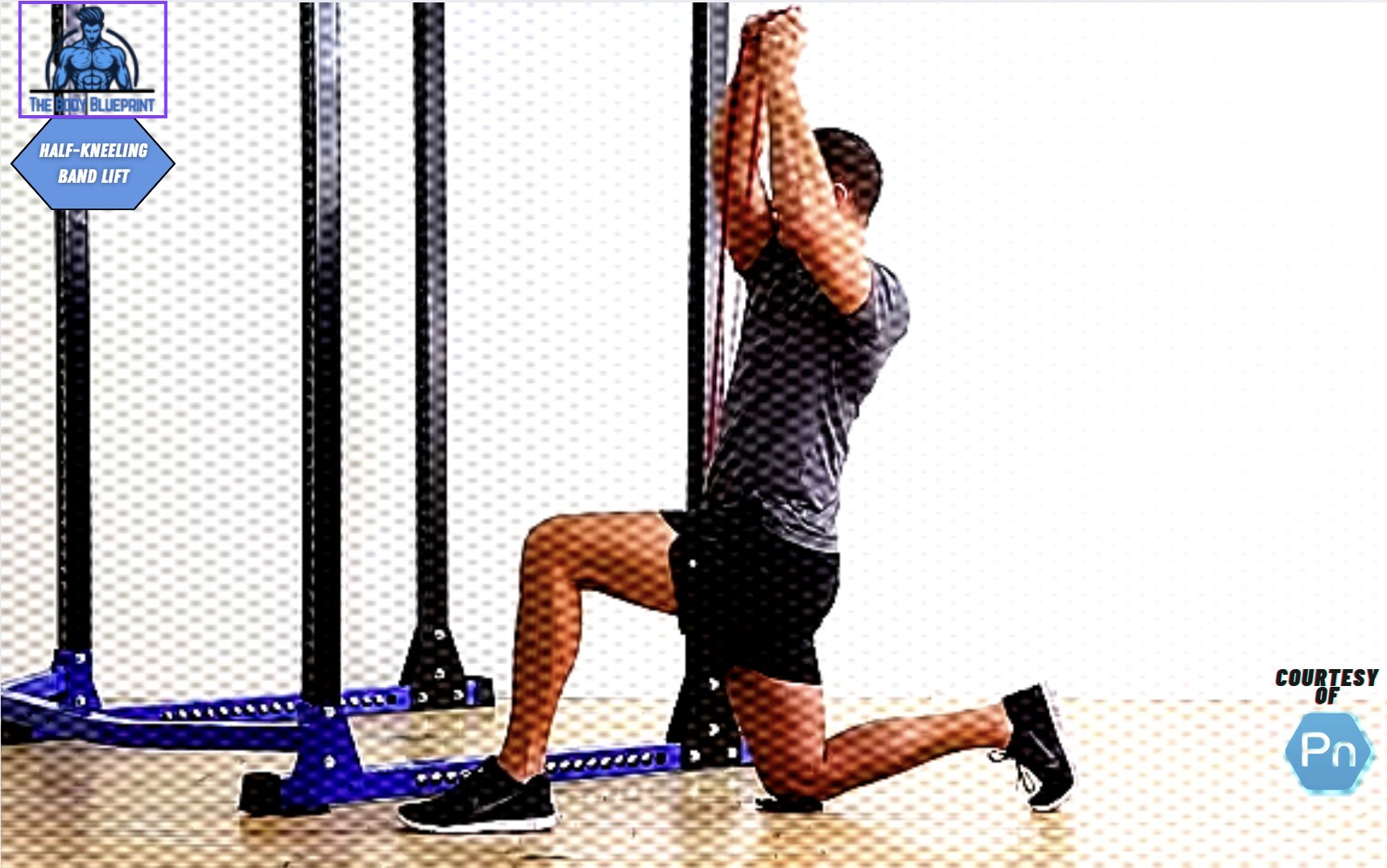
- The Half-Kneel: Kneel down. The leg *closest* to the anchor point should be the one that is down (kneeling). This is critical for the diagonal pull line.
- Grip & Align: Grab the band with both hands. Keep your arms straight. Your torso should face forward, ribs down.
- The Lift: Pull the band diagonally across your body from your hip to above your opposite shoulder. Your eyes should follow your hands.
- The Return: Control the descent. Do not let gravity or elasticity snap you back.
“Imagine there is a laser pointer on your belt buckle. It should point straight ahead the entire time. If your hips rotate with your arms, you’ve lost the core tension.”
— Eugene Thong, CSCS
Unusual Variations to Take It Further
1. The Split-Stance Lift
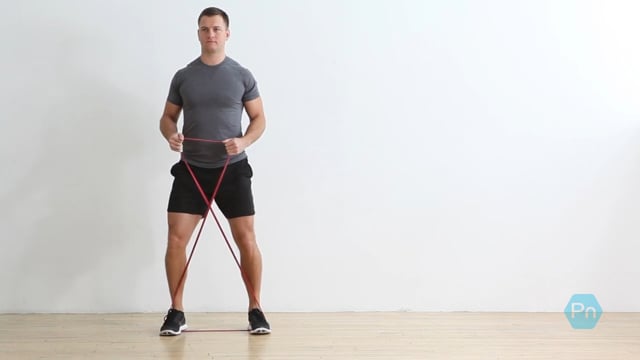
Stand up. Assume a split squat position (lunge stance) but don’t drop the knee to the floor. Now perform the lift. This integrates dynamic balance and is a precursor to the X-Band Walk for hip stability.
2. The “Press-Out” Lift
Instead of keeping arms straight, pull the band to your chest (like a row), press it out, and then lift it overhead. This increases time under tension.
3. Resisted Downward Pull
Anchor high and pull down (a chop). This targets the anterior core more aggressively.
Key Mistakes to Avoid
- Shoulder Shrugging: Keep your traps relaxed. If you shrug, the band is too heavy.
- Lumbar Arching: If you lean back to complete the lift, your core has failed. Squeeze the down-leg glute to lock the pelvis. If tightness is the issue, hit the couch stretch first.
- Bending the Elbows: Keep arms straight to maximize the lever arm and core demand.
Training Blueprint: Progressions
Phase 1: Stabilization
| Week | Protocol | Focus |
|---|---|---|
| 1-3 | 3 sets x 8 reps (Slow) | Perfect hip alignment. |
| 4-6 | 3 sets x 12 reps | Increased band tension. |
Phase 2: Power & Endurance
| Variation | Protocol | Note |
|---|---|---|
| Split-Stance Lift | 3 x 10/side | Minimal rest (30s). |
| Paused Lift | 3 x 6 (3s hold) | Use intra-workout carbs for sustained energy. |
FAQs
Q: How does this differ from the Pallof Press?
The Pallof Press is anti-rotation (resisting movement). The Lift involves active rotation (creating movement) while maintaining stability.
Q: Can I use a dumbbell?
Yes, it’s called a “Woodchop,” but bands or cables are superior here because they provide constant tension vectoring across the body, whereas gravity only pulls a dumbbell straight down.
The Verdict
The Half-Kneeling Band Lift is the bridge between a strong core and a useful core. Stop isolating your abs and start integrating your kinetic chain. Add this to your warm-up or accessory block and watch your stability skyrocket.