The Single-Arm Dumbbell Bench Press is the definitive tool for correcting chest asymmetry and forcing your core to handle “anti-rotation” forces.
If you only ever use a barbell, you’re letting your dominant side hide your weaknesses. We are breaking down the tactical form cues that turn this unilateral press into a total-body stability builder. If you want a chest that looks like it was carved out of granite, you have to stop ignoring your imbalances.
Disclaimer: Consult a physician or qualified trainer before starting any new exercise. This guide is for performance and aesthetic optimization purposes and is not medical advice.
Single-Arm Dumbbell Bench Press: Unilateral Dominance
The Single-Arm Dumbbell Bench Press is a chest variation where you perform a standard press using only one arm at a time. Unlike the Barbell Bench Press, the unilateral load tries to pull your torso off the bench. To stay flat, your obliques and core must fire at maximum capacity. It is the ultimate diagnostic tool for finding out which side of your body is actually doing the work.
- Primary Muscles: Pecs, Triceps, Anterior Deltoids.
- Secondary Muscles: Obliques, Abs (Anti-rotation), Forearms.
- Skill Level: Intermediate. Requires significant eccentric control.
- Key Purpose: Correct muscle imbalances, enhance core stability, and improve shoulder health.
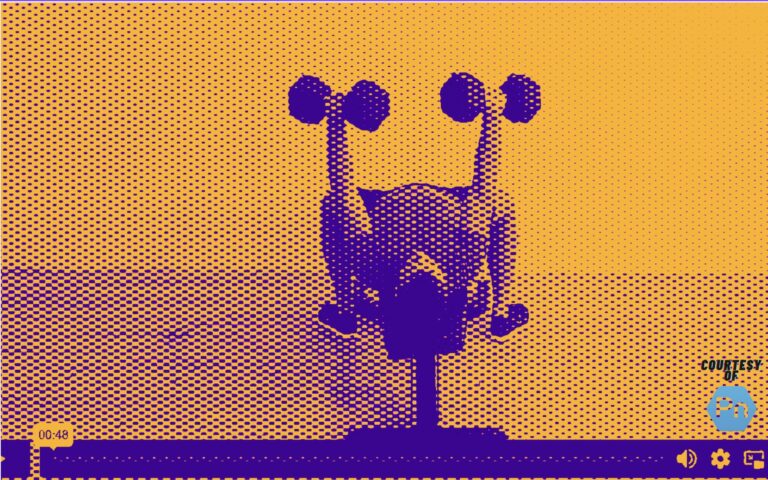
Single-Arm Dumbbell Bench Press instructional video. Watch the feet and torso stability.
Why Single-Arm Pressing is a Non-Negotiable Tool
If you want a symmetrical physique and a bulletproof core, you cannot live on the barbell alone. Unilateral pressing forces the body to stabilize in a way that bilateral movements simply can’t match.
- Anti-Rotation Core Strength: Your abs must fight to keep you from rolling off the bench. This build “functional” core strength that transfers to the Barbell Deadlift.
- Shoulder Health: The dumbbell allows for a neutral or semi-pronated grip, reducing the “impingement” risk often found in fixed-bar pressing. Pair this with Dumbbell External Rotation on Knee for bulletproof shoulders.
- Fixes Asymmetry: You can’t hide a weak left pec when it has to move the weight by itself.
- Increased Range of Motion: Without the bar hitting your chest, you can achieve a deeper stretch at the bottom, recruiting more muscle fibers.
Step-by-Step Form: The Stability Checklist
- The Setup: Sit on the bench with a dumbbell on one knee. Kick the weight up as you lie back. Keep your non-working hand either on your hip or reaching toward the ceiling for balance.
- The Brace: Use 90/90 Wall Balloon-Breathing cues to set your ribs. Drive your heels into the floor. Your legs are your anchors.
- The Descent: Lower the weight with a 3-second eccentric. Keep your elbow at a 45-degree angle—never flare it out 90 degrees.
- The Drive: Press the dumbbell back up while actively fighting the urge to rotate toward the weighted side. Squeeze the pec hard at the top.
- The Switch: Finish all reps on one side before carefully switching to the other.
“The beauty of the single-arm press isn’t just in the chest growth; it’s in the anti-rotation demand. If you can’t stabilize a dumbbell that is 50% of your max bench, your core is the bottleneck in your performance. We use this to bridge the gap between ‘gym strength’ and ‘athletic power.’ It’s the ultimate honesty drill.”
— Eugene Thong, CSCS
3 Common Form Mistakes & How to Fix Them
Precision is the difference between a massive chest and a shoulder injury.
1. The “Rolling” Torso
The Mistake: Letting your shoulder or hip lift off the bench as you press. The Fix: Dig your opposite-side heel into the floor. Tighten your glutes. If you still can’t stay flat, regress the weight or fire up your obliques with an Ab Wheel Iso.
2. Elbow Flaring
The Mistake: Letting the elbow drift out in line with the shoulder. The Fix: Keep the elbow “tucked” slightly (45 degrees). This keeps the tension on the pec and off the delicate shoulder capsule.
3. “Poverty” Range of Motion
The Mistake: Cutting the rep short because the weight feels unstable at the bottom. The Fix: Lower the weight until the dumbbell is just above chest level. Own the stretch.
“From a metabolic standpoint, unilateral work increases the total time the body stays under tension. By the time you finish both sides, your heart rate and core recruitment are significantly higher than a bilateral press. It’s an efficient way to boost caloric demand while hammering hypertrophy.”
— Charles Damiano, B.S. Clinical Nutrition
Programming & Integration
This is best used as your second “accessory” movement on chest or upper-body days.
- Hypertrophy: 3 sets of 8-12 reps per side. 60s rest between arms.
- Stability Focus: 4 sets of 6 reps with a 5-second eccentric. Slow down to grow.
- The Finisher: Superset with Alternating Dumbbell Bench Presses to completely exhaust the muscle fibers.
Variations to Scale Difficulty
- To Regress: Use a Dumbbell Floor Press to limit the range of motion and focus purely on the lockout and core stability.
- To Progress: Move to an incline bench to target the upper pecs or add a “pause” at the bottom to kill all momentum.
- Unilateral Pulling: Balance your pressing with the Single-Arm Dumbbell Row to keep the shoulders healthy.
The Verdict
The Single-Arm Dumbbell Bench Press is the “secret sauce” for a physique that is as strong as it looks. It demands core integrity, solves muscular imbalances, and builds a massive chest. Stop hiding behind the barbell. Own your weak side.
Single-Arm Dumbbell Bench Press FAQ
Should I use the same weight as my regular DB press?
No. Expect to use about 10-20% less weight initially as your core learns to stabilize the anti-rotation forces.
Is this better than a Barbell Bench?
It’s not “better,” it’s different. Barbell is for max load; Single-Arm is for stability, symmetry, and core integration. Use both in a periodized program.
What do I do with my free hand?
Keep it active. Either place it on your hip to monitor core tension or reach it straight up to help with balance. Just don’t let it hang lifelessly.