The effectiveness of collagen peptides for skin elasticity is no longer a matter of debate; it is a matter of molecular weight. While generic protein powders are digested for muscle fuel, “Bioactive Collagen Peptides” (BCP) are engineered to survive digestion and signal fibroblasts to support endogenous production of elastin and fibrillin. We analyzed the 2026 clinical data on Verisol® technology and Type I/III sourcing to determine which formulas legitimately reinforce your dermal structural matrix.
Health & Safety: Statements have not been evaluated by the FDA. These products are not intended to diagnose, treat, cure, or prevent any disease. Results vary by individual. Always consult a professional before altering your supplement regimen.
Dermal Resilience: How Peptides Support Elasticity
To understand skin elasticity, you must view the dermis as a biological suspension system. Collagen provides the tensile strength (the frame), while elastin provides the recoil (the springs). As we age, the enzyme collagenase breaks down this network faster than it can be replaced. Hydrolyzed collagen peptides work by delivering specific dipeptides—primarily Hydroxyproline-Proline—that bypass gut degradation and enter the bloodstream as signaling molecules.
According to 2026 meta-analyses, these peptides don’t just “fill in” gaps; they support endogenous synthesis of Type I pro-collagen and elastin. This process significantly promotes dermal density and supports skin hydration. For the lifter, this same mechanism supports tendon resilience, as the structural requirements of the skin and tendons are remarkably similar.
The Clinical Dosage: 2.5g vs. 10g
There is a distinct mechanical difference between an “aesthetic dose” and a “recovery dose.” Clinical studies consistently show that for maintaining skin elasticity and a smooth appearance, a precise daily dose of 2.5g to 5g of bioactive peptides is the clinical threshold. Higher doses (10g-20g) are excellent for post-workout recovery, but they don’t necessarily scale linearly for skin-specific benefits.
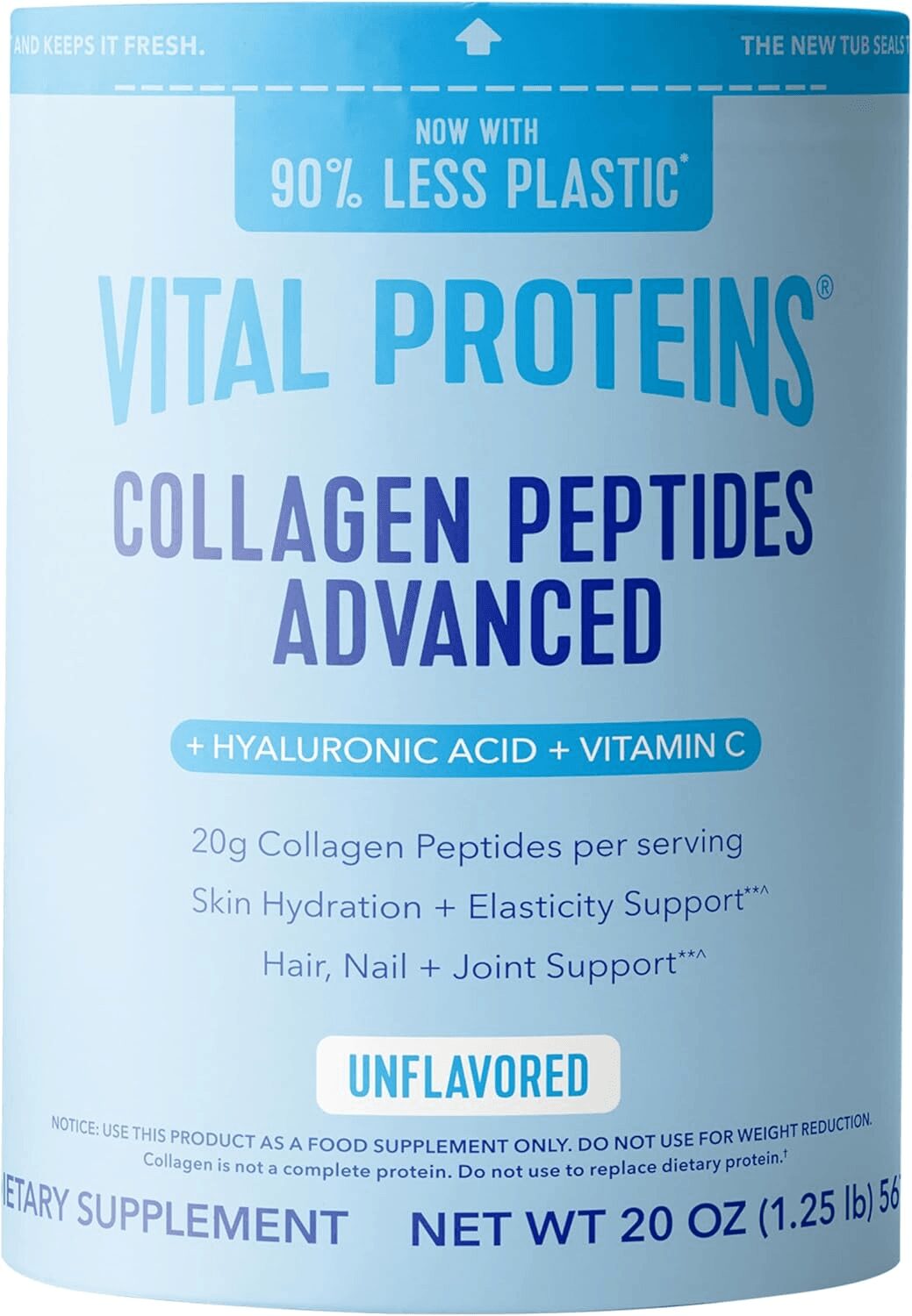 Most premium formulas, like Vital Proteins Advanced, provide 20g of collagen. While this exceeds the aesthetic requirement, it supports reaching the threshold for joint maintenance as well. If you are strictly pursuing aesthetic results, a targeted capsule complex may be more efficient.
Verisol® vs. Standard Hydrolyzed Collagen
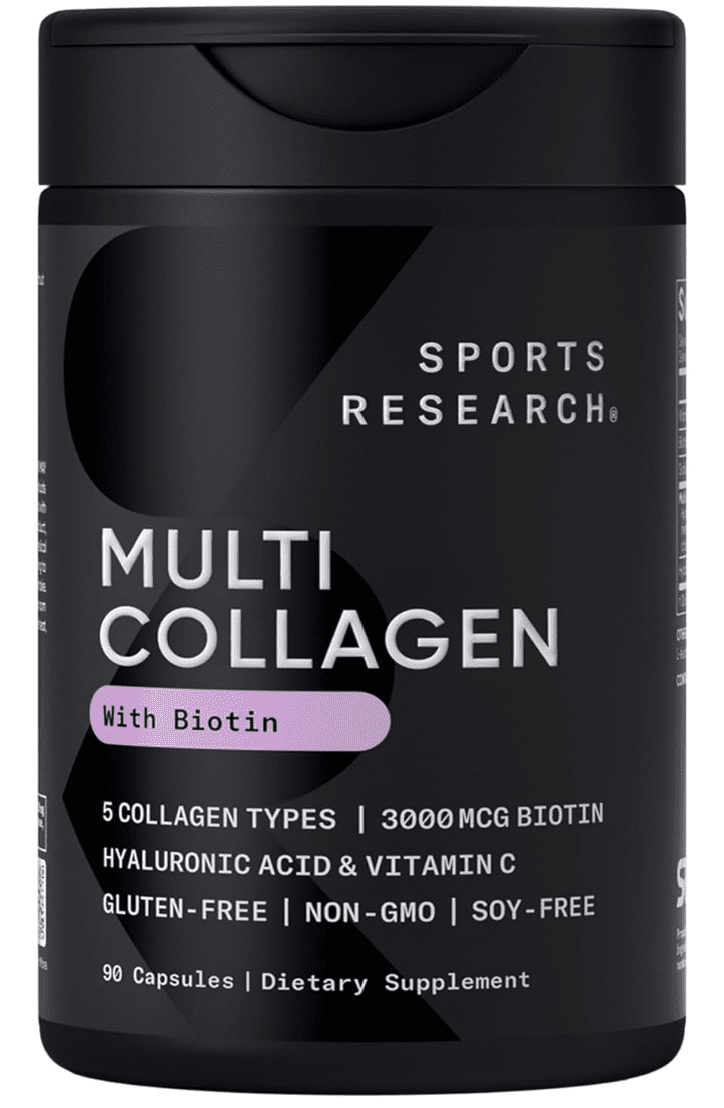 Verisol® is a patented brand of bioactive collagen peptides specifically optimized for dermal applications. Unlike standard hydrolyzed collagen, which has a broad molecular weight distribution, Verisol is filtered to ensure a specific peptide profile that targets skin cells directly. Studies on 114 women aged 45-65 demonstrated that a 2.5g daily intake significantly supported a reduction in eye wrinkle volume appearance after 8 weeks.
If your primary goal is visible elasticity, look for the Verisol logo on your supplement label. You will find this specialized technology in products like the Sports Research Multi-Collagen Complex, which pairs these peptides with Biotin and Hyaluronic Acid for synergistic support.
Selection Matrix: Best Collagen for Skin Elasticity
Every recovery tool has a specific trade-off between price, dose, and variety. To promote dermal resilience, contrast these industry standards:
| Supplement | Key Advantage | Elasticity Tech |
|---|---|---|
| SR Multi-Capsules | Portability + Biotin | 5-Type Blend + Verisol® |
| Vital Proteins | High-Volume Loading | 20g Type I & III |
| Momentous | Elite Purity + Vit C | Fortigel® Peptides |
“Elasticity is the result of a functional extracellular matrix. Whether you choose the clinical precision of Verisol-based capsules or the high-volume loading of Vital Proteins, the objective is to provide the bioavailable signals your fibroblasts need to support the chassis.”
— Eugene Thong, CSCS
Skin Elasticity FAQ: Timing and Synergy
- How long does it take to see results?
- Skin turnover occurs every 28–40 days. 2026 research indicates that 8 to 12 weeks of consistent intake is required to observe significant changes in elasticity appearance and dermal thickness.
- Can I take collagen with my morning coffee?
- Yes. High-quality hydrolyzed peptides are heat-stable. For those with a sensitive digestive system, unflavored bovine peptides are often the cleanest option.
- Is Vitamin C necessary?
- Yes. Endogenous collagen synthesis is promoted by Vitamin C. If your supplement doesn’t include it, pair your dose with a citrus fruit or a Vitamin C supplement.
Final Verdict: The Best Tool for Dermal Resilience
If your primary goal is supporting skin elasticity, the technical winner is a bioactive, multi-type blend. While single-source powders provide the raw nitrogen, the Sports Research Multi-Collagen Complex (with its 5-type profile and Biotin synergy) offers a more specialized approach to aesthetic maintenance. However, if you are a lifter balancing skin goals with joint maintenance, the high-volume loading of **Vital Proteins Advanced** remains the structural gold standard. It’s about choosing the correct molecular hardware for the job.
Verdict: Supported Dermal Integrity
You have the molecular facts. Stop overpaying for generic “beauty” powders and support your elasticity with bioavailable, bioactive peptides.
The Elasticity Tech Lexicon
- Fibroblasts
- The primary cells in the dermis responsible for the synthesis of collagen, elastin, and the extracellular matrix.
- Elastin
- A highly elastic protein in connective tissue that allows many tissues in the body to resume their shape after stretching or contracting.
- Endogenous Synthesis
- The process by which the body creates its own proteins. This is promoted by co-factors like amino acids and Vitamin C.