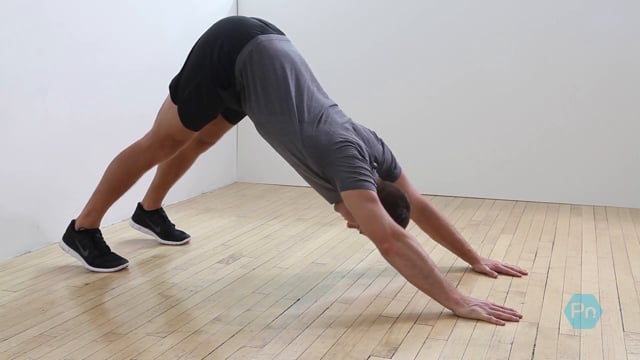
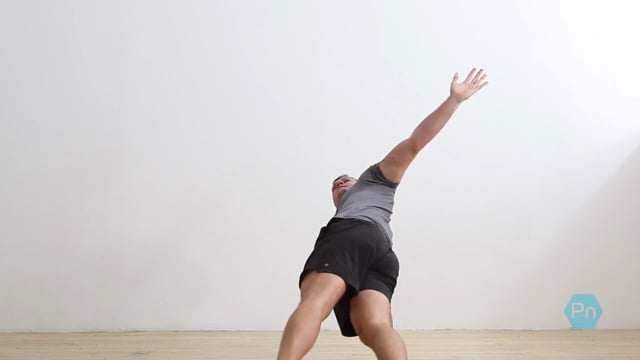
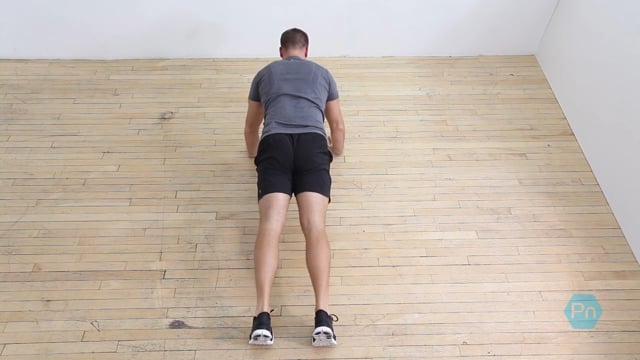
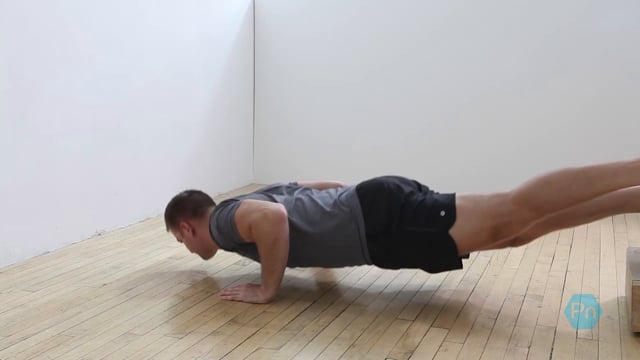
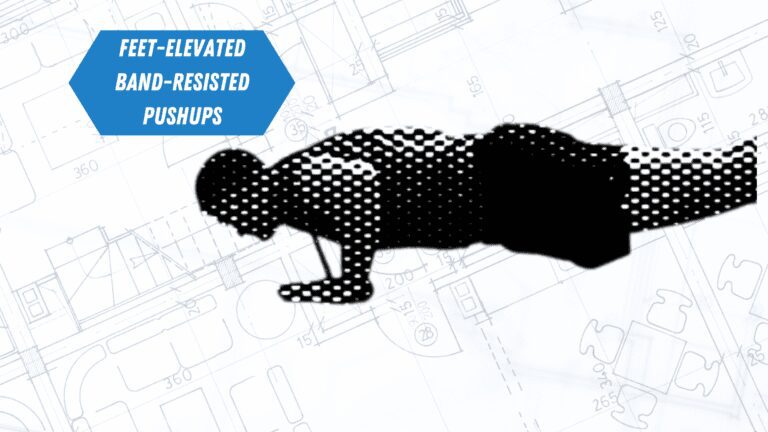
The single-leg feet-elevated band-resisted pushup is a high-threshold horizontal pressing variation that integrates upper-body hypertrophy with extreme rotary stability. Most lifters treat the pushup as a “warm-up” move, but by elevating the feet and removing a point of contact, we perform a mechanical audit on your lumbar-pelvic control. Adding accommodating resistance via the band ensures that your triceps and pectorals are under maximum tension exactly where your leverage is strongest, mirroring the explosive power required for elite-level body engineering.
Technical Setup: Calibrating the Pressing Platform
Feet-elevated pushups shift approximately 70-75% of your body weight onto the shoulder girdle, demanding a rigid chassis. If your hips sag, you are leaking force through the anterior core. Use a ribs-down exhale to anchor the ribcage to the pelvis before adding the band. If you struggle to maintain a neutral spine, integrate single-leg bridges into your warm-up to ensure your glutes are prepared to act as the primary stabilizers for the “floating” leg.
Execution Cues: Overcoming Accommodating Resistance
Initiate the descent by tucking the elbows to a 45-degree angle to preserve subacromial space. Avoid the common mistake of “shrugging” toward the ears, which kills scapular rhythm and mimics the shoulder issues seen in a Golden Era chest day gone wrong. As you explode upward, drive through the palms to fight the increasing tension of the band. To support the neural recovery needed for this intensity, supplement with creatine to maintain ATP stores during high-tension sets.
| Mechanical Check | Correction Strategy |
|---|---|
| Pelvic Rotation | Contract the glute of the grounded foot; brace obliques. |
| Elbow Flaring | Think “screw the hands into the floor” to create torque. |
| Cervical Sag | Maintain a “long neck” and pack the chin. |
Stabilization Logic: The Anti-Rotation Component
Removing one leg transforms a sagittal plane press into a three-dimensional stability challenge. In the Engineering Dept, we prioritize the single-leg variable to eliminate “side-to-side” strength leaks that occur during unilateral athletic movements. If you can’t stabilize your own mass against a band, you can’t expect to produce power on the field. Fuel this high-threshold work with HBCD carbs to prevent intra-workout performance drops.
“Adding weight is easy; adding complexity is how you build a resilient athlete. The band pushup is the benchmark for true horizontal pressing integrity.” — The Body Blueprint Team
Lexicon of Mechanics: Pressing Edition
Accommodating Resistance: Using bands or chains to increase load as the joint angle improves and leverage increases.
Closed-Kinetic Chain: Exercises where the hands or feet are fixed to a non-moving surface, improving proprioception.
Rotary Stability: The core’s ability to resist rotation, crucial for protecting the spine during unilateral loads.
Peak Contraction: The point of maximum muscle tension, intensified here by the band at full arm extension.
Upgrade Your Pressing Blueprint.
Move beyond the basic bench. Master the band-resisted elevated pushup and build a chest that performs as good as it looks.