The Prone T Raise is the zero-equipment fix for weak, rounded shoulders and a vanished upper back.
This is the 2026 posture and performance hack. We’re cutting through physical therapy jargon to deliver the raw mechanics: how this simple move builds shoulder-blade control, unlocks pressing power, and carves aesthetic rear delts. This is the drill you need before your bench press plateaus.
Prone T Raise: The Scapular Control Drill
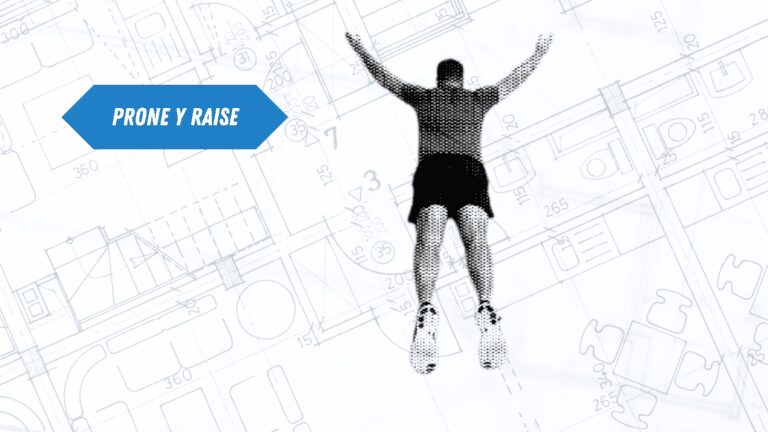
The Prone T Raise is a bodyweight exercise performed face-down to strengthen the muscles that retract and depress your shoulder blades. You lie prone (on your stomach), arms extended to the sides in a “T” shape, and lift them by squeezing your upper back. It’s pure scapular retraction. This isn’t about moving weight; it’s about neurologically owning the space between your shoulder blades. For a complete system, see our Recovery Protocols hub.
- Primary Muscles: Rhomboids, Middle/Lower Trapezius, Rear Deltoids.
- Secondary Benefit: Teaches proper scapular positioning for all compound lifts.
- Equipment Needed: None. Floor, bench, or incline bench.
- Movement Pattern: Scapular Retraction/Depression (Pulling shoulder blades together and down).
Performance & Aesthetic Benefits: Beyond Posture
The Prone T Raise directly translates to a stronger, more stable bench press, overhead press, and a thicker, wider-looking back. This isn’t rehab; it’s prehab for bigger lifts and better aesthetics. Weak scapular retractors are a leak in your strength system. Plug it.
1. Performance & Strength Benefits
Creates a stable base for pressing. A strong, retracted scapula is the stable platform from which to push. This directly improves your Barbell Bench Press and Overhead Press power and safety.
Improves mind-muscle connection for back training. Teaches you to initiate pulls with your upper back, not just your arms. Makes every Bent-Over Row and Lat Pulldown more effective.
2. Aesthetic & Postural Benefits
Builds the “rear delt shelf” and improves upper back detail. Directly targets the often-neglected rear delts and mid-traps, critical for the 3D shoulder look and a V-taper from the back.
Counters “tech neck” and rounded shoulders. Actively fights the internal rotation and protraction caused by sitting. For a complementary stretch, pair with the Cross-Body Lat Mobilization.
“Most lifters have strong internal rotators and protractors from benching and pushing, but weak external rotators and retractors. The Prone T Raise isn’t optional accessory work—it’s balance work. It’s the insurance policy that keeps your shoulders healthy under heavy load and ensures your pressing strength translates to a better physique.”
— Eugene Thong, CSCS
How to Perform the Prone T Raise: Form is Everything
Perfect technique with bodyweight beats sloppy form with dumbbells. Quality reps build the neural map. Here’s the step-by-step breakdown. For visual mastery, watch the embedded tutorial.
- Set-Up: Lie face down on a flat bench, exercise mat, or even the floor. Extend your arms straight out to your sides, forming a “T” with your body. Palms down.
- Initiation: Slightly retract your shoulder blades (pull them together) and depress them (pull them down your back). This is the start position.
- The Lift: Keeping your arms straight (soft elbow), lift your hands toward the ceiling by squeezing your upper back muscles. Lead with your pinky fingers rotating slightly upward.
- The Peak: Hold for a 1-2 second squeeze at the top. Feel the contraction between your shoulder blades.
- The Lowering: Slowly lower back to the start with control. Do not relax completely at the bottom; maintain tension.
Programming the Prone T Raise: Reps, Sets, Progressions
Treat this as skill work and corrective strength, not a mass-builder. Use high reps, focus on fatigue, not failure. Integrate it seamlessly into your existing strength or muscle-building split.
Beginner Protocol (Skill Acquisition)
- Frequency: 3-4 times per week.
- Sets/Reps: 2-3 sets of 12-15 reps.
- Focus: Perfect form, mind-muscle connection. Add as a warm-up before upper body days or as a finisher.
Intermediate/Advanced Protocol (Hypertrophy & Endurance)
- Frequency: 2-3 times per week (e.g., on push or pull days).
- Sets/Reps: 3-4 sets of 15-20 reps.
- Focus: Time under tension. Use a 3-second lift, 2-second hold, 3-second lower tempo.
Progressions (When it Gets Easy)
- Add Light External Load: Hold 2.5-5lb plates or use wrist weights.
- Change Angle: Perform on a 30-45 degree incline bench. This increases range of motion and difficulty.
- Add Isometric Hold: Perform your last set as a 30-45 second hold at the top position.
4 Common Prone T Raise Mistakes (And How to Fix Them)
These errors turn a precision drill into a pointless flail. Correct them immediately. For more on fixing movement errors, explore our Training Foundations guide.
1. Using Momentum & Jerking
Mistake: Jerking the torso or using a swinging motion to lift the arms.
Fix: Slow down. If you can’t lift with a controlled tempo, the “weight” (your arms) is too heavy. Focus on the squeeze, not the height.
2. Shrugging (Elevating Scapula)
Mistake: Leading with the traps, bringing shoulders toward ears.
Fix: Actively think “shoulder blades down and together” before you lift. Initiate with the mid-back, not the neck.
3. Bending Elbows Excessively
Mistake: Turning the move into a rear delt fly by bending elbows 90 degrees.
Fix: Keep elbows “soft” but largely straight (5-10 degree bend). The primary motion is at the shoulder blade, not the shoulder joint.
4. Not Controlling the Descent
Mistake: Dropping the arms quickly after the lift.
Fix: The lowering phase (eccentric) is just as important. Take 2-3 seconds to lower. This builds control and muscle damage for growth.
Integrating the Prone T Raise Into Your Training
This exercise is a glue movement—it holds your bigger lifts together. Slot it in intelligently. Pair it with other targeted work for a bulletproof upper body. Check our Shoulder Exercises hub for more.
Ideal Pairings & Supersets
- As a Warm-Up: 2 sets of 12 before bench or overhead press to activate the retractors.
- As a Finisher: After your main pressing work, superset with Banded Face Pulls for a complete shoulder health circuit.
- On Pull Days: Include in a circuit with Band Pull-Aparts and External Rotations.
The Bigger Picture: The Push-Pull Balance
For every set of pressing (push), you should do at least one set of horizontal pulling (row) AND one set of scapular retraction (like T Raises). This 1:1:0.5 ratio (Push : Horizontal Pull : Scapular Work) maintains joint health and posture. Don’t just chase the mirror muscles; train the ones that let you train harder for longer.
The Bottom Line: Your Shoulder’s Best Friend
The Prone T Raise isn’t glamorous, but it’s foundational. It’s the 5-minute drill that fixes posture, prevents injury, and makes your bigger lifts stronger. Add it to your routine this week. Your shoulders—and your bench press—will thank you in 2026.