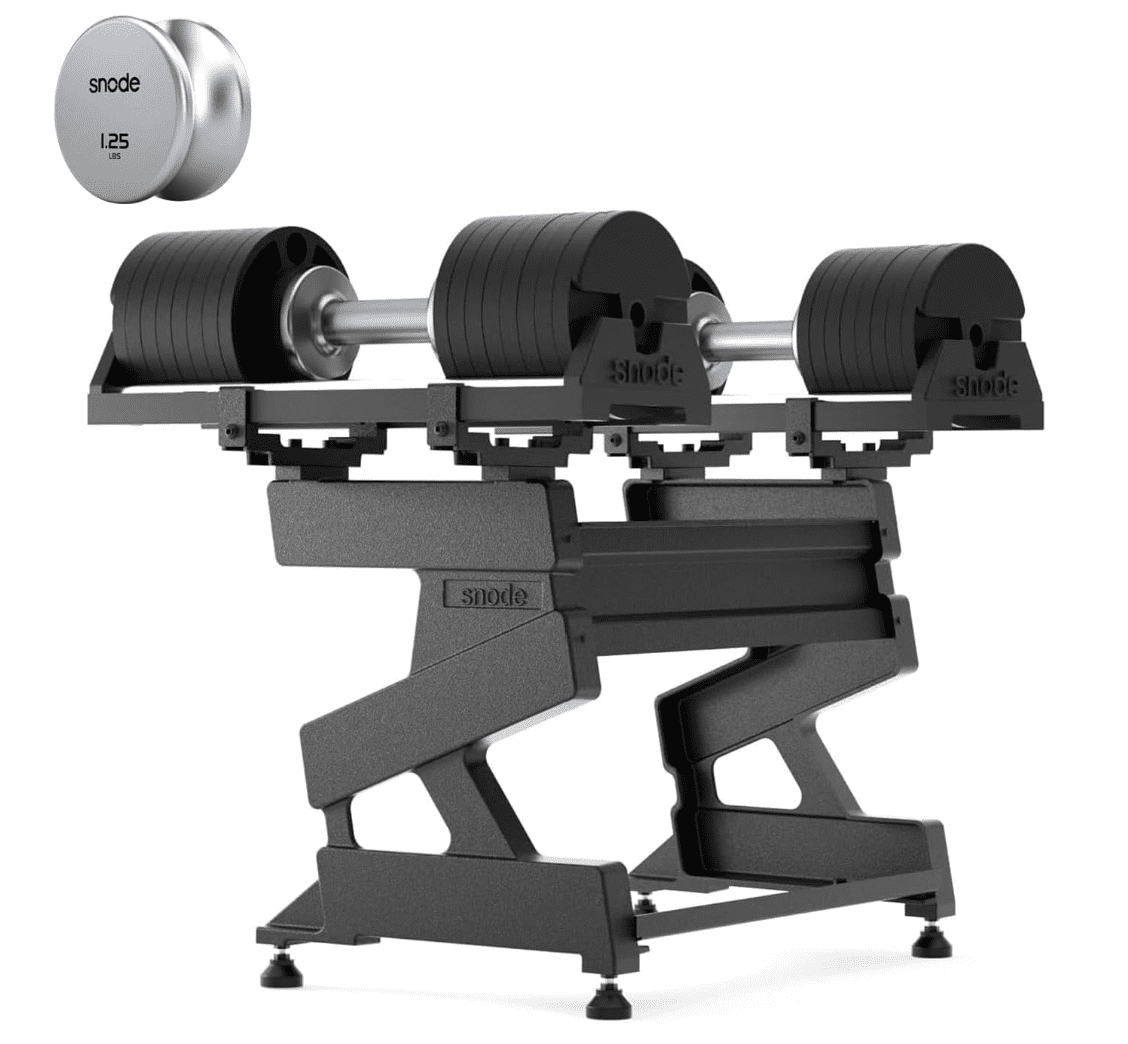
The Snode AD80 Magnetic Adjustable Dumbbells cost more than a rack of used iron. But the real question isn’t about price—it’s about cost per use, space saved, and the hidden tax of frustration from cheaper, failing gear. This 2026 Cost Analysis breaks down the upfront investment, long-term value, and real-world scenarios where the AD80 either saves you money or becomes an expensive paperweight.
Disclaimer: As an Amazon Associate, I earn from qualifying purchases — at no extra cost to you. These analyses take time. If you find it useful, using our link is a great way to support the work. Let’s break down the numbers.
For a full breakdown of features and performance, read our complete Snode AD80 Magnetic Adjustable Dumbbells Review.
The Upfront Sticker Shock: What You Actually Pay
Let’s not sugarcoat it. The Snode AD80s are a premium product with a price tag to match. As of 2026, expect to invest roughly $1,100 to $1,300 for the pair, including the essential vertical stand.
What’s Included (And What’s Not)
- Included: Two adjustable dumbbells (10-80 lbs each), the vertical storage stand, and user manual.
- Not Included: Any additional accessories. You don’t need anything else to start training.
- The Warranty: A 5-year warranty on the magnetic mechanism and frame. This is a critical part of the value proposition.
The “Why” Behind the Price
- Magnetic Mechanism R&D: You’re paying for the patented, sealed magnetic switching system designed to outlast traditional plastic gears.
- Materials & Finish: Solid steel plates with a durable chrome finish, not cheap coated iron.
- Space-Saving Design: The rectangular plate design and integrated stand engineering add cost but massive utility for space-constrained home gyms.
Cost vs. Every Other Option (2026 Math)
This is where context matters. The AD80 isn’t competing with a $200 pair of dial dumbbells; it’s competing with every way to get 10-80 lbs of dumbbell weight in your home.
Scenario 1: vs. A Full Rack of Fixed Dumbbells
- Fixed Dumbbell Set (5-80 lbs in 5 lb increments): Requires ~15 pairs. Even with budget brands, you’re looking at $1,800-$2,500+ for the set.
- Space Required: A massive 8-10 foot dumbbell rack vs. the AD80’s 2’x2′ footprint.
- Verdict: The AD80 saves at least $500-$1,200 and a huge amount of space.
Scenario 2: vs. Other Premium Adjustable Dumbbells
- Nuobell 80lb: Typically $100-$200 less per set. You save money upfront but trade the magnetic durability for a smooth cam system that still has moving plastic parts.
- Budget Dial Dumbbells (e.g., Bowflex): Can be $400-$600 cheaper. You risk the well-documented plastic gear failure, leading to replacement costs and downtime.
“The cost comparison isn’t fair if you only look at year one. A fixed dumbbell rack lasts forever, but it’s a space and capital anchor. The Snode’s cost is for eliminating that anchor while providing a durability guarantee most adjustables don’t have. You’re paying for the ‘delete problem’ button.”
— Eugene Thong, CSCS
Scenario 3: vs. A Long-Term Gym Membership
- Average Premium Gym Membership: $70/month = $840/year.
- Break-Even Point: The AD80’s cost equals roughly 15-18 months of gym dues.
- The Catch: This only makes financial sense if you actually cancel your gym membership and commit to home training.
Long-Term Value, Durability & The Hidden Savings
The investment case for the AD80 is built on the long game.
1. The “Frustration Tax” Savings
- No Time Wasted: Changing weight in seconds vs. loading/unloading spin-lock dumbbells.
- No Downtime: The magnetic mechanism is designed to avoid the 2-3 week repair/replacement cycle common with failed dial systems.
- Consistency Has Value: Removing friction leads to more consistent workouts, which is priceless.
2. The 5-Year Warranty as an Insurance Policy
Most adjustable dumbbells offer 1-2 years. Snode’s 5-year warranty on the mechanism is a direct bet on its durability. This reduces the long-term risk of your investment to nearly zero.
3. Resale Value
Premium, well-reviewed fitness equipment holds value. A 3-year-old AD80 set in good condition could easily retain 60-70% of its value, especially if newer models haven’t radically changed.
“View the cost through the lens of behavioral economics. If this equipment increases your adherence by even 20%, the health ROI—fewer medical costs, better productivity, higher quality of life—dwarfs the initial outlay. The best supplement is consistency, and the right equipment buys you that.”
— Charles Damiano, B.S. Clinical Nutrition
The Smart Investment Verdict: When It Makes Sense
The Snode AD80 IS a Smart Investment If:
- You have limited space and cannot dedicate a room to a full rack.
- You value time efficiency and want to transition between weights and exercises seamlessly.
- You are a serious, long-term home trainer who will use them 2-4x per week for years.
- You’ve had cheaper adjustables fail and view the premium as a durability insurance policy.
The Snode AD80 is NOT a Smart Investment If:
- You have a dedicated gym space and the budget for a full set of fixed dumbbells (the gold standard for feel and indestructibility).
- You only train occasionally or are new to fitness and unsure of your commitment. A more budget-friendly starter set is wiser.
- Your training routinely requires over 80 lbs per hand. You’ll outgrow them.
- The upfront cost would cause genuine financial strain. No equipment is worth that.
Quick Investment Scenarios: Choose Your Path
| Your Situation | Smart Investment? | Better Alternative |
|---|---|---|
| Apartment dweller, trains 4x/week, hates gym crowds | YES (The perfect use case) | None. This is the tool for the job. |
| Homeowner with a basement gym, already has a rack and barbell | Maybe | A few key pairs of fixed dumbbells (e.g., 25s, 45s, 70s) for convenience. |
| Fitness beginner looking to start a routine | NO (Overkill) | A single pair of adjustables with a lower max weight (e.g., 50 lbs) or even resistance bands to start. |
| Person who just wants to do occasional curls and shoulder presses | NO (Underutilized) | Two or three fixed dumbbell pairs from a local marketplace. |
“Don’t buy the Snode because it’s cool. Buy it because it solves a specific, expensive problem: accessing a full range of dumbbell weights in a space where a full rack is impossible. If that’s your problem, it’s not an expense—it’s a highly efficient solution.”
— Eugene Thong, CSCS
Related Cost & Investment Guides
- Full Snode AD80 Magnetic Adjustable Dumbbells Review
- Best Smart Home Gyms: Cost vs. Value Analysis
- Building a Max-Output Home Gym Under $3,000
- RitFit Buffalo Review: Budget All-in-One Machine Cost Analysis
The Iron Lexicon: Investment Edition
- Cost Per Use (CPU)
- The true measure of an item’s value: total cost divided by number of uses. A $1,200 dumbbell set used 300 times yields a CPU of $4, which drops to pennies over a decade.
- Frustration Tax
- The hidden cost of cheap equipment: wasted time fixing malfunctions, working around limitations, and the mental energy lost to inconvenience, which often leads to skipped workouts.
- Space Equity
- The value of the physical floor or wall space an item occupies. In a home gym, high space equity means the equipment provides maximum utility for its footprint.
- Durability Premium
- The additional upfront cost paid for materials and engineering that reduce long-term failure risk, effectively acting as a built-in insurance policy.
- Break-Even Analysis
- Comparing the one-time cost of equipment to the recurring cost of a gym membership to determine the point at which the equipment purchase becomes financially advantageous.
- Behavioral ROI
- The non-financial return on investment measured by increased workout consistency, adherence, and enjoyment driven by superior equipment.