The Rear-Foot-Elevated Single-Arm Dumbbell Split Squat (RFESS) is the premier exercise for fixing strength imbalances and building “anti-lateral” core stability. By holding a weight on only one side while balancing on one leg, you force the glute medius and obliques to fight against rotation and collapse.
This is asymmetrical warfare on your body. Most lifters can squat heavy when the load is balanced. But hand them a single dumbbell and ask them to squat on one leg? They crumble. The offset weight tries to pull your torso sideways. If your core is weak, you will tip over. If your glutes are weak, your knee will cave. This move exposes everything. Stop hiding behind a barbell.
Important: Start with the weight in the “Contralateral” hand (opposite to the working leg). This increases glute recruitment. Holding it on the same side (Ipsilateral) hits the quads harder but requires less balance.
Why Offset Loading Builds Better Athletes
When you load one side of the body, the opposite side of the core must fire to keep you upright; this is called “Anti-Lateral Flexion.” It effectively turns a leg exercise into a massive core workout without doing a single crunch.
The Benefits at a Glance
| Advantage | The Payoff |
|---|---|
| Glute Medius Activation | The side glute must work overtime to prevent the hip from dropping on the unsupported side. |
| Spinal Integrity | Teaches the spine to remain neutral under asymmetrical loads (like carrying groceries or a child). |
| Total Focus | You cannot zone out. The moment you lose focus, you lose balance. |
How to Perform the Single-Arm RFESS
This requires balance, strength, and coordination; much like riding a unicycle on a tightrope while holding a dumbbell. Lock your ribs down. Do not let the weight pull you sideways.
Step-by-Step Execution
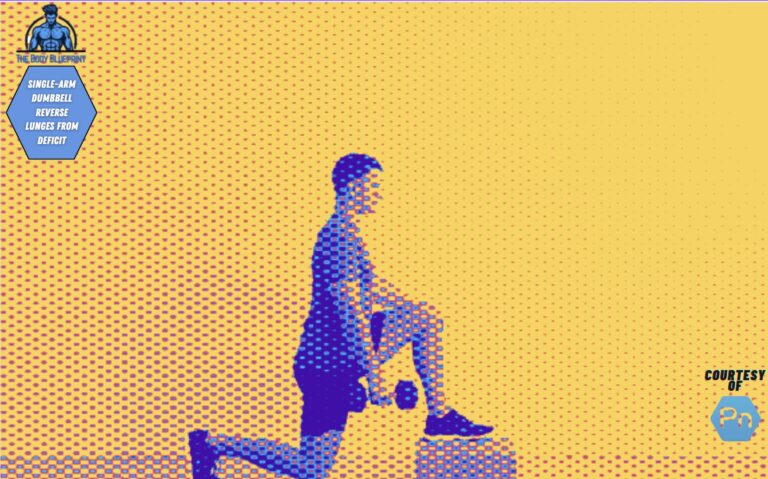
- The Setup: Stand facing away from a bench. Hold a dumbbell in one hand. Place the opposite foot back on the bench (laces down).
- The Stance: Hop your front foot out until you are in a long lunge position.
- The Brace: Squeeze your off-hand into a fist to create tension. Brace your abs.
- The Descent: Drop your back knee toward the floor. Keep your torso vertical. Do not lean toward the weight.
- The Drive: Push through the front heel. Drive straight up. Do not let the hips shift.
- The Finish: Lock out the front leg. Squeeze the glute. Reset.
“Imagine you are in a narrow hallway. You cannot touch the walls. If the weight pulls you left, you hit the wall. Stay perfectly centered. Fight the lean.”
— Eugene Thong, CSCS
Common Mistakes That Kill Stability
If your knee caves in, your glute has failed; you must actively push the floor away. Most people let the weight dominate them. You must dominate the weight.
- The Side Lean: Bending sideways to counterbalance the weight. Fix: Stay tall. Use a mirror to check your shoulders are level.
- Short Stance: Foot too close to the bench. Fix: Hop out further. You need room to drop the hips.
- Back Leg Dominance: Pushing off the bench. Fix: Wiggle your back toes. If you can’t, you’re using the back leg too much.
Programming & Optimization
This is a high-fatigue movement due to the stability demands. Do not program this after heavy squats. It requires fresh stabilizers.
Sample Protocol
| Goal | Sets/Reps | Context |
|---|---|---|
| Hypertrophy | 3 x 8-10 reps/side | Moderate weight. Focus on depth. |
| Core Stability | 3 x 6 reps (Slow) | 3-second eccentric. Heavy offset load. |
Performance Stack
Unilateral training exposes weak links in your recovery and tissue quality.
- Joint Health: The knees take a beating in split squats. Collagen supplements help maintain tendon elasticity under load.
- Inflammation: Systemic inflammation kills recovery. Fish Oil is essential for joint longevity.
- Gut-Core Connection: You can’t brace a bloated stomach. Optimize digestion with the right probiotic—check our Seed vs Align comparison.
- CNS Recovery: Stability work fries the nervous system. Prioritize deep sleep using our sleep recovery guide.
Tech Alternative
If balancing dumbbells is too risky for your current level, use a functional trainer. The cable provides constant tension but adds a slight stability vector. The REP Arcadia is perfect for setting up stable unilateral leg work.
The Verdict
The Single-Arm RFESS is the ultimate test of “grown man strength.” It doesn’t care about your bench press. It asks one question: Can you stand on one leg, hold a heavy weight, and not crumble? Answer correctly.