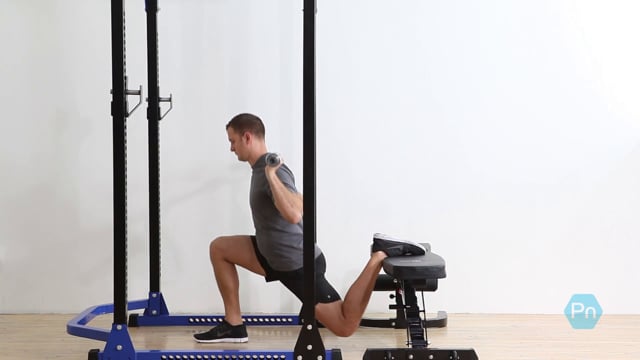
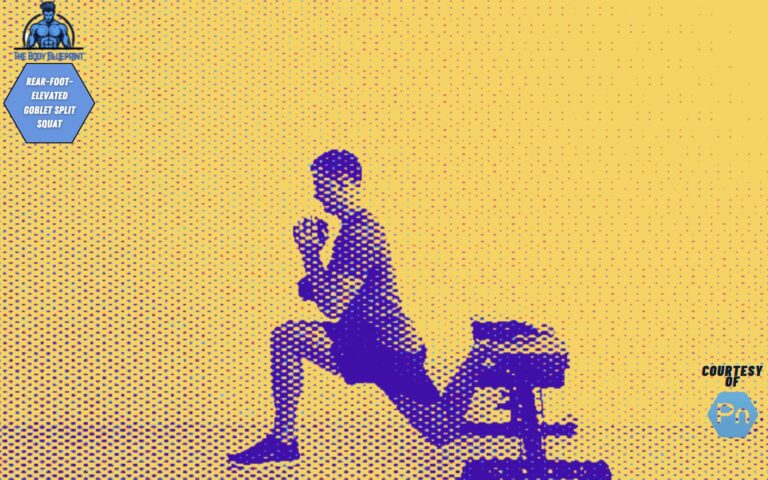
The Single-Arm Dumbbell Reverse Lunge is the premier exercise for correcting leg strength asymmetries and building rotary core stability. Unlike bilateral squats where your strong leg can compensate for your weak one, this movement forces each limb to carry its own load while your core fights to stay upright.
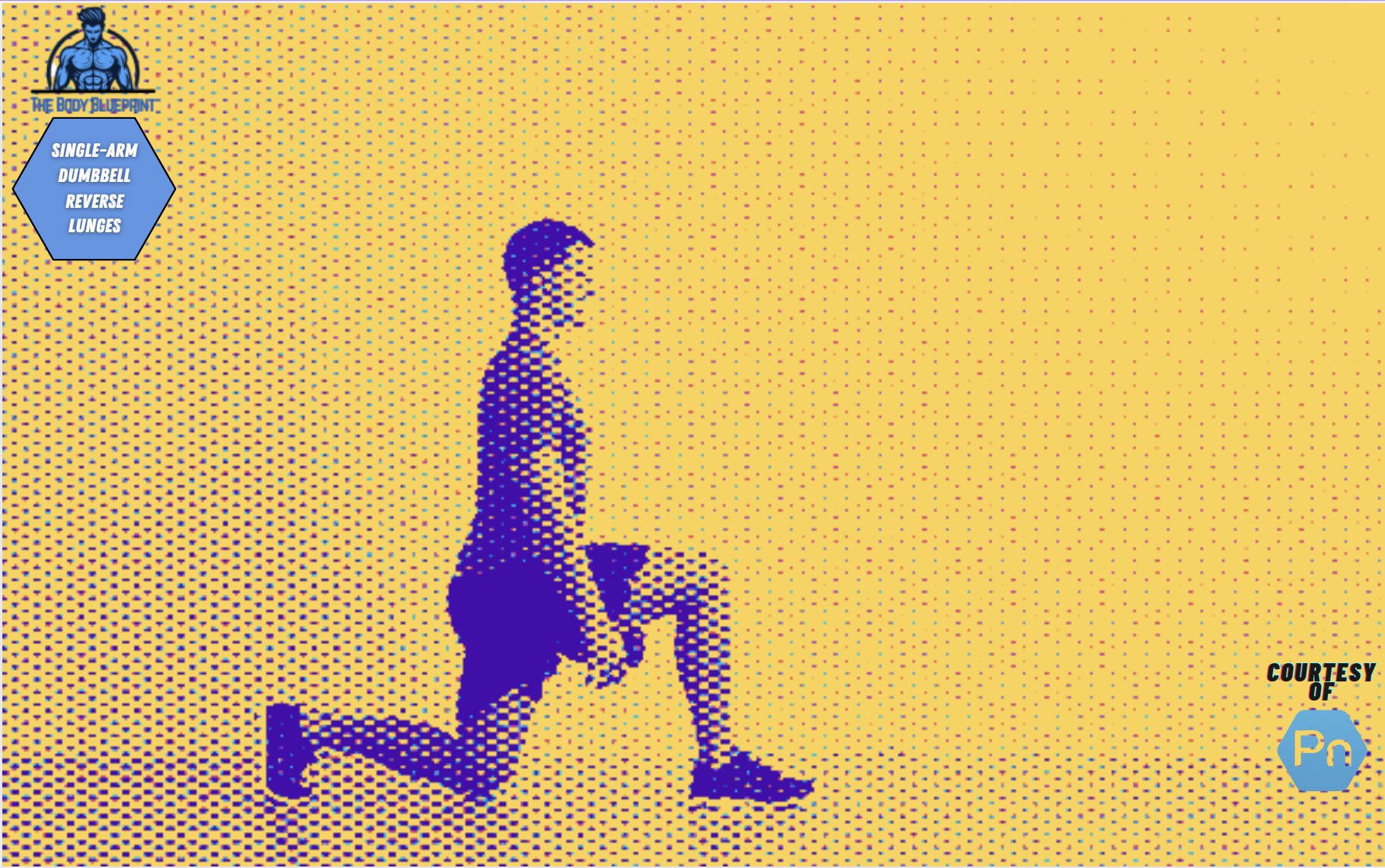
Important: Hold the dumbbell in the hand opposite to the working leg for maximum glute engagement, or the same side for maximum core anti-lateral flexion. Intent matters.
Why Single-Arm Lunges Fix Strength Imbalances
Unilateral exercises target each side of your body individually, exposing and correcting strength imbalances instantly. If you have ever noticed one leg overpowering the other during squats, this move is your fix. The offset load also challenges your core to resist rotational forces, turning a leg exercise into a full-body stabilizer.
The Benefits at a Glance
| Advantage | The Payoff |
|---|---|
| Asymmetry Correction | Forces the weak leg to catch up because the strong leg cannot help. |
| Anti-Rotation Core | The single dumbbell tries to twist your spine. You must brace hard to stay square. |
| Glute Focus | Stepping backward (reverse lunge) hits the glute and hamstring harder than forward lunges. |
How to Perform Single-Arm Reverse Lunges Correctly
This is not a balance beam; keep your feet hip-width apart, not in a straight line. You need a stable base to generate force.
Step-by-Step Execution
- The Setup: Stand tall. Feet hip-width. Hold a heavy dumbbell in one hand.
- The Brace: Squeeze your off-hand into a fist to create tension. Brace your abs.
- The Step: Step the leg on the same side as the dumbbell backward.
- The Descent: Lower the back knee until it hovers an inch off the floor. Torso slightly forward (lean).
- The Drive: Drive through the front heel. Pull yourself forward using the front glute.
- The Finish: Stand tall and reset. Do not rush into the next rep.
“Think about pulling yourself forward with the front leg, not pushing off the back leg. The back leg is just a kickstand. The front leg is the engine.”
— Eugene Thong, CSCS
Common Mistakes That Kill Stability
If you are wobbling, you are too narrow or too heavy. Stability is the prerequisite for strength here.
- Walking the Tightrope: Stepping directly behind the front foot. Fix: Step back on “train tracks” (width), not a tightrope.
- The Torso Twist: Letting the dumbbell pull your shoulder down. Fix: Keep shoulders square and level.
- Knee Cave: Front knee collapsing inward. Fix: Drive the knee out towards the pinky toe.
Programming & Optimization
Use this as a primary accessory movement after your heavy squats or deadlifts.
Sample Protocol
| Goal | Sets/Reps | Context |
|---|---|---|
| Hypertrophy | 3 x 10-12 / leg | Focus on the stretch at the bottom. |
| Strength | 4 x 6-8 / leg | Go heavy. Grip strength is key. |
Performance Stack
Unilateral training is fatiguing. Support your recovery.
- Joint Health: Lunges require deep knee flexion. Collagen Peptides support tendon elasticity.
- Inflammation: High volume leg days cause inflammation. Fish Oil helps manage recovery post-training.
- Gut Health: Core bracing requires a settled stomach. Optimize digestion with our Seed vs Align Probiotic comparison.
- Recovery: If your glutes are tight, use the Hypervolt Go 2 to release tension.
Tech Alternative
Want consistent tension? Digital cable machines offer smooth resistance that doesn’t rely on momentum. Check our comparison of Speediance vs Tonal vs Vitruvian for the best home options.
The Verdict
The Single-Arm Dumbbell Reverse Lunge is the truth serum for your legs. It exposes the weak side and forces the core to work double time. Grab a dumbbell, step back, and build balance.