Picture the scene: the gym floor, 2015. Every other dude is clutching a shaker of neon-colored liquid, sipping religiously between sets of cable crossovers. This is the cult of BCAAs—the belief that you must flood your system with Branched-Chain Amino Acids to stop your precious muscles from melting away mid-workout. It was a marketing masterstroke that turned intra-workout supplementation into a billion-dollar industry.
Here’s the brutal truth: if you eat enough protein, your BCAA supplement is a $40 bottle of placebo-flavored anxiety relief. You’re not preventing catabolism; you’re funding a CEO’s third vacation home.
The BCAA Boom: How Supplement Marketing Created a Solution to a Non-Existent Problem
Let’s travel back. The golden era guys like Arnold and Lou Ferrigno didn’t sip Scivation Xtend between sets at Gold’s. They drank water. Maybe some Gatorade from the 70s if they were fancy. The modern BCAA panic was engineered in boardrooms, not labs. It preyed on the fear of “muscle catabolism”—the idea that your body starts devouring your quad sweep the second you step into the gym.
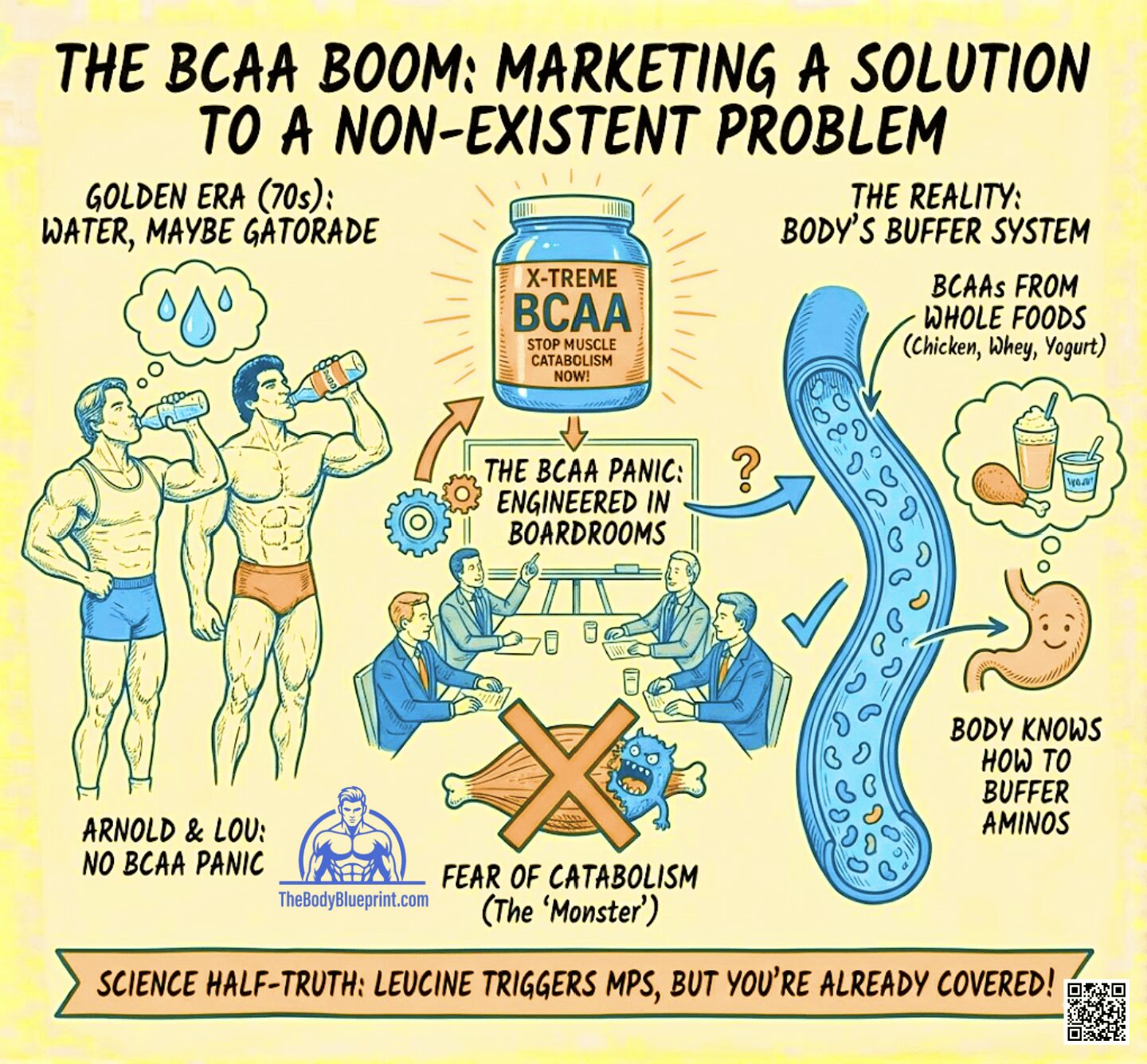
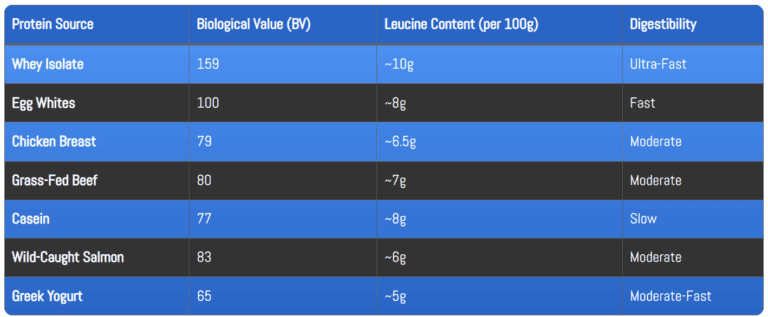
The science they sold was a half-truth. Yes, leucine is the key trigger for Muscle Protein Synthesis (MPS). Yes, BCAAs are “essential.” But here’s what they left out: if you ate a chicken breast, whey protein shake, or even a cup of Greek yogurt in the 3-4 hours before your workout, you already have a bloodstream full of BCAAs. Your body isn’t a stupid; it knows how to buffer aminos.
The BCAA vs. Whole Protein Comparison Table
Let’s break down the hustle versus the reality, dollar for dollar.
| The BCAA Supplement Hustle (The Claim) | The Whole Protein Reality (The Truth) |
|---|---|
| Prevents Intra-Workout Catabolism: “Sip to stop muscle breakdown during your bro split.” | Negligible Impact: Training is a net anabolic stimulus. The catabolic fear is wildly overstated unless you’re training fasted for 3+ hours. |
| Spikes MPS During Training: “Floods muscles with leucine to kickstart growth.” | Redundant Stimulus: MPS is a slower process. The leucine threshold is easily met by your pre-workout meal. A sip mid-set does nothing acute. |
| Improves Recovery & Reduces Soreness: “Get back in the gym faster.” | No Superiority to Carbs/Protein: Electrolytes and carbs (Gatorade) aid performance. For soreness, total daily protein intake and sleep are 100x more important. |
| “Pure” Muscle Fuel Without Calories: “I’m on a cut and need aminos but no calories!” | Physiological Nonsense: This is the biggest scam. Amino acids ARE calories (4 kcal/g). The label says “0 calories” due to a rounding loophole on serving size. You’re paying for trace calories. |
The Hierarchy of Muscle-Building Supplements: Where BCAAs Really Rank
Not all supplements are created equal. Here’s the real priority list for your wallet.
- Foundation Tier (Non-Negotiable): Whey or Casein Protein & Creatine Monohydrate. These have decades of irrefutable evidence for efficacy and cost-benefit.
- Performance Tier (Situation-Dependent): Caffeine (pre-workout), Electrolytes, Beta-Alanine, Citrulline Malate. These can improve workout output or hydration.
- The “Why Are You Buying This?” Tier: BCAAs, Testosterone Boosters. These solve problems that either don’t exist or are better solved by food and the Foundation Tier.
Eugene Thong, CSCS, puts it bluntly: “The only people who might need BCAAs are elite endurance athletes training in a fasted state for hours, or clinical patients who can’t ingest whole protein. For a guy eating chicken and rice trying to get bigger biceps? It’s a complete waste. You’re literally pissing away money.”
BCAA Supplement FAQ: Myths vs. Reality
Q1. But don’t BCAAs prevent muscle breakdown during training?
A: This is the core myth. In a fed state (you ate within 3-4 hours), muscle protein breakdown during a 60-90 minute workout is minimal and part of the normal turnover process. The anabolic stimulus of the training itself far outweighs it. BCAAs do not create some magical anti-catabolic shield. Your pre-workout meal timing is what matters.
Q2. What about taking BCAAs while fasting or cutting?
A: If you’re practicing Intermittent Fasting and train fasted, BCAAs will technically break your fast (triggering an insulin response). They also provide trace calories. For fat loss, black coffee and willpower are free. For muscle preservation on a cut, your total daily protein intake is king, not a mid-workout sip.
Q3. Are there any legitimate uses for BCAA supplements?
A: Extremely niche. Think: a marathon runner needing intra-race fuel without gut distress, or a hospitalized patient. For the 99.9% of gym-goers, no. Even then, Essential Amino Acids (EAAs) or carb gels would be a more complete option.
Strategic Supplement Questions: Leucine, EAAs, and the Anabolic Threshold
Q1. If BCAAs are useless, what about EAAs (Essential Amino Acids)?
A: EAAs are a step up because they contain all nine essential aminos, making them a more complete “protein signal.” However, they still suffer from the same core issue: they’re an inferior, expensive substitute for real food or whey protein. If you can eat or drink a complete protein source, EAAs are redundant. Their best use case is for someone who literally cannot tolerate whole protein post-surgery.
Q2. What’s the deal with leucine and the anabolic threshold?
A: Leucine is the key that unlocks the mTOR pathway for MPS. Research suggests a “threshold” of ~2-3g per meal optimally stimulates this. Here’s the kicker: a single scoop of Optimum Nutrition Gold Standard Whey has about 2.5g of leucine. A 4-oz serving of chicken breast has about 2g. You’re hitting the threshold with normal food. You don’t need a separate leucine supplement.
Charles Damiano, B.S. Clinical Nutrition, explains: “Supplement companies took a kernel of truth—leucine’s role as a trigger—and extrapolated it into a fake necessity. They convinced you that you needed to hammer that trigger every two hours, ignoring that your body maintains a circulating pool of amino acids from your meals. It’s like worrying your car won’t start because you didn’t turn the key twice in a row.”
The Supplement Graveyard: BCAA Edition
Take the money you’re about to spend on this month’s tub of fruit-punch flavored disappointment and:
- Buy an extra pound of chicken breast or ground beef. Actual muscle-building material.
- Get a quality electrolyte mix for actual intra-workout performance if you sweat a lot.
- Put it toward a gym membership that has a sauna for actual recovery benefits.
- Literally burn it for warmth. You’ll get more tangible value.
Final Rep. Cash Saved.
Stop funding the placebo industrial complex. The path to a better physique isn’t found in a proprietary blend of three isolated aminos; it’s paved with consistent protein intake, progressive overload, and sleep. The next time you see that neon-colored sludge, remember: it’s not science in a shaker. It’s the ghost of marketing past, and it’s got its hand in your pocket. Buy the steak, not the sizzle.