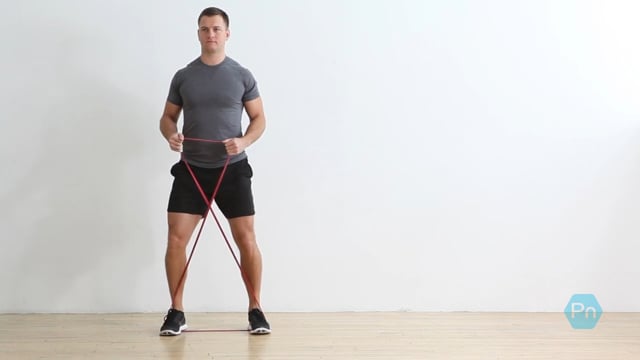
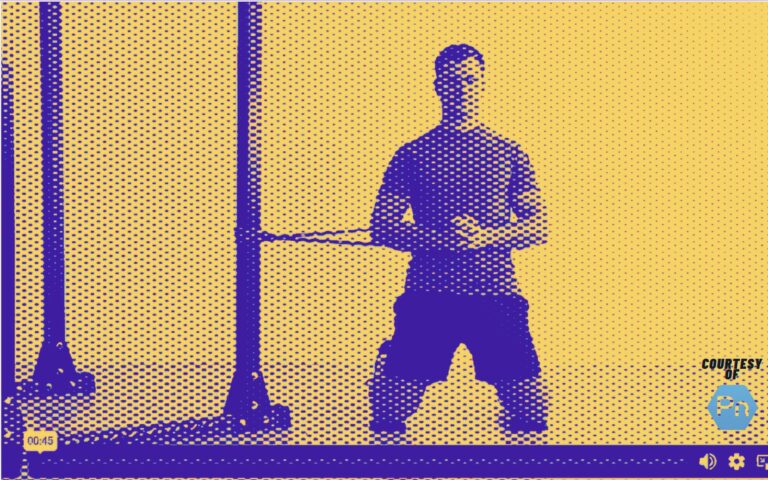
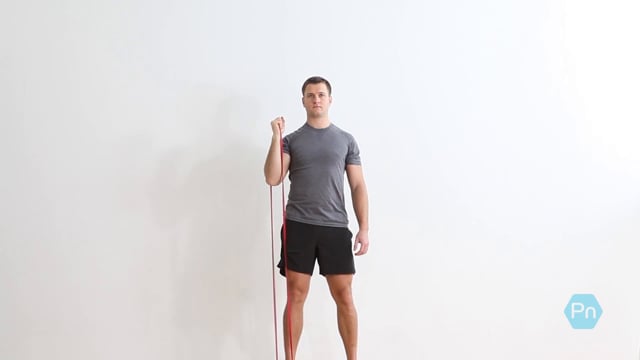
The X-Lat Band Pull Down is the superior alternative to standard cable pulldowns for achieving peak contraction and back width. By crossing the bands, you create a unique line of pull that aligns perfectly with the diagonal fibers of the latissimus dorsi.
Most lifters struggle to “feel” their lats. They pull with their arms, shrug with their traps, and use momentum to move the weight. The X-Lat Pull Down fixes this immediately. Because the resistance increases as you pull (accommodating resistance), you cannot cheat the lockout. You are forced to drive your elbows down and squeeze, or the bands will snap you back up. If you want a V-taper that actually shows, stop swinging heavy iron and start mastering elastic tension.
Important: Anchor your bands high and secure. If the anchor snaps, you are going to have a very bad day. Test the tension before you commit your bodyweight to the movement.
Why The “X” Pattern Builds Better Lats
The latissimus dorsi fibers run diagonally from the armpit to the spine; pulling straight down (like a standard pull-up) is good, but pulling across the body is better. The “X” setup allows for a greater range of motion at the bottom, letting you pull your elbows past your hips for a cramping contraction that a straight bar prevents.
The Benefits at a Glance
| Advantage | The Payoff |
|---|---|
| Peak Contraction | Bands get heavier as you pull, maximizing tension where the muscle is shortest. |
| Fiber Alignment | The cross-body angle hits the lower lats harder than vertical pulling. |
| Joint Friendly | Less stress on the rotator cuff than heavy overhead pressing or wide-grip pull-ups. |
X-Lat Band Pull Down Technique Guide
You must treat this exercise like a pose, not a race; the goal is to squeeze the muscle, not just move the handles. If you don’t feel your back cramping at the bottom, you are using too much weight or too much momentum.
Step-by-Step Execution
- The Setup: Attach two bands to a high anchor point (pull-up bar).
- The Grip: Grab the LEFT band with your RIGHT hand, and the RIGHT band with your LEFT hand. The bands should form an “X” in front of you.
- The Stance: Kneel down or sit on the floor. This removes the legs and forces you to stabilize.
- The Pull: Drive your elbows down and out. Pull them towards your back pockets.
- The Squeeze: At the bottom, pull your hands apart slightly. Hold for 1 second.
- The Return: Let the bands pull your arms up slowly. Feel the stretch in the armpits.
“Do not crunch your abs. Keep your chest proud and tall. If you round forward, you turn this into an ab exercise. The chest must remain up to engage the thoracic extensors.”
— Eugene Thong, CSCS
Common Mistakes That Kill Back Growth
The most common error is pulling with the biceps instead of driving with the elbows. Your hands are just hooks; ignore them and focus on driving the elbow joint down.
- The Shrug: Letting shoulders rise to ears. Fix: Depress your scapula before you start the pull.
- Using Momentum: Rocking back and forth. Fix: Stay rigid. If you need stability help, master the single arm plank first.
- Short Range: Not letting the arms fully extend at the top. Fix: You need the stretch to grow. Reach high.
Programming for Hypertrophy
Since bands cause less muscle damage than heavy iron, you can perform this movement with higher volume and frequency. It works best as a finisher after heavy compound movements like the chest supported dumbbell row.
Sample Protocol
| Goal | Sets/Reps | Note |
|---|---|---|
| Connection | 3 x 15 (Slow) | Use as a warm-up to prime the lats. |
| Burnout | 4 x 20-25 | End of workout. Minimal rest. |
Performance Stack
High-repetition band work creates massive metabolic demand (the burn).
- Endurance: To fight the lactic acid buildup in high-rep sets, understanding what is beta-alanine and supplementing with it is crucial.
- Fuel: Band workouts deplete glycogen. Use Highly Branched Cyclic Dextrin intra-workout to keep muscles full.
- Joint Health: Healthy shoulders are required for pulling. Check our Omega-3 guides to keep inflammation low.
- Recovery: Growth happens when you rest. Optimize your night with top-tier sleep supplements.
Contrast Training
Pairing antagonistic movements ensures structural balance.
Between sets of X-Lat Pull Downs, perform a pushing movement like the band assisted pushup or a core stabilizer like the plank arm march to keep the heart rate up and the body balanced.
The Verdict
The X-Lat Band Pull Down is the ultimate hack for back width. It takes the momentum out of the equation and forces the lats to do the work. Cross the bands, drive the elbows, and build the V-taper.