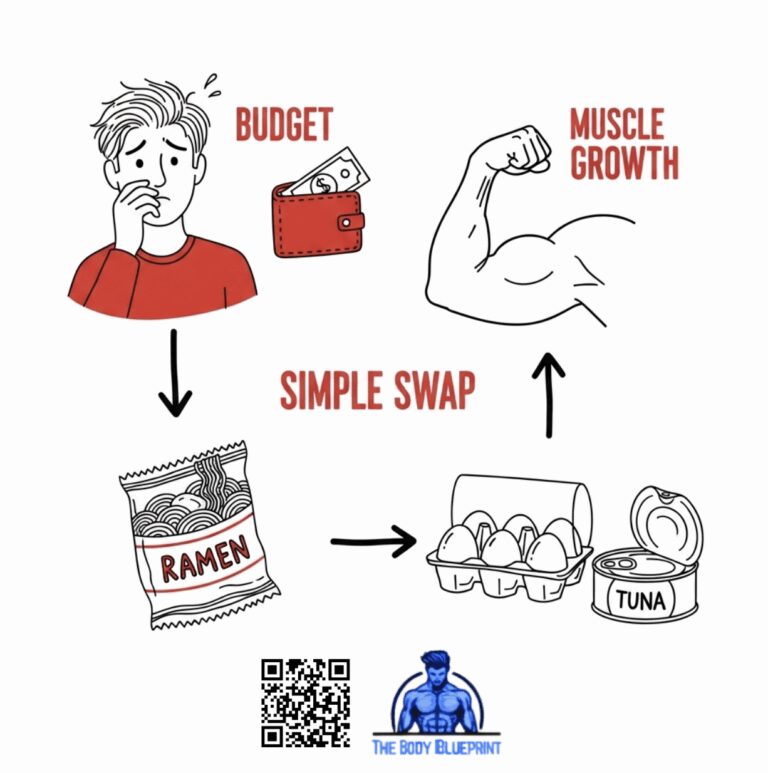
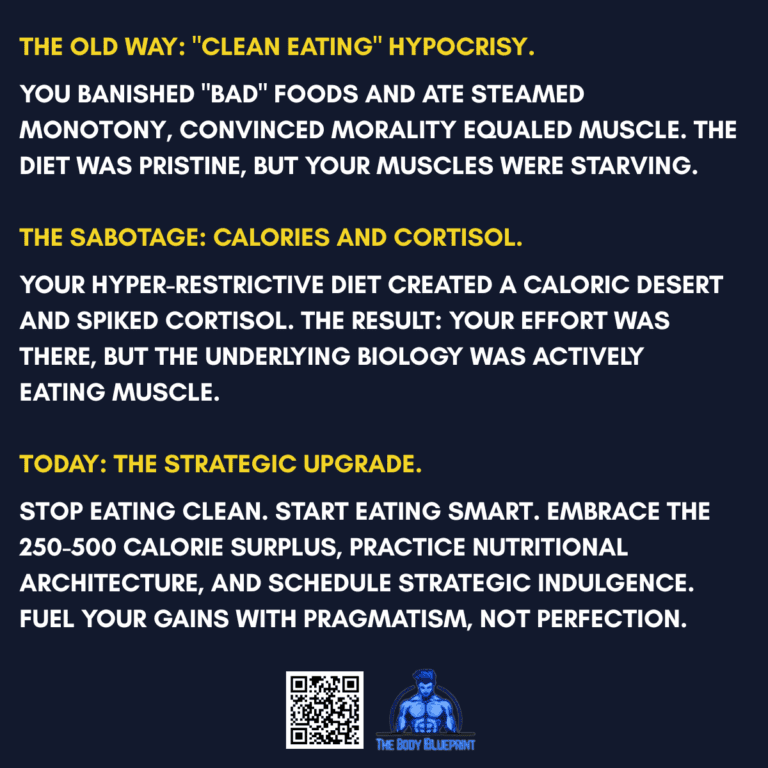
You are training like a professional but eating like an amateur.
You lift with brutal consistency. You track every macro. Yet, you still look “puffy” while your strength stalls. The gap between your effort and your results isn’t bad luck; it’s bad logistics.
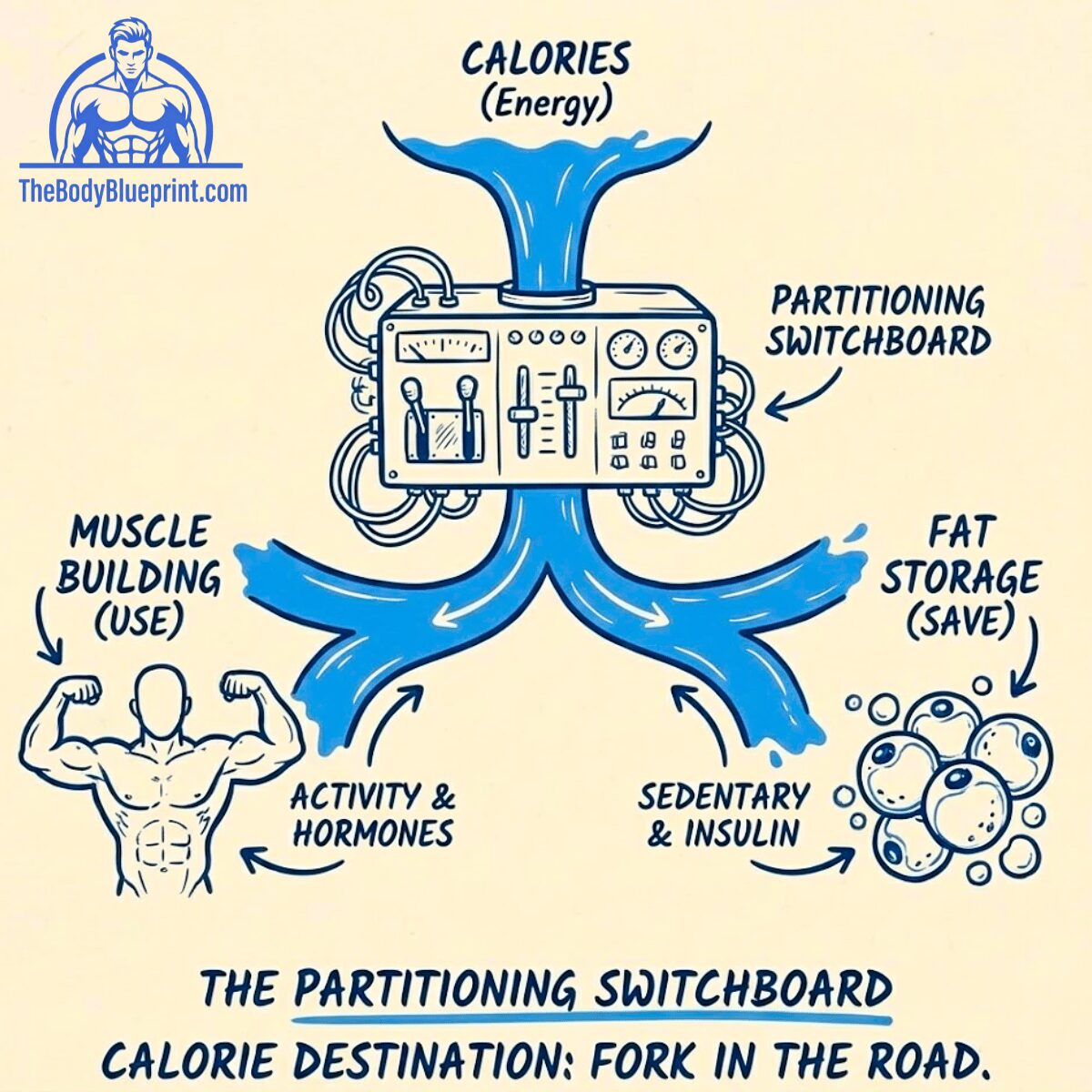
Your body has a “metabolic switchboard” that decides where every calorie goes. Right now, your switchboard is wired to send fuel straight to storage (fat) instead of construction (muscle). It’s time to rewire the system.
Core Concepts of Nutrient Partitioning
The science of where your calories go:
Nutrient Partitioning Defined
Your body’s decision to store fuel as muscle or fat. Not just “how many” calories—but where they end up.
The Insulin Lever
- Master Hormone: Insulin is the storage signal.
- High Sensitivity: Calories are shuttled into muscle cells for growth and fuel.
- Low Sensitivity (Resistance): Calories are dumped into fat cells for storage.
- Science: Improved insulin sensitivity can increase nutrient diversion to muscle by up to 30% (DeFronzo, 1981).
The Starve-Fat-Cells Strategy
Reality: You can’t spot-reduce fat, but you can spot-starve fat cells by making muscle cells the more attractive destination.
Metabolic Destination Control
| Metabolic State | Primary Destination | Body Composition Outcome |
|---|---|---|
| Insulin Sensitive | Muscle Tissue | Lean Growth, Fat Loss |
| Insulin Resistant | Fat Tissue | Fat Gain, Stagnant Muscle |
Sensitivity Boosters: Resistance, Movement, Carb Timing & Sleep
Pulling the metabolic lever toward muscle:
Resistance Training (The #1 Stimulus)
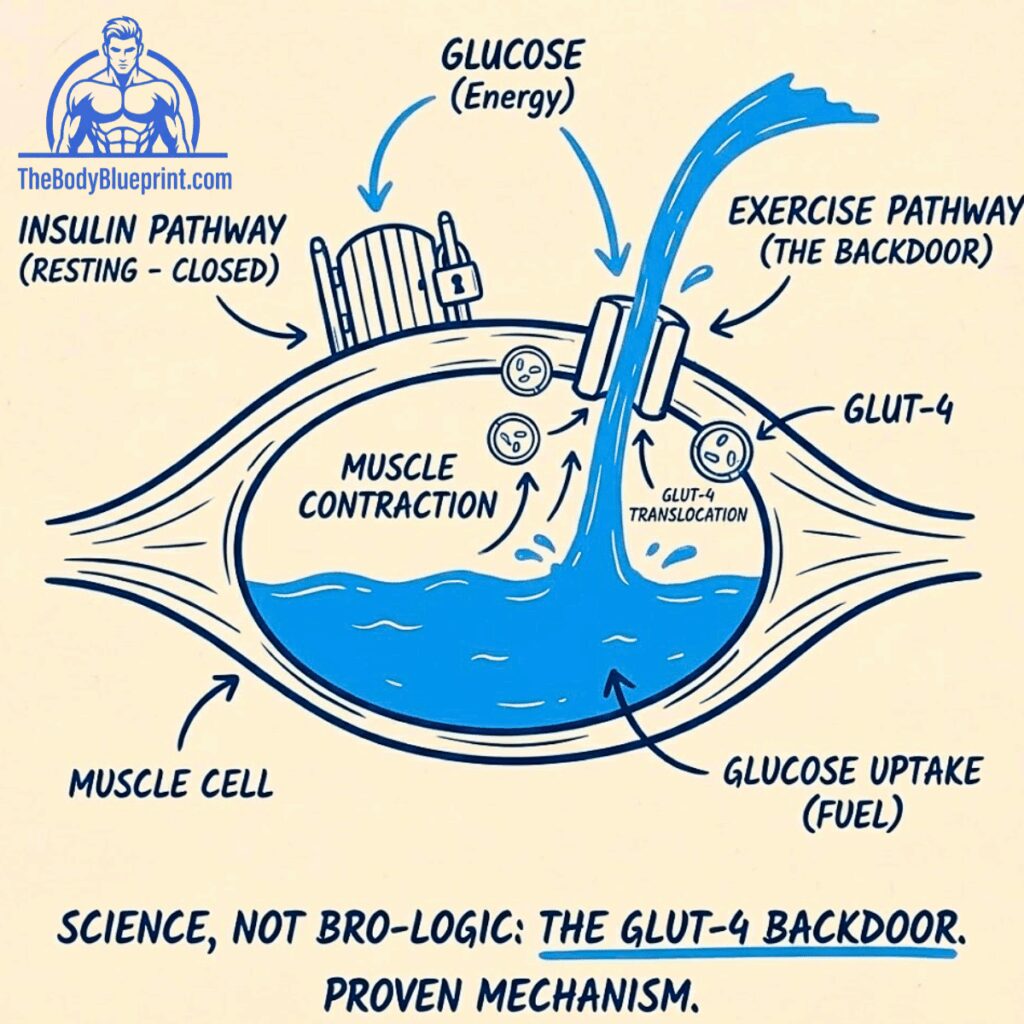
- Mechanism: Muscle contractions activate GLUT-4 receptors, pulling glucose into muscle without insulin.
- Protocol: Compound lifts (squats, deadlifts) > isolation exercises.
- Effect: Boosts sensitivity for 24-48 hours post-workout.
Strategic Carbohydrate Timing
- Synergy: Eat the majority of your carbs around your workout.
- Rationale: Insulin spike is anabolic, not storage-promoting, when muscles are glycogen-depleted.
- Example: 80kg lifter = 80-100g carbs post-training.
Daily Movement (NEAT)
- Science: A single bout of walking can increase glucose uptake by 40%.
- Protocol: 10-minute walk after large meals.
Sleep & Stress Management
- Cortisol Effect: This stress hormone directly antagonizes insulin, promoting resistance.
- Sleep Debt: Just one night of poor sleep can reduce insulin sensitivity by 25%.
Dietary Levers
Macronutrients as metabolic tools:
| Macro | Effect on Insulin | Strategic Use |
|---|---|---|
| Protein | Moderate Spike | High at all meals to boost MPS & satiety. |
| Carbohydrates | High Spike | Cluster around training; focus on fiber-rich sources otherwise. |
| Fats | Minimal Spike | Primary energy source for non-training meals. |
Supplemental Support
Targeted insulin sensitizers:
- Berberine: Activates AMPK, mimicking the effects of exercise and metformin on glucose metabolism.
- Magnesium: Cofactor for insulin receptor function; deficiency is linked to resistance.
- Omega-3s (EPA/DHA): Improve cell membrane fluidity, enhancing insulin receptor signaling.
- Apple Cider Vinegar: 20g pre-meal can blunt post-prandial glucose spike by 35%.
Individualization Factors
Your metabolic starting point:
| Factor | Partitioning Strategy |
|---|---|
| Over 40 (Sarcopenic Risk) | Prioritize protein + resistance training to combat anabolic resistance. |
| Sedentary Job | Non-Exercise Activity Thermogenesis (NEAT) is non-negotiable. |
| Previous Diet History | Chronic yo-yo dieting damages sensitivity; focus on consistency over deficits. |
| High Body Fat % | Fat cells (adipocytes) secrete inflammatory cytokines that promote insulin resistance. |
Scientific Evidence
What research confirms:
- Training is Paramount (Ivy, 2001)
- Data: A single workout can increase insulin-mediated glucose uptake for 16+ hours.
- Carb Timing Edge: Trained individuals see superior body comp when carbs are peri-workout (Haff, 2003).
- Protein’s Dual Role: High protein intake not only boosts MPS but also improves glycemic control.
Common Mistakes
Partitioning saboteurs:
- Chronic Cardio + Caloric Deficit: Signals catabolism, promoting muscle loss and metabolic adaptation.
- Low Protein Intake: Fails to maximally stimulate MPS, leaving “calorie space” for fat storage.
- Fear of All Carbs: Eliminates the powerful anabolic leverage of insulin around workouts.
- Sedentary Lifestyle: The #1 driver of insulin resistance in the modern world.
Progress Tracking
Data-driven metabolic adjustments:
- Waist-to-Height Ratio: More telling than weight; aim for <0.5.
- Fastng Glucose & Insulin: Get blood work; calculate HOMA-IR.
- Training Performance: Are you getting stronger? Sensitive muscles are fueled muscles.
- Visual Feedback: Are you leaning out while maintaining strength? That’s optimal partitioning.
Psychological & Behavioral Factors
The adherence advantage:
- Focus on Fueling: Shift mindset from “eating less” to “fueling performance.”
- Strategic Satisfaction: Timing carbs allows for larger, more satisfying meals without guilt.
- Energy Wins: Proper partitioning means stable energy, which drives consistency in all areas.
Nutrient partitioning isn’t magic—it’s metabolic engineering. That stubborn fat? It’s not your fate—it’s a traffic jam in your hormones. Flip the insulin switch. Your muscle cells are waiting to be fed.
Key Studies:
- DeFronzo et al. (1981): The glucose clamp technique & insulin action
- Ivy & Kuo (2001): Muscle glucose transport post-exercise
- Haff et al. (2003): Carbohydrate supplementation and resistance training