The Deadlift Rehab Protocol: Rebuilding a Bulletproof Lower Back
That sharp twinge as you set the bar down. The dull ache that follows you home. Lower back pain after deadlifts is an incredibly common issue that affects both beginners and experienced lifters. This pain can range from mild soreness to intense discomfort, and it raises legitimate questions about injury risk and recovery strategies. Whether it’s due to poor form, inadequate warm-up, or overtraining, it doesn’t have to sideline your progress. Let’s get into the exact exercises and recovery methods that will help you return stronger.
What Causes Lower Back Pain After Deadlifts?
The deadlift is a fundamental movement pattern that engages your entire posterior chain. When pain appears, it’s often your body’s signal that something needs attention. The most common causes include:
- Technical breakdown (rounding or over-arching the spine under load)
- Poor bracing (insufficient intra-abdominal pressure)
- Muscle imbalances (dominant quads and underactive glutes)
- Training errors (excessive volume or intensity jumps)
- Previous vulnerability (old injuries or mobility restrictions)
Immediate Post-Injury Protocol: The First 72 Hours
How to manage acute pain and inflammation
Phase 1: Assessment
| Symptom Level | Action Plan |
|---|---|
| Mild Stiffness | Active recovery: walking, gentle mobility |
| Moderate Pain | Relative rest: avoid aggravating movements |
| Severe/Radiating | Medical consultation immediately |
Phase 2: Inflammation Control
- Ice therapy: 15 minutes every 2-3 hours (first 48 hours)
- Positional relief: Lie on back with knees bent (supported by pillows)
- Gentle movement: Cat-cow stretches pain-free range only
Foundational Rehabilitation Exercises
Rebuilding movement patterns without strain
Early Stage Mobility Work
These gentler exercises are appropriate for early stages of recovery. They improve body awareness and coordination while minimizing strain on the spine.
1. Pelvic Tilts
- Purpose: Restore lumbar-pelvic rhythm
- Execution: Lie on back, knees bent. Gently arch and flatten lower back
- Dosage: 2 sets of 15 repetitions, daily
2. Dead Bug Progressions
- Purpose: Develop core stability without spinal loading
- Execution: Maintain neutral spine while alternating arm/leg movements
- Progression: Start with single limbs, advance to simultaneous movements
3. Bird-Dog Variations
- Purpose: Enhance cross-body stability and glute activation
- Execution: From quadruped position, extend opposite arm/leg while maintaining neutral spine
- Key cue: Imagine balancing a glass of water on your lower back
Intermediate Strength Development
Once a solid foundation is built, take your rehabilitation to the next level
Glute Activation Series
Bridging Progressions
- Basic bridge → Single-leg bridge → Weighted bridge
- Focus: Drive through heels, squeeze glutes at top
- Science: Glute max activation reduces lumbar strain by 40%
Clamshells and Hip Abductions
- Target: Glute medius strengthening
- Purpose: Stabilize pelvis during single-leg activities
Core Integration Patterns
Front Plank Variations
- Standard plank → RKC plank (maximum tension) → Stir-the-pot (on stability ball)
- Progression criteria: Maintain perfect form for 30 seconds
Pallof Press Progressions
- Purpose: Develop anti-rotation strength
- Execution: Resist cable pull while maintaining neutral spine
- Application: Direct carryover to deadlift bracing
Advanced Return-to-Training Exercises
Developing greater resilience and confidence in movement
Loaded Carry Variations
Farmer’s Walks
- Start light (bodyweight appropriate), progress to heavy loads
- Benefits: Grip strength, core stability, upright posture
Suitcase Carries
- Purpose: Develop anti-lateral flexion strength
- Execution: Carry heavy weight in one hand only
- Carryover: Prevents asymmetric breakdown in deadlifts
Romanian Deadlift Progressions
Bodyweight RDL to Loaded RDL
- Phase 1: Bodyweight with focus on hip hinge mechanics
- Phase 2: Light kettlebells (focus on tension not weight)
- Phase 3: Barbell with sub-maximal loads
Tempo Variations
- 4-second eccentrics to build control
- 2-second pauses at mid-shin to reinforce positioning
Mobility and Maintenance Protocol
Daily practices to keep your back resilient
Hip Mobility Circuit
- 90/90 hip rotations: 2 minutes daily
- Hip CARs (controlled articular rotations): 10 reps each side
- Pigeon pose progression: 30 seconds per side
Thoracic Spine Work
- Bench T-spine rotations: 8 reps per side
- Foam roller extensions: 10 controlled reps
- Side-lying windmills: 5 reps per side
When to Seek Professional Help
Red flags that require medical attention
- Pain radiating down leg (sciatic nerve involvement)
- Numbness or tingling in extremities
- Bowel or bladder function changes
- Pain that worsens despite conservative care
- Night pain that wakes you from sleep
Psychological Aspects of Recovery
Rebuilding confidence after injury
Visualization Techniques
- Mental rehearsal of perfect deadlift form
- Progressive exposure to previously painful movements
- Celebration of small weekly victories
Gradual Exposure Protocol
- Week 1-2: Technique work with PVC pipe only
- Week 3-4: Light kettlebell variations
- Week 5-6: Barbell with 30-40% of previous max
- Week 7-8: Systematic load progression
Nutrition and Recovery Support
Supporting the healing process from within
Anti-Inflammatory Nutrition
- Omega-3 fatty acids (wild salmon, sardines)
- Turmeric and ginger (natural anti-inflammatories)
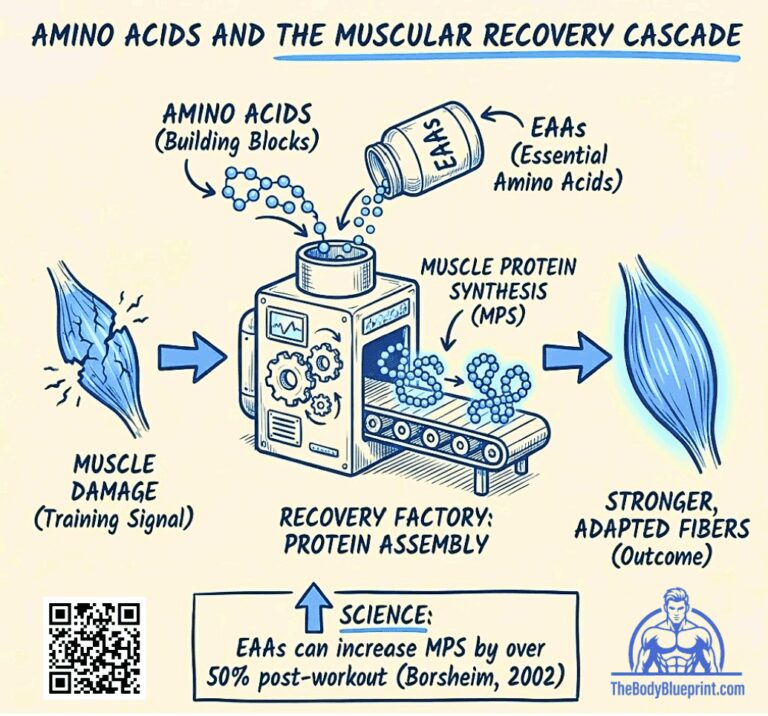
- Adequate protein for tissue repair (1.6-2.2g/kg bodyweight)
Recovery Enhancement
- Sleep optimization (7-9 hours nightly)
- Hydration emphasis (0.6-0.7oz water per pound bodyweight)
- Stress management techniques (meditation, breathing work)
The Return to Deadlifting Program
A systematic approach to rebuilding strength
| Week | Focus | Intensity | Volume |
|---|---|---|---|
| 1-2 | Motor pattern refinement | Bodyweight only | 3×8 |
| 3-4 | Light loading | 40-50% 1RM | 4×6 |
| 5-6 | Moderate loading | 60-70% 1RM | 5×5 |
| 7-8 | Strength building | 70-80% 1RM | 5×3 |
| 9+ | Performance testing | 85%+ 1RM | 1-3 reps |
Recovering from deadlift-related back pain isn’t about avoiding the movement—it’s about relearning it with precision. Your body is giving you feedback, not a life sentence. Listen to it, respect it, and rebuild accordingly. The platform isn’t going anywhere, and neither is your strength—it’s just waiting for a smarter approach.