
WOLF TACTICAL Sandbag Workout Bag is a heavy-duty training implement. It carries up to 200 pounds. It utilizes sand or gravel fill. It seals the load inside a ballistic nylon shell. It features reinforced webbing handles, a heavy-duty zipper, and an internal liner bag. It is engineered for loaded carries, squats, throws, and strongman conditioning. No pre-filled plates. No fixed weight. You bring the fill. You set the load. This is our 2026 technical deep dive. The question is whether the bag survives the upper end of its weight rating. It either seals tight, or it splits a seam.
Price Disclaimer: Prices shown are approximate and may vary. Check current pricing and availability on Amazon.
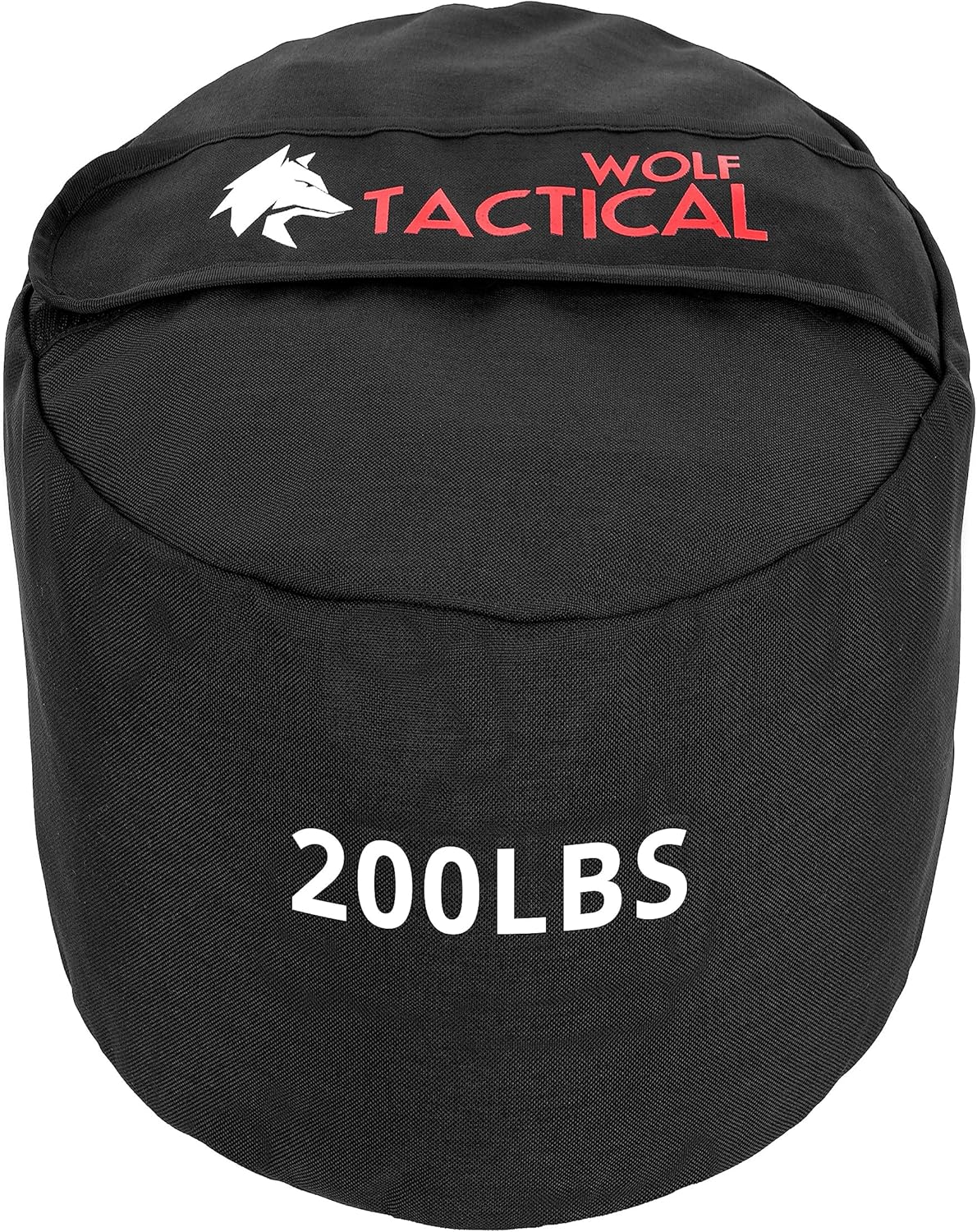
Hardware Architecture: Ballistic Nylon Shell and Reinforced Webbing Integration
The WOLF TACTICAL Sandbag utilizes a two-layer containment system. The outer shell is ballistic nylon. The inner layer is a removable liner bag. The handles are reinforced webbing straps. They are stitched directly into the shell. A heavy-duty zipper seals the outer bag. A drawstring seals the liner. There are no weak single-stitch points on the primary load path. The reinforcement sits exactly where the mechanical stress concentrates.
-
Ballistic Nylon Outer Shell: The outer layer utilizes 1000D ballistic nylon. This is military-grade textile. It resists surface abrasion. It halts tear propagation. It repels moisture. Ballistic nylon does not degrade against concrete or gym rubber. The fabric handles 200 pounds easily. Above that, the seam stitching becomes the failure variable, not the textile.
-
Webbing Handles: Multiple reinforced webbing handles run along the sides and ends. They are stitched through multiple layers of the shell fabric. No single stitch line bears the full load. The layout supports bear-hug carries, shouldering, and two-handed squats. The webbing is wide. It does not bite into the palm. Above 150 pounds, grip strength becomes the limiting factor, not the handle.
-
Removable Liner Bag: A separate liner bag sits inside. Fill goes into the liner. The liner seals via a drawstring closure. Two layers sit between the sand and your floor. One layer fails? The other catches it. The drawstring is the primary seal. If it loosens during dynamic movement, sand migrates. That is a nuisance, not a catastrophic failure.
-
Zipper Closure and Seal: The outer shell closes with a heavy-duty zipper. It runs the full length of the bag. The zipper track uses fabric backing. The zipper is the most common failure point on any sandbag. Stray sand grains lodge in the teeth. They cause track separation. Keeping the liner drawstring tight is mandatory prevention.
“A sandbag is like a heavy partner who refuses to hold eye contact. The load shifts with every rep. That is the training stimulus. A barbell is predictable. A sandbag negotiates with you every time you pick it up. The bag itself needs to be tougher than the movement. Ballistic nylon is the baseline. Anything less quits before you do.”
— Eugene Thong, CSCS
Fill Mechanics and Dynamic Load Shifting: Sand vs. Gravel
The WOLF TACTICAL Sandbag relies on loose fill. Sand or gravel pours into the liner bag. The drawstring tightens. The liner goes into the outer shell. The zipper locks. Weight is strictly determined by fill volume and material density. A 200-pound ceiling means the bag physically holds roughly 200 pounds of wet, packed sand. Fill type alters the training experience.
-
Fill Options: Play sand is the baseline. It is cheap. It is dense. It is widely available. Pea gravel drains better. It compacts less. It weighs less per cubic inch. Rubber mulch is lighter. It bounces on impact. It produces far less load per bag. The fill choice dictates the maximum achievable weight.
-
Weight Variability: The 200-pound rating is a structural capacity, not a guaranteed fill capacity. Filling the bag with dry play sand yields roughly 150 to 175 pounds. Wet or highly packed sand reaches 200 pounds. The rating assumes optimal, dense packing.
-
Dynamic Load Distribution: Loose fill shifts constantly. That is the objective. Sandbag training forces the lifter to stabilize. The load is never static. The core never rests. This dynamic load shifting distinguishes sandbag work from rigid barbell training.
-
Fill Maintenance: Sand compacts. The bag feels heavier initially as the sand settles into a dense mass. You must top it off periodically to maintain peak weight. A 150-pound bag at week one becomes a 130-pound bag at month three if you do not refill. See our classic strength training protocols.
“A sandbag filled with dry play sand is like a mattress filled with memory foam. It molds to every contour. It shifts when you shift. It never sits still. Every rep recruits deep stabilizers a barbell cannot touch. The downside? The weight changes as the sand settles. Refill the mattress, or accept that the load is drifting downward.”
— Charles Damiano, B.S. Clinical Nutrition
Selection Matrix: Who the Wolf Tactical Sandbag Fits
The multi-handle design, high load ceiling, and ballistic nylon dictate the user profile. This is a strongman-style training bag. The feature set mirrors the price.
-
The Beginner Wanting Room to Grow: Start at 40 pounds. Work up to 150. The 200-pound ceiling outlasts your progression curve. Buy one bag. Fill it light. Refill it heavy. No second purchase required.
-
The Strongman or Power Athlete: Loaded carries, shoulder tosses, squats, and get-ups. The multiple handles support every grip position. The ballistic nylon survives concrete drag. This bag absorbs abuse.
-
The Home Gym Minimalist: No rack. No bench. No plates. The bag stores in a corner. The fill costs roughly $5 at a hardware store. Complete posterior chain training from one tool.
-
The Grip and Core Specialist: Loose fill training is unmatched for isometric grip endurance and anti-rotation core stability. No other implement demands high-threshold stabilizer recruitment on every single rep.
The mismatch list.
-
The User Demanding Fixed Weight: Sandbag weight varies with fill density and moisture. If you need exactly 100 pounds every session, buy a kettlebell. Sandbags are not precision instruments.
-
The Indoor Hardwood Trainer: Ballistic nylon drags against hardwood, laminate, and tile. It will scratch finished surfaces. Train on rubber mats, concrete, or grass.
-
The User Who Hates Mess: Sand will eventually escape. It migrates through the drawstring. It lodges in the zipper. A liner system reduces this, but it does not eliminate it. Sandbag training is inherently gritty. Literally.
Advantages and Limitations
The Advantages
- 200-Pound Capacity: The ceiling outlasts nearly any training progression. Infinite weight range via fill volume.
- Ballistic Nylon Shell: Resists abrasion. Survives concrete drag. Military-grade fabric weight.
- Multiple Reinforced Handles: Supports bear-hug, shoulder, and squat grip positions safely.
- Removable Liner Bag: Two-layer containment. Drawstring liner seals the fill. Outer shell protects the liner.
- Fill Cost Efficiency: roughly $5 for 50 pounds of play sand. The cheapest cost per pound of any training tool.
The Limitations
- Fill Mess: Sand migrates over time. Drawstring and zipper channels collect grit.
- Zipper Failure Risk: Sand grains in the zipper track cause separation. Maintenance is mandatory.
- Weight Variability: Actual fill weight depends heavily on sand density and moisture.
- Surface Abrasion: Ballistic nylon scratches finished indoor floors.
- Fill Compaction: Sand settles. Weight drifts downward. Periodic topping off is required.
Market Contrast: Wolf Tactical vs. the Sandbag Field
Bag material, handle configuration, load ceiling, and liner systems dictate the market. No single bag leads all four categories.
| Sandbag | Primary Strength | Primary Trade-off |
|---|---|---|
| WOLF TACTICAL Sandbag | 200-lb capacity, ballistic nylon, multiple handles, liner system | Fill mess, zipper maintenance, no pre-filled options |
| Rogue Strongman Sandbag | Pre-filled options, heavy-duty zipper, trusted warranty | Higher price, fewer handle positions, less color variety |
| Brute Force Sandbag | Kevlar reinforced, military-grade build, no liner needed | $100 to $150 price range, heavier empty bag weight |
| Generic Amazon Sandbag | Lowest price point, lighter fabric, entry-level capacity | Lower durability, weaker seam stitching, lower load ceiling |
Rogue wins on pre-filled convenience. Brute Force wins on Kevlar build. Generic bags win on price. The WOLF TACTICAL sandbag occupies the value slot. Ballistic nylon shell. 200-pound ceiling. Multiple handles. A price that splits the difference between budget and premium. It is not the toughest bag available. It is the toughest bag at this price point.
Frequently Asked Questions
- What fill should I use for the WOLF TACTICAL sandbag?
- Play sand is the baseline. It is cheap and dense. Pea gravel drains better and compacts less. Rubber mulch is cleaner but produces a lower total load.
- Can the bag handle 200 pounds consistently?
- Yes. The ballistic nylon and reinforced stitching are rated for 200 pounds. Reaching that weight requires densely packed or wet sand. Dry play sand fills to roughly 150 to 175 pounds.
- Does the sand leak out during use?
- Minimal leakage occurs with proper setup. Pull the liner drawstring tight. Zip the outer shell completely. Fine sand particles will eventually migrate into the zipper track. Periodic cleaning is required.
- How do I clean the sandbag?
- Empty the liner. Hand wash the liner and outer shell with mild soap and cold water. Air dry completely. Do not machine wash or dry.
- Is this bag suitable for outdoor training?
- Yes. Ballistic nylon resists moisture, abrasion, and UV degradation. Use it on grass, gravel, or concrete. Do not submerge the filled bag in standing water.
Final Analysis: The Value Sandbag for Progressive Loading
The WOLF TACTICAL Sandbag Workout Bag is a ballistic nylon training tool. It carries up to 200 pounds of loose fill. It features multiple reinforced webbing handles. It utilizes a removable liner bag. It prices below the premium strongman brands. It exceeds the build quality of generic entry bags.
Ballistic nylon survives concrete drag. The 200-pound ceiling outlasts most training progressions. The liner system contains the mess. The multiple handles support every grip position. Sand will migrate. The zipper requires maintenance. The weight drifts as sand settles.
None of these are defects. They are the trade-offs required for a sandbag that fills for roughly $5. It trains the posterior chain through unpredictable, dynamic load shifting. The WOLF TACTICAL bag occupies the value middle. Ballistic nylon. 200 pounds. Multiple handles. A price that does not require a second mortgage. It is the bag that gives the most training utility per dollar.
To structure your sandbag progression, see our sandbag training guide, our classic strength training principles, or browse our home gym equipment essentials.
Summary: Ballistic Nylon. 200-Lb Capacity. Multiple Handles.
Ballistic nylon shell. 200 pounds. Reinforced webbing handles. Removable liner. Buy it. Fill it. Lift it. Refill it heavier. A sandbag that grows with your strength for less than the cost of an iron plate.
*Prices subject to change. Verified 2026 technical review. Consult a physician before beginning a loaded carry or strongman program.