The Weighted Neutral-Grip Pullup is the single most effective vertical pull for maximizing lat thickness and brachialis development without destroying your shoulders.
Look, the data doesn’t lie: most lifters are chasing wide-grip variations that prioritize “ego width” over actual fiber recruitment. By switching to a neutral (palms-facing) grip and adding external load, you create a biomechanical advantage that allows for greater range of motion and higher intensity. This is how you build a back that actually fills out a shirt.
Disclaimer: Consult a qualified trainer before adding significant weight to your pullups. This guide focuses on performance and aesthetic optimization and is for educational purposes only.
Weighted Neutral-Grip Pullups: Vertical Pull Mastery
The Weighted Neutral-Grip Pullup is a compound vertical pulling movement performed with palms facing each other, typically using parallel bars or a V-bar attachment. Unlike the standard Chin-Up or pullup, the neutral grip places the wrists and elbows in a more “natural” alignment. Adding a dipping belt or weighted vest turns this back pulling staple into a primary strength builder.
- Primary Focus: Lats, Brachialis, Brachioradialis, Lower Traps.
- Equipment Needed: Pullup Bar (Parallel Handles), Dipping Belt, or Weighted Vest.
- Skill Level: Intermediate to Advanced. Must own the bodyweight version first.
- Key Purpose: Build upper back thickness, increase grip strength, and maximize arm aesthetics.
Instructional video for the Neutral-Grip Pullup. Focus on the full lockout and chest-to-bar finish.
Why Neutral Grip is Superior for Massive Arms
The neutral grip puts the brachialis—the muscle that sits underneath the bicep—into a position of maximal mechanical advantage. When you grow the brachialis, it literally pushes the bicep up, making your arms look thicker from the side. If you are already doing Alternating Dumbbell Curls and your arms are stalling, you need the heavy load of a weighted pullup to break the plateau.
- Shoulder Longevity: The parallel grip reduces internal rotation, saving your rotator cuffs during high-volume high-intensity training.
- Superior Lat Stretch: The hand position allows for a deeper stretch at the bottom, which is a primary driver for hypertrophy.
- Increased Grip Strength: Hanging with external load is the ultimate test for your grip strength.
- Core Integration: Maintaining a “hollow body” position under weight turns this into an elite core stability exercise.
Step-by-Step Form: The 5-Point Load Protocol
- The Setup: Attach your weight. Use a dipping belt or vest. Grip the parallel bars and hang with arms fully extended.
- The Hollow Body: Squeeze your glutes and point your toes slightly forward. Use your Ab Wheel Iso cues to keep your ribs down.
- The Initiation: Depress your shoulder blades first. Do not just pull with your arms; think about pulling your elbows to your ribcage.
- The Finish: Pull until your chin is clearly over the handles, or ideally, your upper chest touches the bar. Do not kipping or use momentum.
- The Eccentric: Lower yourself under control for a 2-3 second count. Feel the lats stretch before the next rep.
“Neutral grip pullups are the ‘low-risk, high-reward’ vertical pull. By aligning the joints, we can apply significantly more load without the typical impingement issues seen in wide-grip pulling. It’s a staple in our foundations for anyone looking to build true functional upper body power.”
— Eugene Thong, CSCS
3 Common Mistakes & How to Fix Them
Adding weight to bad form is the fastest way to the surgical table. Fix your mechanics first.
1. The “T-Rex” Partial Rep
The Mistake: Failing to reach full extension at the bottom or chin-over-bar at the top.
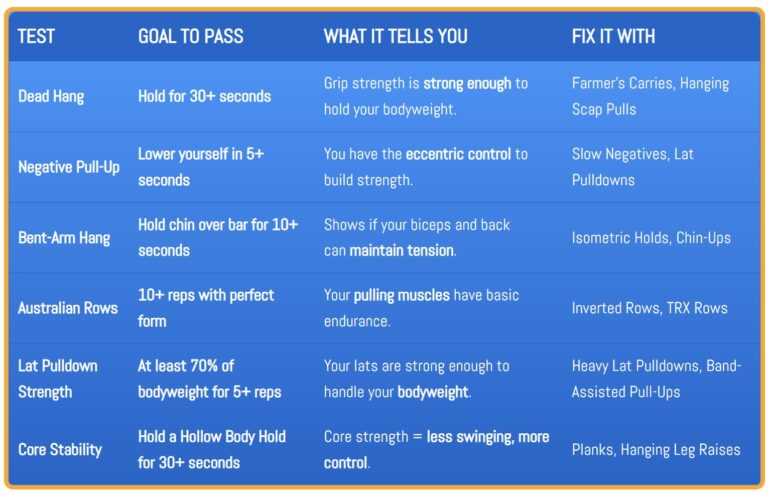
The Fix: Lighten the weight. If you can’t hit full range of motion, you aren’t ready for the load. Focus on Close-Grip accessory work if your lockout is weak.
2. Excessive Lumbar Arching
The Mistake: Arching the back like a banana to “swing” the weight up.
The Fix: Ribs down. Use 90/90 Wall Balloon-Breathing to learn how to keep your core braced while your lats work.
3. Elbow Flaring
The Mistake: Letting the elbows drift away from the body.
The Fix: Keep your elbows tucked tight. Think about driving them into your back pockets.
“Heavy pulling requires an aggressive recovery protocol. If you’re pushing the intensity, you need a high-quality protein source like Momentous Recovery to repair the localized muscle damage. Don’t let your nutrition be the bottleneck for your back growth.”
— Charles Damiano, B.S. Clinical Nutrition
Programming for Power and Aesthetics
Treat weighted pullups as a “Primary” movement on your back or pull days.
- Strength Focus: 5 sets of 3-5 reps. 3 minutes rest. Use a creatine supplement to maximize your ATP for these sets.
- Hypertrophy Focus: 3 sets of 8-10 reps. 90s rest. Follow this up with Single-Arm Dumbbell Rows.
- The Finisher: Drop the weight and go to failure with bodyweight reps.
Variations to Scale and Progress
- Regressions: Use a Band-Assisted Neutral-Grip Pullup if you can’t hit 8 clean bodyweight reps.
- Progressions: Increase the eccentric time (4-5 seconds) or use a Band-Resisted Pullup for accommodating resistance.
- Alternative: If bars are unavailable, use Single-Arm Standing Band Rows to mimic the movement pattern.
The Bottom Line: Own the Bar
The Weighted Neutral-Grip Pullup is the king of vertical pulling for the modern lifter. It builds the lats, thickens the arms, and protects the joints. If you want to be an elite athlete in 2026, this belongs in your program. Load it, pull it, and grow.
Weighted Neutral-Grip Pullup FAQ
Should I use a belt or a vest?
A belt allows for heavier loads (plates), while a vest keeps the weight closer to your center of gravity, which is better for functional carryover.
Can I do these every day?
Vertical pulling places high stress on the elbows. 2-3 times per week is the “sweet spot” for most. Supplement with Momentous Collagen to support your connective tissue.
What if my gym doesn’t have parallel handles?
Use a V-bar from the cable machine and drape it over a standard pullup bar.