V2 Strength Heel Lift Inserts are rigid 5mm wedges designed to fix squat mechanics and ankle mobility in any shoe. They promise a cheap, versatile alternative to weightlifting shoes. But this isn’t a magic fix. We tested them to answer one question: are these a tactical tool for serious lifters, or just expensive shoe stuffing that creates long-term stability issues?
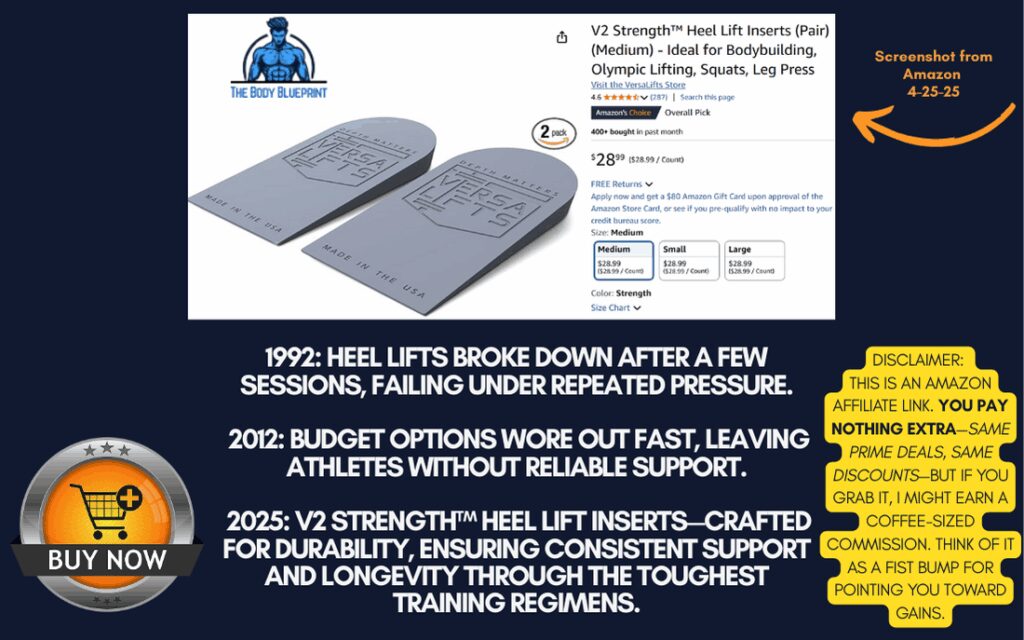
Disclaimer: You’re here to find gear that gets you results, and I’m here to help. As an Amazon Associate, I earn from qualifying purchases at no added cost to you. Fair deal? Let’s break it down.
Heel Lift Inserts Explained: The Ankle Mobility Hack
V2 Strength Heel Lift Inserts are 5mm rigid plastic wedges that create instant heel elevation. This isn’t cushioning. It’s structural. The lift shifts your center of gravity forward, reducing the demand for ankle dorsiflexion during squats, cleans, and snatches. Think of it as a biomechanical cheat code for lifters with tight ankles.
“A slight heel lift is a scalpel, not a sledgehammer. It improves positioning but doesn’t replace ankle mobility work. Use it as a tool, not a crutch.”
— Eugene Thong, CSCS
Target Audience: Who Actually Needs These
Heel lift inserts solve specific problems for a narrow audience. They’re not for casual gym-goers. They’re for athletes who understand biomechanics and have identified ankle mobility as their limiting factor.
✅ BUY IF YOU ARE:
- The Lifter with Poor Ankle Mobility: You struggle to hit depth without your heels rising.
- The Cross-Training Athlete: You need versatility for squats, cleans, and plyometrics in one shoe.
- The Tactical Minimalist: You want a gym-bag tool, not another pair of specialty shoes.
- The Performance Optimizer: You’ve maxed out mobility work and need a mechanical edge.
🚫 AVOID IF YOU ARE:
- The Runner or Endurance Athlete: These lack cushioning and alter running gait.
- Anyone with Plantar Fasciitis: The rigid design can aggravate arch pain.
- The Untested Beginner: Fix your mobility first. Don’t mask movement flaws.
- The Casual Lifter: If you don’t care about squatting ATG, you don’t need these.
Pros & Cons: The Unfiltered Breakdown
The value of heel inserts is a direct trade-off between convenience and compromise. They solve one problem elegantly but introduce others. Here’s the raw data.
| PROS | CONS |
|---|---|
| Instant 5mm Heel Lift: Works in any shoe, from cross-trainers to Chucks. | Not for Running/Jumping: Rigid design lacks cushioning, alters force absorption. |
| Durable Construction: Handles heavy squats (500lb+) without compression. | Potential for Foot Pain: Rigid plastic can cause discomfort under the arch during long sessions. |
| Cost-Effective: Far cheaper than dedicated weightlifting shoes. | No Stability Boost: Doesn’t provide the lateral support of a lifting shoe. |
| Portable & Discrete: Fits in your gym bag, no extra shoes needed. | Can Mask Mobility Issues: Risk of dependency without addressing root cause. |
Heel Inserts vs. Weightlifting Shoes: The Real Choice
Choosing between inserts and shoes is a question of specialization versus versatility. One is a tool, the other is dedicated equipment. Here’s the 2026 breakdown.
- Weightlifting Shoes (Nike Romaleos, Adidas Adipower): Built-in heel (15-20mm), maximal stability, strap-down fit. Purpose-built for heavy lifting only.
- V2 Heel Lift Inserts: 5mm lift, adds elevation to any shoe. Versatile for mixed training.
- Standing on Weight Plates: Free, but unstable and dangerous. A gym-floor hack, not a solution.
The Verdict: For pure strength athletes, lifting shoes win. For CrossFit, functional fitness, or lifters on a budget, inserts offer smart versatility.
“Heel lifts solve one problem elegantly but won’t replace a full toolbox. They’re the Swiss Army knife of lifting gear—useful in a pinch, but not your main tool.”
— Charles Damiano, B.S. Clinical Nutrition
The 5mm Science: Why This Height Matters
The 5mm lift is the biomechanical sweet spot for improved squat mechanics. It creates a subtle anterior shift in your center of mass. This allows for a more upright torso position, reducing shear force on the knees and lumbar spine. It’s enough elevation to improve mobility for most, without drastically altering your natural gait or balance.
Critical FAQs: The Questions Lifters Actually Ask
Yes, if used as a crutch. Relying on them without concurrent mobility work (calf stretches, ankle dorsiflexion drills) can lead to “lazy ankles.” Use them to train better movement, not replace it.
Technically yes, but stability plummets. Stacking creates uneven pressure and a wobbly base. If you need 10mm+, invest in proper weightlifting shoes.
They can, by improving form. The heel lift often reduces forward knee travel, shifting load to the posterior chain. This can alleviate patellar tendon stress for some lifters.
Generally not recommended. Deadlifts benefit from a flat, close-to-the-ground foot. Heel elevation puts you at a mechanical disadvantage, increasing the range of motion.
Final Verdict: A Niche Tool for Biomechanical Precision
V2 Strength Heel Lift Inserts are a precision tool for a specific problem: limited ankle mobility under load. They are not a universal fix. For the right user—the informed lifter who has identified ankle dorsiflexion as their bottleneck—they are a cost-effective, versatile solution that works.
BUY THEM IF: You understand your mechanics, need versatility for mixed training, and have exhausted mobility work without solving your heel-rise issue.
SKIP THEM IF: You’re looking for a magic fix, want cushioning, or aren’t prepared to pair them with dedicated ankle mobility training to avoid dependency.
Ready to Fix Your Squat Mechanics?
If you’ve identified ankle mobility as your limiting factor and want a tactical, versatile tool, V2 Strength Heel Lift Inserts deliver a proven biomechanical advantage. No hype. Just mechanics.
The Iron Lexicon: Lifting Mechanics Edition
- Ankle Dorsiflexion
- The ability to bring your shin forward over your foot. Critical for deep squat positioning. Limited mobility often causes heel rise.
- Heel-to-Toe Drop
- The height difference between the heel and forefoot of a shoe. A 5mm insert adds 5mm to this drop, altering biomechanics.
- Posterior Chain
- The muscle group on the back of the body: glutes, hamstrings, spinal erectors. Proper squat form loads this chain.
- Shear Force
- A parallel, sliding force across a joint (like the knee). Poor squat mechanics increase shear force, elevating injury risk.
- Mechanical Advantage
- Using tools or positioning to make a movement more efficient. Heel lifts provide a mechanical advantage for squats by improving leverages.
Individual results will vary based on anatomy, existing mobility, and training technique. These inserts are a training aid, not a medical device.