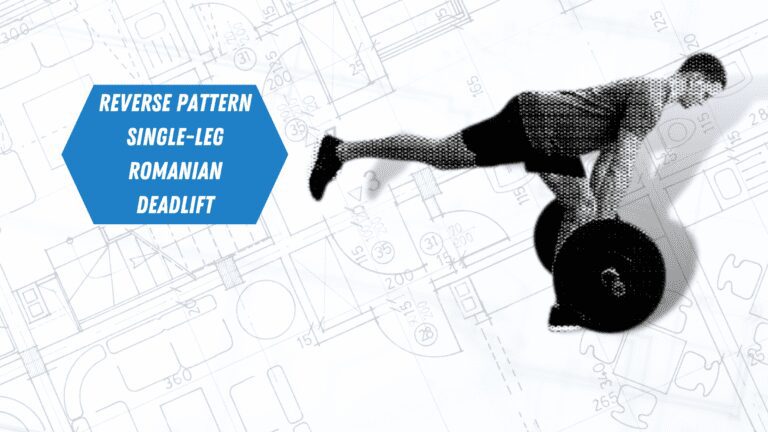
The Single-Leg Dumbbell Romanian Deadlift (SL RDL) is the ultimate diagnostic tool for posterior chain imbalances and hamstring health. While standard deadlifts allow your dominant side to take over, this unilateral movement forces each leg to stabilize and lift independently.
Most lifters are lopsided. They have one strong glute and one weak one. This leads to back pain and stalled lifts. The SL RDL fixes this. It is not a heavy power movement; it is a precision strike. It demands that you balance on a knife’s edge while loading the hamstring. It forces your core to lock, your foot to grip, and your hip to hinge perfectly. If you wobble, you fail. Stop hiding your weak side. Expose it and fix it.
Important: If you cannot balance, do not add weight. Use a wall for support or tap your back foot on the floor (B-Stance) until your stability improves.
Why Unilateral Hinging Builds Better Athletes
The Single-Leg RDL is more than just a hamstring stretch; it is a challenge of proprioception and hip stability. By removing one base of support, you force the “glute medius” (side butt) to fire aggressively to keep your pelvis level. This is the secret to preventing knee pain and lower back injuries.
The Benefits at a Glance
| Advantage | The Payoff |
|---|---|
| Symmetry | Ensures both hamstrings are equally strong, preventing tears during sprinting or heavy lifting. |
| Foot Strength | Your foot must grip the floor like a claw to maintain balance, building a strong foundation. |
| Back Health | Allows for high hamstring activation with much lighter spinal loading than a barbell deadlift. |
How to Perform the Single-Leg RDL
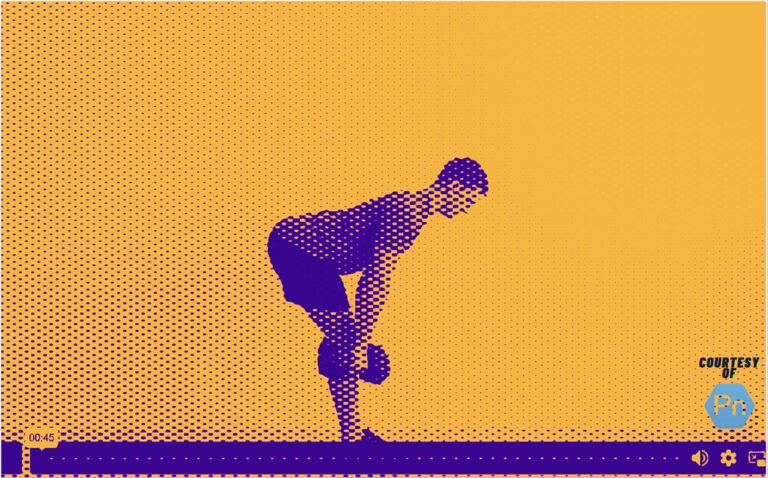
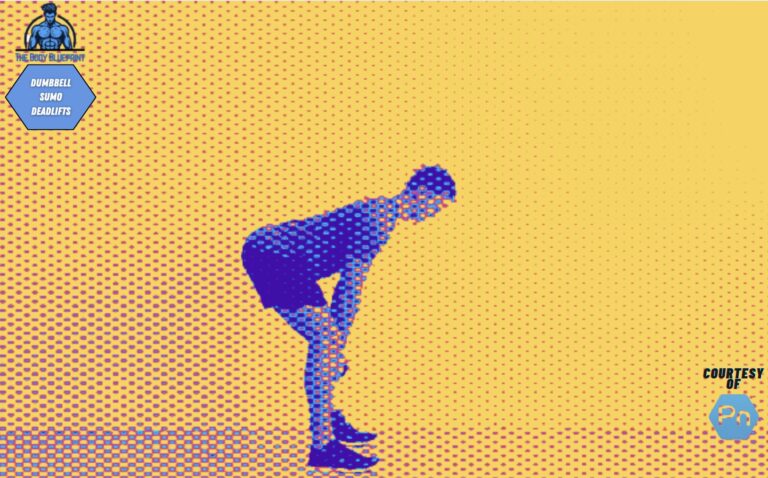
Imagine you are a drinking bird toy; the movement comes from the hip pivot, not the spine. Your head and your back heel are connected by a steel rod. If one goes down, the other goes up.
Step-by-Step Execution
- The Grip: Hold a dumbbell in the hand opposite to the working leg (Contralateral) for stability, or same side (Ipsilateral) for extra core challenge.
- The Stance: Plant the working foot. Soft bend in the knee (20 degrees). It stays frozen there.
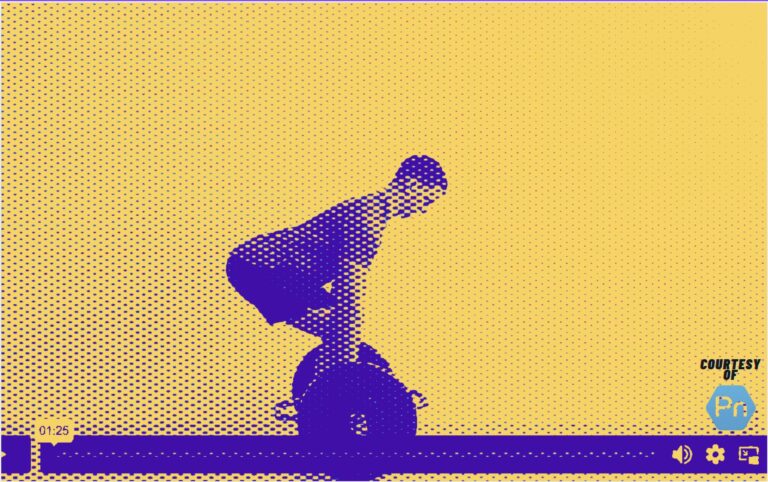
- The Hinge: Push your hips back. As your chest drops, your back leg lifts. Keep a straight line from head to heel.
- The Alignment: Keep your “zipper” facing the floor. Do not let your hips open up to the side.
- The Stretch: Lower until you feel a deep stretch in the hamstring. Do not round your back to go lower.
- The Drive: Push through the heel. Squeeze the glute to stand tall.
“Imagine you are trying to close a car door with your butt. Reach back. The weight is just a counter-balance. The focus is on the reach.”
— Eugene Thong, CSCS
Common Mistakes That Kill Stability
If you look like a wacky waving inflatable tube man, you are doing it wrong. This is about control, not depth.
- The Hip Open: Rotating the pelvis to the side to balance. Fix: Point the back toe straight at the floor.
- The Squat: Bending the knee too much. Fix: Keep the shin vertical. Only the hip moves.
- The Reach: Rounding the shoulders to get the weight lower. Fix: Keep the dumbbell close to your leg. Stop when the hamstring stops stretching.
Programming & Optimization
This is a quality movement, not a quantity movement. Keep reps moderate and focus on the mind-muscle connection.
Sample Protocol
| Goal | Sets/Reps | Context |
|---|---|---|
| Correction | 3 x 8-10 reps | Use light weight. Perfect form. |
| Hypertrophy | 4 x 12 reps | Slow eccentric (3 seconds down). |
Performance Stack
Unilateral training requires intense neural focus and recovery.
- Recovery: Hamstrings are prone to soreness. Prioritize sleep quality and cellular repair with NAD+ Cell Regenerator.
- Gut Health: Core bracing starts in the gut. Reduce bloating with a top-tier probiotic like in our Seed vs Align comparison.
- Tissue Work: If your hips are tight, you can’t hinge. Use a Hypervolt Go 2 to loosen the glutes pre-workout.
Tech Alternative
If balancing with free weights is impossible for you, digital resistance offers a solution. Smart gyms like those in our Best Smart Home Gyms guide or Speediance comparison offer digital spotting modes that help you learn the pattern safely.
The Verdict
The Single-Leg RDL is the most humbling exercise in leg training. It exposes your imbalances and forces you to own your movement. Don’t hide your weak side. Fix it.