The Single-Leg Band-Resisted Romanian Deadlift (RDL) is the most efficient way to delete muscular imbalances while forcing insane hypertrophy in the glutes and hamstrings.
This is the 2026 blueprint for a bulletproof posterior chain. We aren’t just doing “balance work”; we are using accommodating resistance to attack the muscle where it is strongest. If your glute development has stalled on the barbell, it’s because your central nervous system is hiding behind your compensations.
Disclaimer: Consult a physician or qualified trainer before starting any new exercise. This guide focuses on performance and aesthetic optimization. Get your data right before you lift.
The Single-Leg Band-Resisted RDL: Accommodating Tension
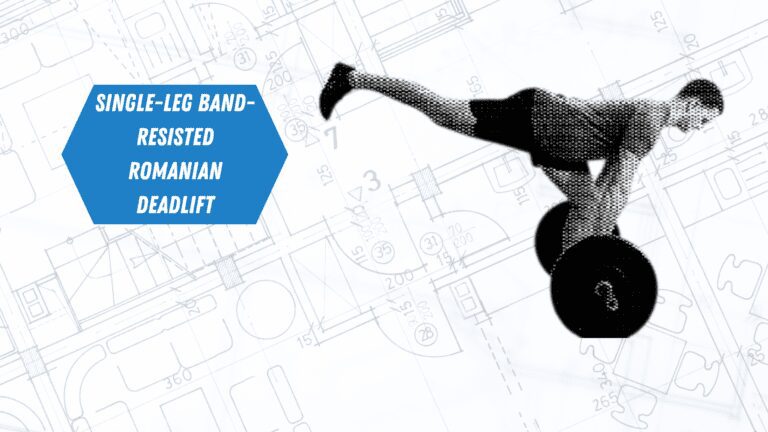
The Single-Leg Band-Resisted RDL is a unilateral hinge movement that uses a resistance band to provide “accommodating resistance.” As you stand up and the band stretches, the tension increases, forcing the glutes to work hardest at the lockout. It’s a specialized progression from the Barbell Romanian Deadlift that targets stability and explosive hip extension.
- Primary Focus: Glutes, Hamstrings, Erector Spinae, Core.
- Equipment Needed: Long Loop Resistance Band.
- Skill Level: Intermediate. Requires a solid “hinge” foundation.
- Key Purpose: Correcting side-to-side imbalances and maximizing glute peak contraction.
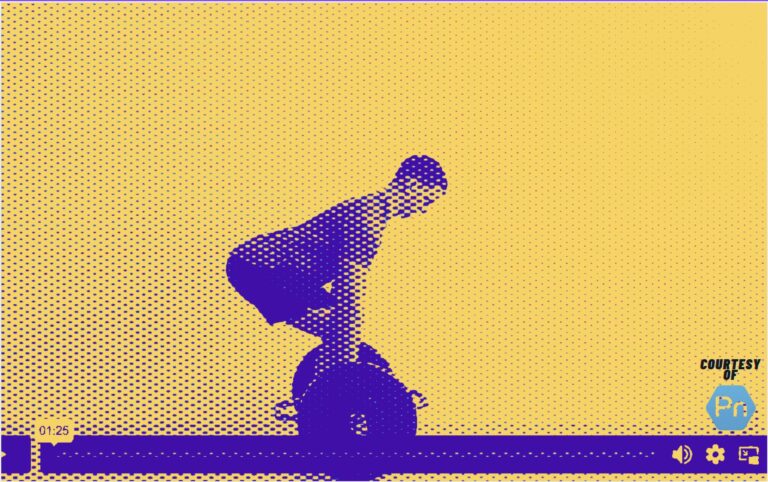
Single-Leg Band-Resisted RDL instructional video. Focus on the hip hinge and band tension.
Why Banded Unilateral Work Dominates
Biology doesn’t lie: most people have one leg that’s doing 60% of the work. Bilateral moves like the Barbell Sumo Deadlift are great, but they let your dominant side hide your weaknesses. The band adds a layer of “variable resistance” that gravity alone can’t provide.
- Peak Glute Contraction: The band is heaviest at the top, exactly where your glutes should be doing the most work.
- Core Integration: Balancing on one leg while fighting band tension forces the obliques and lower back to stabilize. Prime this with an Ab Wheel Iso.
- Pelvic Stability: It trains the “anti-rotation” of the hips, keeping your pelvis level under load.
- Joint Friendly: High muscle tension with lower total joint load compared to heavy barbell variations.
Step-by-Step Form: The 5-Point Checklist
- Setup: Step one foot inside the band loop. Hold the other end of the band with both hands or the opposite hand (offset). Stand tall.
- The Brace: Take a deep breath. Brace your core. For elite ribcage stability, hit a few reps of 90/90 Wall Balloon-Breathing beforehand.
- The Hinge: Unlock your knee. Push your hips BACK toward the wall. Your torso should stay flat. Do not reach for the floor; reach for the wall behind you.
- The Stretch: Lower until you feel a “big” stretch in the hamstring. The band will go slack—this is fine.
- The Drive: Drive your hips forward to stand up. Squeeze your glute hard against the increasing band tension at the top.
“The band changes the strength curve of the RDL. In a traditional RDL, the hardest part is the bottom where the hamstrings are stretched. With the band, we shift the peak load to the top. This forces the glutes to fire at maximum intensity to complete the lockout. It’s a mechanical masterpiece for posterior power.”
— Eugene Thong, CSCS
3 Common Form Mistakes & How to Fix Them
Bad form is just wasting pixels. Fix your hinge or go home.
1. The “Turtle Back”
The Mistake: Rounding the spine to get deeper. The Fix: Range of motion doesn’t matter; the hinge does. Stop the rep as soon as your hips stop moving backward. Keep your lats “packed.”
2. The Knee Drop
The Mistake: Turning the RDL into a squat by bending the knee too much. The Fix: Keep the shin vertical. Imagine your foot is glued to the floor. If you’re struggling, regress to a Bodyweight Squat to Box to learn leg positioning.
3. Hip Opening
The Mistake: Letting the non-working hip rotate up toward the ceiling. The Fix: Keep both hip bones pointing toward the floor. Use Adductor Mobilization to unlock the tight tissues that might be pulling your pelvis out of alignment.
“From a clinical standpoint, unilateral loading increases the demand for intramuscular coordination. For hypertrophy, this means more effective amino acid delivery to the specific glute fibers that usually ‘lazily’ follow the dominant leg. It’s an aesthetic necessity.”
— Charles Damiano, B.S. Clinical Nutrition
Programming & Integration
Use this as a specialized accessory to build the “big” lifts.
- Hypertrophy/Shape: 3 sets of 12-15 reps per leg. 45s rest.
- Stability Primer: 2 sets of 8 reps before heavy Barbell Deadlifts.
- Posterior Pump: Superset with Barbell Hip Thrusts for total glute destruction.
Variations to Scale Difficulty
- Single-Leg Dumbbell RDL: Swap the band for a weight to change the resistance profile.
- B-Stance RDL: Use the non-working foot as a “kickstand” for extra stability while still focusing on one leg.
- To Progress: Add a dumbbell and the band for “deadened” tension at the top. Pair with Ab Wheel Rollouts for total core-to-glute connection.
The Verdict
The Single-Leg Band-Resisted RDL is the ultimate tool for anyone serious about posterior chain aesthetics and functional power. It forces you to stabilize, it forces you to hinge, and it forces you to grow. No excuses. Hit the reps.
Single-Leg Band-Resisted RDL FAQ
Should I feel this in my lower back?
You should feel “tension” as the muscles stabilize, but never sharp pain. If you do, you’re likely rounding your spine or not bracing your core properly.
How thick should the band be?
Start light. The goal is the quality of the hinge and the peak squeeze. If the band is so heavy you’re wobbling, you’re missing the hypertrophy benefits.
Can I do this every day?
As a warm-up, yes. As a heavy hypertrophy tool, stick to 2-3 times per week to allow for muscle protein synthesis and recovery.