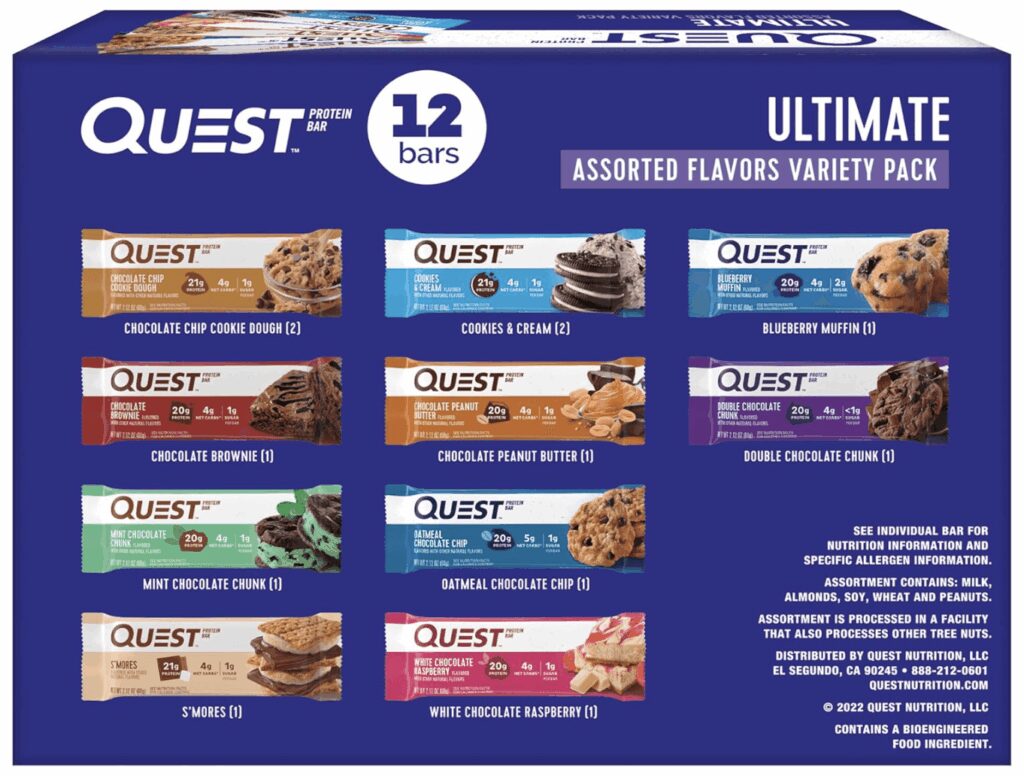
Quest Bars have been the benchmark, promising high protein, low sugar, and actual edible flavor. But in 2026, with a flood of new competitors, does the OG still hold up for the lifter or entrepreneur who needs real food fuel?
We break down the macronutrient matrix, the texture trade-offs, and whether these bars deserve a prime spot in your desk drawer or gym bag.
Disclaimer: You’re here to find a product that’ll get you results, and I’m here to help. Just a heads-up: As an Amazon Associate, I earn from qualifying purchases. If you buy through my links, I get a small commission at no added cost to you. It’s like I get a little thing for doing the heavy lifting on research. Fair deal? Now, let’s get into the good stuff.
Important: This information is for educational purposes. This review is based on macronutrient analysis, ingredient profiling, and consumer experience. It is not a substitute for professional dietary or medical advice. Consult a healthcare provider for personalized guidance.
Quest Protein Bars Overview: The Macro-Calculated Workhorse
Quest didn’t invent the protein bar, but they defined the modern “high-protein, low-carb” category. The promise is simple: a convenient, shelf-stable packet that delivers a meaningful dose of protein and fiber with minimal sugar and digestible carbs. It’s engineered nutrition for when whole food isn’t an option.
- Core Macronutrient Profile (Avg. per Bar): 190-210 Calories | 20-21g Protein | 14-15g Fiber | 4-5g Net Carbs | 7-9g Fat | 1g Sugar.
- Protein Source: Blend of Milk Protein Isolate and Whey Protein Isolate. A slow-and-fast-digesting combo intended to support muscle protein synthesis and satiety.
- Sweetener System: Uses a blend of soluble corn fiber (which contributes to the high fiber count) and sugar alcohols like erythritol and allulose to sweeten without spiking blood sugar.
- The Core Idea: This is a tactical tool for hitting protein targets and managing hunger, not a health food or daily meal replacement. It solves the “I need food now and don’t want to trash my diet” problem.
The Macro Blueprint: Why The Numbers (Mostly) Work
The formula is a masterclass in hitting specific nutritional KPIs. Here’s what each macro is doing.
1. The 20g Protein Hit – The Whole Point
Why it matters: Hitting a 20-40g protein threshold per feeding is key for stimulating muscle protein synthesis (MPS). For an athlete or active person, this bar gets you a meaningful chunk of the way there in a pinch. The milk protein/whey blend provides a sustained release.
The Trade-off: To hit this protein high note with low calories and carbs, the protein source is highly processed and isolated. This is efficient, but not the same as eating a chicken breast in terms of micronutrients or satiety signals.
2. The Fiber Gambit (14-15g)
Why it matters: This astronomical fiber number is the secret weapon for net carbs (Total Carbs – Fiber – Sugar Alcohols = Net Carbs). It also contributes massively to the “this bar will fill you up” feeling. The soluble corn fiber acts as a prebiotic.
The Trade-off: For some guts, this much fiber from processed sources, combined with sugar alcohols, is a one-way ticket to bloating and gas. Tolerance is highly individual.
3. The Net Carb Calculus (<5g)
Why it matters: This is what made Quest famous in the keto and low-carb communities. By using non-impact carbs (fiber and sugar alcohols), they create a sweet, palatable bar that doesn’t spike blood sugar, making it a viable tool for fat-loss phases.
The Trade-off: The quest for low net carbs leads to the use of sugar alcohols, which some people are sensitive to, and can create a slight cooling aftertaste.
“Think of a Quest Bar not as food, but as a delivery mechanism for protein and fiber. Its value is in its macronutrient precision and convenience. The question is whether your gut and palate accept the engineered ingredients required to make that math work.”
— Charles Damiano, B.S. Clinical Nutrition
Taste & Texture Reality: The Flavor Tier List
Quest Bars have evolved. The older versions were notoriously dry and chewy. The current “Ultimate” line is softer, but texture is still a polarizing point. Heating in the microwave for 5-10 seconds is a non-negotiable game-changer that transforms many flavors.
- S-Tier (Legitimately Good): Chocolate Chip Cookie Dough (the classic for a reason), Blueberry Muffin (surprising fruit flavor, good softness). Microwaved, these approach a decent baked good.
- A-Tier (Solid Daily Drivers): Cookies & Cream, Double Chocolate Chunk. Reliable, good chocolate flavor, minimal weird aftertaste.
- B-Tier (Flawed, But Usable): Oatmeal Chocolate Chip (can be dry), Peanut Butter (some find the PB flavor artificial). These benefit most from heating.
- The Mint Chocolate Caveat: Mint Chocolate Chunk is divisive. If you love thin mints, it’s S-Tier. If you’re wary of mint in your protein bar, it’s a hard avoid.
Texture Verdict: Expect a dense, chewy, slightly sticky consistency. It’s not a light, crispy rice treat. It’s a substantial bar that feels like you’ve eaten something.
“For the lifter, a Quest Bar 30-60 minutes pre-workout provides a slow-drip protein source and steady energy without gut bomb. Post-workout, it’s a decent placeholder until you can get a full meal. Its utility is in its predictable macros and convenience, not gourmet experience.”
— Eugene Thong, CSCS
Who Quest Bars Are For (And Not For)
It’s Perfect For:
- The Macro-Counting Athlete/Lifter: You need to hit 180g of protein today and are 20g short. This solves it with mathematical precision.
- The Busy Professional in Back-to-Back Meetings: Stash it in your bag for the 3 PM crash when the alternative is vending machine candy.
- Anyone on a Strict Low-Carb or Keto Protocol: One of the few sweet, convenient options that fits the macro limits.
- The Frequent Traveler: Non-perishable, airport-safe, and won’t crumble into dust in your suitcase.
It’s NOT For:
- The Whole Food Purist: If your philosophy is “eat nothing with ingredients you can’t pronounce,” this is a chemistry set.
- The Sugar Alcohol Sensitive Gut: If erythritol or soluble corn fiber causes you digestive distress, you will have a bad time.
- The Casual Snacker Seeking a Health Food: This is a processed supplement. There are better whole-food-based bars (like RXBAR) if that’s the goal.
- Anyone Expecting a Candy Bar: The taste has improved, but manage expectations. It’s a protein bar first.
Quest Bars vs. The 2026 Competition
Its position is no longer unchallenged. Here’s how it stacks up.
- vs. David Protein Bars: The new contender on the block. David bars often boast extremely high protein-to-calorie ratios and simplified ingredients, challenging Quest’s dominance in the “serious lifter” demographic.
- vs. Barebells / Fulfil Bars: These European-style bars often taste more like candy and have a creamier texture, but they typically use a lower-quality protein blend (often collagen/whey mix) and may have higher sugar. Quest wins on protein quality; they win on hedonistic taste.
- vs. ONE Brands Bars: Similar macro profile, often with more indulgent flavors (like maple donut). Can be sweeter and use more artificial ingredients. A toss-up, often down to specific flavor preference.
- vs. RXBAR / LaraBar: RXBARs use whole food ingredients (dates, egg whites, nuts) and have a simpler label. They have more natural sugar and less protein, but are less processed. Different philosophies: engineered nutrition vs. whole-food convenience.
- vs. DIY / Real Food: A Tupperware of chicken and rice, Greek yogurt, or a hard-boiled egg will always be superior in terms of protein quality, satiety, and cost. Quest exists for when that’s logistically impossible.
Potential Drawbacks (The Fine Print)
- Gut Check Required: The high fiber/sugar alcohol combo is the biggest point of failure. You must test your tolerance.
- Price Per Serving: At ~$2.50-$3.00 per bar, it’s an expensive protein source compared to powder or canned tuna.
- Processed Ingredients: It’s a highly formulated product. Soluble corn fiber, palm oil, and artificial flavors are staples.
- Taste Fatigue: Even the best flavors can become a chore if you rely on them too heavily. They are a supplement to a diet, not its foundation.
The Verdict: The Reliable, If Uninspiring, Tactical Tool
Quest Bars aren’t exciting, and they’re not a health food. They are a reliable, macro-precise tool for a specific job. If your goal is to add protein and fiber with minimal sugar/carbs in a shelf-stable form, they remain a top-tier option. Just know what you’re signing up for.
More From Our Nutrition Deep Dives
- See All Our Protein Product Reviews: Our full archive of hands-on tests.
- Best Protein Bars for Lifters 2026: See how Quest stacks up against all other top picks in our main pillar guide.
- Whey Protein Types & Differences: Understanding the core protein sources in bars like these.
- How to Read a Supplement Label: Decode the marketing to see what you’re really buying.
The Iron Lexicon: Protein Bar Edition
- Net Carbs
- Total carbohydrates minus fiber and sugar alcohols. Represents the carbs that significantly impact blood sugar. The key metric for low-carb and ketogenic dieters.
- Milk Protein Isolate
- A slow-digesting protein derived from milk (80% casein, 20% whey). Provides a sustained release of amino acids, promoting satiety and prolonged muscle protein synthesis support.
- Soluble Corn Fiber (Resistant Maltodextrin)
- A processed fiber that contributes to total fiber count without adding digestible carbs. Acts as a prebiotic and bulking agent, but can cause digestive issues in sensitive individuals.
- Erythritol
- A sugar alcohol commonly used as a zero-calorie sweetener. It has a minimal impact on blood sugar and is generally better tolerated than other sugar alcohols, though some people experience digestive discomfort.
- Macronutrient Precision
- The practice of using engineered foods to hit specific daily targets for protein, carbs, and fat, often sacrificing whole-food ingredients for consistency and convenience.