You dropped $300 on a recovery tool that’s supposed to last for years. But you treat it like a disposable razor—throwing it in a wet gym bag, letting the battery die, and wondering why it sounds like a dying lawnmower after six months. Maintaining your massage gun isn’t cleaning; it’s protecting your investment and ensuring it delivers the same punch on day 500 as it did on day one.
This isn’t a gentle suggestion. It’s the operational manual for the weapon in your recovery arsenal. We’ll cover:
- Battery Protocols: How to charge for maximum lifespan and why you’re probably killing your battery right now.
- Cleaning & Hygiene: Sanitizing the tool that hits your sweaty muscles without damaging the motor.
- Mechanical Integrity: Spotting early failure signs in attachments, arms, and motors before they break.
- Storage & Travel: How to pack it so it survives your car trunk, not just your bedroom.
Massage Gun Battery Maintenance: The Charge Cycle That Dictates Lifespan
Your gun’s lithium-ion battery is its heart. Abuse it, and you’ve got an expensive paperweight. Here’s the data-driven protocol.
| Do This | Never Do This | Why It Matters |
|---|---|---|
| Charge at 20-30% battery. Top it up before it fully dies. | Let it drain to 0% and sit dead for weeks. | Deep discharges stress lithium cells, permanently reducing capacity. A dead battery can enter a state where it won’t charge again. |
| Unplug at 100%. Don’t leave it on the charger for days. | Use it as a desk ornament permanently plugged in. | “Trickle charging” at full capacity creates heat and micro-stress on the battery, shortening its life cycle count. |
| Store at ~50% charge if not using for a month+ (e.g., off-season). | Store it fully charged or completely dead. | Lithium batteries degrade fastest at extreme high or low charge. 50% is the most stable, non-reactive state for storage. |
| Use the manufacturer’s charger and cable. | Use a random fast-charging phone block. | Incorrect voltage/amperage can overheat the battery management system. The Hypervolt 2 Pro’s removable battery makes storage charging easy. |
“Think of your battery like muscle tissue. You wouldn’t train it to total failure every single day and expect it to grow. You need strategic recovery. Chronic deep discharge is like chronic overtrain—it doesn’t build resilience, it breaks down the system permanently.” — Eugene Thong, CSCS
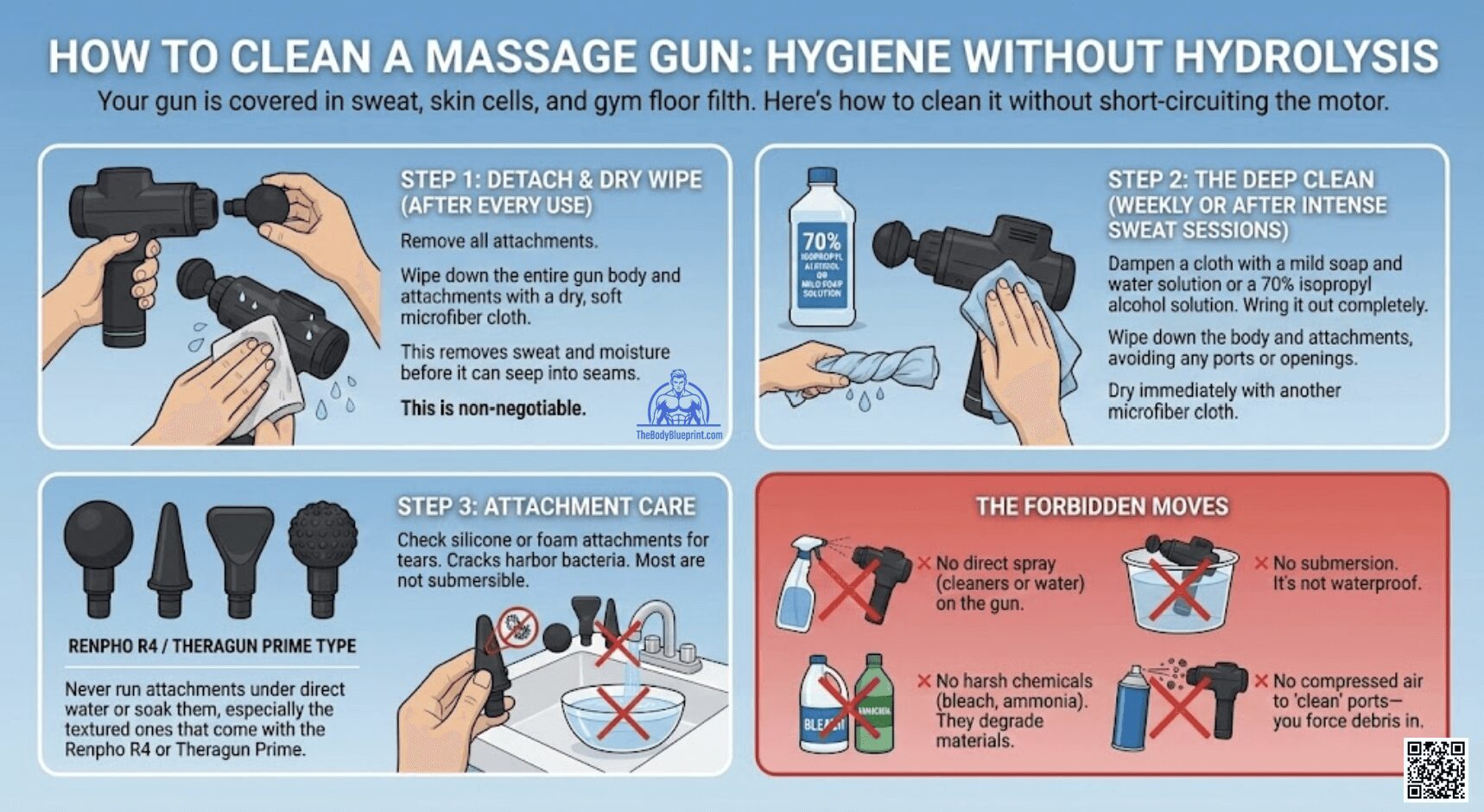
How to Clean a Massage Gun: Hygiene Without Hydrolysis
Your gun is covered in sweat, skin cells, and gym floor filth. Here’s how to clean it without short-circuiting the motor.
Percussion Massager Mechanical Maintenance: Listening to Your Tool
Your gun talks. A change in sound or feel is a diagnostic report. Ignore it, and the repair bill is on you.
| Component | Preventive Check | Red Flag (Immediate Action) |
|---|---|---|
| Attachments | Monthly: Inspect for deep cracks, warping, or permanent odor. Ensure they snap in firmly without play. | Attachment wobbles mid-use. This strains the connection port and can break the internal clip. Stop, remove, and replace. |
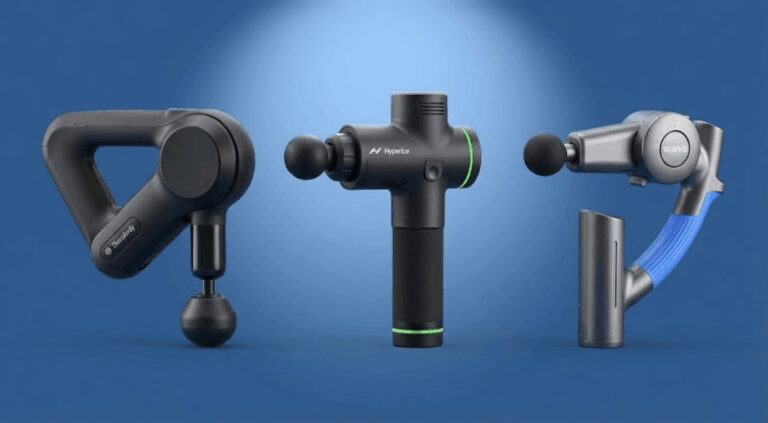
| Arm/Hinge Mechanism (Critical on Renpho R4 & Theragun PRO-style guns) | Check the locking mechanism weekly. Ensure it holds position firmly and moves without grinding. | Arm won’t hold angle or slips during use. This is a stress failure. Don’t force it; contact support. |
| Motor & Bearings | Listen for consistency. A healthy motor has a steady pitch. | New grinding, screeching, or rattling sounds. A change in percussion rhythm or a burning smell. STOP IMMEDIATELY. Do not unscrew the casing to investigate—breaking the seal instantly voids your 1-2 year warranty. This is often a fatal internal issue. |
| Body & Grip | Check for hairline cracks, especially near stress points like the handle base. | Any visible crack or loose panel. This can worsen and expose internal components. |
“A new vibration isn’t a feature; it’s a symptom. Your body and your tools give you feedback long before they fail. That rattle isn’t ‘just getting broken in’—it’s the sound of a bearing screaming for help. Listen to it.” — Charles Damiano, B.S. Clinical Nutrition
Massage Gun Storage and Travel: The Gym Bag Logistics
How you store it determines whether it arrives ready for war or broken in transit.
| Home Storage (The Daily Driver) | Rule 1: Use the provided case. It’s not packaging; it’s a protective system. Rule 2: Store in a cool, dry place. Not your hot car or damp bathroom. Rule 3: Store attachments separately in their slots. Loose attachments rattle and crack each other. |
| Gym Bag Transport | Always use the case inside your bag. Don’t let it bounce around with shoes and dumbbell handles. If you lost the case, get a padded sleeve or use a thick towel as a wrap. The Theragun Prime’s compact case is built for this. |
| Air Travel & Checked Luggage | Carry-On Only. Lithium-ion batteries should always be in your carry-on (FAA guidelines). The gun itself is fine in checked luggage, but why risk baggage handlers? Pro Tip: For the Hypervolt 2 Pro, carry the removable battery in your carry-on separately if you have a spare. |
Massage Gun Maintenance FAQs
Q1: Can you lubricate a massage gun?
Almost never. Modern percussive devices are sealed. Attempting to oil them will attract dust and gunk up the mechanism, causing more harm. If a hinge (like on the Renpho R4) feels stiff, contact manufacturer support for specific advice. Don’t just WD-40 it.
Q2: Why is my massage gun overheating?
Three likely culprits: 1) Excessive runtime: Using it for 15+ minutes continuously on high. It’s a tool, not a marathon. 2) Blocked vents: Fabric or your hand covering the motor vents during use. 3) Failing motor/bearing: Increased friction = increased heat. If it’s hot after just a few minutes of normal use, it’s likely failing.
Pro Tip: Stall Force vs. Breakdown. If your gun stops or stutters when you press too hard, that’s likely the stall force protection kicking in—a safety feature to prevent motor burnout. Ease up, it’s not broken. If it won’t start again or makes a sickly noise without pressure, that’s a breakdown.
Q3: Are massage gun attachments universal?
No, and forcing them will break your gun. While many use a similar “star pattern” fitting, the locking mechanisms, stem sizes, and depths are brand-specific. A Theragun attachment will not fit securely on a Hypervolt, and vice-versa. Always use manufacturer-recommended attachments.
Looking for My Massage Gun Reviews?
Disclaimer: If you’re here to find a product that’ll get you results, I’m here to help. Just a heads-up: As an Amazon Associate, I earn from qualifying purchases. If you buy through my links below, I get a small commission at no added cost to you. It’s like I get a little something for doing the heavy lifting on research. Fair deal? Now, let’s get into the good stuff.
Key Takeaways: The Maintenance Mindset
- Battery care is predictive, not reactive. Charge at 30%, unplug at 100%, store at 50%. This single habit doubles the functional lifespan of your tool.
- Cleaning is about moisture management. A damp cloth, never wet. Dry immediately. Sweat is corrosive; your goal is to remove it before it seeps in.
- Your ears are the best diagnostic tool. A new sound is the first sign of mechanical failure. Stop and investigate; do not “push through it.”
- The case is part of the product. Use it. Always. For home storage, gym transport, and especially travel. It is the primary armor against impact damage.
- Respect the engineering. These are precision instruments, not blunt objects. Following these rules isn’t being fussy; it’s being smart with your money and ensuring your recovery tool doesn’t become another source of frustration.
Treat your gun with the same respect you treat your other training gear. Your gains depend on consistency, and your tools need to be ready to work every time you are.