The ritual is sacred: roll out of bed, slam some black coffee, and hit the treadmill before a single calorie crosses your lips. This is the dogma of fasted cardio—the belief that in the absence of food, your body has no choice but to tap directly into stored body fat for fuel. It’s been sold from the pages of 90s Muscle & Fitness magazines to modern intermittent fasting gurus as the ultimate fat-loss hack. The logic feels bulletproof. But in physiology, feelings are often frauds.
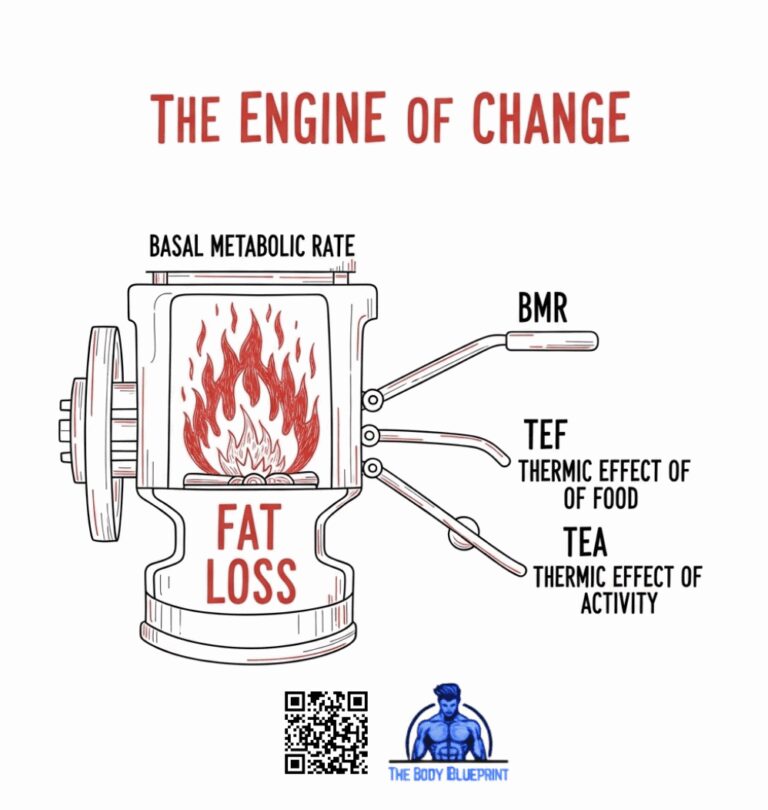
The promise of fasted cardio is a physiological sleight of hand. Yes, you burn a higher percentage of fat during the session. But the total amount of fat lost over 24 hours is governed by one ruthless equation: calories in vs. calories out. You might be optimizing for a metric that doesn’t matter.
The Fasted Cardio Debate: Acute Fat Burn vs. Total Body Composition
Let’s be clear: the appeal isn’t crazy. After an overnight fast, your insulin is low and glycogen stores are somewhat depleted. In this state, a greater proportion of the energy you use during low-intensity steady state (LISS) cardio will come from fat oxidation. This is the kernel of truth.
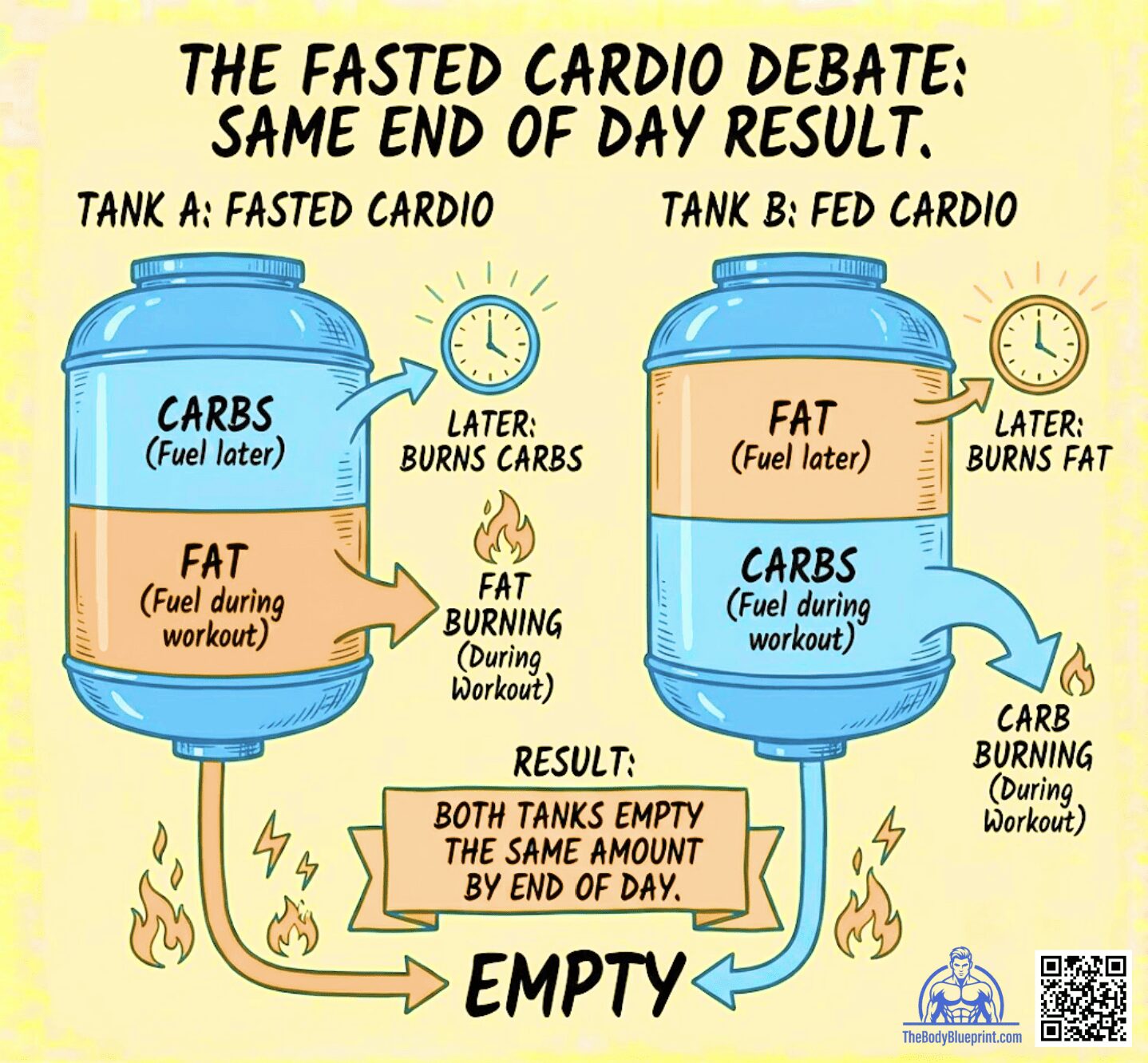
But here’s where the bro-science narrative derails. It conflates substrate utilization (what’s burning now) with fat balance (what you lose over time). Your body isn’t a simple, single-burner stove. It’s a dynamic system that accounts for energy across the entire day. Burn more carbs during your workout? You might burn more fat later while you sit on the couch. The net difference is often negligible, but the hormonal and recovery costs can be steep.
Fasted vs. Fed Cardio: The Metabolic Trade-Offs Table
This isn’t about good vs. evil. It’s about understanding the trade-offs of each protocol.
| The Case for Fasted Cardio (The Promise) | The Reality of Fed Cardio (The Context) |
|---|---|
| Higher % of Fat Burned DURING Session: Leverages low insulin to prioritize fat oxidation. | Greater Total Work Output & Calories Burned: Fuel in the tank allows for higher intensity or longer duration, increasing total daily energy expenditure (TDEE). |
| May Enhance Metabolic Flexibility: Trains the body to switch between fuel sources efficiently. | Potentially Spars Muscle Tissue: Available amino acids and carbs may reduce cortisol-induced muscle breakdown during training. |
| Convenience & Routine: Simple to execute first thing in the morning. | Improved Performance & Recovery: Fuel supports better session quality and faster glycogen replenishment post-workout. |
| The “Pure Fat Burn” Mentality: Strong psychological appeal of targeting fat directly. | Better Hormonal Environment: Mitigates the sharp cortisol spike associated with fasted training, which can be catabolic. |
The Hierarchy of Fat Loss Priorities: Where Cardio Fits
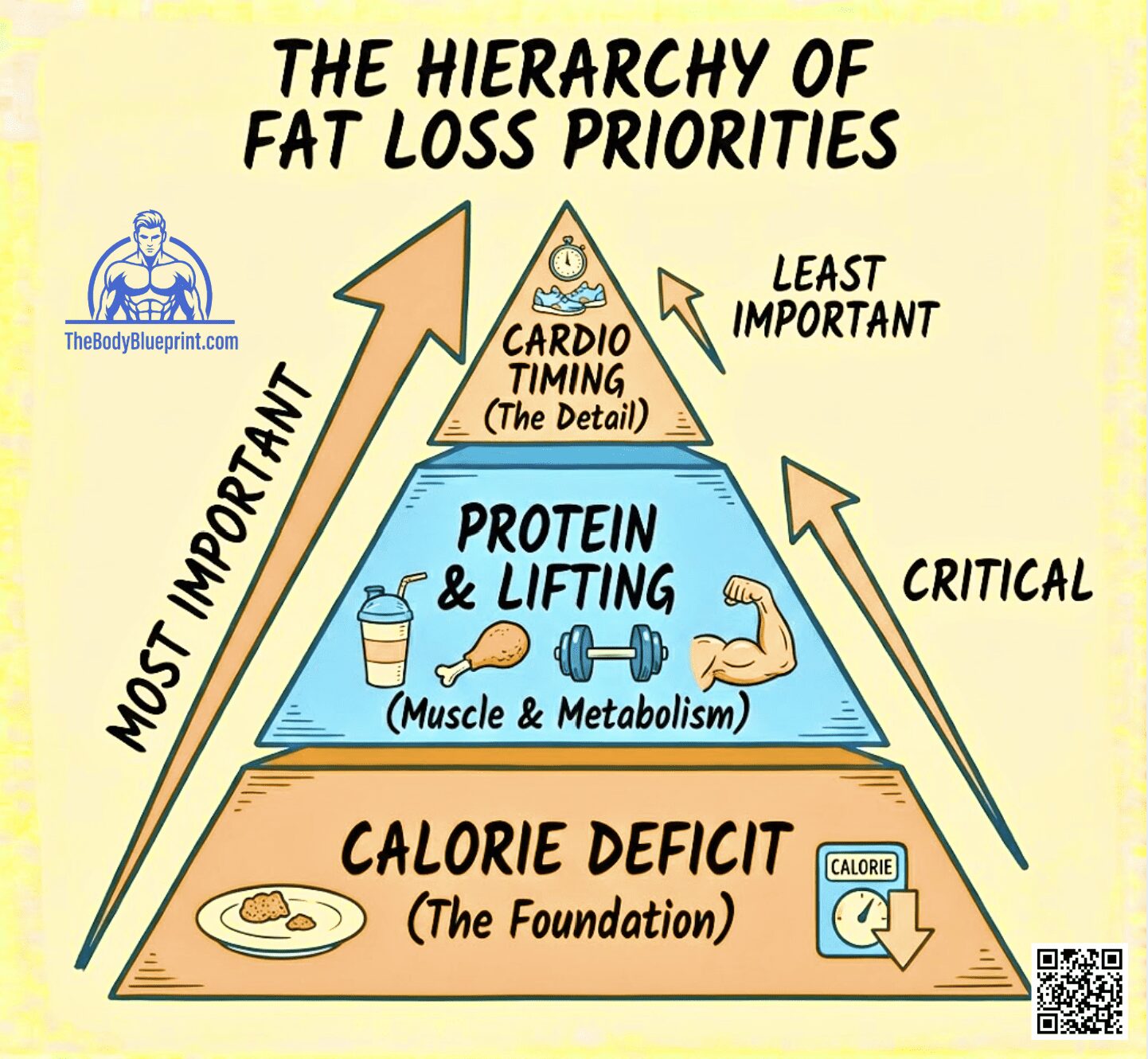
Arguing about fasted vs. fed cardio is like debating the paint color on a car with no engine. First, you need the engine. Here’s the actual priority list for fat loss:
- The Non-Negotiable Deficit: A sustained calorie deficit created through diet. This is 90% of the battle. Cardio is a tool to support this, not create it.
- Protein Intake & Resistance Training: Preserving lean muscle mass is the only way to ensure the weight you lose is fat. This requires adequate protein and lifting heavy weights.
- Activity & Adherence (NEAT): Your daily non-exercise movement (NEAT) often burns more than your dedicated cardio sessions. Walk more, fidget, stand.
- Cardio Modality & Timing: Finally, we get to the choice of LISS, HIIT, fasted, or fed. This is fine-tuning, not foundation building.
Eugene Thong, CSCS, offers a dose of reality: “I’ve seen clients obsess over fasted morning cardio while their diet is a dumpster fire of weekend cheat meals and nightly peanut butter binges. You cannot fast-track your way around a bad diet. The timing of your cardio is irrelevant if you’re not in a deficit. It’s the ultimate misplacement of effort.”
Fasted Cardio FAQ: Cortisol, Muscle, and Fast-Tracking
Q1. Doesn’t fasted cardio lead to more muscle loss?
A: It can, especially if prolonged, intense, or paired with inadequate protein intake. Training fasted elevates cortisol (a catabolic hormone) more significantly. Without circulating aminos from food, the body may be more likely to break down muscle tissue for energy. This risk is highest in a deep calorie deficit.
Q2. Should I take BCAAs before fasted cardio to prevent muscle loss?
A: This is the classic supplement band-aid. BCAAs will break the fast and trigger an insulin response, negating the proposed “fasted” benefit. If you’re that concerned about muscle loss, have a small, protein-based meal (e.g., scoop of whey protein) 30-60 minutes prior. Or better yet, do your cardio fed.
Q3. Is fasted cardio better for insulin resistance?
A: There is some evidence that fasted training can improve insulin sensitivity. However, consistent exercise in any state improves insulin sensitivity. The marginal potential benefit here is likely irrelevant compared to the broader picture of weight loss and muscle gain for improving metabolic health.
Strategic Cardio Questions: HIIT, Insulin, and The Golden Era
Q1. What about fasted HIIT for fat loss?
A: This is where the risks outweigh any theoretical benefit. High-Intensity Interval Training (HIIT) is glycolytic—it relies heavily on muscle glycogen. Performing it fasted guarantees poor performance, extreme fatigue, and maximally elevates cortisol. It’s a recipe for burnout and muscle loss. HIIT should always be done in a fed state.
Q2. Did golden-era bodybuilders like Arnold use fasted cardio?
A: Unlikely in the way we think of it. Their “cardio” was often posing practice, light activity, or hitting the StairMaster post-meal. Their cutting philosophy revolved around gradually reducing calories from whole foods and increasing activity—not manipulating meal timing to chase acute fat oxidation. The modern obsession is a product of the supplement era, not the golden era.
Charles Damiano, B.S. Clinical Nutrition, summarizes: “The ‘fasted cardio advantage’ is isolated to a metabolic moment that doesn’t dictate the 24-hour ledger. For most, the stress of fasted training and its potential impact on muscle protein balance nullifies any minor advantage. If you enjoy it and perform well, fine. But don’t suffer through it believing it’s a magic bullet. The magic is in the consistent deficit and weight training.”
The Supplement Graveyard: Cardio Edition
The fasted cardio myth fuels useless purchases. You don’t need:
- “Fast-Acting” Fat Burners like yohimbine or caffeine pills to “enhance” your fasted burn. They increase stress, not results.
- BCAAs or “Fast-Acting” EAAs to “protect muscle” during your fasted session. Eat real food instead.
- Expanded intra-workout formulas for low-intensity LISS. Water and maybe electrolytes are all you need.
Final Lap. Step Off the Treadmill.
Stop letting a minor, acute metabolic detail dictate your entire approach. The greatest fat-loss tool isn’t the state of your stomach when you train; it’s the consistency of your diet and the heaviness of your squats. Do cardio when it fits your schedule and energy levels, fuel your body to perform, and direct your obsessive energy toward the fundamentals. The path to leanness isn’t paved with hunger pains; it’s built with protein, patience, and progressive overload.