You feel it, don’t you?
That low-grade hum of metabolic rebellion. The ghost of holiday meals past, settling not as a memory, but as a permanent fixture around your waist. The quiet, nagging sense that the body you have is in a slow-motion negotiation with the body you want—and it’s losing.
This isn’t about vanity. It’s about velocity. The velocity of your life. You’re in your prime earning years, your leadership years, the years where every minute is accounted for. The idea of spending two hours in the gym, grinding through mind-numbing routines, is a beautiful, prehistoric fiction. Your time is a non-renewable currency, and you’re done wasting it.
But what if the entire premise is wrong? What if getting lean and strong wasn’t about adding more—more time, more effort, more complexity—but about a ruthless, elegant subtraction?
This is the new playbook. This is the 45-minute reclamation.
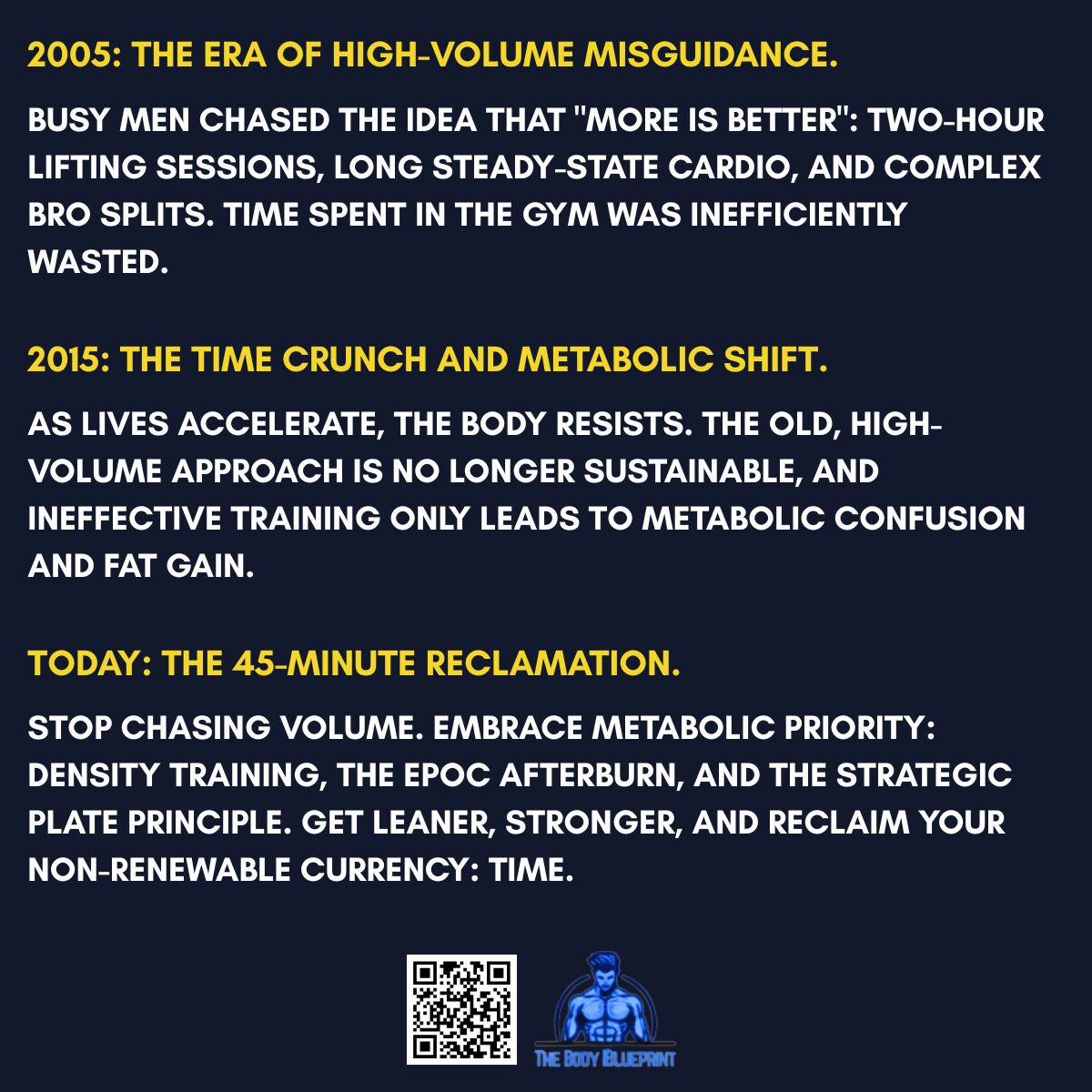
The Catalyst: Why Everything You Knew Stopped Working
Around the age of 30, a silent, metabolic shift occurs. It’s not dramatic, but it’s insidious. Your hormones begin a subtle, stubborn recalibration.
“The most common complaint I hear from men in this demographic isn’t a lack of willpower,” says Eugene Thong, CSCS. “It’s a profound confusion. They’re doing the same things that worked a decade ago—skipping meals, running for miles, benching three times a week—and the needle isn’t just stuck; it’s moving backwards. The body is no longer responding to the old commands.”
The problem isn’t you. The problem is your operating system.
The old model was Calories In, Calories Out. A primitive, arithmetic misery.
The new model is Metabolic Priority. A strategic, biological chess match.
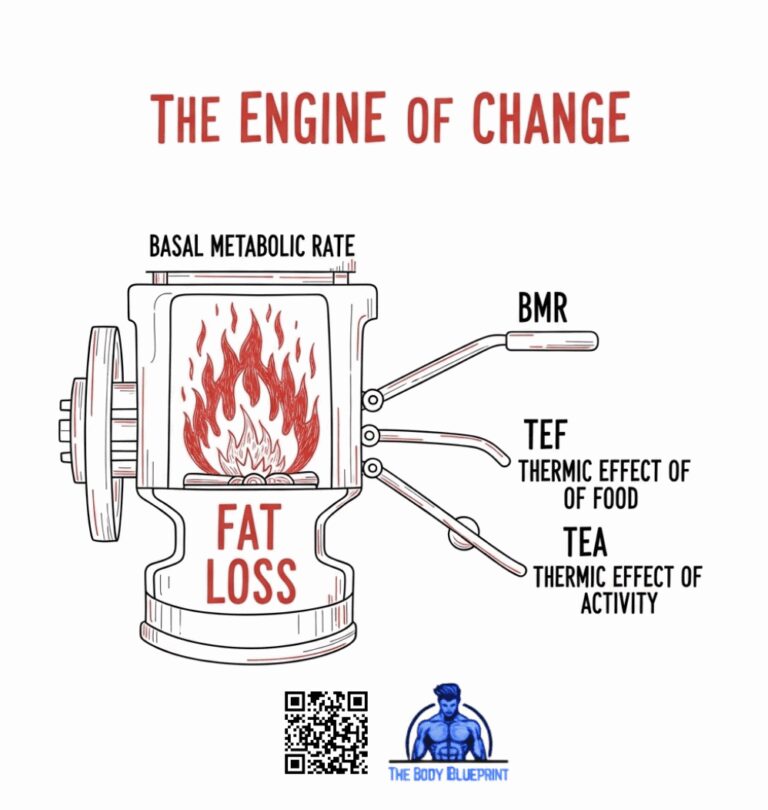
Your body now prioritizes two things: preserving energy (fat) and maintaining function (muscle). Long, steady-state cardio signals a “famine state,” encouraging your body to cling to fat for dear life. Random, unfocused weight training creates noise, not a signal.
The solution is to speak your body’s language with precision, not volume.
The 45-Minute “Metabolic Ignition” Protocol
This isn’t a workout. It’s a physiological intervention. It’s built on two pillars, performed on alternating days.
Pillar 1: Density Over Duration (Strength Days – 3x/Week)
Forget “bro splits.” The goal is to stimulate the maximum amount of muscle fiber in the minimum amount of time. We use compound movements—the exercises that recruit the most muscle and spark the highest metabolic cost.
To ensure balanced development and prevent your body from hitting a plateau, we use a simple A/B workout structure. This “strategic variation” challenges your muscles and nervous system in subtly different ways, forcing continuous adaptation without complexity.
The Weekly Structure:
- Week 1: Monday (Workout A), Wednesday (Workout B), Friday (Workout A)
- Week 2: Monday (Workout B), Wednesday (Workout A), Friday (Workout B)
The 45-Minute Strength Template:
- Minutes 0-10: Dynamic Warm-up (World’s Greatest Stretch, Cat-Cow, Banded Pull-Aparts)
- Minutes 10-40: The Core Lifts (Superset for efficiency)
- Minutes 40-45: Strategic Cool-down & Mobility (Focus on hamstrings, hips, and thoracic spine)
Here are the two workout structures:
Workout A: Posterior Chain & Horizontal Power
| Block | Exercise Pair (Superset) | Primary Focus |
|---|---|---|
| A1 | Barbell Squat | Quad & Glute Dominance, Core Stability |
| A2 | Pull-Ups (or Inverted Rows) | Back Width, Biceps, Grip |
| B1 | Dumbbell Bench Press | Chest, Shoulders, Triceps |
| B2 | Kettlebell Swings | Explosive Hip Hinge, Glutes, Conditioning |
| Finisher | Farmer’s Walks | Grip, Core, Total-Body Stability |
Workout B: Anterior Chain & Vertical Power
| Block | Exercise Pair (Superset) | Primary Focus |
|---|---|---|
| A1 | Deadlift (or Trap Bar Deadlift) | Posterior Chain, Back, Grip |
| A2 | Overhead Press | Shoulders, Triceps, Core |
| B1 | Dumbbell Rows | Back Thickness, Lats |
| B2 | Walking Lunges | Unilateral Leg Strength, Glutes, Balance |
| Finisher | Plank Holds (30-60 sec) | Deep Core Stabilization, Anti-Extension |
You move from one exercise to the next with minimal rest. This “density” training condenses an hour of work into 30 minutes of focused, ferocious effort.
Pillar 2: The After-Burn Engine (Conditioning Days – 2x/Week)
We are not jogging. Jogging is a time-tax with diminishing returns.
“We’re targeting Excess Post-Exercise Oxygen Consumption, or EPOC,” explains Thong. “In layman’s terms, we’re creating a metabolic debt so large that your body has to work overtime for hours—sometimes up to 48 hours—to repay it. This is where the real fat loss happens: on your couch, after you’ve finished.”
This is achieved through High-Intensity Interval Training (HIIT). The protocol is simple, but never easy:
- 5-Minute Warm-up (light rowing or cycling)
- The “20/40” Cycle: 20 seconds of all-out, leave-nothing-in-the-tank effort, followed by 40 seconds of complete rest. Repeat for 15-20 cycles.
- 5-Minute Cool-down
You can use an assault bike, a rower, or even simple bodyweight sprints. The entire session, including warm-up and cool-down, is 25-30 minutes. The result is a metabolic rebellion in your favor.
The Culinary Alchemy: Eating for the Engine
You cannot out-train a broken diet. But for the busy man, “diet” conjures images of measuring cups, bland chicken, and a social life in exile. This is different.
“Think of your body as a high-performance engine,” says Charles Damiano, B.S. Clinical Nutrition. “You wouldn’t put low-grade fuel in a Ferrari and expect peak performance. For men over 30, the fuel quality is everything. It’s about controlling the hormone insulin—the master regulator of fat storage.”
The strategy is built on a framework, not a rigid menu:
The Plate Principle:
- ½ Plate Protein: (Chicken, beef, fish, eggs) The building blocks of muscle and the driver of satiety.
- ¼ Plate Complex Carbs: (Sweet potato, quinoa, brown rice) Strategic energy for your workouts, not for your sofa time.
- ¼ Plate Fibrous Veggies: (Broccoli, spinach, asparagus) Micronutrient power and digestive health.
- Thumb-sized portion of Healthy Fats: (Avocado, olive oil, nuts) Crucial for hormone production, including testosterone.
The Two Non-Negotiable Rules:
- Protein Anchor Every Meal: Start with a palm-sized portion of protein. This simple act regulates appetite and maintains muscle.
- The 80/20 Hydration Rule: For every 8 oz of coffee or other diuretic, you drink 10 oz of water. Dehydration masquerades as hunger and fatigue.
This isn’t a diet of deprivation; it’s one of strategic abundance. It’s the quiet confidence of knowing your food is working for you, not against you.
The Quiet Pride
This is not a transformation that screams. It whispers. It’s the slight pause as you catch your reflection and don’t immediately look away. It’s the feeling of your shirt fitting differently across your shoulders, not straining at your waist. It’s the newfound energy that arrives at 3 PM instead of the familiar crash.
It’s the rediscovery of a body that is not a burden, but a tool—lean, strong, and efficient. It’s the quiet pride of a problem, once thought insurmountable, solved.
In 45 minutes a day, you are not just building a better body. You are reclaiming a piece of yourself.