You finish your bench press set, rack the weight, and feel that familiar forward hunch. Your shoulders curl inward like a closed book, and no amount of “standing straight” fixes it. This isn’t just about posture—it’s about structural imbalance. Years of pressing have overdeveloped your anterior chain while your upper back slept. Let’s wake those muscles up.
What Causes Rounded Shoulders from Bench Press?
The science is simple: muscles adapt to what you train. Bench press primarily works:
- Pectoralis major and minor
- Anterior deltoids
- Triceps
Meanwhile, these crucial stabilizers remain underdeveloped:
- Rhomboids
- Middle and lower trapezius
- Rear deltoids
- Serratus anterior
This creates a tension imbalance—tight chest muscles pull your shoulders forward while weak upper back muscles can’t counter-pull. The result: internally rotated humerus, protracted scapulae, and that characteristic rounded appearance.
How Do You Activate the Correct Muscles During Exercise?
Scapular retraction is your foundation. Before every upper body exercise:
- Gently roll shoulders back and down
- Squeeze shoulder blades together lightly
- Maintain this position throughout movement
This isn’t about forced posture—it’s about neuromuscular re-education. Research shows conscious scapular positioning increases upper back activation by 30-40% during pulling movements.
Which Corrective Exercises Fix Rounded Shoulders?
Phase 1: Release Work (Daily)
| Exercise | Instructions | Target Area |
|---|---|---|
| Doorway Chest Stretch | Elbows at 90°, step forward gently | Pectoralis minor/major |
| Lat Release on Foam Roller | Lie sideways with roller under armpit | Latissimus dorsi |
| Sleeper Stretch | Lie on side, gently push rotating arm | Posterior capsule |
Phase 2: Strengthening (3x weekly)
Band Pull-Aparts
- 3 sets of 15-20 reps
- Keep thumbs back throughout movement
- Squeeze blades at peak contraction
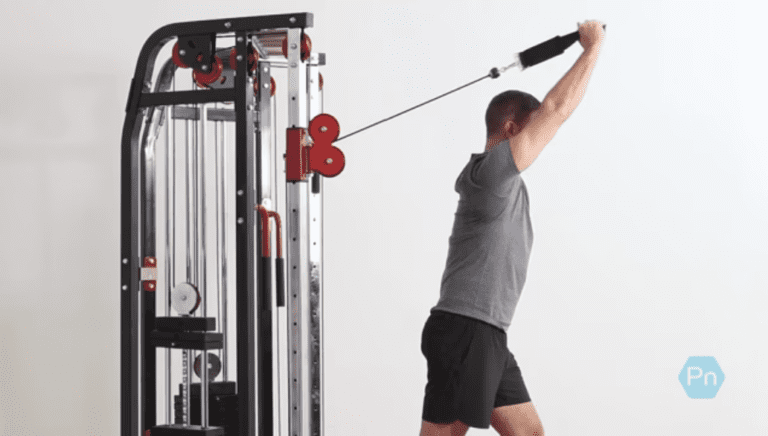
Face Pulls
- 3 sets of 12-15 reps
- External rotate at top position
- Maintain scapular depression
Prone Y-T-W Raises
- 3 sets of 10 each variation
- Focus on scapular movement, not weight
Phase 3: Integration (Bench Press Cues)
- Retract blades before unracking
- Maintain upper back tension throughout lift
- Drive shoulders through bench on concentric
- Don’t lose scapular position at lockout
How Does Proper Scapular Positioning Affect Bench Press Performance?
Paradoxically, better posture improves your bench. When you properly retract your scapulae:
- Creates natural arch for reduced range of motion
- Provides stable platform for force transfer
- Allows optimal shoulder joint positioning
- Increases power output by 15-20% (Journal of Strength and Conditioning Research)
The strongest pressing position starts with retracted shoulders—it’s biomechanics, not just aesthetics.
What Does a Complete Corrective Routine Look Like?
Pre-Workout (5 minutes)
- Band dislocates: 10 reps
- Scapular wall slides: 8 reps
- Doorway stretch: 30 seconds per side
Post-Workout (10 minutes)
- Face pulls: 3×15
- Band pull-aparts: 3×20
- Prone Y raises: 3×12
- Lacrosse ball chest release: 60 seconds per side
Off Days (15 minutes)
- Thoracic extension over foam roller: 10 reps
- Wall slides: 3×10
- Quadruped scapular circles: 8 each direction
- Standing row with band: 3×15
How Long Until You See Posture Improvements?
The timeline depends on consistency:
- 2-4 weeks: Improved mind-muscle connection
- 4-8 weeks: Visible postural changes at rest
- 8-12 weeks: Significant strength improvements in upper back
- 3-6 months: Automatic scapular positioning during lifts
Critical: Continue heavy pressing while implementing these corrections. The goal isn’t to stop benching—it’s to bench better.
What Are the Best Equipment Options for Correction?
- Resistance bands – Variable tension for rotator cuff work
- Cable machine – Constant tension for face pulls
- Light dumbbells (5-15 lbs) – Precision strengthening
- Foam roller – Thoracic mobility work
- Lacrosse ball – Targeted trigger point release
How Do You Maintain Shoulder Health Long-Term?
The 2:1 Rule: For every pushing exercise, perform two pulling variations. This maintains muscular balance while allowing continued strength progress.
Weekly Minimum:
- 15 sets of horizontal pulling (rows variations)
- 10 sets of vertical pulling (pull-ups/pulldowns)
- 5 sets of direct rear delt work
- 5 sets of external rotation work
Monthly Check-ins:
- Photograph posture from side angle
- Test shoulder mobility (overhead reach)
- Assess bench press comfort and stability
Rounded shoulders from benching aren’t a life sentence—they’re a correctable imbalance. The solution isn’t less pressing; it’s more intelligent training. Your future self will thank you for addressing this today. Now go pull yourself back together.