The top collagen supplements are not all the same. Single‑source powders only target skin and hair. Multi‑collagen blends support tendons, joints, and connective tissue. This guide cuts through the beauty marketing. You will learn which collagen types actually matter for lifters, how to stack them with Vitamin C, and which five brands deliver verified peptides. No fluff. Just the structural truth.
Why Collagen? The Structural Framework
Collagen is the most abundant protein in your body. It forms the scaffolding for skin, tendons, ligaments, bones, and cartilage. Heavy training constantly stresses this framework.
Supplementing with collagen peptides provides specific amino acids that standard whey lacks. Glycine, proline, and hydroxyproline are the building blocks of connective tissue. Whey is for muscle. Collagen is for the glue that holds muscle to bone.
For a deeper dive on how collagen supports connective tissue resilience, read our collagen for tendons guide. To understand the difference between collagen and other joint supplements, see Cissus vs. Collagen.
“Whey builds the engine. Collagen reinforces the chassis. If you ignore connective tissue, your strength gains will eventually outrun your structural limits. That is when things snap.”
Charles Damiano, B.S. Clinical Nutrition
Collagen Types: What You Actually Need
Not all collagen types serve the same purpose. Here is the breakdown for lifters.
| Type | Primary Role | Best For |
|---|---|---|
| Type I | Skin, tendons, ligaments, bones | Connective tissue resilience |
| Type II | Cartilage, joint health | Joint mobility support |
| Type III | Skin elasticity, gut lining | Skin and digestive health |
| Type V | Cell structure, tissue formation | Overall matrix integrity |
| Type X | Bone matrix, joint integrity | Long‑term skeletal support |
Single‑source collagens (Types I & III) are fine for skin and hair. But if you want connective tissue resilience for heavy lifting, you need a multi‑collagen blend that includes Types II, V, and X. Read our what is multi‑collagen guide for full details.
The 2026 Collagen Showdown
Five contenders. Different strengths. Here is how they compare.
| Product | Collagen Types | Protein/Serving | Key Additives | Best For |
|---|---|---|---|---|
| Momentous | I & III | 15g | Vitamin C, Fortigel® | NSF Certified for Sport |
| Vital Proteins Advanced | I & III | 20g | Hyaluronic Acid, Vitamin C | Skin + Joint Support |
| True Nutrition Multi | I, II, III, V, X | ~10g (adjustable) | None | Full‑spectrum connective tissue |
| Sports Research | I & III | 11g (capsules) | Biotin, Hyaluronic Acid | Convenience (capsules) |
| Levels | I & III | 11g | None | Zero‑additive purity |
For a head‑to‑head comparison of the top three powders, read True Nutrition vs Vital Proteins vs Sports Research. Also check our best collagen supplements guide for rankings.
Momentous Grass‑Fed Collagen Peptides: The NSF Certified Choice
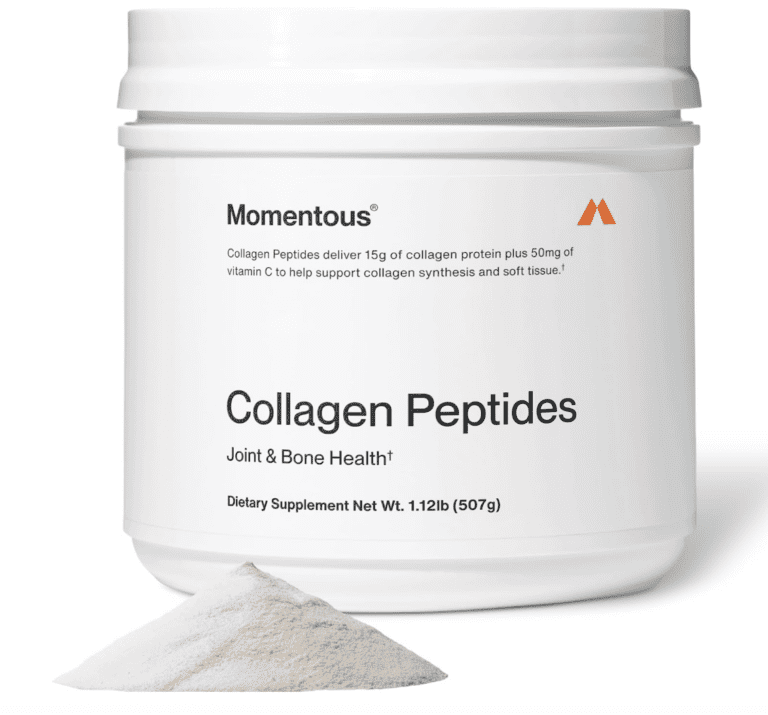
The angle: Third‑party verified purity. NSF Certified for Sport means no banned substances. Includes Fortigel® (a patented collagen peptide shown to support joint comfort) and 50mg Vitamin C to support collagen synthesis.
- Collagen per serving: 15g (Types I & III)
- Best for: Competitive athletes who need certified clean labels
- Taste: Unflavored, dissolves easily in coffee or shakes
Read our full Momentous Collagen Peptides review for deeper analysis.
Vital Proteins Collagen Peptides Advanced: The Category King
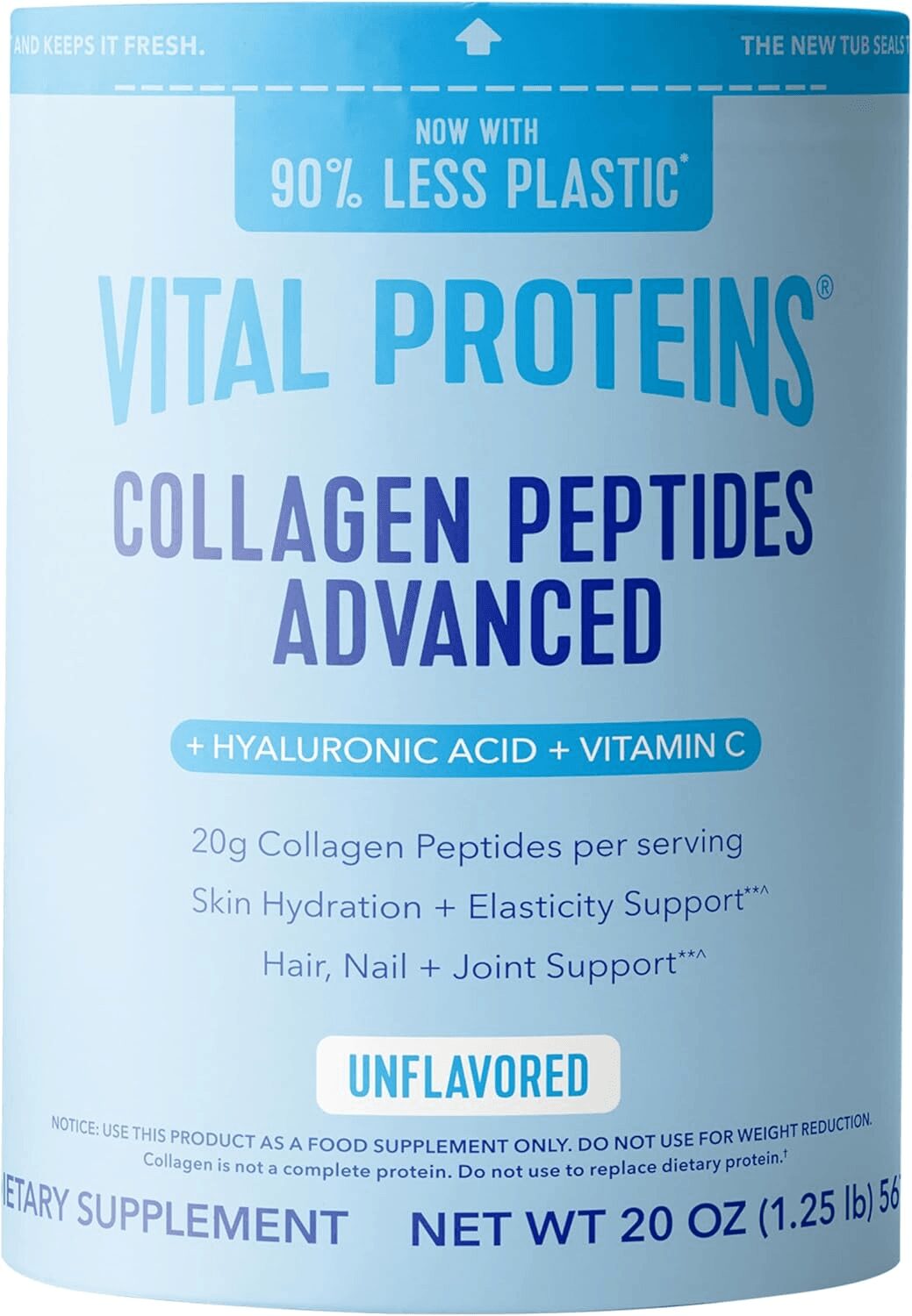
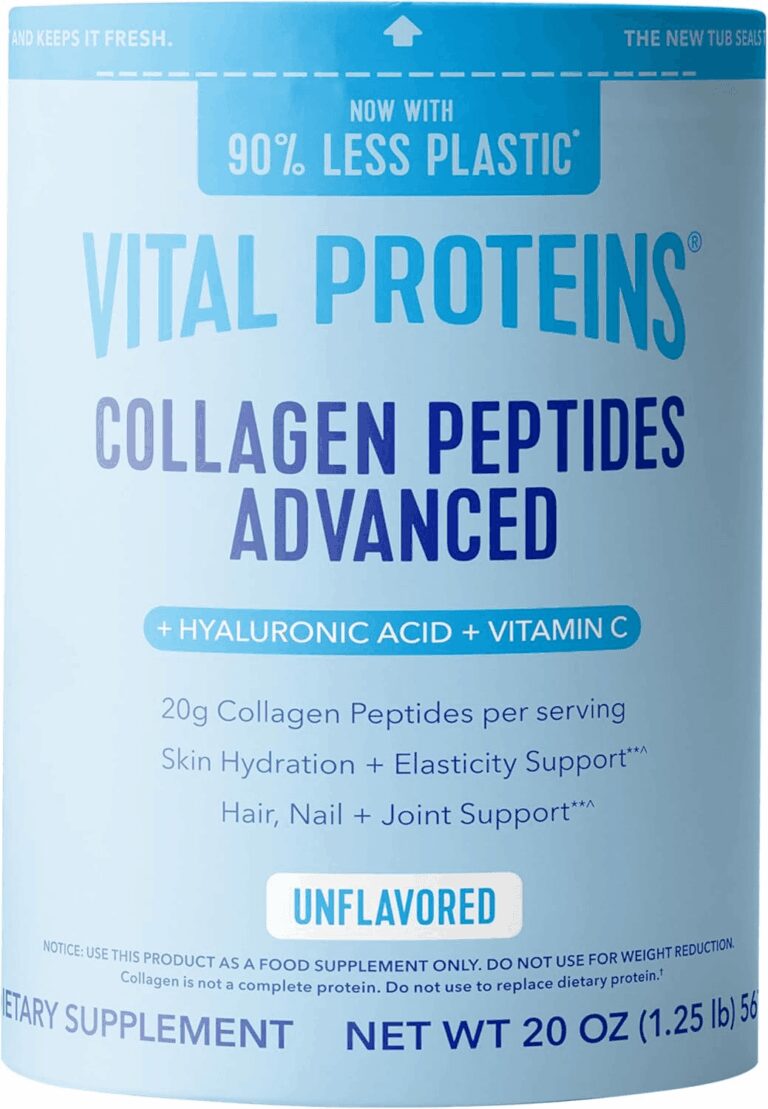
The angle: The most recognized collagen brand. 20g of collagen per serving, plus added hyaluronic acid and Vitamin C. Formulated for skin hydration, hair strength, and connective tissue support.
- Collagen per serving: 20g (Types I & III)
- Best for: Lifters who want an all‑in‑one beauty + recovery powder
- Taste: Unflavored, mixes well, slight marine note
See our Vital Proteins Advanced review and the original Vital Proteins review.
True Nutrition Multi‑Collagen: The Full‑Spectrum Workhorse
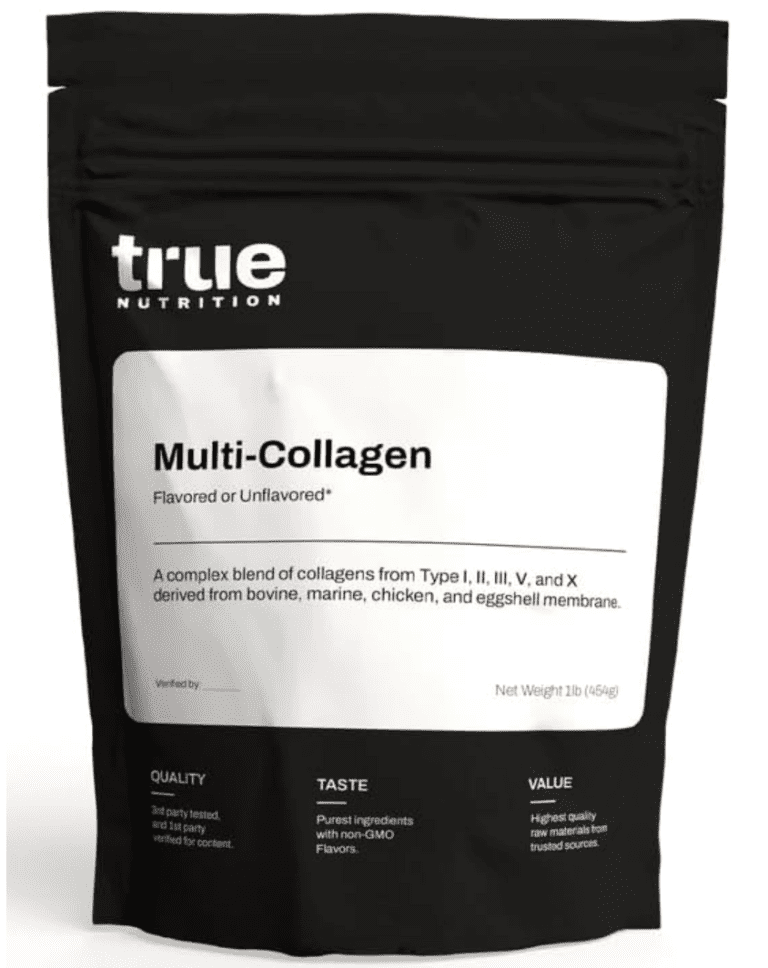
The angle: Five collagen types (I, II, III, V, X). Bovine, marine, chicken, and eggshell sources. This is the only product in the lineup that covers the entire connective tissue matrix.
- Collagen per serving: ~10g (adjustable scoop)
- Best for: Lifters who want full‑spectrum joint, tendon, and skin support
- Taste: Unflavored, neutral, disappears into any liquid
Read our True Nutrition Multi‑Collagen review and superfood collagen benefits.
Sports Research Collagen Peptides: The Capsule Convenience
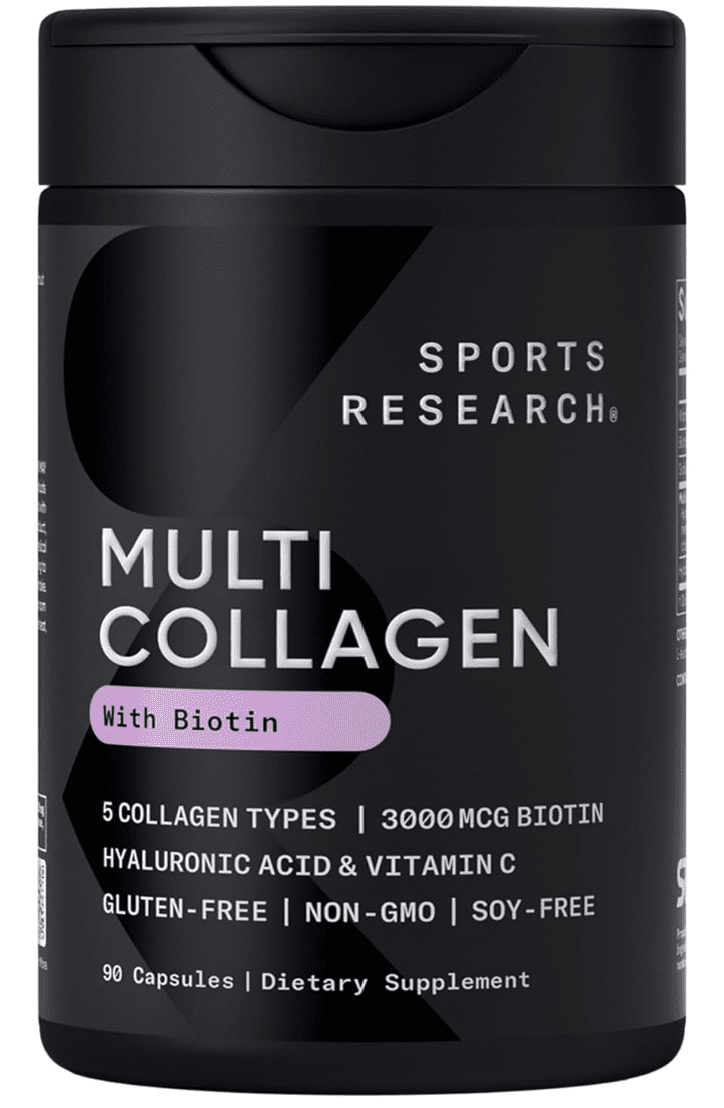
The angle: Capsules, not powder. No mixing. No taste. 90 capsules per bottle, with added biotin and hyaluronic acid. Great for travel or for lifters who hate scooping powder.
- Collagen per serving: 11g (5 capsules)
- Best for: Convenience and portability
- Trade‑off: Only Types I & III, lower dose per dollar
See our Sports Research Collagen review.
Levels Collagen Peptides: The Zero‑Additive Purist
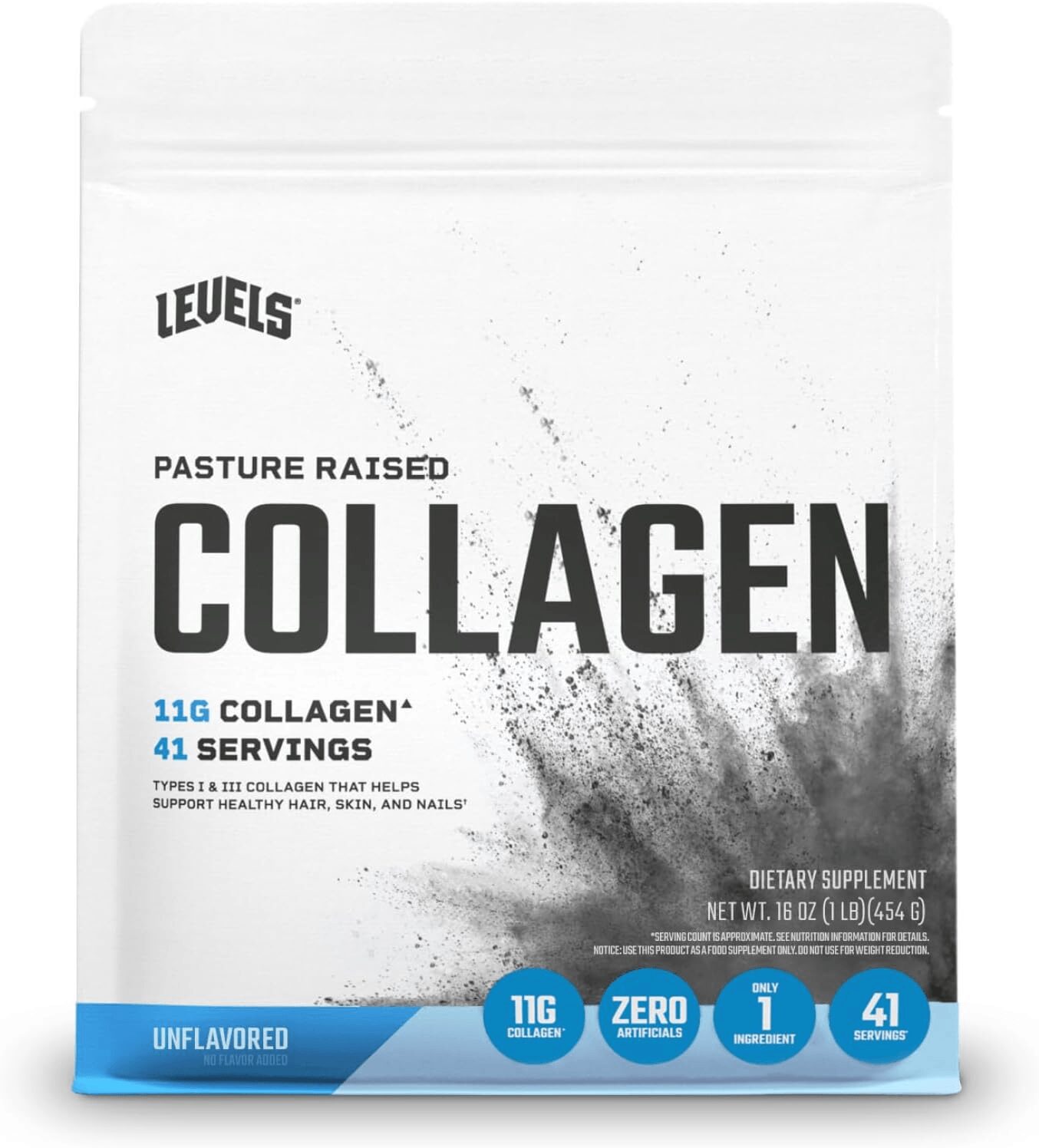
The angle: No gums. No fillers. No flavors. Just pasture‑raised bovine collagen. This is for the lifter who wants absolute purity and controls their own Vitamin C intake separately.
- Collagen per serving: 11g (Types I & III)
- Best for: Sensitive digestion, clean label purists
- Taste: Odor‑neutral, dissolves instantly
Read our Levels Collagen review.
The Collagen Stack: Why You Need Vitamin C
Collagen without Vitamin C is incomplete. Vitamin C is the essential cofactor for collagen synthesis. It hydroxylates proline and lysine, stabilizing the collagen triple helix. Without it, the peptides cannot cross‑link into functional tissue.
The optimal stack for connective tissue support:
- Multi‑collagen peptides – True Nutrition or Vital Proteins
- Vitamin C (500mg daily) – Nutricost or your preferred brand. See Nutricost Vitamin C review.
- Cissus Quadrangularis (optional) – For additional connective tissue support. Read joint supplements for lifters.
For more on how collagen fits into a complete recovery protocol, see collagen for skin and superfood collagen benefits.
Collagen Supplements: Pros & Cons
- Pros:
- Provides specific amino acids (glycine, proline) missing from whey.
- Supports connective tissue resilience and joint function.
- May improve skin elasticity and hair strength.
- Easy to add to coffee, smoothies, or shakes.
- Multi‑collagen blends cover full structural matrix.
- Cons:
- Not a complete protein (low in tryptophan). Do not replace whey with collagen.
- Results take time – weeks to months of consistent use.
- Some brands are under‑dosed or use poor sourcing.
- Requires Vitamin C for proper utilization.
Collagen Supplements: The Raw Truth
A: No. Collagen is low in tryptophan. Do not use it as your primary protein source. Use whey or animal protein for muscle building. Collagen is a specialized supplement for connective tissue.
A: Many users report improved skin hydration in 4‑6 weeks. Connective tissue benefits typically take 8‑12 weeks of consistent daily use. Collagen is a long‑game supplement.
A: Yes. They complement each other. Whey builds muscle. Collagen supports the connective tissue attached to that muscle. Many lifters mix half a scoop of each post‑workout.
A: Type II is specifically associated with cartilage support. However, a multi‑collagen blend (Types I, II, III, V, X) provides broader connective tissue support. Read what is multi‑collagen for details.
A: Yes. Vitamin C is required for collagen synthesis. Some products (Momentous, Vital Proteins Advanced) include it. If yours does not, add a separate Vitamin C supplement. See Nutricost Vitamin C review.
Final Verdict: Which Collagen Should You Buy?
The answer depends on your primary goal.
- Best overall for connective tissue (full spectrum): True Nutrition Multi‑Collagen. Types I, II, III, V, X in one clean powder.
- Best for athletes needing certified purity: Momentous. NSF Certified for Sport, includes Fortigel and Vitamin C.
- Best for skin + joint combo: Vital Proteins Advanced. 20g collagen plus hyaluronic acid and Vitamin C.
- Best for convenience (capsules): Sports Research. No mixing, easy to travel with.
- Best for zero‑additive purity: Levels. Pasture‑raised, no gums, no fillers.
Buy collagen if: You train heavy, want to support connective tissue resilience, and are willing to take it consistently for 8‑12 weeks.
Skip collagen if: You expect instant results, or you are not willing to also take Vitamin C.
For a complete recovery protocol, pair collagen with joint support supplements, omega‑3s, and quality sleep. Your connective tissue is the foundation of every lift. Give it the raw materials it needs.
The Bottom Line: Reinforce the Framework.
Collagen is not a replacement for whey. It is a specialized tool for connective tissue resilience. Use it daily. Pair it with Vitamin C. Be patient. Your tendons and joints will thank you when the weight gets heavy.
*Prices subject to change. Verified 2026 collagen analysis.
The Collagen Lexicon
- Collagen Peptides
- Hydrolyzed collagen broken into short‑chain amino acids for better absorption. Also called hydrolyzed collagen.
- Hydroxylation
- The chemical process requiring Vitamin C that stabilizes the collagen triple helix. Without it, collagen fibers are weak.
- Multi‑Collagen
- A blend containing multiple collagen types (usually I, II, III, V, X) from different sources (bovine, marine, chicken, eggshell).
- Fortigel®
- A patented bioactive collagen peptide shown in studies to support joint comfort and mobility. Found in Momentous.
- Prolyl Hydroxylase
- The enzyme that hydroxylates proline. Requires Vitamin C as a cofactor. Critical for collagen stability.
- Glycine / Proline / Hydroxyproline
- The three primary amino acids in collagen. They are abundant in connective tissue but less common in muscle protein.