The label decides everything. Peptide grade, collagen types, and the co-factor stack. Read those three lines and you know what you are buying. Most “beauty collagen” is one anonymous hydrolyzed powder in a pretty jar. The specs are where the differences live. We broke down the sourcing, the format, and the transparency on the labels to see which formulas actually declare what is inside.
The Spec Sheet: What the Label Declares
A collagen label carries three specs that matter. The peptide grade, the collagen types, and the co-factor stack. Everything else is packaging. Read those three and two jars stop looking the same.
Peptide grade is the first line. Generic hydrolyzed collagen is a broad, unspecified mix. A branded grade like Verisol or Fortigel is a named, patented, trademarked fraction. The trademark on the label is the tell. It means the manufacturer is paying to source a specific spec instead of the cheapest bulk powder.
- Collagen Types (I, II, III, V, X): A single-source powder lists one or two types. A multi-collagen blend lists five. More types on the label means more sourcing inputs (bovine, marine, chicken, eggshell).
- Branded Peptide Grade: Look for a trademark symbol. Verisol® and Fortigel® are declared, traceable fractions. No trademark means unspecified bulk hydrolysate.
- Co-Factor Stack: Biotin, Hyaluronic Acid, and Vitamin C printed on the panel. These are add-ins that change the value math versus a plain single-ingredient powder.
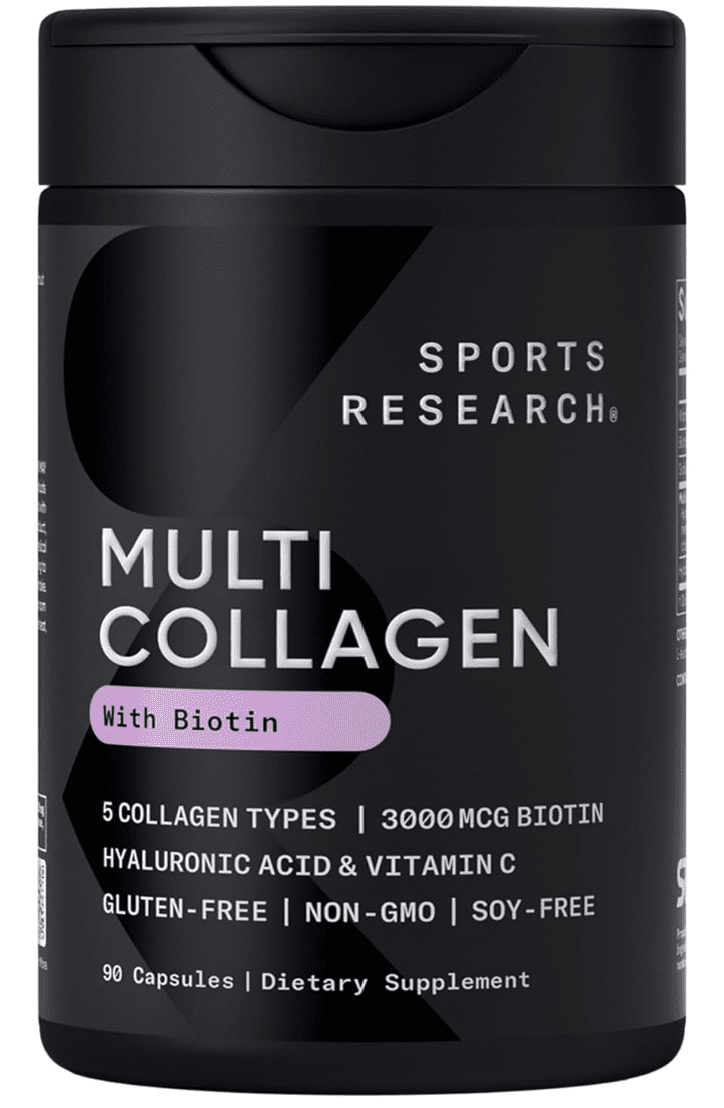
The Sports Research Multi-Collagen Complex checks all three boxes on the label. Five types. A branded Verisol® grade. Biotin and Hyaluronic Acid in the same capsule.
“Read a collagen label like a parts list on an engine block. Anonymous hydrolyzed collagen is a generic bracket from a bin. A trademarked peptide grade is a machined part with a stamped serial number. Same shape on the shelf. Very different manufacturing spec behind it.”
— Charles Damiano, B.S. Clinical Nutrition
Serving Size and Format: Capsule vs. Scoop
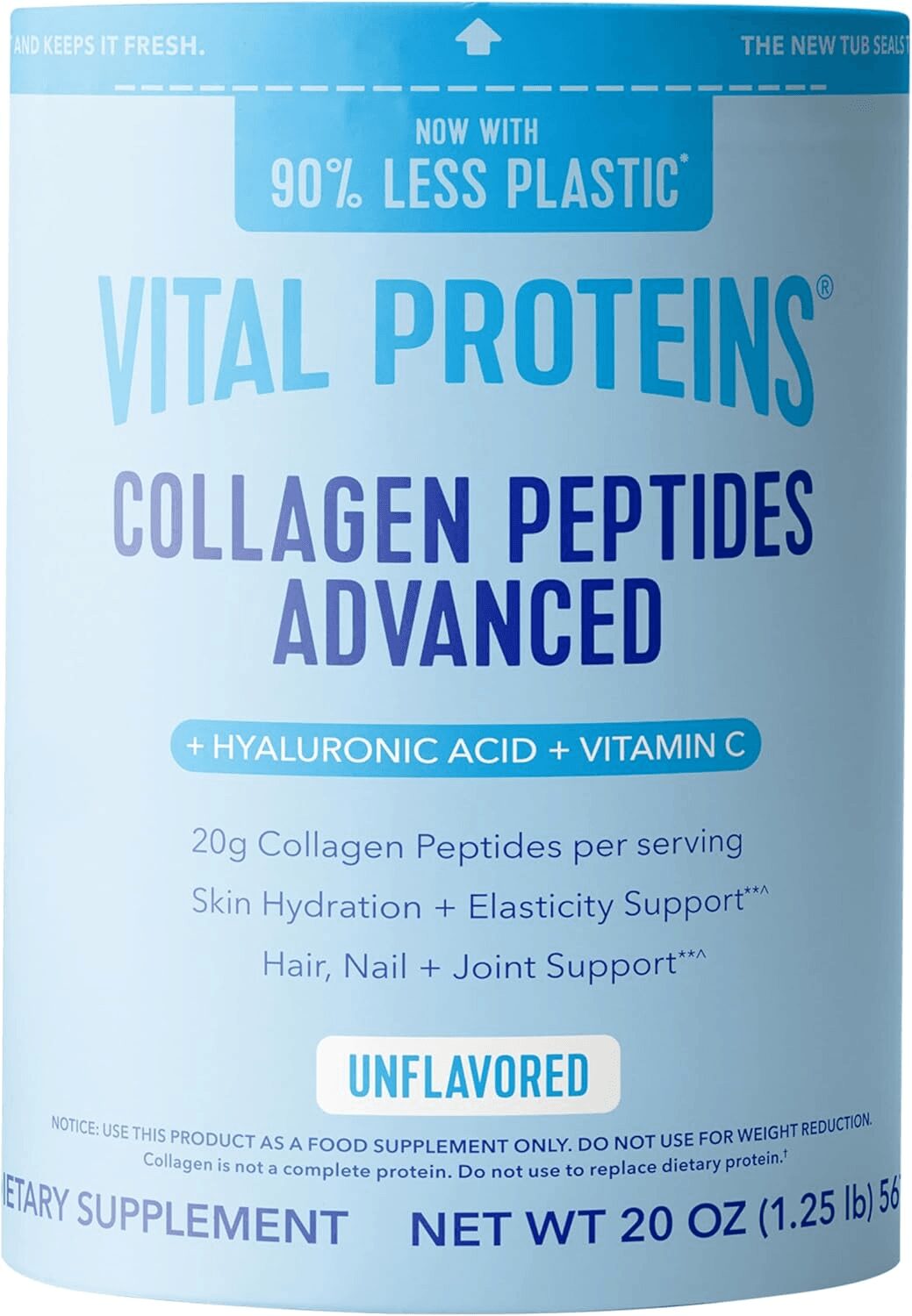 The two formats on the market are the capsule complex and the bulk scoop. They serve different buyers. The spec that separates them is grams per serving. A capsule complex runs a small, fixed dose. A powder like Vital Proteins Advanced pours a 20g scoop.
The 20g scoop is a high-volume format. More grams per serving. It also means a blender bottle, a liquid, and a step in your morning. That is friction, and friction is what people quit over.
The capsule is a low-friction format. It goes in a bag. No mixing. The trade is total grams per serving, which is lower than a full scoop. Chasing convenience, the capsule wins on format. Chasing maximum grams per dollar, the bulk powder wins on volume. Neither is “better.” They are two different spec targets.
“Format is the spec people ignore and then regret. A 20-gram scoop is a great deal on paper. But a tub you never open because the blender is dirty is the most expensive collagen there is. The capsule you actually take beats the powder you do not.”
— Eugene Thong, CSCS
Selection Matrix: Who Actually Needs This?
Match the spec to your priority. Not every collagen is built for every shopper.
- The Label Reader: You want a declared, branded peptide grade and a printed type breakdown. A five-type Verisol® complex gives you the fullest spec panel on the shelf.
- The Volume Buyer: You want the most grams per dollar and you will happily mix a scoop. 20g single-type powder is your cost-per-gram winner.
- The Convenience Buyer: You will never touch a blender bottle. Capsules with Biotin and Hyaluronic Acid travel and skip the mixing step entirely.
- The Minimalist: You want one ingredient, no add-ins, unflavored. Skip the multi-collagen complex. A plain bovine hydrolysate is your cleaner, cheaper match.
Multi-Collagen Complex Pros and Cons: Spec vs. Price
The Advantage (Pros)
- Branded Peptide Grade: The label declares a trademarked Verisol® fraction, not anonymous bulk hydrolysate.
- Five-Type Blend: Types I, II, III, V and X from multiple sources on one panel. The widest spec in the category.
- Co-Factors Included: Biotin and Hyaluronic Acid printed on the same label. Fewer separate products to buy.
- Capsule Format: Fixed serving, no mixing, travel-friendly. Removes the blender step that ends most powder routines.
The Trade-off (Cons)
- Lower Grams Per Serving: A capsule serving carries fewer total grams than a 20g scoop. Volume buyers lose on raw quantity.
- Higher Cost Per Gram: Branded grades and capsule encapsulation cost more than plain bulk powder per gram of collagen.
- Add-Ins You May Not Want: If you only want collagen, the Biotin and Hyaluronic Acid are extras you are paying for.
Market Contrast: The Spec Field
A pretty jar is not a spec sheet. Compare the labels, not the marketing. The capsule complex wins on declared grade and co-factors. The bulk powders win on grams per dollar. No single product tops every column.
| Supplement | Core Edge | Primary Trade-off |
|---|---|---|
| SR Multi-Collagen Capsules | 5-Type Blend, Verisol® and Biotin | Fewer grams per serving than bulk powder |
| Vital Proteins Advanced | 20g scoop, Type I & III volume | Requires mixing, single grade |
| Momentous | Fortigel® grade, added Vitamin C | Premium price per serving |
| Generic Bovine Powder | Lowest cost per gram, unflavored | Unspecified grade, no co-factors |
Collagen Spec FAQ: Labels, Format and Value
- What does the trademark symbol on a collagen label mean?
- A mark like Verisol® or Fortigel® signals a branded, patented peptide grade sourced to a specific spec. No trademark means the product uses unspecified bulk hydrolyzed collagen. The symbol is a sourcing tell, not a health claim.
- Is a five-type blend worth more than single-source?
- It depends on what you are buying for. A five-type blend pulls from multiple sources (bovine, marine, chicken, eggshell) and lists more on the panel. A single-source powder is simpler and usually cheaper per gram. More types means more sourcing inputs, not automatically more value.
- Capsule or powder for value?
- Powder wins on cost per gram. A 20g scoop delivers the most collagen per dollar. Capsules cost more per gram but skip the mixing step. It is a convenience-versus-volume trade on the spec sheet.
- Can I take collagen with coffee?
- Most hydrolyzed collagen powders are marketed as heat-stable and mix into hot liquids. Check the individual product label for its own mixing guidance. For usage questions specific to your situation, consult a professional.
Final Verdict: The Fullest Spec Sheet Wins
On specs alone, the multi-type branded complex has the deepest label in the category. A generic single-source powder gives you one grade and one or two types. The Sports Research Multi-Collagen Complex declares five types, a trademarked Verisol® grade, and Biotin and Hyaluronic Acid on one panel. For a shopper who reads labels, that is the fullest spec sheet on the shelf.
Different priority, different pick. If you want the most grams per dollar and you do not mind a blender bottle, the 20g scoop of Vital Proteins Advanced is the volume value play. Also worth a look for anyone tracking joint maintenance alongside a general routine. Read the three specs. Pick the label that matches your priority.
Verdict: The Fullest Spec Sheet
You have the spec breakdown. Stop paying for a pretty jar with an anonymous label. Buy the grade, the types, and the co-factors that are actually printed on the panel.
The Collagen Spec Lexicon
- Hydrolyzed Collagen
- Collagen broken into smaller peptides during processing. The base ingredient in most powders and capsules. Unspecified unless a branded grade is declared.
- Verisol® / Fortigel®
- Trademarked, patented peptide grades. A declared, traceable fraction on the label rather than anonymous bulk hydrolysate.
- Multi-Collagen Blend
- A formula listing several collagen types (I, II, III, V, X) sourced from bovine, marine, chicken, or eggshell inputs on one panel.
- Co-Factor Stack
- Added ingredients like Biotin, Hyaluronic Acid, or Vitamin C printed alongside the collagen on the supplement facts panel.