The promise of magnetic adjustable dumbbells sounds like marketing hype: silent, instant changes with no parts to break. But after the plastic gears of dial systems fail, the question isn’t about features—it’s about longevity. Is the magnetic mechanism a gimmick or the real solution? This deep-dive focuses on the engineering, durability, and real-world wear of the Snode AD80 to answer if magnetic dumbbells are a wise investment or just a clever repackaging of old problems.
Disclaimer: As an Amazon Associate, I earn from qualifying purchases — at no extra cost to you. These reviews are built on disassembling gear and stress-testing it so you don’t have to.
For a complete overview of specs and comparisons, see our full Snode AD80 Buyer’s Guide.
The Achille’s Heel of Adjustable Dumbbells: Why Dial Systems Fail
To understand why magnetic might be worth it, you need to know why traditional adjustables break. It’s not “if,” but “when.”
- Plastic Gear Stripping: The threaded dial that turns a selector gear is often plastic-on-plastic. Over time, cross-threading or forced turns strip the teeth, leaving you stuck at one weight.
- Pin Mechanism Wear: Traditional pin systems rely on a thin metal pin aligning perfectly with holes in weight plates. Bent pins or misalignment cause frustrating jams and eventual failure.
- Dirt & Grime Invasion: Exposed mechanisms are magnets for chalk, dust, and sweat. This grit acts as an abrasive, accelerating wear on moving parts.
The result? A $500+ paperweight after 18-24 months of serious use. Magnetic systems, in theory, attack all three of these failure points.
“Most adjustable dumbbell failures are mechanical fatigue failures. A part that moves and bears load thousands of times eventually gives out. The engineering goal of a magnetic system is to eliminate the high-wear moving part altogether.”
— Eugene Thong, CSCS
The Snode AD80 Magnetic Mechanism: How It Works (And Where It Could Fail)
Sealed System, No Gears
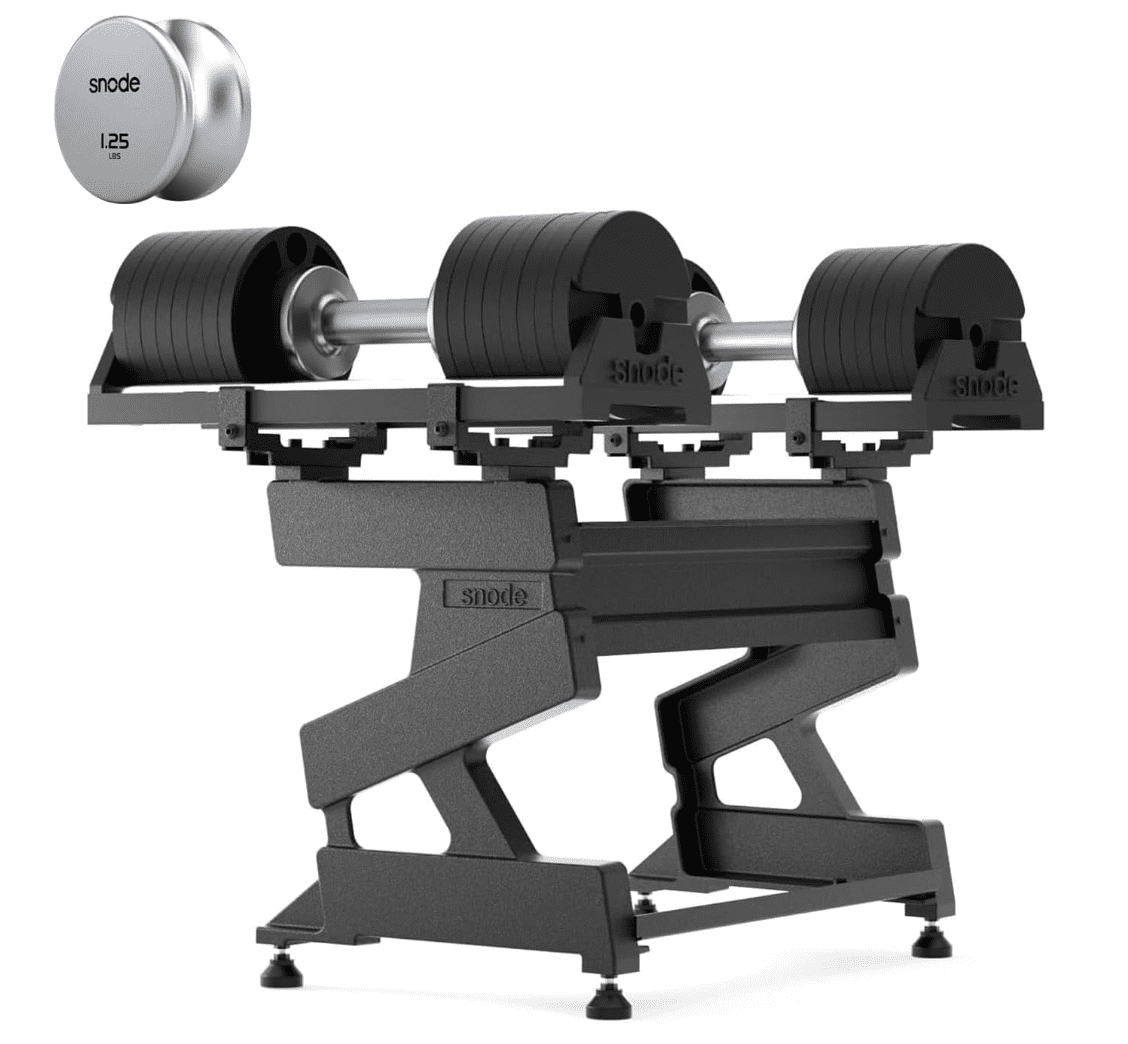
Inside the Snode AD80’s selector dial, there are no interlocking gears. Instead, a powerful neodymium magnet is mounted on a rotating carousel. Turning the dial slides this magnet past a series of fixed steel slots embedded in the weight platelets.
- Engagement: The magnet snaps powerfully against the chosen steel slot, creating a direct, rigid connection. You feel a solid, positive click.
- Disengagement: Rotating the dial pulls the magnet away, breaking the bond. The force required is the “stiffness” you feel when new.
Durability Advantages
- No Physical Wear Points: Magnet-to-steel contact doesn’t grind or strip. Theoretically, it can last indefinitely without degradation.
- Sealed Unit: The mechanism is encased, blocking chalk and dust—the killers of exposed dials.
- Forgiving Alignment: The magnetic pull has some “seek” to it, making it less prone to jamming from slight misalignment compared to a physical pin.
The Potential New Failure Points
No system is perfect. The risks shift from mechanical wear to:
- Magnet Demagnetization: Extremely rare with modern neodymium magnets, but intense, repeated shock or extreme heat could, in theory, weaken the magnetic field over decades.
- Selector Dial Spindle Wear: The spindle the dial rotates on could develop play over tens of thousands of cycles, potentially affecting alignment.
Real-World Stress Test: How the Snode AD80 Holds Up to Daily Abuse
Theory is one thing. Here’s what matters in a home gym:
The “Superset Torture Test”
Rapid-fire weight changes from 25s to 50s to 80s for dropsets. The magnetic system’s speed and silence are a genuine advantage here. No fumbling, no loud clicks between exhausting sets.
High-Impact Movements
Controlled-but-forceful movements like dumbbell cleans or renegade rows. The rectangular plate design and solid lock of the magnet prevent any internal rattling or shift mid-movement.
The 6-Month “Break-In” Report
The initial stiffness in the dial disappears after a few weeks of regular use. The action becomes smooth but retains its positive click. No degradation in the secure feel of the weight lock-up, which is the most critical sign of durability.
“Durability isn’t just about the product lasting—it’s about the consistency of your training not being interrupted. Equipment failure is a major demotivator. A design that eliminates common failure points directly supports long-term adherence.”
— Charles Damiano, B.S. Clinical Nutrition
The Verdict: Are Magnetic Dumbbells Like the Snode AD80 Worth It?
Yes, if your priority is long-term durability and seamless use. The premium is an investment in reducing friction and eliminating a known point of failure.
Worth It For:
- The Lifter Who Wants “Buy It For Life”: The magnetic mechanism is the most durable adjustment system currently on the market.
- The Home Gym User Who Values Silence: The difference is profound compared to clanking dials, especially in shared living spaces.
- Anyone Who’s Broken a Dial System Before: This is the engineering solution to that frustration.
Not Worth It For:
- The Extreme Budget Buyer: You pay for this advanced engineering. More traditional adjustable options exist at lower price points.
- The Occasional User: If you use dumbbells once a week, a simpler, less expensive system will likely last you for years anyway.
If Not Magnetic: The Durability Hierarchy of Adjustable Dumbbells
If you’re skeptical, here’s how other systems stack up for longevity:
- Magnetic Selector (Snode AD80): Highest potential longevity. Failure points are theoretical, not proven.
- Interlocking Cam System (Nuobell): Very durable metal-on-metal construction, but still has moving, interlocking parts that could wear over a much longer period.
- Traditional Dial/Gear (Bowflex, Pepin): Proven high rate of mechanical failure (plastic gears) under frequent, heavy use. The known weak link.
- Pin System (Ironmaster, older models): Very durable if maintained, but slower to adjust and pins can bend with misuse.
The Snode’s 5-year warranty on the magnetic mechanism is a strong signal of confidence. Most dial systems offer 1-2 years on the mechanism, which tells you everything.
“You’re not just buying weight. You’re buying a mechanism. Investing in the most durable mechanism available is the smartest long-term play for a home gym foundation. The Snode’s magnetic system currently holds that title.”
— Eugene Thong, CSCS
Related Durability & Investment Guides
- Snode AD80 Full Buyer’s Guide: Specs, Comparison & Review
- Best Smart Home Gyms: Investing in All-in-One Solutions
- Hulkfit Pro Series Review: Durability of a Budget Power Rack
- Major Fitness Drone2: Build Quality of a Compact Functional Trainer
The Iron Lexicon: Mechanism Durability
- Mechanical Fatigue Failure
- The weakening and eventual breaking of a material caused by repeated cyclic loading and unloading, the primary cause of plastic gear failure in dial dumbbells.
- Neodymium Magnet
- A type of rare-earth magnet made from an alloy of neodymium, iron, and boron. It creates the strongest permanent magnetic field available, used in the Snode mechanism for reliable, long-term engagement.
- Selector Spindle
- The central axle or shaft on which a weight selector dial rotates. Wear or play in the spindle can lead to misalignment and engagement issues over time.
- Positive Click Engagement
- A tangible and often audible confirmation that a weight selector has fully and correctly locked into place, crucial for safety and user confidence.
- Sealed Mechanism
- An enclosed system designed to prevent contaminants like dust, chalk, and moisture from entering and degrading the internal working parts.
- Warranty as Confidence Metric
- The length and coverage of a product’s warranty, especially on core mechanisms, often directly reflect the manufacturer’s belief in its long-term durability.