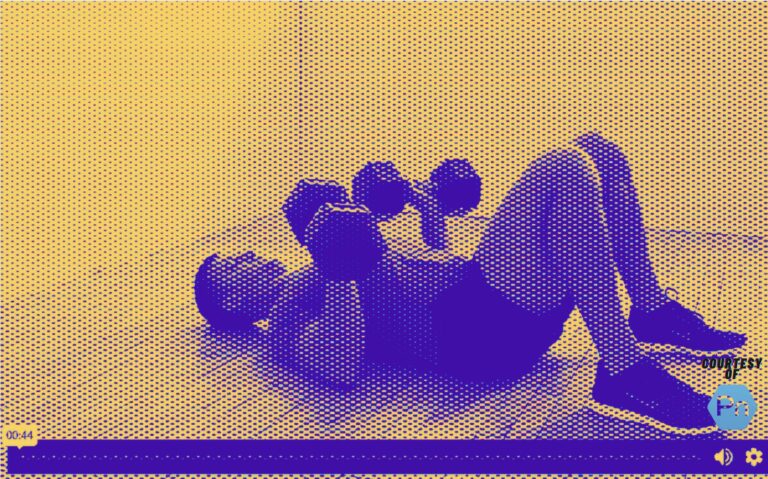
The barbell bench press is a lie. It allows your dominant side to carry the load while your weak side hides in the background. If you want true strength, you need to expose that weakness.
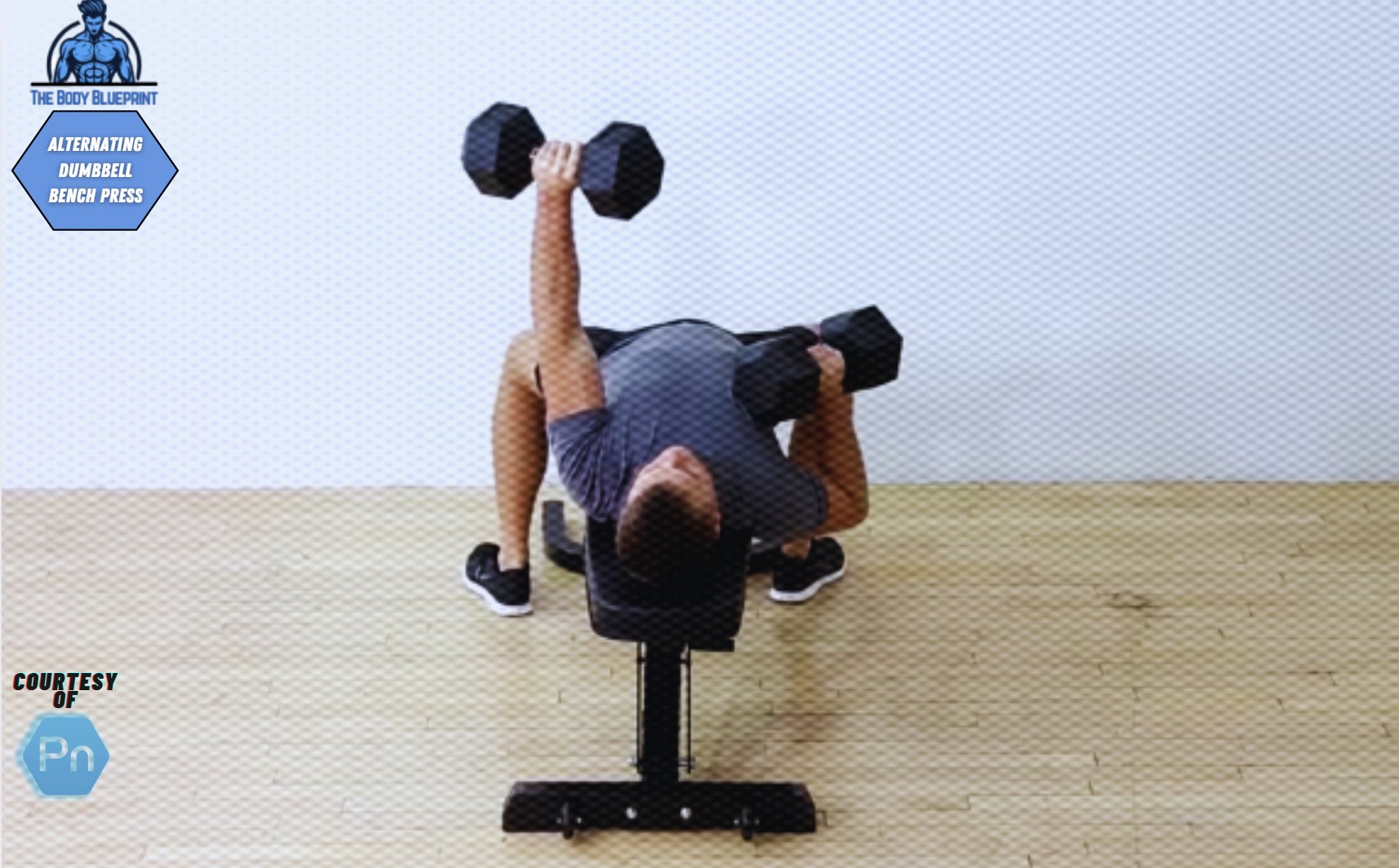
The Alternating Dumbbell Bench Press is the “truth serum” for your upper body. It forces you to stabilize a heavy load with one arm while pressing with the other. This massive increase in Time Under Tension (TUT) and core demand turns a basic chest exercise into a total-body stability test. If you can’t keep your torso flat while one arm moves, you aren’t strong—you’re just good at compensating.
Important: Start with 20% less weight than your standard dumbbell press. The increased time under tension will burn your stabilizers out faster than you expect.
Why This Move Outclasses the Barbell
While the barbell is king for absolute load, it fails to address **rotational instability**. When you press one dumbbell while holding the other, your core must fight to keep you from rolling off the bench. This integrates the chest, shoulder, and abs into one functional unit.
The Benefits at a Glance
| Advantage | The Payoff |
|---|---|
| Symmetry | Forces each pec to work independently, correcting visual and strength imbalances. |
| Core Stiffness | Acts as an “anti-rotation” core exercise, similar to a plank, but while pressing. |
| Constant Tension | The non-working arm is held in an isometric contraction, increasing metabolic demand. |
How to Perform It Like a Pro
There are two ways to do this: “Rest at Bottom” (Easier) or “Hold at Top” (Superior). We are focusing on the **Top Hold** method for maximum tension.
Step-by-Step Execution
- The Setup: Lie back with dumbbells. Press BOTH weights to the top (lockout). This is your start position.
- The Brace: Squeeze your glutes and drive your feet into the floor. Pin your shoulder blades back (retraction).
- The Descent: Lower the RIGHT dumbbell while keeping the LEFT arm locked out at the top.
- The Press: Press the RIGHT dumbbell back to the top.
- The Switch: Now lower the LEFT dumbbell while keeping the RIGHT arm locked out.
- The Rhythm: One down, one up. Never move both at the same time.
“The arm staying at the top is the ‘anchor.’ If it starts to drift or bend, your set is over. You must maintain active tension in the static arm while the other arm moves.”
— Eugene Thong, CSCS
Common Mistakes That Kill Progress
- The Hip Wiggle: If your hips shift side-to-side as you press, your core is weak. Lock it down.
- Soft Lockout: Bending the elbow of the stationary arm. Keep it punched toward the ceiling.
- Rushing: Moving the second arm before the first arm has finished. Finish the rep before starting the next.
Programming & Optimization
This is an accessory movement. Do not try to hit a 1-Rep Max here.
Sample Protocol
| Goal | Sets/Reps | Notes |
|---|---|---|
| Hypertrophy | 3 x 8-10 per side | Total time under tension will be high (~60s). |
| Stability | 4 x 6 per side | Focus on zero torso movement. |
Performance Stack
Because this exercise creates immense metabolic stress (the “burn”), your support systems matter.
- Pre-Workout: You need laser focus to balance the weights. Check our Genius Pre-Workout review for a nootropic boost that improves mind-muscle connection.
- Inflammation Control: High volume pressing can irritate the AC joint. Incorporate high-quality fish oil to manage systemic inflammation.
- Immune Support: Hard training taxes the immune system. Consider functional mushrooms like those in our Host Defense Stamets 7 review to stay in the gym.
- Recovery: After trashing your chest, use cold exposure to regulate recovery, but time it correctly (not immediately post-hypertrophy training).
**Note:** If you are short on space, this exercise works perfectly with compact home gym setups because it requires minimal equipment compared to a barbell bench.
The Verdict
The Alternating Dumbbell Bench Press separates the strong from the stable. It forces you to own the weight rather than just renting it. Stop hiding your imbalances. Isolate them, crush them, and grow.