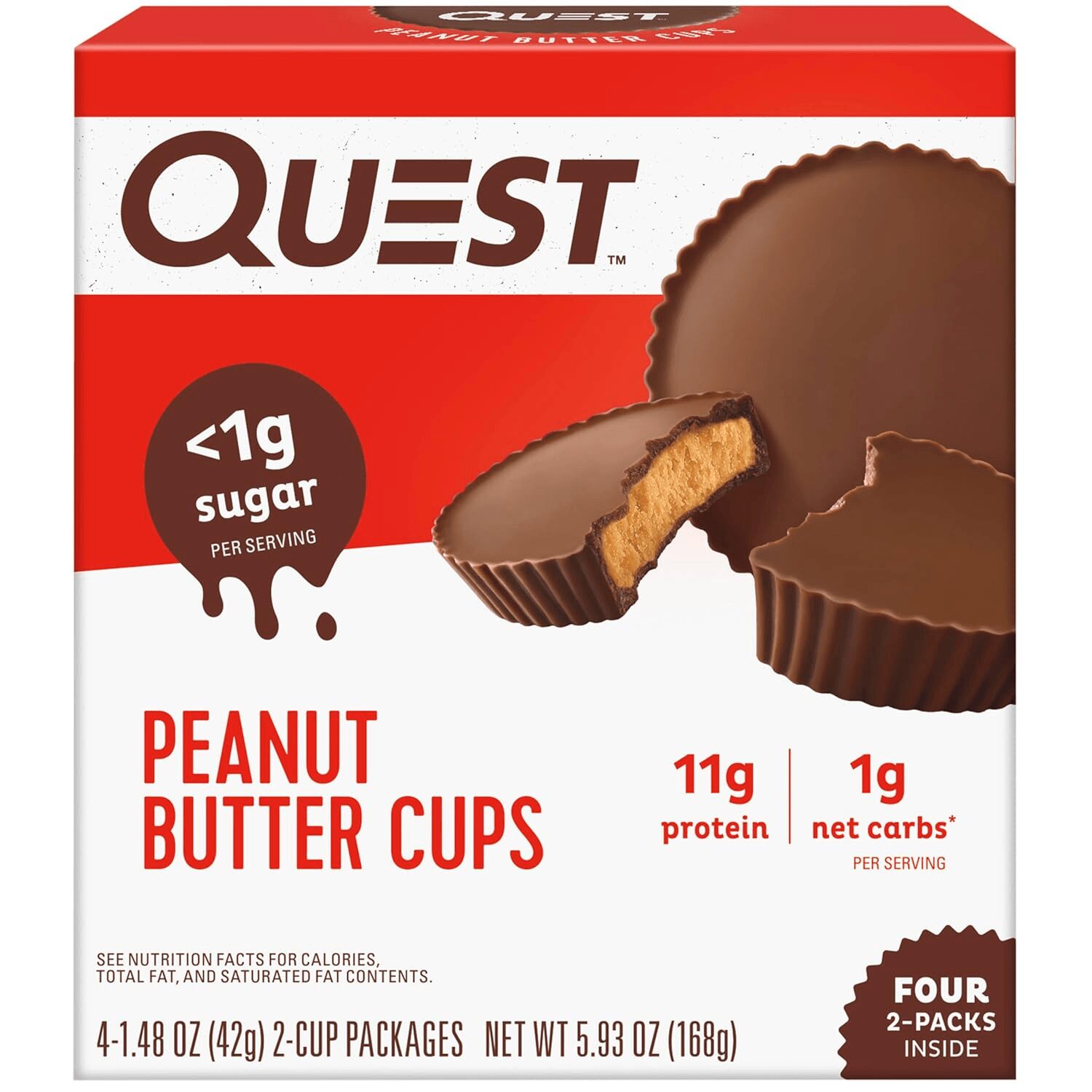
If you are looking for a definitive Quest Peanut Butter Cups review, you need to understand that these are precision-engineered fat bombs designed for ketogenic compliance, not protein-dense muscle builders. The fitness industry heavily markets these as a healthy alternative to traditional candy, but we have to examine the biological reality of trading sugar for high-density saturated fat and erythritol. We analyzed the whey isolate profile, the intense caloric density, and the digestive impact of this functional food to determine if it actually belongs in your fat loss or muscle-building regimen.
The Fine Print: As an Amazon Associate, I earn from qualifying purchases at no extra cost to you.
Medical Disclaimer: This guide is strictly for educational purposes, based on a technical analysis of macronutrient engineering. Always consult a qualified professional before significantly altering your dietary intake, especially if you have sensitivities to concentrated fats or sugar alcohols.
The Macro Reality: Ketogenic Fuel vs. Protein Insufficiency
Quest Peanut Butter Cups are aggressively marketed under the “protein” umbrella, but the macronutrient math tells a different story. Yielding 11g of protein, 15g of fat, and <1g of sugar per serving (two cups), this is unequivocally a high-fat ketogenic tool masquerading as a muscle builder. The protein source is premium (Whey Protein Isolate), but the dosage falls well short of the biological threshold required to trigger meaningful muscle protein synthesis.
Because these cups derive the vast majority of their calories (190 total) from peanuts and cocoa butter, they have an incredibly slow gastric clearance rate. This makes them highly effective for suppressing appetite during a long workday, but biologically useless for post-workout recovery, where you need rapid amino acid delivery to repairing tissue.
“Stop treating Quest Cups like a protein supplement. They are a zero-sugar fat source. If you are on a strict keto protocol, they are a godsend for craving management. If you are a bodybuilder trying to hit 200g of protein a day, spending 15g of your fat macros for only 11g of protein is a terrible mathematical trade-off.”
— Charles Damiano, B.S. Clinical Nutrition
Ingredient Breakdown: The Brutal Biological Truth
Functional candies require heavy processing to achieve their macros. Here is what you are actually digesting when you eat these cups.
The Pros: Taste and Keto Compliance
- Near-Perfect Candy Replication: The mouthfeel and taste are virtually indistinguishable from a standard Reese’s cup, making this an elite behavioral tool for surviving a diet.
- Zero Glycemic Impact: With 1g of net carbs and <1g of sugar, these will not trigger an insulin spike, allowing you to maintain a ketogenic state or manage blood sugar effectively.
- Premium Protein Source: The 11g of protein is derived from pure Whey Protein Isolate, completely bypassing cheap soy or collagen fillers.
The Cons: Digestive Friction and Fat Density
- The Fat Penalty: 15g of fat per serving is massive. If you are on a standard calorie-restricted diet (not keto), eating these can rapidly blow out your daily fat budget.
- Erythritol Dominance: To achieve the sweetness without sugar, Quest relies heavily on erythritol. While safe, it can cause severe bloating, gas, and osmotic distress in sensitive lifters if consumed in volume.
- Poor Protein Ratio: The protein-to-calorie ratio is mathematically inferior to almost any standard protein bar on the market.
Macronutrient Comparison: Quest vs. The Standard Candy Bar
How does this engineered functional food stack up against the junk food it is trying to replace?
| Metric (Per 2 Cups) | Quest Peanut Butter Cups | Reese’s Peanut Butter Cups |
|---|---|---|
| Total Calories | 190 | 210 |
| Protein Yield | 11g (Whey Isolate) | 5g (Peanuts/Milk) |
| Total Fat | 15g | 13g |
| Net Carbs / Sugar | 1g Net / <1g Sugar | 24g Net / 22g Sugar |
| Biological Impact | Appetite suppression, no insulin spike | Massive insulin spike, rapid crash |
Quest Peanut Butter Cups FAQ: Ketosis, Digestion, and Muscle
- Are Quest Peanut Butter Cups good for building muscle?
- No. Muscle hypertrophy requires a sufficient leucine threshold (usually 20g-25g of complete protein per feeding). At only 11g of protein, these cups will not optimally trigger muscle protein synthesis. They are a craving management tool, not a primary muscle-builder.
- Will these knock me out of ketosis?
- No. The entire macro profile is engineered for keto compliance. With 15g of fat and only 1g of net carbs, they provide dense energy without the carbohydrate load necessary to disrupt a ketogenic state.
- Why do I feel bloated after eating these?
- Quest relies on a heavy dose of Erythritol (a sugar alcohol) to simulate the sweetness of chocolate. Because your body cannot fully metabolize sugar alcohols, they ferment in the large intestine. If you have a sensitive gut, this fermentation causes gas and painful bloating.
Final Verdict: Should You Buy Quest Peanut Butter Cups?
Your decision relies entirely on your specific dietary protocol. If you are following a ketogenic diet or a low-carb protocol and desperately need a candy replacement that won’t spike your insulin, these are the absolute best-tasting option on the market. However, if you are a bodybuilder tracking macros tightly, the heavy 15g fat penalty is simply not worth the meager 11g protein yield.
Verdict: The Elite Keto Fat Bomb
You have the biological facts. If you need strict sugar control without sacrificing taste, this is your weapon.
The Functional Food Lexicon: Macros & Thresholds
- Net Carbohydrates
- The total amount of fully digestible carbohydrates. It is calculated by taking the total carbohydrates and subtracting dietary fiber and sugar alcohols (which do not significantly impact blood sugar).
- Erythritol
- A zero-calorie sugar alcohol. It provides sweetness without an insulin spike but can cause mild gastrointestinal distress if consumed in large quantities.
- Ketogenic Ratio
- The mathematical ratio of fats to proteins and carbohydrates. Quest Cups are highly keto-compliant due to their heavy fat payload and near-zero glycemic impact.