The Lat and Triceps Stretch is the ultimate high-status mobility drill for anyone serious about vertical pressing power and lat width.
This is the 2026 blueprint for upper body mechanics. If you can’t reach overhead without arching your lower back into a banana shape, your biology is working against you. Most lifters are walking around with “locked” lats that actively kill their shoulder health and aesthetic V-taper. It’s time to stop fighting your own fascia. Master the stretch or stay stiff.
Disclaimer: Consult a physician or qualified trainer before starting any new exercise. We are focused on elite performance and aesthetic optimization. This guide is for educational purposes.
Lat and Triceps Stretch: The Overhead Opener
The Lat and Triceps Stretch is a specialized mobility drill using a bench or box to elongate the entire lateral line of the upper body. By fixing your elbows in place and dropping your chest, you create a massive eccentric load on the lats and the long head of the tricep. It is the mandatory corrective for anyone transitioning to a Standing Barbell Overhead Press.
- Primary Focus: Latissimus Dorsi, Triceps Long Head, Thoracic Spine.
- Equipment Needed: Bench, Box, or PVC pipe for added leverage.
- Skill Level: Beginner to Advanced.
- Key Purpose: Restore overhead range of motion, improve lat width, and decompress the shoulder joint.
Lat and Triceps Stretch instructional video. Focus on the deep exhale and thoracic drop.
Why This Stretch is Non-Negotiable for Mass
If you can’t reach overhead without your ribs flaring, you aren’t training your shoulders—you’re just mangling your spine. This stretch is the fix. For total body integration, pair it with Ab Wheel Rollouts to learn how to keep the core tight while the arms are overhead.
- Expanded Lat Width: A tight muscle is a short muscle. Elongating the fascia allows for a more significant hypertrophy response during Pullups.
- Shoulder Decompression: It pulls the humerus away from the acromion, creating space in the joint.
- Tricep Peak: The long head of the tricep crosses the shoulder joint. Stretching it here ensures full development that translates to a better Close-Grip Bench Press.
- Thoracic Extension: It forces your mid-back to move, which is the “master switch” for all athletic movement.
Step-by-Step Form: The 5-Point Checklist
- Setup: Kneel in front of a bench. Place your elbows on the edge, shoulder-width apart. Hold your hands together or use a PVC pipe to keep them parallel.
- The Core Set: Don’t let your back arch. Perform a Ab Wheel Iso mentally—tuck your tailbone and engage your abs.
- The Drop: Slowly push your hips back and drop your head between your arms. Think about bringing your forehead toward the floor.
- The Exhale: This is where the magic happens. Use 90/90 Wall Balloon-Breathing cues. A long, slow exhale will let your nervous system “release” the lats.
- The Fold: Bend your elbows to bring your hands toward your upper back. This intensifies the triceps stretch.
“Stiffness in the lats is the #1 killer of overhead pressing performance. When the lats are tight, they pull the shoulders into internal rotation. This stretch is a mandatory ‘reset’ for anyone looking to build a massive Barbell Push Press. If you skip this, you’re just waiting for an impingement injury to happen.”
— Eugene Thong, CSCS
3 Common Form Mistakes & How to Fix Them
Bad form in a stretch is just “performing” mobility. We want actual biological changes.
1. The Banana Back
The Mistake: Arching the lower back to get the head lower. The Fix: Keep your ribs down and glutes squeezed. If your back arches, the stretch leaves the lats and enters the spine. You’re cheating yourself.
2. Flared Elbows
The Mistake: Letting the elbows slide out wide. The Fix: Keep elbows in line with shoulders. If they flare, you lose the tension on the triceps long head.
3. Breath Holding
The Mistake: Tensing up and holding your breath. The Fix: The lats are respiratory muscles. If you don’t exhale, they won’t let go. Follow a 4-second inhale, 8-second exhale tempo.
“Fascial hydration is key here. Think of your lats like a dry sponge; if you try to pull them apart, they tear. If they’re hydrated and you use rhythmic breathing, they expand. From a nutrition standpoint, ensure your electrolyte balance is dialed in to prevent the ‘gluey’ fascia that limits this range.”
— Charles Damiano, B.S. Clinical Nutrition
Programming & Integration
Use this to prep for heavy lifting or to recover from a high-volume back day.
- The Primer: 2 sets of 30 seconds before any overhead pressing or Chin-Ups.
- The Finisher: 3 sets of 60 seconds after your back workout to decompress the spine and elongate the fibers.
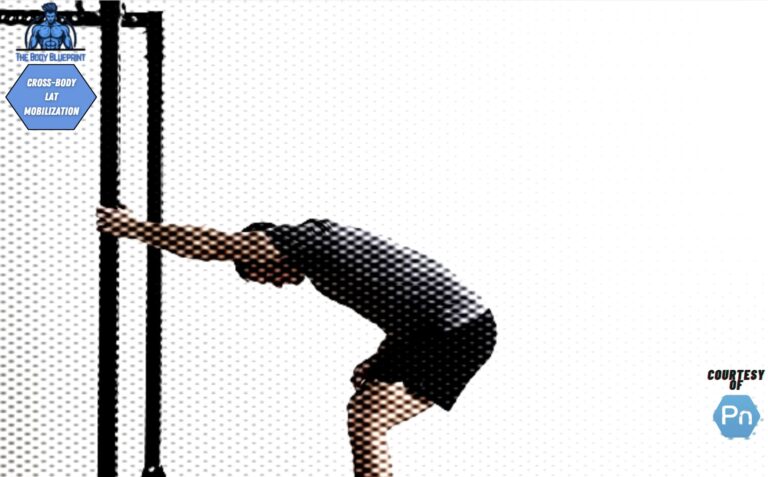
- The Reset: Pair with Cross-Body Lat Mobilization for a 360-degree shoulder solution.
Variations to Scale Difficulty
- Weighted Stretch: Hold a light dumbbell between your hands to pull your arms deeper into flexion.
- Single Arm: Focus on one side at a time to fix imbalances. See the Single-Arm Standing Band Row for a similar one-sided focus.
- Dynamic Rocking: Gently rock your hips back and forth to add a neural flossing element to the stretch.
The Verdict
The Lat and Triceps Stretch is the secret behind every elite upper body. It creates the mobility required for heavy weight and the length required for a world-class V-taper. Master the exhale, own the range, and build a physique that moves as good as it looks.
Lat and Triceps Stretch FAQ
Does this help with “Phantom Lat Syndrome”?
Yes. Most people who think they have wide lats are just flared out due to poor posture. This stretch restores the actual length of the muscle so you can build real width.
My elbows hurt during this, what should I do?
Pad the bench with a towel. If the pain is inside the joint, reduce the elbow bend and focus more on the lat drop. Ensure you aren’t over-stretching the tricep insertion.
How often should I do this?
If you work a desk job, do this every single day. It is the direct antidote to the “slumped” posture that kills performance.