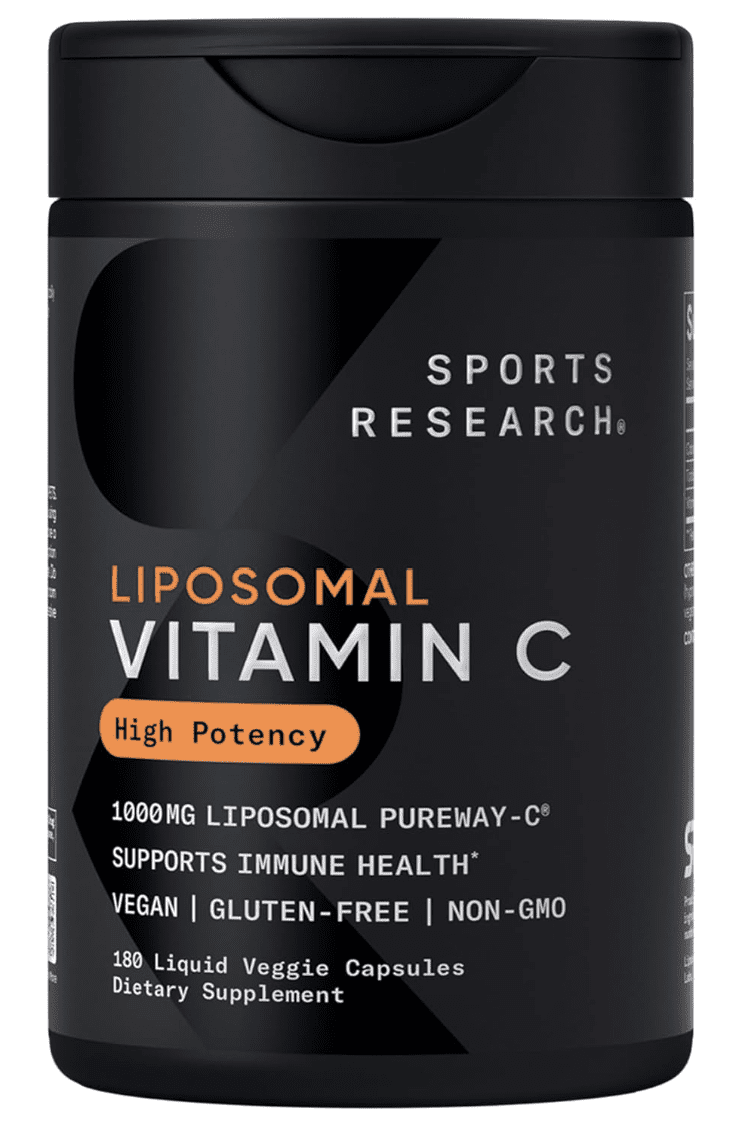
Most Vitamin C supplements are a biological waste of money—flushed down the toilet because your gut can’t absorb more than 200mg at a time. Sports Research Liposomal Vitamin C isn’t a pill; it’s a delivery hack that shuttles 1000mg of ascorbic acid directly into your bloodstream, bypassing the gut’s absorption limits.
This 2026 Review breaks down the liposomal technology, the actual immune and recovery benefits, and whether this premium delivery system is worth the extra cost over bulk powder or standard capsules.
Disclaimer: You’re here to find a product that’ll get you results, and I’m here to help. Just a heads-up: As an Amazon Associate, I earn from qualifying purchases. If you buy through my links, I get a small commission at no added cost to you. It’s like I get a little something for doing the heavy lifting on research. Fair deal? Now, let’s get into the good stuff.
Sports Research Liposomal Vitamin C: Overview & Key Specs
This isn’t a ground-up tablet. It’s a liquid-filled veggie capsule containing Vitamin C (as Ascorbic Acid) encapsulated in phospholipids from sunflower lecithin. This liposomal shell is the entire game.
- Form: Liposomal Ascorbic Acid (1000mg per capsule).
- Delivery: Phospholipid encapsulation from Non-GMO Sunflower Lecithin.
- Dose: 180 liquid capsules (90 servings).
- Certifications: Certified Vegan, Non-GMO, Gluten-Free.
- Key Differentiator: Designed for up to 3x greater absorption than standard forms, allowing for a true high-dose protocol without GI distress.
Liposomal Delivery: The Bioavailability Hack
The Problem with Standard Vitamin C
Your gut has an active transporter called SVCT1 that shuttles Vitamin C into your bloodstream. It saturates fast—around 200-400mg per dose. Anything more sits in your intestines, draws in water, and causes the notorious “Vitamin C flush” (diarrhea). You’re literally pissing away your money.
The Liposomal Solution
Liposomes are microscopic bubbles made from phospholipids (the same material as your cell membranes). The Vitamin C is packaged inside.
- Bypasses Gut Saturation: The liposome is absorbed through a different pathway (passive diffusion in the small intestine).
- Protects the Nutrient: Shields the Vitamin C from degradation by stomach acid.
- Direct Cellular Delivery: The phospholipid shell can fuse directly with cell membranes, delivering the payload inside the cell where it’s needed.
“Liposomal delivery turns a low-efficiency nutrient into a high-efficiency one. For Vitamin C, which has a steep dose-response curve for immune and antioxidant effects, getting more into the systemic circulation isn’t a luxury—it’s the point.”
— Charles Damiano, B.S. Clinical Nutrition
Real‑World Benefits: Beyond Just “Immune Support”
At these absorbed doses, Vitamin C shifts from a general antioxidant to a active recovery and performance co-factor.
1. Actual Immune System Function (Not Just Prevention)
- Neutrophil & Lymphocyte Support: High dose Vitamin C is chemotactic—it helps direct your white blood cells to the site of infection.
- Shortens Illness Duration: Significant research shows high-dose Vitamin C (especially via IV or liposomal) can reduce the duration and severity of respiratory infections.
2. Accelerated Training Recovery & Collagen Synthesis
- Essential Cofactor: Vitamin C is mandatory for converting proline and lysine into hydroxyproline and hydroxylysine—the building blocks of collagen. No C, no collagen repair.
- Reduces Oxidative Stress: Mops up free radicals generated by intense training, potentially lowering muscle soreness (DOMS).
3. Skin Health & Anti-Aging
- By supporting collagen production and directly fighting skin-based free radicals from UV exposure.
“For lifters, Vitamin C is a silent partner in recovery. You don’t feel it working like you do with stimulants, but it’s crucial for tendon and ligament repair. The liposomal form means you can take a dose that actually moves the needle without living in the bathroom.”
— Eugene Thong, CSCS
Dose, Timing & Stacking Protocol (2026 Update)
Maintenance vs. Therapeutic Dosing
- General Health (Maintenance): 1 capsule (1000mg) daily with a meal.
- Immune Challenge / High Stress / Intense Training Block: 2 capsules (2000mg) split into two doses (AM/PM).
- At First Sign of Illness (Therapeutic): 2 capsules every 4-6 hours for the first day, then taper. The liposomal delivery makes this protocol feasible without GI catastrophe.
Timing & Synergies
- Take with Food: Always take with a meal containing some fat to enhance liposomal absorption.
- Stack with Collagen: Take this alongside your morning collagen peptides to maximize collagen synthesis.
- Pair with Zinc: For immune support, combine with a well-absorbed zinc supplement (like zinc picolinate) for a synergistic effect.
Who This Liposomal Vitamin C Is For (And Not For)
It’s Perfect For:
- Biohackers & Athletes: Who need high-dose benefits without gut issues.
- People Who “Feel a Cold Coming On”: Who want an effective, high-dose tool in their kit.
- Anyone with Sensitive Stomachs: Who gets acid reflux or diarrhea from standard Vitamin C.
- The Results-Driven: Who understands paying for absorption, not just raw milligrams.
It’s NOT For:
- Extreme Budget Buyers: Bulk ascorbic acid powder is far cheaper (but far less effective per mg).
- Those on a “Basic Multivitamin Only” Regimen: This is a specialized, high-potency tool.
- People with a Sunflower Lecithin Allergy: The liposome is made from sunflower lecithin.
The Drawbacks & How It Stacks Up
Potential Drawbacks
- Cost per Dose: Significantly more expensive than bulk powder or standard capsules.
- Capsule Size: The liquid-filled veggie caps are larger than typical pills. Some may find them hard to swallow.
- Not Instant-Release: The liposomal delivery has a slower, more sustained release. For immediate, massive dosing (like in a therapeutic IV-mimicking protocol), a liquid liposomal form might be faster.
Comparison: Liposomal vs. Standard vs. Buffered
| Form | Liposomal (This) | Standard Ascorbic Acid | Buffered (Ester-C) |
|---|---|---|---|
| Absorption | Very High (Up to 3x) | Low (Saturates at ~200mg) | Moderate |
| GI Upset Risk | Very Low | High at dose >500mg | Low |
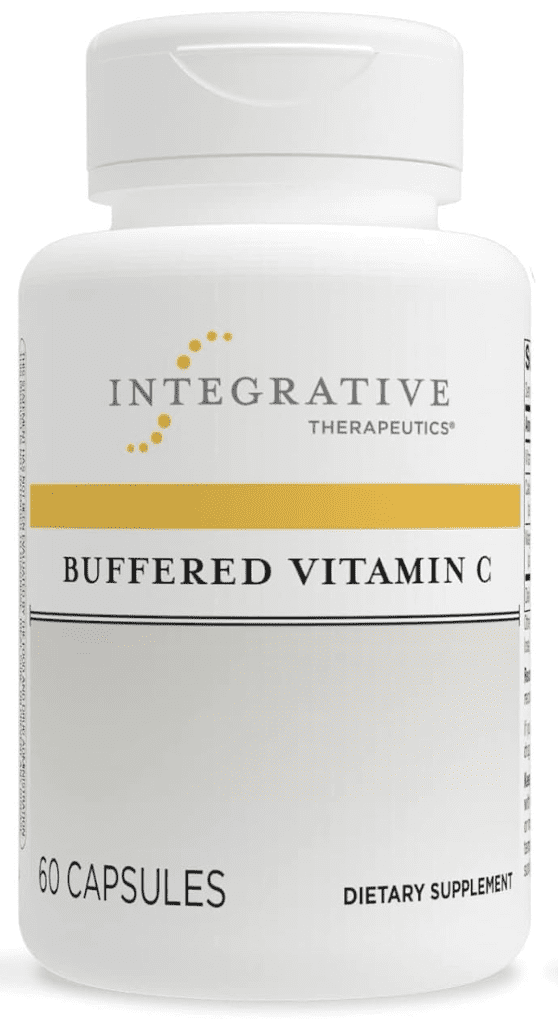
| Cost per 1000mg | Highest | Lowest | Medium |
| Best For | High-dose therapy, sensitive stomachs | Budget maintenance dosing | Daily general use |
“You have to view supplements through the lens of ‘absorbed dose,’ not ‘labeled dose.’ Liposomal Vitamin C corrects the absorption flaw. For targeted, high-impact use, the premium is justified. For sprinkling on your oatmeal metaphorically, buy the powder.”
— Charles Damiano, B.S. Clinical Nutrition
The Iron Lexicon: Vitamin C Edition
- Liposomal Delivery
- A nutrient encapsulation technology where the active compound (e.g., Vitamin C) is packaged inside a microscopic bubble (liposome) made of phospholipids, enabling direct cellular delivery and bypassing gut absorption limits.
- Ascorbic Acid
- The pure, bioactive form of Vitamin C. Its acidity can cause GI distress at high oral doses, making an efficient delivery system like liposomal crucial for high-dose protocols.
- SVCT1 Transporter
- The sodium-dependent Vitamin C transporter in the gut responsible for active absorption. It becomes saturated at low doses (200-400mg), creating a hard ceiling on standard supplement absorption.
- Phospholipid
- A type of lipid molecule that is a primary component of all cell membranes. In liposomal supplements, they form the protective shell that carries the nutrient.
- Bioavailability
- The proportion of a nutrient that enters the bloodstream and is available for use by the body. Liposomal forms dramatically increase bioavailability for many nutrients.
- Hydroxyproline
- A critical amino acid derivative in collagen formation. Vitamin C is an essential cofactor in its production from proline, directly linking Vitamin C status to connective tissue repair.
- Neutrophil Chemotaxis
- The movement of white blood cells (neutrophils) toward sites of infection. High-dose Vitamin C has been shown to enhance this process, improving immune response.