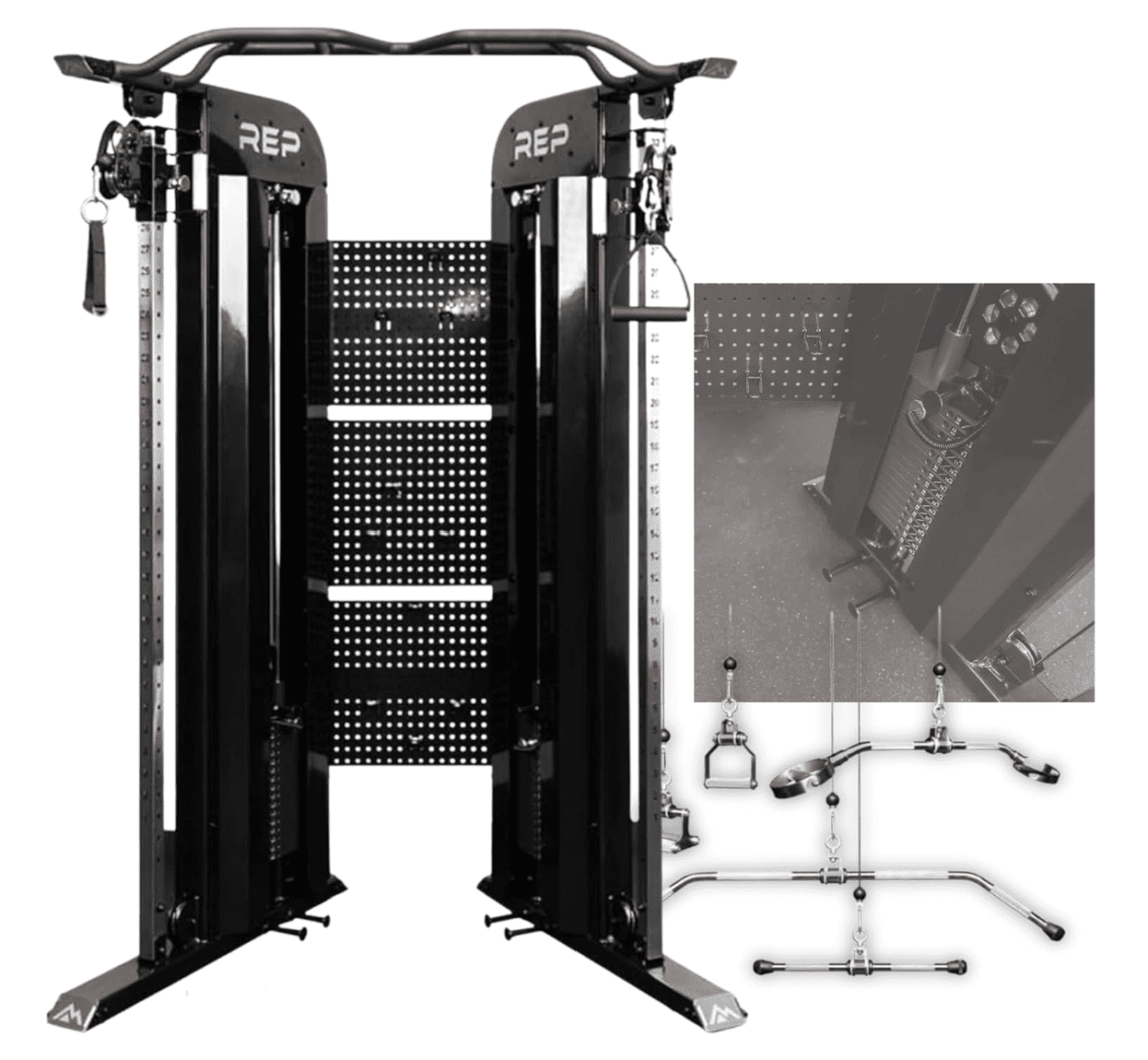
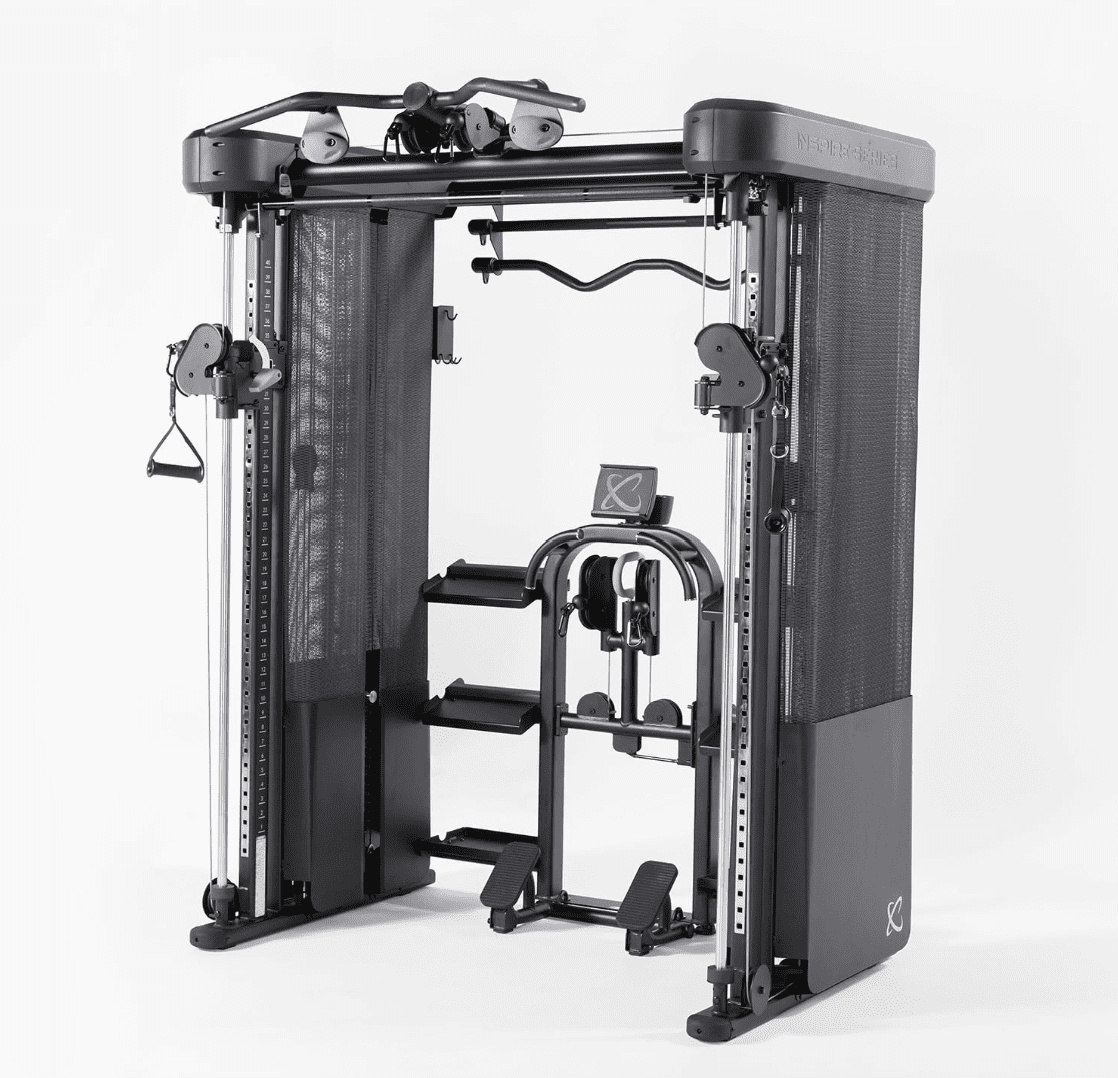
The REP Arcadia and Inspire FT2 Pro are built from two completely different philosophies of strength. One is a purist’s cable machine engineered for raw, commercial-grade tension. The other is a Swiss Army Knife designed to replace half a commercial gym.
This 2026 guide tears down the specs, feels, and brutal truths to show you which one fits your DNA.
Disclaimer: You’re here to find a product that’ll get you results, and I’m here to help. Just a heads-up: As an Amazon Associate, I earn from qualifying purchases. If you buy through my links, I get a small commission at no added cost to you. It’s like I get a little something for doing the heavy lifting on research. Fair deal? Now, let’s get into the good stuff.
The 60-Second Verdict: Purist vs. Pragmatist
Choose the REP Arcadia if: You want the cleanest, heaviest, most predictable cable feel in a home gym. You already have (or will get) a power rack and barbell. You train for strength and hypertrophy, not “variety.”
Choose the Inspire FT2 Pro if: You want one machine to rule them all. The integrated Smith-style bar and massive accessory ecosystem let you do cable work, squats, presses, and more in a single footprint. You value versatility over purity.
“The Arcadia is for the lifter who treats their cable machine like a barbell—it’s a tool for progressive overload. The FT2 Pro is for the trainee who wants a complete gym experience without buying five separate pieces of equipment.”
— Eugene Thong, CSCS
Build & Frame: Commercial Anchor vs. Multi-Station Fortress
REP Arcadia – The Purist’s Anchor
- Feels like commercial gym equipment because it is. Thick 3×3 steel, zero side-to-side sway, mounted on a massive base.
- Simple, brute-force engineering: Fewer moving parts, fewer failure points. It’s designed to be loaded heavy and often.
- Compact vertical footprint that fits in a standard garage or basement without dominating the room.
Inspire FT2 Pro – The All-in-One Fortress
- A complete multi-station frame with integrated Smith bar guides and a larger overall presence. It commands the space.
- More complex, feature-driven design: The engineering focuses on enabling multiple exercise modalities, not just perfecting one.
- Requires more real estate and higher ceilings to feel open, especially for overhead Smith bar work.
Cable & Pulley Feel: The “Real Lifter” Difference
This is where the rubber meets the road. How does it feel when you’re grinding out a heavy set of seated rows?
Arcadia Feel: Direct & Predictable
- Minimal pulley redirection means less friction and a more direct connection to the weight stack.
- Virtually zero slack. The tension engages the instant you pull. There’s no “dead zone” to build momentum.
- Feels like a premium cable column you’d find in a powerlifting or bodybuilding gym.
FT2 Pro Feel: Smooth & Integrated
- Smooth operation but you can feel the additional pulley system and the longer cable path.
- Engineered for versatility, not purity. The feel is excellent for general training but doesn’t have the same raw, direct feedback as the Arcadia.
- The Smith bar integration is the trade-off. To enable that functionality, the cable system makes compromises a purist would notice.
“Consistent, predictable resistance is key for tracking progress. A machine that feels ‘different’ every workout makes it hard to know if you’re getting stronger or just dealing with variable friction. That consistency is a hidden driver of long-term results.”
— Charles Damiano, B.S. Clinical Nutrition
Weight Stack Reality: Enough for Real Strength?
Both use a 2:1 ratio. 200 lbs on the stack = 100 lbs of resistance at the handle. But “enough” depends on your goals.
Arcadia Stack (Up to 220 lbs per side)
- 220 lbs (110 lbs at handle): More than enough for unilateral work, rear delt flies, triceps pushdowns for 99% of lifters.
- May hit a ceiling on heavy, two-handed movements like seated rows for very strong individuals.
- The weight feels heavier due to the direct feel and lack of momentum.
FT2 Pro Stack (Up to 215 lbs per side)
- Similar max, different application. The Smith bar lets you combine stacks for exercises like squats, effectively doubling the load.
- Practical ceiling is higher for compound movements because of the Smith bar functionality.
- The weight can feel slightly lighter due to the pulley system’s inherent smoothness and momentum.
Who It’s For (And Who Should Walk Away)
The REP Arcadia Is For:
- The home gym purist who already has a rack and barbell and wants a world-class cable station to complete their setup.
- The bodybuilder or strength athlete who values perfect resistance curves and zero slack for muscle-building and accessory work.
- Anyone with limited space who needs a compact, vertical, no-BS machine.
The Inspire FT2 Pro Is For:
- The all-in-one seeker who wants a single machine to handle strength, hypertrophy, and cardio conditioning without buying more equipment.
- Multi-user households where one person does cable flys and another needs a guided bar for squats.
- Those who prioritize variety and guided movement (Smith bar) over the raw feel of free weights or pure cables.
“Don’t buy the Arcadia expecting it to be something it’s not. It’s a phenomenal cable machine. The FT2 Pro is the opposite—it’s trying to be everything. That’s its greatest strength and its biggest weakness. Know which philosophy matches your training identity.”
— Eugene Thong, CSCS
Head-to-Head: REP Arcadia vs. Inspire FT2 Pro (2026)
| Feature | REP Arcadia | Inspire FT2 Pro |
|---|---|---|
| Core Philosophy | Purist Cable Machine | All-in-One Multi-Station |
| Max Weight (per side, 2:1) | 220 lbs | 215 lbs |
| Key Differentiator | Direct Cable Feel & Build | Integrated Smith Bar |
| Ideal User | Strength Athlete w/ Rack | General Tracker / Family |
| Footprint & Space | Compact, Vertical | Larger, Requires More Room |
| Price Point | Premium Functional Trainer | Premium Multi-Station |
“The best machine is the one you’ll use consistently for the next decade. If you hate changing attachments and just want to lift, the Arcadia’s simplicity wins. If you get bored easily and need constant variety to stay engaged, the FT2 Pro’s ecosystem is worth the premium.”
— Charles Damiano, B.S. Clinical Nutrition
Final Call: Stop Overthinking It
You’re a lifter, not a hobbyist. Your equipment should match your mentality.
Buy the REP Arcadia if your home gym is your sanctuary and every piece must be best-in-class for its specific purpose. It’s the specialist.
Buy the Inspire FT2 Pro if you need one flagship machine to be the heart of your gym for every family member and every type of workout. It’s the generalist.
Related Home Gym Guides
- Major Fitness Drone2 Review
- Ritfit Buffalo All-in-One Review
- Hulkfit Pro Series Review
- Best Smart Home Gyms
The Iron Lexicon: Functional Trainer Edition
- 2:1 Pulley Ratio
- The most common ratio in functional trainers. For every 2 pounds the weight stack moves, you feel 1 pound of resistance at the handle. It allows for heavier stacks while keeping the felt weight manageable for precise movements.
- Smith-Style Bar
- A barbell fixed within steel guides, allowing only vertical movement. It provides stability and safety for heavy lifts without a spotter but removes the stabilizing component of free-weight training.
- Cable Slack / Dead Zone
- The initial, unresisted portion of a cable pull before the weight stack engages. Minimal slack is a mark of a quality machine and is critical for maintaining tension during high-rep sets.
- Pulley Redirection
- Every time a cable changes direction via a pulley, it introduces slight friction. Fewer redirections mean a more direct, efficient feel. A “pure” cable machine minimizes these.
- Weight Stack Increment
- The amount of weight added per plate in the stack. Smaller increments (5-10 lbs) allow for more precise progressive overload compared to large jumps (15-20 lbs).
- Unilateral vs. Bilateral
- Unilateral training works one side of the body at a time (e.g., single-arm row). Bilateral works both sides together (e.g., lat pulldown). Functional trainers excel at both, but max weight needs are higher for bilateral movements.