The grind is glorified. The seven-day split is a badge of honor. Walking out of the gym feeling like you got hit by a truck is seen as a victory. This is the gospel of “more is more,” sold to you on the back of every MuscleTech label and whispered between sets at every Gold’s Gym. It’s a lie that keeps you small, weak, and perpetually sore.
Your muscles aren’t built between the rack and the floor. They’re forged on the couch, in the kitchen, and most importantly, in the bed. Ignoring this isn’t hardcore—it’s stupid.
Muscle Recovery Science: The Golden-Era Secret vs. The Modern Grind
Look at the legends. Arnold preached naps. Franco Columbu structured his training around recovery from his powerlifting feats. These guys trained savage, but they recovered savager. The “no days off” cult wasn’t born in the golden era of bodybuilding; it sprouted from Instagram hustle porn and a fundamental misunderstanding of anabolic physiology.
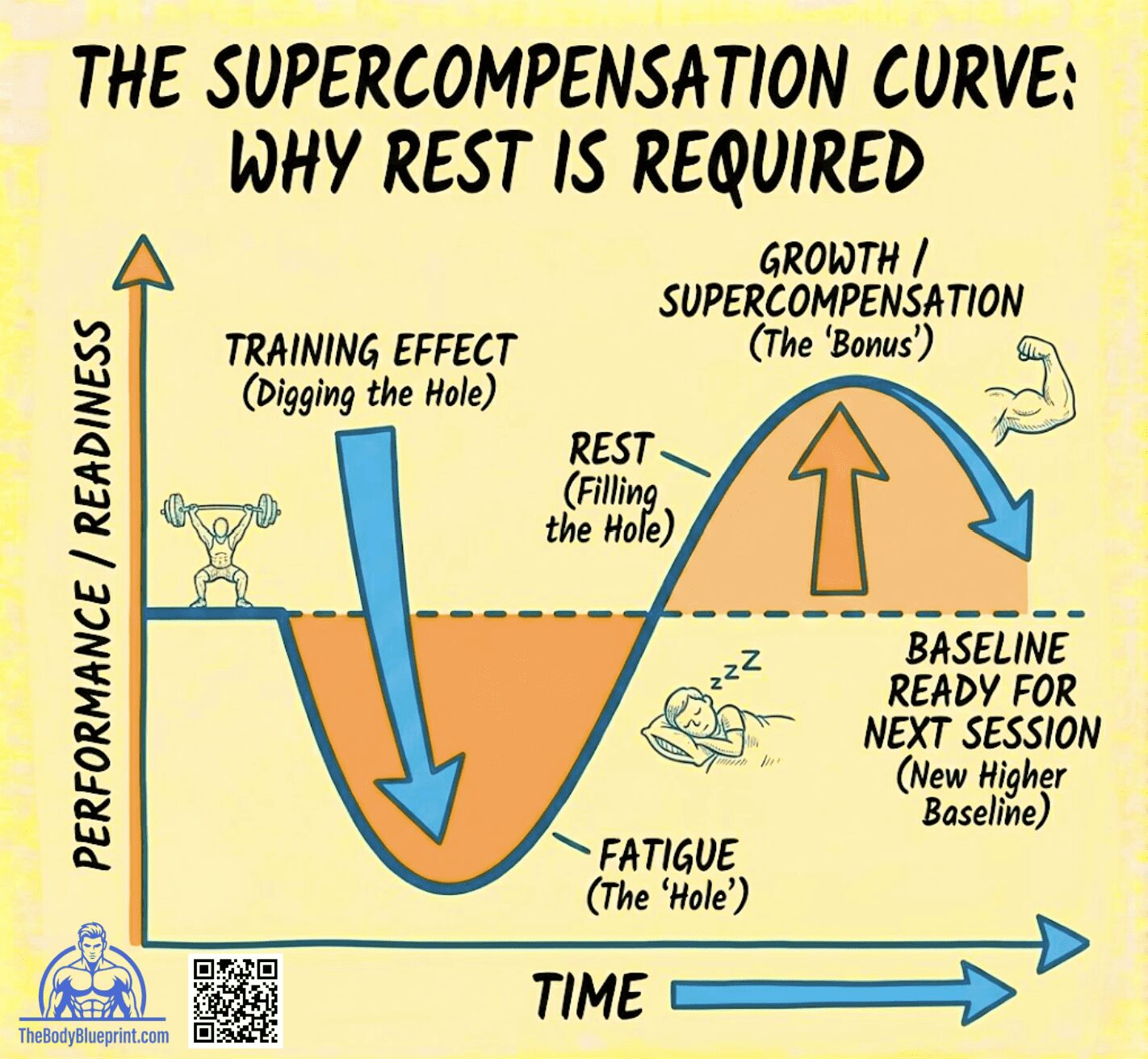
Growth happens when the stimulus ends. That’s when Muscle Protein Synthesis (MPS) kicks in, repairing the damage from your heavy squats and bench press sessions. This process is fueled by protein synthesis, driven by hormones, and completely wrecked by a fried Central Nervous System (CNS) and sky-high cortisol.
The Overtraining vs. Optimal Recovery Diagnostic Table
Stop guessing. Are you building a physique or digging a recovery hole? Use this.
| Sign of Overtraining (You’re Losing) | Sign of Optimal Recovery (You’re Growing) |
|---|---|
| Chronic Fatigue & Low Motivation: Dreading the gym. Needing 2+ scoops of pre-workout just to move. | Sustainable Energy: You feel eager to train. Driven by purpose, not powder. |
| Performance Plateau/Regression: Your deadlift weight is stuck or dropping. You’re weaker. | Consistent Progressive Overload: Adding reps, weight, or quality to working sets weekly. |
| Poor Sleep & High Resting Heart Rate: Tossing all night. Body is stuck in “fight or flight.” | Deep, Restorative Sleep: You crash hard, wake refreshed. Nervous system is calm. |
| Joint Pain & Nagging Injuries: Elbows, knees, shoulders always ache. | Joint Resilience: You feel sturdy. Soreness is muscular, not in the joints. |
| Suppressed Immune System: Catching every cold. Lingering sniffles. | Robust Immune Function: You rarely get sick. Resources go to growth, not defense. |
The Hierarchy of Recovery: The Non-Negotiable Growth Protocol
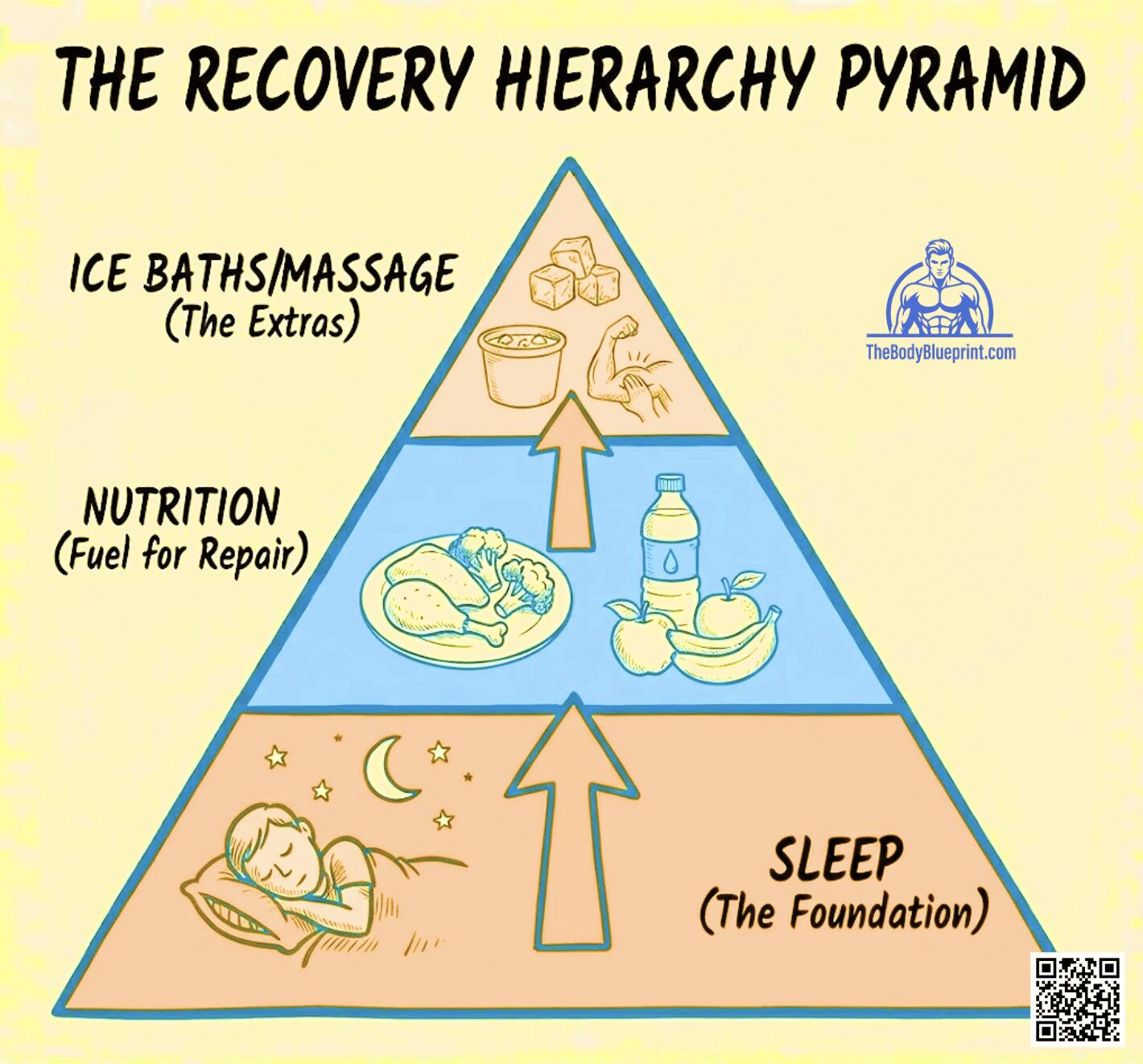
Building muscle is a resource game. Your body has limited energy. Here’s the priority list:
- The Foundation: Sleep & Systemic Rest (The “8-Hour Rule”)
This is anabolic biochemistry, not soft advice. Deep sleep triggers the largest pulses of growth hormone (GH) and optimizes testosterone production. It’s when glycogen stores refill and your CNS resets. 5 hours of poor sleep = a catabolic state. Prioritize this like your 1-rep max depends on it. - The Fuel: Strategic Nutrition & Hydration (The “24-Hour Feed”)
Recovery needs raw materials. This is your daily protein target (1g/lb), spread over meals to keep MPS elevated. It’s complex carbs to restore muscle glycogen. Think of it as a lean bulk for your recovery systems. - The Trigger: Intelligent Training Stimulus (The “Mike Mentzer” Principle)
The workout is the signal, not the construction. You need enough progressive overload to trigger adaptation, but not so much it requires a 10-day deload. This is where High-Intensity Training (HIT) philosophy had merit: brief, brutal, then get out. - The Enhancers: Active Recovery & Management
This is where foam rolling, walking, and dynamic stretching live. They aid circulation but are useless if Tiers 1-3 are broken. Don’t ice bath your way out of a sleep deficit.
Eugene Thong, CSCS, cuts to the chase: “Fatigue is the tax you pay for a training stimulus. But if you’re bankrupt from overtraining, you can’t afford new muscle. Recovery is your income.”
Recovery Protocol FAQ: Deloads, Cardio, & CNS Fatigue
Q1. How do I know if I need a deload week?
If you check 3+ boxes in the “Overtraining” column of the table above, it’s time. A deload week isn’t quitting; it’s strategic reinvestment. Cut your volume and/or intensity by 40-60% for a week. You’ll come back stronger.
Q2. Is doing cardio on rest days killing my gains?
It depends. A 30-minute walk (LISS) can aid recovery. A gut-busting HIIT or fasted cardio session is additional stress that can impede muscle repair. If your goal is muscle growth, keep rest-day activity genuinely light.
Q3. What’s the difference between muscle soreness (DOMS) and overtraining?
DOMS is local muscle pain 24-72 hours post-workout. Overtraining Syndrome is a systemic breakdown of performance and health from chronic CNS fatigue. DOMS is normal; OTS is a crisis.
Strategic Recovery Questions: Testosterone, Cortisol, & Adaptation
Q1. Can I use supplements to fix poor recovery?
No. You cannot out-supplement a lack of sleep and food. Testosterone boosters won’t offset sleep deprivation. Cortisol blockers are a band-aid for the wound of chronic stress. Fix the foundation first.
Q2. If I feel flat, should I “push through” or rest?
That “flat” feeling is your nervous system begging for a break. “Pushing through” with extra caffeine digs a deeper hole. One forced, crappy workout can set you back a week. One strategic rest day can springboard you forward. Take the day.
Charles Damiano, B.S. Clinical Nutrition, clarifies: “The adaptation signal from training lasts for days. Missing one scheduled workout due to fatigue is irrelevant in the long-term growth curve. Forcing it and extending your recovery timeline is detrimental.”
The Supplement Graveyard: Recovery Edition
Save your money. Stop buying:
- Overpriced “Recovery Formulas” that are just repackaged BCAAs and electrolytes.
- “Testosterone Boosters” when the solution is an extra hour of sleep and managing life stress.
- “Cortisol Control” supplements instead of addressing your 7-day bro split and poor meal timing.
Final Set. Walk Off.
The ultimate flex isn’t a crowded gym log. It’s the discipline to not touch a weight when your body says no. It’s understanding that the temple isn’t built by the constant swing of the hammer, but by the quiet, strategic setting of the mortar. Be the guy who recovers as hard as he trains. Your gains—and your joints—will thank you for decades.