You finish a brutal session, muscles screaming. The next day, you’re not just sore—you’re drained, fighting off a cold. That systemic crash? It’s not just fatigue. It’s a metabolic debt. Glutamine isn’t a miracle cure—it’s the body’s most abundant repair currency. Let’s settle your recovery balance.
Glutamine Core Concepts
The science of amino acids for cellular fuel and repair:
Glutamine Defined
A conditionally essential amino acid. Under normal circumstances, your body makes enough. But during intense stress—like heavy training—demand outstrips supply. Not just “another amino”—it’s crisis fuel for your immune system and gut.
The Stress Cascade
- Trigger: Intense exercise depletes intramuscular glutamine stores by up to 40%.
- Process: The body robs Peter (muscle cells) to pay Paul (immune cells, gut lining).
- Outcome: Without replenishment, recovery slows and infection risk rises.
- Science: Plasma glutamine levels can remain depressed for 6+ hours post-exercise (Krzywkowski, 2001).
The Recovery Multi-Tool
Reality: Glutamine’s primary superpower isn’t directly building muscle—it’s creating the metabolic environment where repair can happen optimally by supporting your immune and digestive systems.
Glutamine Impact Matrix
| Recovery Metric | Without Glutamine Replenishment | With Strategic Glutamine Intake |
|---|---|---|
| Immune Function | Suppressed Post-Exercise | Supported & Maintained |
| Gut Barrier Integrity | Compromised (“Leaky Gut”) | Fortified |
| Muscle Hydration | Suboptimal | Enhanced (Cell Volumization) |
| Systemic Stress | Elevated Cortisol | Moderated |
What is Glutamine?
Definition and Role in the Body
Glutamine is the most abundant free-form amino acid in your bloodstream and muscle tissue. It’s classified as “conditionally essential” because while your body can produce it, extreme physical stress (like trauma, surgery, or prolonged intense exercise) dramatically increases your requirement.
Its primary roles include:
- Fuel for Immune Cells: Lymphocytes and macrophages devour glutamine to proliferate and fight pathogens.
- Fuel for Intestinal Cells: The cells lining your gut use it as their primary energy source, maintaining a strong barrier against toxins and bacteria.
- Nitrogen Shuttling: It transports nitrogen between tissues, a critical process for muscle repair.
- Acid-Base Balance: It helps regulate the body’s pH by producing bicarbonate.
Natural Sources of Glutamine
Glutamine is found in both animal and plant-based proteins. The richest sources include:
- Animal Proteins: Beef, chicken, fish, eggs, and dairy products (especially milk and yogurt).
- Plant-Based Sources: Beans, lentils, spinach, parsley, and cabbage.
- Note: Cooking can degrade glutamine content, so some raw or lightly cooked sources are preferable.
Benefits of Glutamine for Recovery
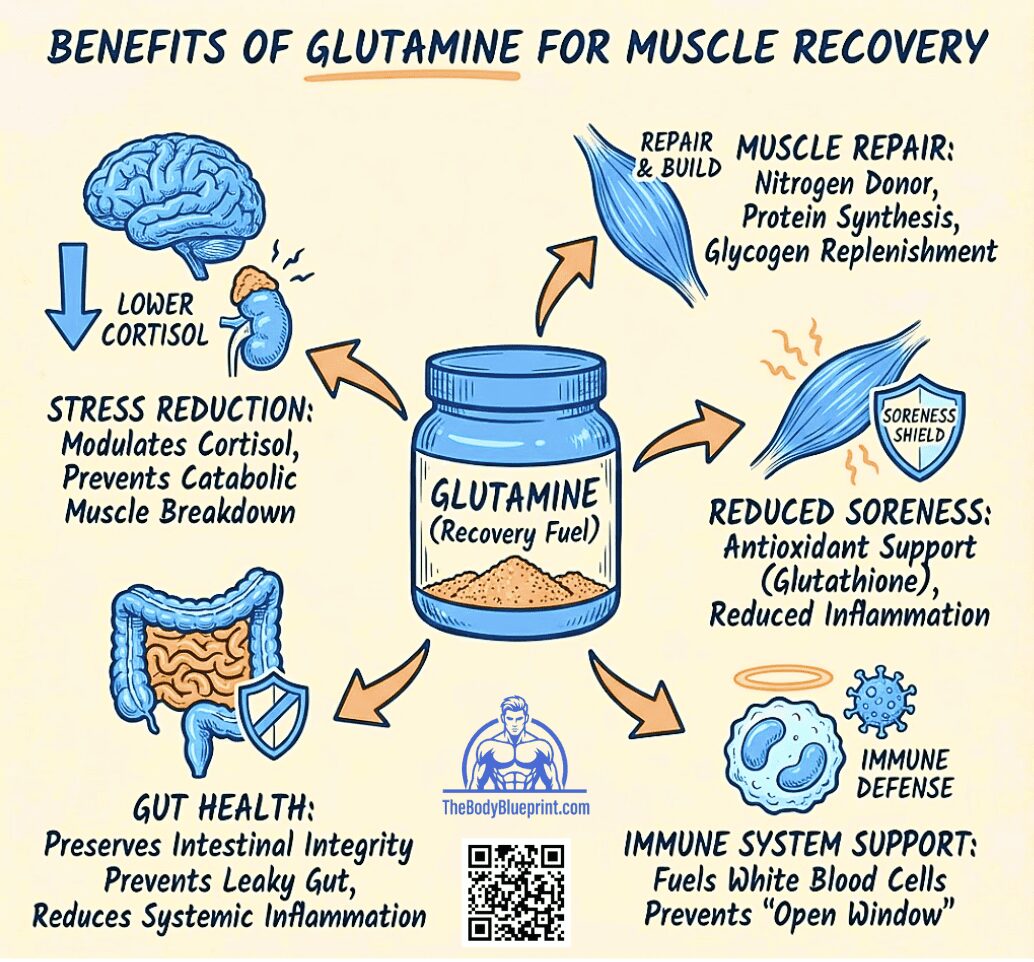
- Muscle Repair: Serves as a nitrogen donor, facilitating the synthesis of new muscle proteins and helping to replenish glycogen stores.
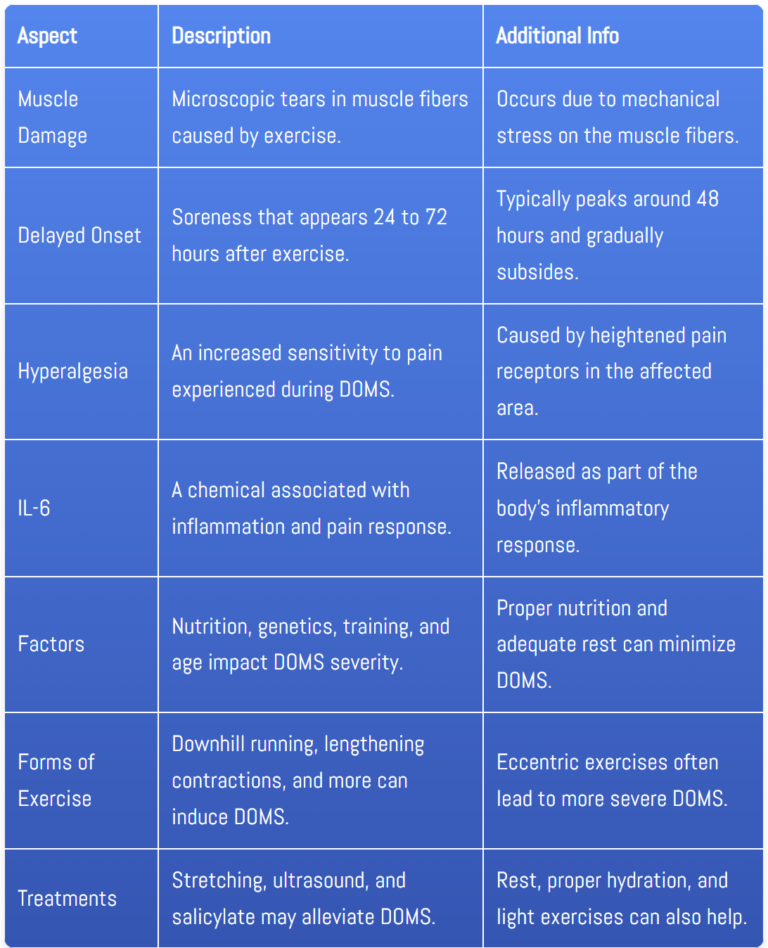
- Reduced Soreness: By supporting the body’s antioxidant system (glutathione production) and reducing inflammatory markers, it can mitigate the severity of DOMS.
- Immune System Support: Prevents the post-exercise “open window” of immunosuppression by fueling white blood cells, reducing the frequency of upper respiratory tract infections in athletes.
- Gut Health: Preserves the integrity of the intestinal lining, preventing exercise-induced leaky gut, which can cause systemic inflammation and hinder recovery.
- Stress Reduction: Helps modulate the body’s release of cortisol, the catabolic stress hormone that can break down muscle tissue.
Glutamine and Exercise Performance
Strength Training Recovery
For strength athletes, glutamine’s role is supportive. It won’t directly increase your 1-rep max, but by fortifying immune function and reducing systemic inflammation, it ensures you can maintain consistent training frequency—the true driver of long-term strength gains. It helps manage the overall stress load of high-volume, heavy training.
Endurance Athletes Recovery
Endurance training is a major glutamine drain. Marathon runners and cyclists often see the most dramatic benefits. Supplementation can help maintain glycogen stores (via gluconeogenesis precursor role) and is crucial for preventing the immunosuppression that can follow long, grueling sessions.
Glutamine for Older Athletes
Aging comes with a natural decline in glutamine synthesis and an increase in catabolic (muscle-wasting) processes. For athletes over 50, glutamine becomes even more critical. It acts as a countermeasure to sarcopenia by creating an anti-catabolic environment and supporting the immune system, which becomes more vulnerable with age.
Timing and Dosage
Best Time to Take Glutamine Post-Workout
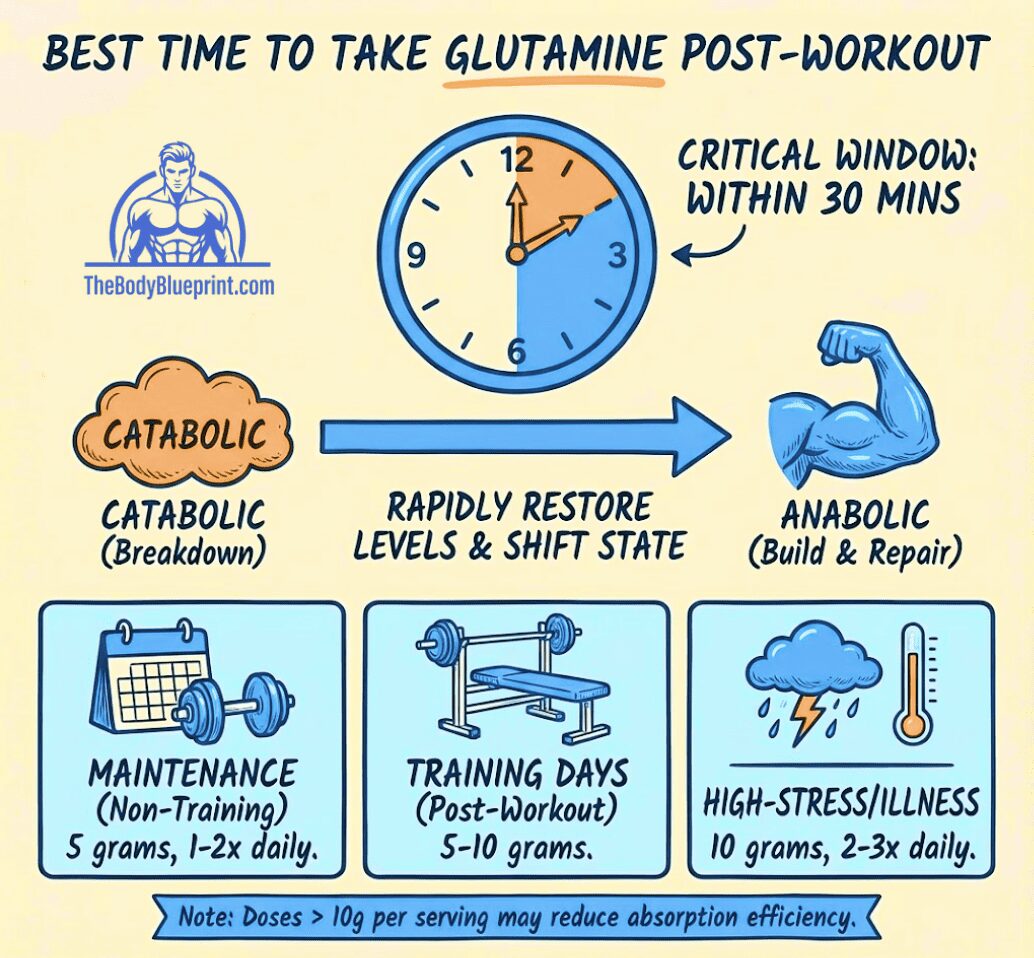
The most critical window is immediately after your workout (within 30 minutes). This is when plasma levels are most depleted, and muscles are primed for nutrient uptake. Taking it post-workout helps rapidly restore levels and shift the body from a catabolic to an anabolic state.
Glutamine Before vs. After Exercise
| Timing | Primary Benefit | Recommendation |
|---|---|---|
| Before Training | May help prime blood levels, potentially reducing intra-workout catabolism. | Lower priority. 5g dose if stomach tolerates it. |
| After Training | Essential. Replenishes depleted stores, directly supports repair and immune function. | Non-negotiable. 5-10g dose mixed with your post-workout shake. |
| Before Bed | Supports overnight recovery and growth hormone release. | Highly beneficial. 5g dose. |
Recommended Dosage Ranges
- Maintenance (Non-Training Days): 5 grams, 1-2 times daily.
- Training Days (Post-Workout): 5-10 grams.
- During High-Stress/Illness: 10 grams, 2-3 times daily for short periods.
- Note: Doses above 10g per serving may reduce absorption efficiency.
Food Sources vs. Supplements
Natural Food Sources of Glutamine
- Best Sources: Beef, chicken, fish, eggs, milk, yogurt, cottage cheese.
- Plant-Based: Raw spinach, parsley, cabbage, beans, lentils.
- Reality Check: You’d need to eat a very large amount of these foods to match a supplemental dose, making supplementation practical for targeted post-workout use.
Glutamine Powders and Capsules
L-glutamine powder is the most common and cost-effective form. It’s flavorless, mixes easily into cold water or shakes, and is rapidly absorbed. Capsules offer convenience but can be more expensive per gram.
Pros and Cons of Supplementation
| Pros | Cons |
|---|---|
| Precision Dosing for post-workout needs | Adds Cost to your supplement stack |
| Rapid Absorption without digestion | Potential for Mild GI Distress at high doses |
| Convenient to add to any shake | Not a “direct” muscle builder like EAAs or Leucine |
Glutamine and Immune Health
Role in Reducing Exercise‑Induced Stress
Intense exercise is a form of physiological stress that temporarily suppresses the immune system, creating an “open window” for infection. This is partly because immune cells, which are highly active post-exercise, are starving for glutamine. Supplementation directly fuels these cells, helping to maintain immune surveillance and reduce the risk of illness, which is the ultimate training derailer.
Supporting Gut and Immune Function
The gut is your largest immune organ. Strenuous exercise can redirect blood flow away from the intestines, damaging the gut lining and allowing endotoxins to leak into the bloodstream, triggering inflammation. Glutamine is the primary fuel for enterocytes (gut lining cells), helping to repair this damage and maintain a strong barrier, which in turn supports overall immune function.
Safety and Side Effects
Common Side Effects
Glutamine is extremely safe for most people. The most common side effect is mild gastrointestinal discomfort (bloating, gas) when starting with high doses, which usually subsides as the body adapts.
Safe Usage Guidelines
- Start with a lower dose (3-5g) to assess tolerance.
- Stay within the recommended 20-30 grams per day total limit.
- Individuals with liver disease, kidney problems, or Reye’s syndrome should consult a doctor before use.
- Choose pharmaceutical-grade L-Glutamine from reputable brands.
FAQs
Yes, indirectly. Glutamine supports the body’s antioxidant systems and can help reduce exercise-induced inflammation. Studies have shown that glutamine supplementation can decrease the perception of muscle soreness (DOMS) and accelerate recovery, particularly after endurance exercise.
They serve different purposes and are not directly comparable. BCAAs (specifically leucine) are direct triggers for muscle protein synthesis. Glutamine is a recovery facilitator, supporting immune and gut health. For overall recovery, especially during high-stress periods, glutamine may be more impactful. For direct muscle building signaling, BCAAs/EAAs are superior. They work best together.
Not directly as a performance enhancer, but it can support endurance by bolstering immune function and glycogen replenishment. By preventing the immunosuppression and gut issues common in endurance athletes, it helps maintain consistent training, which is the true driver of endurance gains.
You can take it consistently. Unlike some supplements, there’s no need to cycle glutamine. It’s a conditionally essential nutrient, so daily intake is safe and often beneficial, especially for athletes in consistent training. It’s a foundational supplement, not a stimulant.
Conclusion
Glutamine isn’t the star quarterback of muscle growth—it’s the offensive line that protects it. That persistent fatigue and sniffle after a hard week? It’s not bad luck—it’s a nutrient deficit. Invest in your internal defense. Your immune system and recovery capacity are waiting to be fortified.
Key Studies & Resources:
- Krzywkowski et al. (2001): Exercise-induced changes in plasma glutamine and immune response.
- Castell & Newsholme (1997): The effects of oral glutamine supplementation on athletes after prolonged exercise.
- PubMed: For ongoing research on glutamine and exercise immunology.