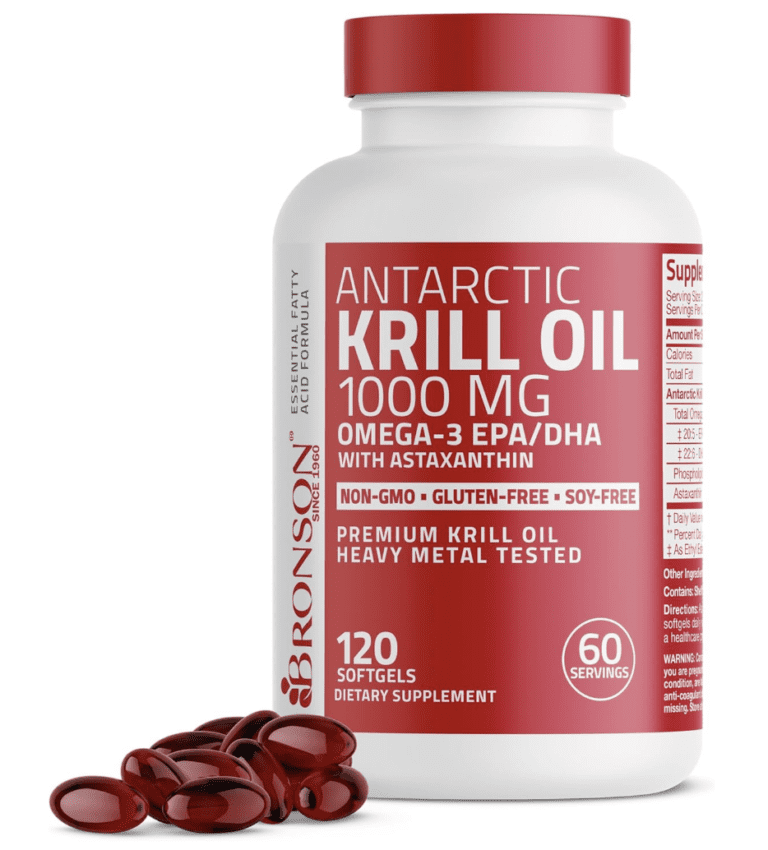
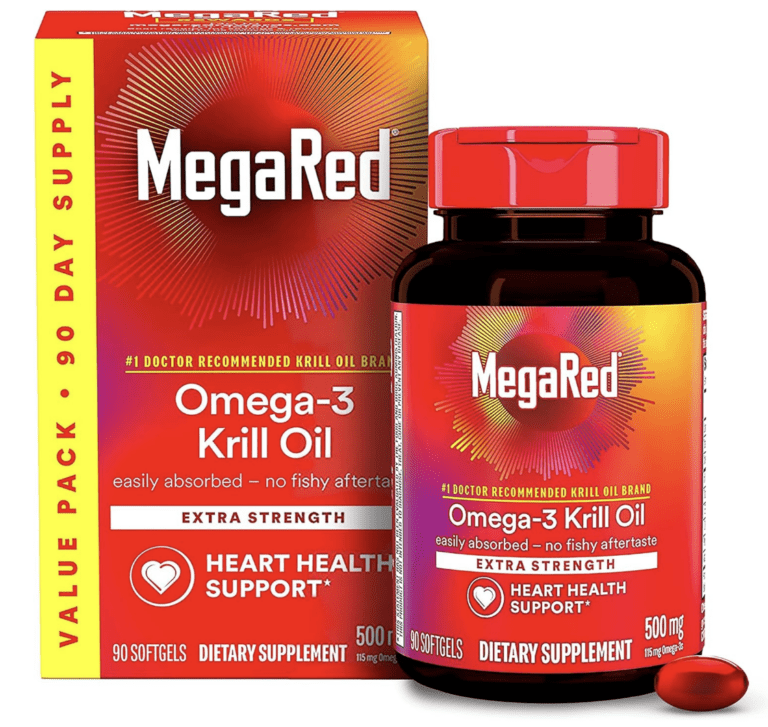
Krill oil is often marketed as a smarter, more absorbable form of omega-3 fatty acids, but not all supplements deliver enough active EPA and DHA to match clinical results. In this review, we’ll compare Carlyle Antarctic Krill Oil, Bronson Antarctic Krill Oil, and MegaRed Extra Strength Krill Oil, clarify how much EPA/DHA actually works, and reveal what recent studies showed about muscle strength, cholesterol, and recovery.
A Quick Look at the Top Krill Oil Supplements
| Brand | Krill Oil per Serving | Approx. EPA + DHA (mg) | Astaxanthin (Antioxidant) | Key Strength | Potential Drawback |
|---|---|---|---|---|---|
| Carlyle Antarctic Krill Oil | 1000 mg | 200–250 mg | Yes | Excellent purity testing | Low EPA/DHA yield per capsule |
| Bronson Antarctic Krill Oil | 1200 mg | 240–300 mg | Yes | High astaxanthin levels | Higher cost per gram |
| MegaRed Extra Strength Krill Oil | 1000 mg | 230 mg | Yes | Strong brand reputation | Lower total dose vs. clinical studies |
What the Science Actually Says About Dose and Results
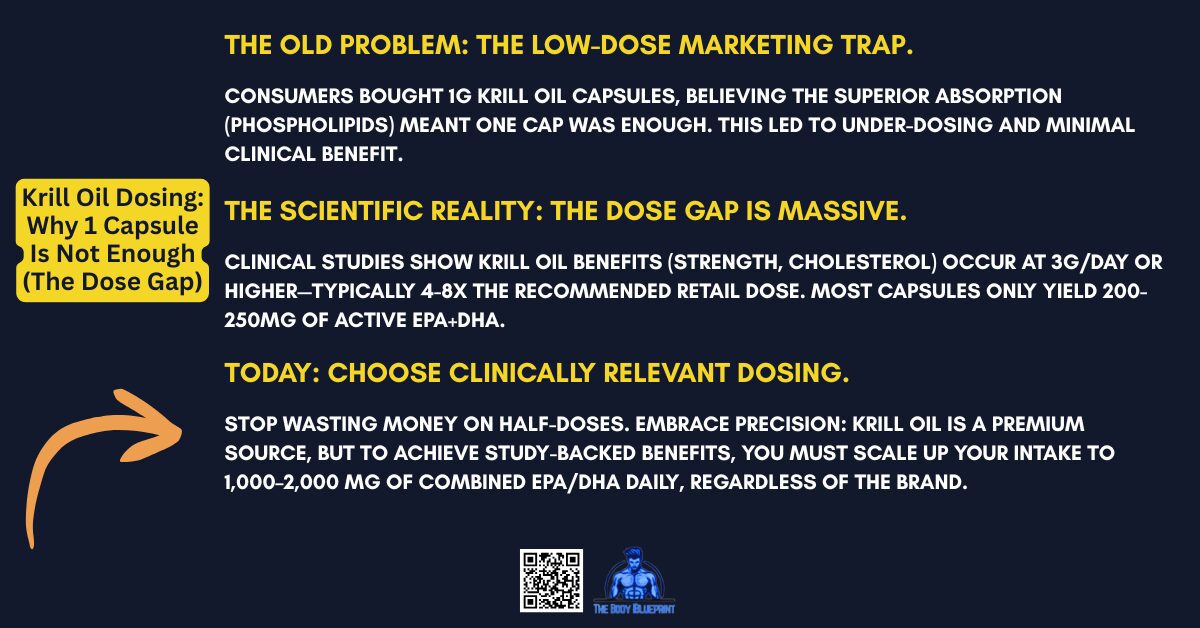
A recent study (Ramprasath, V. R., et al., Lipids in Health and Disease, 2014) found that 3 g/day of krill oil significantly increased blood levels of EPA and DHA and improved lipid profiles. That’s 3,000 mg of krill oil, which typically provides ~600–750 mg of EPA+DHA—several times higher than the amounts in most retail capsules.
Expert Recommendation
Nutrition specialist Charles Damiano notes that men aiming to support heart health, recovery, and muscle function should target 1,000–2,000 mg of combined EPA+DHA daily. That means 4–8 standard krill capsules, not one.
A Note on Dosing, Genetics, and Expectations
It’s vital to understand that most clinical trials and expert recommendations use high-dose omega-3 protocols. A 1000 mg capsule labeled “krill oil” typically contains only 120–250 mg EPA+DHA.
To match the study-backed effects—like improved muscle strength, reduced bad cholesterol, and enhanced endurance—you need multiple capsules daily, or a concentrated krill oil with declared EPA/DHA content.
If you’re on statin therapy, supplementing with omega-3s may further reduce LDL cholesterol and improve HDL ratio, but always coordinate with your physician, especially if taking anticoagulants or after dental deep cleaning, since omega-3s can slightly increase bleeding risk in those with severe gum disease.
Krill Oil vs. Fish Oil: The Real Difference
Both deliver EPA and DHA, but the structure differs:
- Fish oil uses triglycerides.
- Krill oil uses phospholipids, which may be absorbed up to 30% more efficiently (Ulven et al., Am J Clin Nutr, 2011).
Still, fish oil’s higher concentration often means you need less volume to hit the same EPA/DHA dose. Krill oil’s real edge lies in antioxidant astaxanthin, which can reduce oxidative stress after training.
How Krill Oil May Impact Muscle and Strength
In a 2016 randomized study (C. M. Lewis et al., Clinical Nutrition), older adults supplementing with 3 g/day of krill oil for 6 months showed improvements in leg strength (+10%) and grip endurance, attributed to better muscle membrane fluidity and reduced inflammation.
For men training regularly, krill oil may help:
- Reduce post-exercise soreness
- Improve recovery rate
- Support joint health
- Enhance lipid balance
But again, these effects occur at 3 g/day, not 1 g.
How to Take It (Based on Science, Not Marketing)
| Goal | Recommended EPA+DHA (Daily) | Equivalent Krill Oil (Approx.) | Timing |
|---|---|---|---|
| Heart & Lipid Health | 1000–2000 mg | 4–8 standard capsules | With meals |
| Muscle Recovery | 1200–2000 mg | 5–8 capsules | Post-workout or with protein |
| Joint Support | 800–1500 mg | 3–6 capsules | Split doses AM/PM |
Always take with food containing fat for maximum absorption. Pairing with vitamin D3 or CoQ10 may enhance cardiovascular benefits.
The Real Review: Strengths and Weaknesses
| Product | Strengths | Weaknesses |
|---|---|---|
| Carlyle Antarctic Krill Oil | Excellent purity, USP-certified | Low EPA/DHA per capsule |
| Bronson Antarctic Krill Oil | High astaxanthin, softgel form | Expensive for daily use |
| MegaRed Extra Strength Krill Oil | Trusted brand, good tolerability | Low potency vs. study doses |
Final Verdict
For men serious about performance and health, krill oil offers measurable benefits—but only at clinically relevant doses. The best approach:
- Choose a high-concentration krill oil (≥250 mg EPA+DHA per capsule).
- Take multiple capsules daily to reach research-backed intake.
- Monitor lipid markers and training recovery after 8–12 weeks.
Our Recommendation:
If you prefer brand reliability, MegaRed Extra Strength Krill Oil remains a solid choice.
For higher astaxanthin and purity, Bronson Antarctic Krill Oil is top-tier.
But if you’re looking for best cost-to-dose ratio, Carlyle Antarctic Krill Oil wins—just scale the dose appropriately.
Bottom Line
Krill oil is a premium omega-3 source that supports muscle recovery, endurance, and cholesterol balance—but dose matters. The benefits seen in research require 3–6× higher intake than what most product labels suggest.
Find out what your body truly needs, scale accordingly, and remember—the science rewards consistency and precision, not marketing promises.