In modern sports science, NAD (Nicotinamide Adenine Dinucleotide) has emerged as one of the most compelling molecules in human physiology. It’s the enzyme cofactor that fuels nearly every cellular energy reaction, influencing everything from mitochondrial efficiency to skeletal muscle recovery.
For athletes who regularly engage in physical activity, maintaining optimal NAD levels may represent a new frontier in performance and recovery optimization. Let’s get into how this molecule works, why it matters, and where it could take human performance next.
1. What is NAD and Why Athletes Should Care
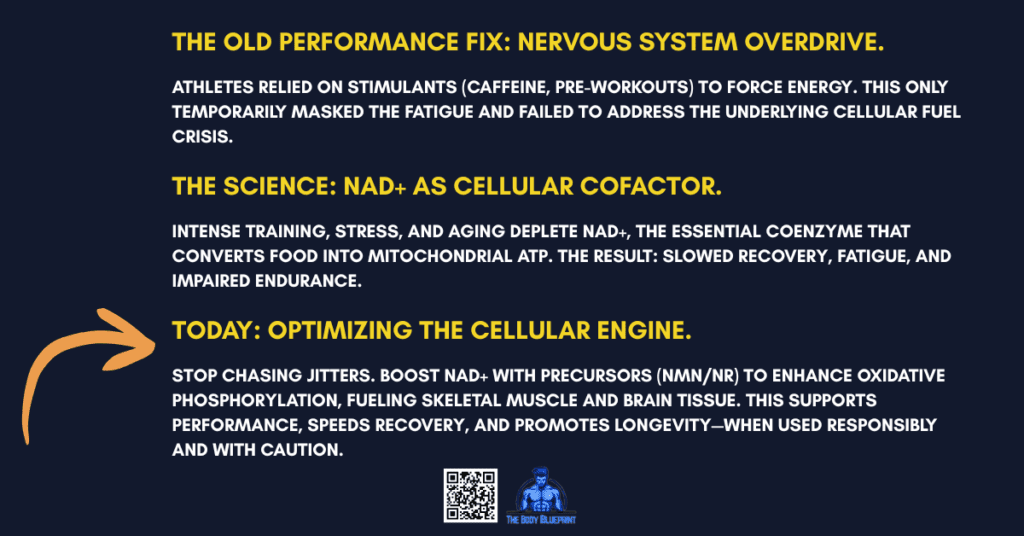
NAD is an essential enzyme in all living cells, acting as a coenzyme in redox reactions—the very chemistry that turns food into fuel. Without sufficient NAD, energy production in skeletal muscle and brain tissue slows down, leading to fatigue, slower recovery, and impaired cognitive performance.
Over time, NAD levels decline naturally with age, stress, and intense physical training. This is where NAD supplements—often in the form of NMN (Nicotinamide Mononucleotide) or NR (Nicotinamide Riboside)—come into play. These compounds boost NAD biosynthesis, restoring cellular energy and enhancing recovery capacity.
“NAD supplementation is like charging the battery of every cell in your body,” explains Eugene Thong, CSCS. “It’s particularly relevant for athletes who push their cellular systems to the limit daily.”
2. The Science of NAD Biosynthesis and NAMPT
The enzyme NAMPT (Nicotinamide Phosphoribosyltransferase) regulates the rate of NAD biosynthesis in cells. Under healthy conditions, this enzyme promotes steady NAD production in skeletal muscles, the heart, and brain tissue—fueling endurance and cognitive function.
However, in cancerous ones, NAMPT can promote uncontrolled NAD synthesis, supporting cell growth indiscriminately. In the context of athletic performance, though, properly balanced NAMPT activity is beneficial—it sustains long-term exercise performance and muscle repair.
In our opinion, any NAD supplementation strategy should place special focus on maintaining healthy NAMPT expression, ensuring the molecule supports recovery, not unwanted proliferation.
3. How NAD Supplements Work
NAD and its precursors (NMN, NR) improve mitochondrial health by enhancing oxidative phosphorylation, the key process that turns nutrients into ATP—the energy currency of the cell.
When taken in conjunction with high-dose NMN supplementation, NAD precursors may fuel cells more efficiently, supporting:
- Improved muscle recovery after resistance or endurance sessions.
- Enhanced brain functionality and memory by boosting neuronal energy.
- Better cardiovascular performance, as NAD supports heart cell function and oxygen efficiency.
In athletes, this translates into greater training capacity, faster recovery, and longer-term performance stability.
4. Potential Benefits of NAD for Athletes
| Physiological System | Benefit | Mechanism |
|---|---|---|
| Skeletal Muscle | Improved endurance and recovery | Enhances mitochondrial ATP production |
| Brain | Boosts memory and cognitive clarity | Supports neuronal NAD balance and neurotransmission |
| Heart | Supports cardiovascular functionality | Improves energy efficiency in heart tissue |
| Longevity | Promotes long-term cellular health | Maintains NAD-dependent repair enzymes (sirtuins) |
“In the long term, NAD may help maintain skeletal muscles and other tissues in healthy conditions,” says Charles Damiano, B.S. Clinical Nutrition. “That’s essential not just for performance—but for longevity and quality of life.”
5. A Word of Caution: NAD and Cancer Context
While NAD supplementation offers immense promise for athletic performance, it’s critical to understand the context of NAD metabolism.
Research has shown that in cancerous cells, excessive NAMPT-driven NAD biosynthesis may fuel tumor metabolism. This doesn’t mean NAD causes cancer—but it underscores the need for balance.
Athletes using NAD boosters should do so under healthy, controlled conditions—not as a blanket solution. NAD may promote longevity and performance, but indiscriminate fueling of cells could, in theory, also sustain cells that shouldn’t be supported.
This is why proper dosing, timing, and medical oversight are key, especially for long-term users or those combining NAD with other supplements.
6. How to Use NAD Supplements Responsibly
- Start with moderate doses (250–500 mg/day) of NMN or NR.
- Pair with regular physical activity, which naturally boosts NAD turnover.
- Cycle supplementation every 8–12 weeks to avoid receptor downregulation.
- Combine with sufficient sleep, protein intake, and hydration.
- Consult a healthcare professional before combining with other compounds.
When used intelligently, NAD supplements can become a cornerstone of performance nutrition—helping athletes balance cellular energy, recovery, and longevity.
7. The Future of NAD Research in Sports Science
This field is rapidly evolving. Scientists are exploring how exercise and NAD pathways interact, particularly in long-term athletic adaptation. Early evidence suggests that endurance training may naturally increase NAMPT expression, which could work synergistically with NAD supplementation.
In conjunction with optimized nutrition and recovery, this may represent a new line of therapy for athletes, aimed at extending performance years and protecting against age-related decline.
My Recommendation> TRU NIAGEN
👉 Full Disclosure: Links to Amazon in this article are affiliate links. As an Amazon Associate, I earn from qualifying purchases. You don’t pay a penny more, you snag the best deals here, and you support this work (I earn a commission). Fair trade for the research grind?
Quick Recap
- NAD is essential for cellular energy, brain function, and muscle recovery.
- Athletes benefit from improved mitochondrial function and faster repair.
- NAMPT is the key enzyme in NAD biosynthesis—healthy regulation is vital.
- Caution is warranted: overactivation in cancerous cells can promote unwanted growth.
- When used wisely, NAD supplementation may enhance longevity, strength, and performance.